
Texting has become one of the fastest and easiest ways to reach your team. It keeps everyone connected during shift changes, schedule updates, and quick daily check-ins. To make the most of it, every workplace needs a few simple rules that keep communication clear, consistent, and professional. A well-written texting policy helps your team stay organized, protects privacy, and ensures messages reach the right people at the right time. The eight rules below will help you create one that works for your organization.
1. Define Acceptable Use for Texting at Work
Acceptable texts should be short, factual, and time-sensitive:
- Shift reminders like "Shift starts at 7 a.m." or "Schedule changed to afternoon crew."
- Emergency notifications such as "Building closed due to weather" or "Equipment malfunction on line 3."
- Quick operational updates like "Machine 4 is down, use line 2" or "Delivery delayed 30 minutes."
Set boundaries to prevent any confusion and disputes down the road. Keep anything involving confidential data, disciplinary action, or detailed HR questions in more secure, documented channels.
Your policy should contain guidelines like:
- "Use texting only for quick scheduling updates, urgent safety alerts, or operational instructions.”
- “Do not discuss performance reviews, wages, medical information, or disciplinary issues over text.”
- “Messages must stay professional, respectful, and free of confidential details."
These limits protect you and your team from misunderstandings. As we're not legal professionals, we recommend having counsel review your final policy for an extra layer of protection.
2. Set Clear Communication Hours
Building on these usage guidelines, protecting everyone's time starts with a simple rule: decide when work texts are okay, and stick to those hours. After-hours messages blur the line between personal time and paid work. A good starting point is 7 a.m. to 7 p.m. local time. This window covers most shifts while protecting family time.
Sample policy language: "Supervisors may send work-related texts only between 07:00 and 19:00 in the recipient's time zone. Exceptions are limited to safety emergencies. Any after-hours reply is voluntary unless pre-approved as paid overtime."
For 24-hour operations or teams in different time zones, create separate windows that match each crew's schedule:
- Morning shift crews receive messages between 6 a.m. and 2 p.m. in their local time zone.
- Night shift teams get updates between 10 p.m. and 6 a.m. when they're actively working.
- Multi-location companies specify which time zone applies for each message.
Defined hours help employees disconnect, prevent wage disputes, and keep communication predictable for everyone. For teams that rely heavily on overnight communication, our guide on what messaging system works for night shift employees covers how to structure after-hours messaging so critical updates land on time without disrupting off-duty workers.

3. Require Professional Language and Tone
Beyond timing, every workplace text you send should be in a professional tone. Professional messaging means using respectful language every time. Skip the slang, inside jokes, and emojis that can be misunderstood later.
- Good example: "Hi team, the delivery arrives at 3 p.m. Please be ready at the dock." This message gets straight to the point with no room for misinterpretation.
- Bad example: "Heads up, guys, truck's in lol 😜" The casual tone, gendered language, and emoji create multiple issues. The informality could be seen as unprofessional, while "guys" excludes team members who don't identify as male.
Managers especially need to model professional employee communication. A sarcastic late-night text from a supervisor can look like pressure to work off the clock or evidence of unfair treatment. When messages could be misinterpreted, use a more detailed communication method instead.
Your policy should make expectations explicit. All business texts should meet these standards:
- Use concise and courteous language in every message.
- Avoid references to race, gender, age, religion, or other protected characteristics.
- Never include emojis or informal slang in work communications.
- Choose a different channel if a message requires explanation or context.
This approach keeps everyone safe while maintaining the speed and convenience that makes messaging valuable for your team.
4. Protect Employee Privacy and Data
Employee data needs the same protection you give customer information. While we are not legal professionals, regulations like GDPR show how seriously privacy violations are treated. The solution is straightforward: use a company-approved messaging platform that hides personal numbers and automatically saves every message for compliance reviews. This approach prevents common security problems like data theft and unauthorized access.
Always get explicit consent before collecting phone numbers. Employees should know exactly why you need their number and how to stop receiving messages anytime. This transparency prevents TCPA violations of any kind.
Sample policy language: ‘’Work communication happens only through [Company Name]'s secure messaging system. Personal phone numbers stay private and won't be shared with clients or coworkers. Sensitive information like pay details or health records cannot be sent by text under any circumstances. HR will get written consent to store phone numbers and will process opt-out requests within [number of days] business days if needed."
5. Keep Messages Recordable and Searchable
Privacy protection goes hand in hand with proper record-keeping. If you can't find a message later, you can't prove what was said when questions come up. Work-related texts count as business records, and many industries need to keep them. For a deeper look at the risks that arise when employee conversations happen outside documented channels, read our guide on the compliance risks of employees texting each other and how unsecured messages create operational blind spots.
You can make it easier for your teams to follow company policy by having all work texts go through a company platform. A compliant system should include these features:
- Automatic archiving that saves every message with tamper-proof timestamps.
- Quick search capability so you can find specific conversations when needed.
- Secure storage that meets your industry's retention requirements.
- No employee access to delete, forward, or edit archived records.
These simple rules help you meet retention requirements, protect important evidence, and give you confidence if or when questions arise.
6. Address Multilingual and Accessibility Needs
Proper record-keeping systems should also accommodate your entire workforce. Everyone on your team should be able to read a text, understand it, and act on it right away. When crews speak different languages or need special formats, you have to plan for it.
Write messages in plain, jargon-free language first. Short sentences travel better across cultures and translation software. For workers who prefer another language, use built-in translation tools or send a second version instead of asking them to figure it out.
Accessibility matters just as much. Screen-reader-friendly text, high-contrast images, and large-print PDFs help employees with visual or cognitive disabilities stay in the loop. If you attach a photo, add a short description so no information is lost.
When drafting your policy, establish standards that work for everyone:
- Require all company texts to use simple, straightforward language without technical jargon.
- Provide translated versions when a significant portion of your workforce speaks another language.
- Make accessible formats like audio, large print, or screen-reader-compatible text available promptly.
- Include brief descriptions for any photos or visual content shared via text.
These guidelines ensure no one gets left behind when important information goes out. Inclusive communication cuts confusion and boosts engagement.
7. Provide Training and Enforcement Steps
Consistent training and steady enforcement turn a written policy into daily habits.
Start by weaving policy training into employee onboarding. New hires should walk through real scenarios such as shift swaps, emergency alerts, and off-hours texts so they see the rules in action. Short refreshers every quarter keep the guidance fresh, and managers can use the same materials for quick team huddles. Interactive tools like quizzes and role-plays make these sessions stick better than dry presentations.
Between formal training, send microlearning reminders by text. For example, a two-line tip on professional tone today, message archiving tomorrow. These short nudges work better than thick policy manuals that gather dust. Your leadership team sets the example. When supervisors model respectful language and avoid late-night messages, everyone else follows naturally.
When rules get broken, keep enforcement simple and fair:
- Start with coaching for first-time violations to help employees understand the mistake.
- Issue written warnings for repeat issues with specific examples of policy breaches.
- Escalate to HR review for ongoing problems or serious violations.
- Document each enforcement step to demonstrate consistency during audits or disputes.
This approach helps people learn rather than just punishing mistakes.
8. Address Employee-to-Employee Texting
While most workplace texting policies focus on management communication, peer-to-peer texting between employees creates its own set of challenges and compliance risks. Coworkers naturally want to coordinate shifts, ask quick questions, or share operational updates. When those conversations happen on personal phones, you lose the ability to find important information when you need it. Scattered messages across personal devices make it harder to verify decisions, track down customer details, and maintain the records you may need for compliance purposes.
The practical solution is keeping work communication inside a controlled channel where everything stays organized, searchable, and properly documented. This protects your operations while giving employees the fast, simple communication they need.
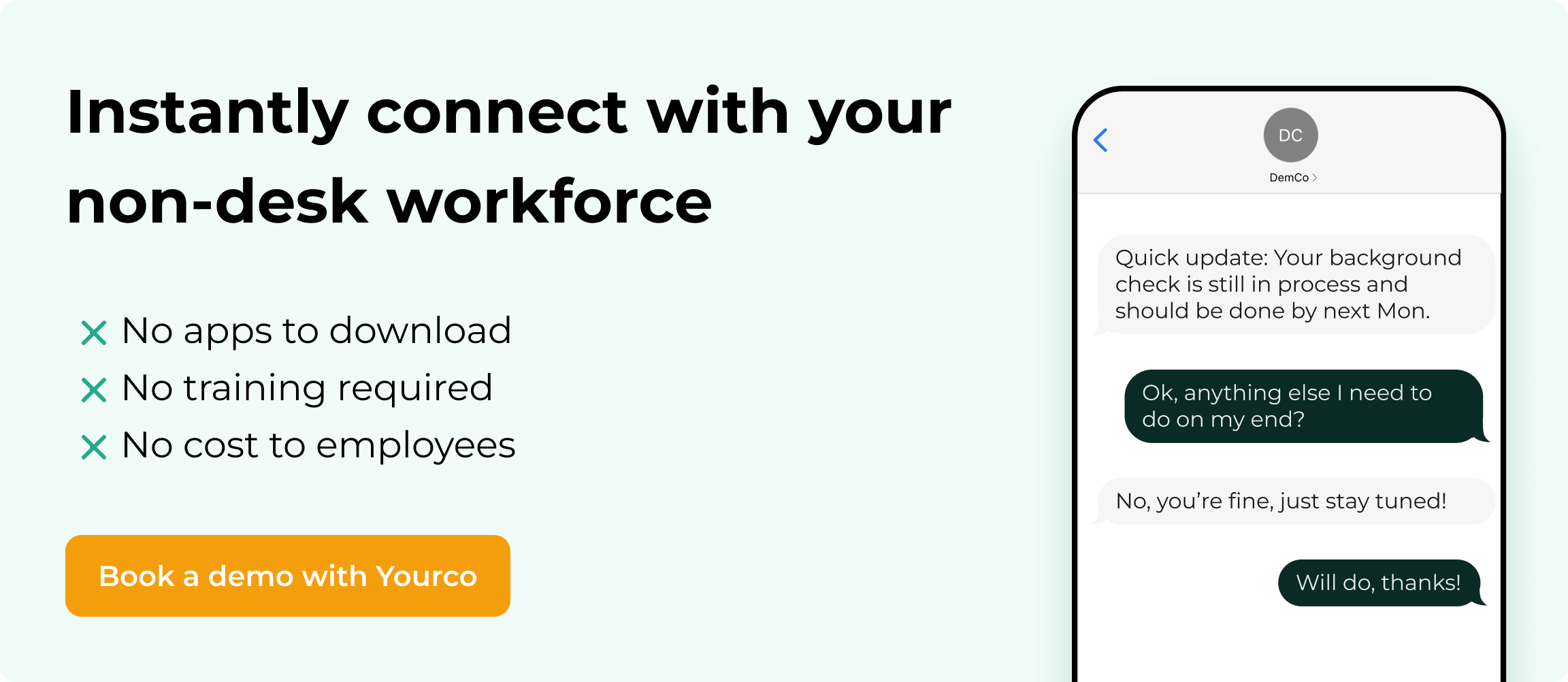
Yourco makes this simple by giving managers and HR a secure way to communicate directly with employees by text, without using personal numbers or group chats. Employees can receive updates, confirm shifts, or report issues through SMS, while all messages flow through a company-managed number. Every exchange is automatically archived, timestamped, and connected to the right team or location.
9. Review and Update the Policy Regularly
A workplace messaging policy only protects you if it keeps pace with your workplace, your tools, and the law. New phones hit the market several times a year, teams shift to hybrid schedules, and new rules may reshape consent or opt-out standards. Put the review on your calendar to stay covered. Some companies review policies with input from HR, IT, and legal, but there is no standard practice of an annual spring meeting for a detailed line-by-line review.
Don't skip the frontline perspective. Supervisors and crew members who text daily often catch gaps faster than any formal audit. A quick pulse survey or short focus group gives you real-world insights.
When conducting your policy review, focus on these areas:
- Verify that consent and quiet-hour rules reflect current regulations.
- Confirm that approved platforms archive every message and meet security standards.
- Review any complaints or security incidents tied to workplace messaging.
- Update training materials to address new scenarios or technology changes.
Sample policy line: "The Company will review this messaging policy each year, or sooner if regulations change, with input from HR, IT, legal, and employee representatives. Updates take effect 30 days after publication."
Regular tune-ups keep the policy useful, practical, and trusted.
Simplify Compliance with Yourco's SMS Platform
Yourco makes workplace texting compliance effortless. The platform automatically archives every message with tamper-proof timestamps and provides a dedicated toll-free company number that keeps personal contact information private. All communication logs can be downloaded for e-discovery purposes, ensuring you have complete documentation to support internal investigations, legal requests, or regulatory audits.
AI-powered translations in over 135 languages and dialects ensure your policy reaches everyone in their preferred language. Two-way communication lets employees respond with questions, while built-in polls can gather employee feedback automatically. Every interaction gets logged for compliance audits, giving you searchable records when you need them.
Ready to streamline your workplace communication? Try Yourco for free today or schedule a demo and see how the right communication tool can transform your workplace safety.
Frequently Asked Questions
Can employees text each other about work?
Yes, but boundaries help everyone stay professional. Peer-to-peer texts work well for shift swaps or quick updates, but remind your team to keep messages work-appropriate and avoid sharing sensitive information.
In industries like manufacturing, logistics, and construction, group chats can fall short of meeting communication needs. Important updates can easily get buried under casual conversations, and off-topic chatter makes it challenging to locate critical information when time is of the essence.
Do we need to save every work text?
Most businesses need to keep work texts as discoverable records. Regulators expect companies to store messages in a searchable, secure format. Centralized archiving protects you when disputes arise and meets the record-keeping standards outlined in employment investigations.
How often should we update the policy?
Plan for annual reviews, or sooner when regulations change. Gather employee feedback during each update to keep your guidelines practical and realistic.
What happens if an employee texts a coworker inappropriately?
Treat inappropriate peer texting the same way you handle other workplace conduct violations. Investigate promptly, gather evidence (including screenshots if available), and apply consistent disciplinary measures.