


3.4% of full-time workers in transportation and material moving occupations were absent in an average workweek during 2025, according to Bureau of Labor Statistics absence data. On any given morning, that means a driver texts off at 4:30, a loaded trailer has no one assigned to it, and dispatch starts calling down a list, hoping somebody answers. The delivery clock is already running, and nobody in the office can see which drivers have hours left, the right endorsement, and a willingness to take the run. A driver call-off policy and a documented route-coverage workflow turn that scramble into a repeatable sequence.
TL;DR
- Driver call-offs cost more than other absences, because the replacement needs the right license, available hours, and a phone that gets answered.
- A workable policy sets a notice window, one official call-off channel, and standard capture of the reason and route ID.
- A call-off and a no-call/no-show need separate written definitions and separate consequences.
- Route coverage runs as a sequence: log, assess, broadcast to the extra board, escalate through overtime and consolidation, then close the loop.
- Documentation matters twice, once for attendance decisions and again for leave and grievance review.
- SMS-based platforms like Yourco give drivers a documented text off-line and reach every phone in one send.
Why Driver Call-Offs Hit Logistics Harder
In most industries, a missing worker slows production. In trucking and last-mile delivery, a missing driver stops one specific route, and federal rules narrow the pool of people who can legally take it.
Screening a replacement means checking the right commercial driver's license class and endorsements, then reviewing federal hours-of-service rules to see how many hours that driver can still work today. Dispatch rarely has one screen showing both, which is why the search takes an hour the delivery window doesn't allow.
An uncovered route carries costs that land in four places:
- Missed pickup and delivery windows, which surface as retailer chargebacks and customer calls
- Service-level penalties and a lower carrier scorecard on the next bid review
- Backfill premium and overtime pay for whoever takes the run
- Knock-on delay into the next day when freight rolls to tomorrow's schedule
56% of HR leaders have missed vital deadlines because they could not reach a frontline employee in time, according to a Yourco-commissioned survey of 150 HR leaders. In a fleet, that deadline has a customer attached.
Build a Driver Call-Off Policy That Holds Up at 4 a.m.
A defensible driver call-off policy rests on four decisions, and each one gets tested at the worst hour of the day.
Start with the notice window. Set a minimum that gives dispatch enough time to arrange coverage before the route is due out, and define a separate, longer window for pre-planned absences.
Name one official call-off channel next. The policy should identify dispatch or a designated attendance line, with a night-dispatch backup for after-hours, plus the reporting deadline and the approved method. Some carriers designate one number as a text-off line, so every call-off arrives as a timestamped short message service (SMS) text rather than a voicemail somebody has to play back and transcribe. Fleets running mixed shifts often compare call-off platforms before choosing a channel. Where drivers have no company email, the same reasoning applies to handling call-offs without email.
Third, standardize what gets captured every time a driver texts off:
- Exact reporting time
- Driver name or identification number, plus the route or load left open
- A standardized reason code, flagged where the absence may be protected leave
- Whether the notice met the policy window
- Who received the call-off, for the audit trail
Fourth, decide how the record gets used. The route ID drives coverage; the reason code drives later attendance and leave review. Federal leave guidance on the Family and Medical Leave Act (FMLA) generally expects employees to follow an employer's usual call-in procedures absent unusual circumstances, and the federal fatigue and illness rule in Title 49 of the Code of Federal Regulations (CFR) addresses operating while too fatigued or ill to drive safely, so many carriers treat fatigue and illness reports as safety matters first and attendance matters second.
This information is for general awareness only. For specific compliance guidance, consult with qualified legal professionals.
Separate a Call-Off From a No-Call/No-Show
These are two different events, and they need two different definitions. A call-off means the driver notified dispatch through the approved channel before the shift started. A no-call/no-show means the shift began in silence, with no notice and no contact. Written policies should count each missed shift separately and attach consequences that reflect what was lost, which in a fleet is the notice window dispatch needed to cover the route.
Many employers treat several consecutive no-call/no-show days as job abandonment and consider the employee to have voluntarily resigned, though carrier policies and jurisdictional requirements vary. Fleets drafting from scratch can start from a general no-call/no-show policy and add the two logistics-specific pieces: route-ID capture and the fatigue carve-out.
Run the Route-Coverage Workflow Step by Step
Five steps take a route from an uncovered call-off to a confirmed driver and a closed payroll record.
Step 1: Confirm and log the call-off
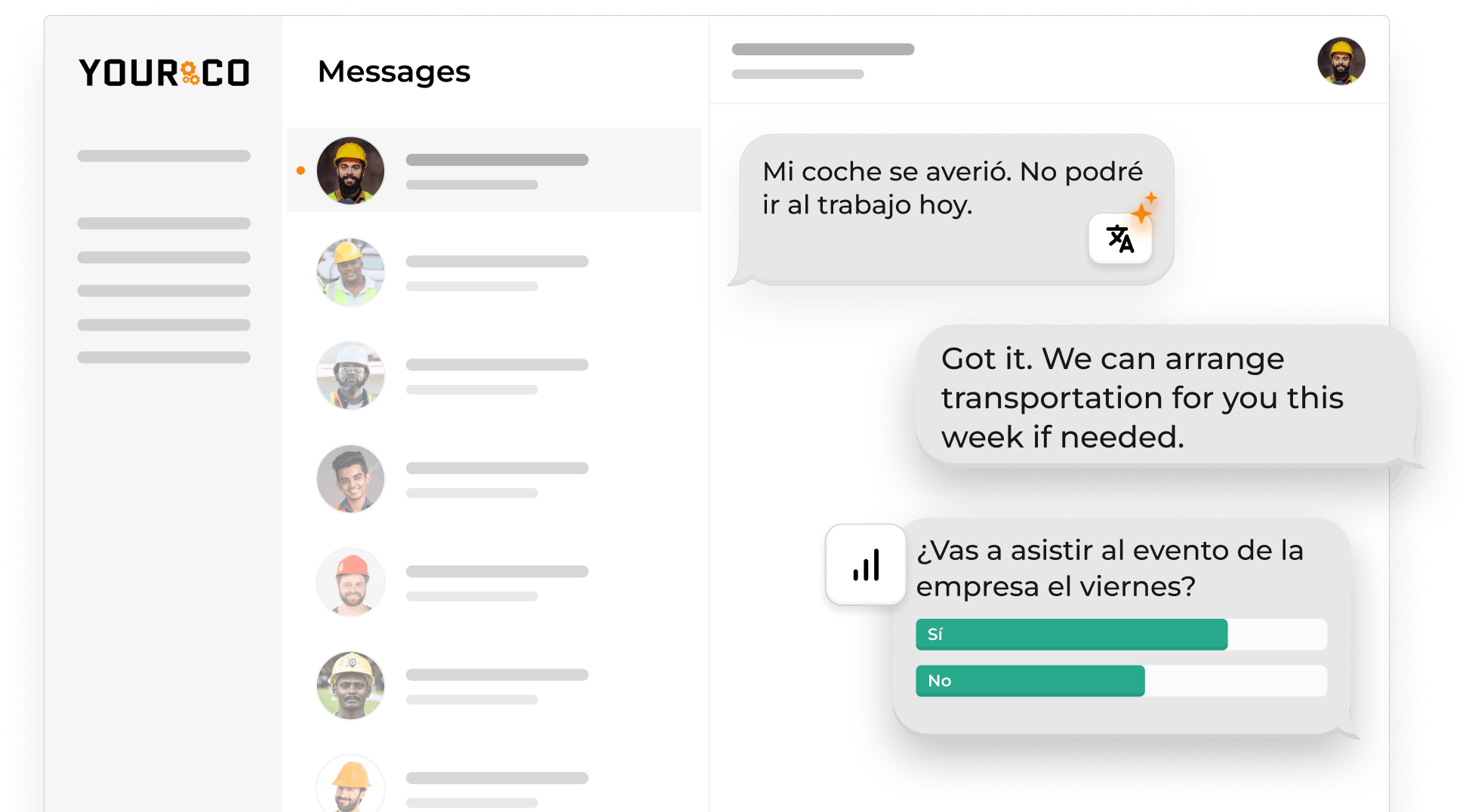
Reply to confirm receipt, then log the timestamp, route ID, and reason code. Yourco’s AI Call-Off Agent automatically responds to the driver's text, confirms the reason and date using natural language, and logs the record. This removes the transcription step and the argument over what time the driver called.
Step 2: Assess what the open route requires
Compare the estimated route duration against each candidate's remaining hours under federal hours-of-service limits:
- An 11-hour driving limit after 10 consecutive hours off duty
- A 14-hour on-duty window that off-duty time does not extend
- A 30-minute break after 8 hours of accumulated driving time
- A 60 or 70-hour on-duty limit across 7 or 8 consecutive days
Electronic logging devices verify remaining hours rather than relying on a driver's estimate. The run may also require tank, doubles or triples, or hazmat endorsements under federal endorsement requirements, and the backfill driver's qualification file and medical certificate need to be current before the assignment goes out.
Step 3: Broadcast the open run, then escalate in order
Send one message to the whole qualified extra board instead of calling drivers one at a time, and let replies come back as accept or decline. A single broadcast collects in minutes what a phone tree takes an hour to collect, and SMS-based platforms like Yourco deliver the offer in each driver's preferred language, so it reaches drivers who don't read English easily.
When the board comes back empty, escalate through a fixed sequence, so dispatch is not improvising at 5 a.m.:
- Standby and extra board: drivers already scheduled or rostered as available for exactly this situation.
- Volunteer overtime: qualified drivers off that day, offered in seniority order where an agreement requires it.
- Route consolidation: merge stops onto adjacent routes with hours to spare, accepting a later delivery window over a missed one.
- Third-party coverage: a partner carrier or broker for the load, priced against the chargeback it prevents.
Each tier costs more than the one above it, so work them in order and record where coverage came from.
Step 4: Confirm coverage and close the loop
Assign the run to the first qualified driver who accepts, unless a collective bargaining agreement sets a seniority order. Send route details and pickup information, require a confirmation reply, update the dispatch board, and stand down the rest of the list so nobody arrives expecting work.
Step 5: Log the outcome
Record who covered the route and any premium or guarantee pay owed, so payroll gets the detail without chasing dispatch. That record then feeds the attendance system and absence pattern analysis.
Track Call-Off Patterns Before They Become Chronic
Review absence records by day of week, driver, and route to separate a one-off emergency from a driver who texts off every second Monday. Consistent reason codes keep that review fair, and set aside absences flagged as potentially protected leave before calculating any points. Other 24/7 industries run the same review differently, and call-offs in healthcare show how coverage rules change when the shift cannot go uncovered.
Documentation earns its keep twice. Attendance decisions need a record of what was reported and when, and leave and grievance review needs the same record for a different reason. Where drivers are represented, a timestamped call-off log and a documented coverage sequence answer the two questions a grievance usually raises: whether the absence was reported as required, and whether the overtime or route assignment that followed matched the agreement.
A warning that cites a documented event holds up better than one that cites a supervisor's memory. AI analytics layers such as Yourco's Frontline Intelligence report call-off volume and response times by terminal, turning that review from a manual spreadsheet exercise into a standing report. That consistency starts upstream: instead of every terminal handling call-offs differently, the AI Call-Off Agent gives the whole organization one standardized workflow, while drivers everywhere keep doing exactly what they already do: send a text.
85% of HR leaders say improved communication would reduce absenteeism, according to a Yourco-commissioned survey of 150 HR leaders. In a fleet, the improvement usually starts with a call-off channel drivers can use in ten seconds from the cab.

Cover Every Open Route Faster With Yourco
Drivers are never at a desk, and Yourco is built for exactly that workforce. It is an SMS-based employee communication platform that gives every driver a documented way to text off, and gives dispatch one place to broadcast an open run. Core capabilities include:
- SMS to any phone, including basic flip phones, with no app download, no Wi-Fi, and no data plan required
- Two-way messaging, so drivers text off and answer open-run offers in the same thread
- The AI Call-Off Agent, which collects the required call-off details over two-way SMS, confirms the request, logs it, and notifies the supervisor without dispatch intervention
- AI-powered translation across 135+ languages and dialects, in each driver's preferred language
- Segmentation by terminal, shift, or qualification, so an open-run offer reaches only eligible drivers
Yourco connects to 240+ HRIS and payroll systems, keeping driver rosters and absence records in sync across terminals.
For multi-terminal carriers, Enterprise Bridge lets corporate leadership send one-way policy and safety updates across every location, while local dispatchers keep two-way conversations with their own drivers.
Frontline Intelligence gives operations leaders centralized visibility into call-off and coverage activity across all terminals. Leaders can review call-off volume and response times by terminal, identify which sites run short most often, and use those reports when planning driver headcount.
"The Yourco texting system has helped the Railroad communicate with a 24/7 workforce. Sharing weather events, safety concerns and company bulletins have been priceless."
— Carl Kocur, Vice President, Engineering, New Orleans Public Belt Railroad
After 90 days on Yourco, companies see two-way employee engagement reach 86%.
Try Yourco for free today or schedule a demo and see the difference the right workplace communication solution can make in your company.
Frequently Asked Questions About Driver Call-Offs and Route Coverage
What should a driver call-off policy include?
A driver call-off policy should define the notice window, the official reporting channel, what dispatch collects during intake, and how potentially protected absences get reviewed. It should also cover route-assignment capture, after-hours contacts, no-call/no-show definitions, and how drivers acknowledge the policy at onboarding.
How much notice should a driver give before calling off a shift?
Notice requirements vary by fleet. The window should give dispatch enough time to find an eligible replacement before the route is due out, with a longer process for planned leave. Review the final language against applicable agreements and jurisdictional guidance.
How do you fill an open route after a driver calls off?
Broadcast the run to the qualified extra board in one message, then escalate through volunteer overtime, route consolidation, and third-party coverage if nobody accepts. SMS-based platforms like Yourco deliver the offer to every driver's phone and keep the accept-or-decline replies in one place.
How many no-call/no-show days count as job abandonment?
Thresholds depend on the fleet's written policy and applicable state requirements. Before treating an absence as a voluntary resignation, attempt contact through several channels, document each attempt, consider the possibility of an emergency or protected leave, and seek qualified legal review of the decision.
Can you discipline a driver for calling off sick or fatigued?
That depends on the circumstances, the fleet's policy, and applicable protections. Federal Motor Carrier Safety Administration guidance addresses driving while ill or fatigued, so many carriers treat those reports as safety matters first, record the reason accurately, and consult qualified legal professionals before deciding on discipline.


