


Unplanned absences hit shift-based operations hard. Bureau of Labor Statistics data show healthcare support roles have a 4.3% absence rate, while manufacturing has a 2.8% baseline. The CDC Foundation reports that absenteeism-related productivity losses cost U.S. employers $225.8 billion annually. Without a clear reporting channel, managers piece together absences from scattered voicemails, personal texts, and missed phone calls, and a single missed notification can cascade into forced overtime and production delays before the morning break. In this guide, we cover how to set up a centralized call-off hotline, why SMS-based "text-off" systems outperform traditional methods, and how to turn absence data into smarter workforce planning.
TL;DR
- Unplanned absences cost organizations heavily through overtime, understaffing, and production delays, especially in shift-based industries like manufacturing, warehousing, and healthcare
- Traditional call-off methods, such as voicemails, personal texts, and phone calls, create documentation gaps and make absence tracking unreliable
- A centralized call-off hotline gives employees one clear channel to report absences while giving managers timestamped, searchable records
- SMS-based text-off hotlines outperform phone-based systems because they work on any phone, support two-way communication, and automatically log every notification
- Integrating absence data with HRIS and scheduling systems turns individual reports into actionable workforce patterns that help you plan proactively
What is an Employee Call-Off Hotline and Why Organizations Need One
An employee call-off hotline is a dedicated communication channel, typically a phone number or SMS line, through which employees report absences by providing their name, department, shift, reason for absence, and expected return date. The system records and timestamps all notifications, enabling management to document absences accurately and arrange coverage quickly.
Traditional methods like voicemails, personal texts to managers' phones, or attempts to reach someone during off-hours create documentation gaps and verification challenges. When notifications arrive through multiple, uncoordinated methods, managers struggle to maintain accurate records, and critical absences slip through the cracks. According to the CDC Foundation, absenteeism costs $1,685 per employee annually. Organizations that centralize absence reporting in a single documented channel make faster coverage decisions and clearer data to proactively manage staffing.
Understanding Text-Off Hotlines: The Modern Alternative to Traditional Call-Off Systems
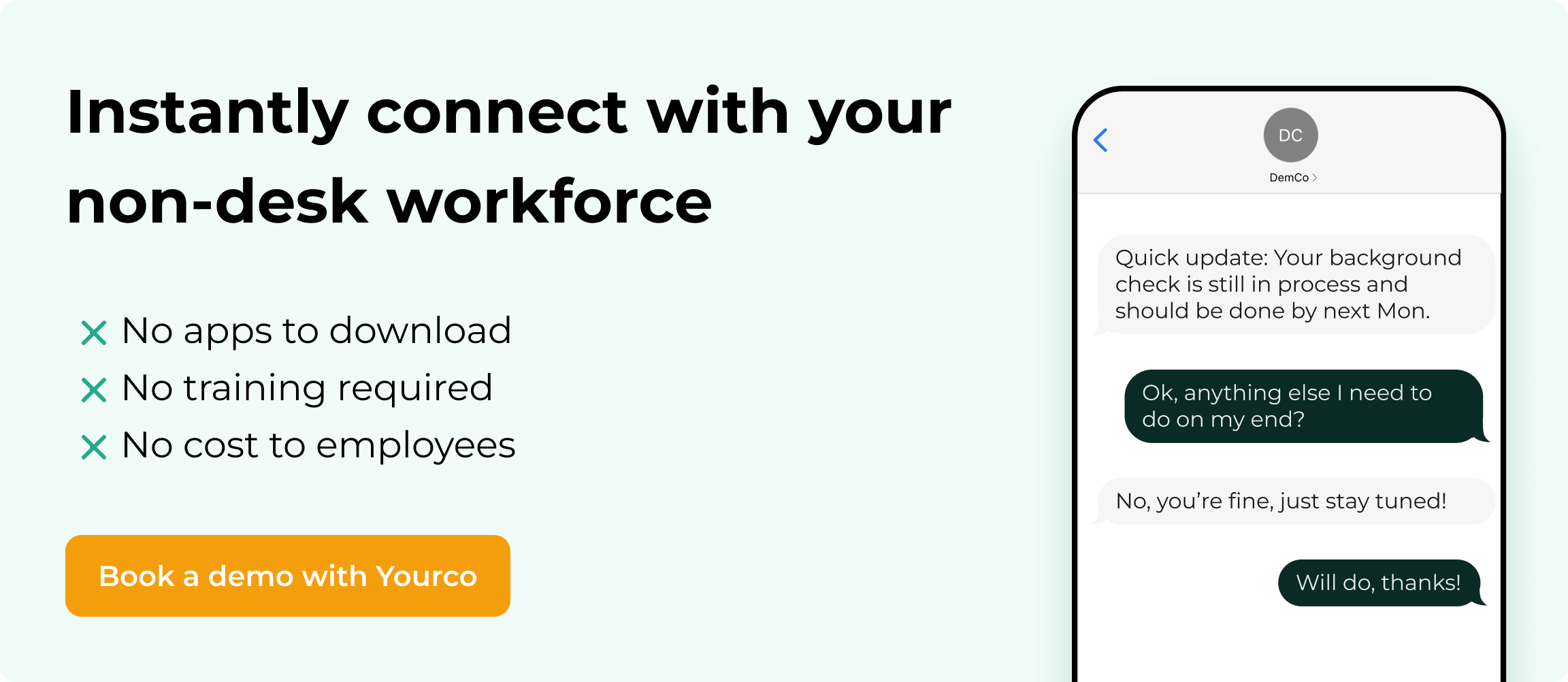
A centralized hotline addresses fragmentation, but the channel you choose determines its effectiveness. A text-off hotline takes the call-off concept further by replacing phone calls with SMS. Rather than navigating voicemail systems or waiting for someone to answer, employees simply text a designated company number with their name, department, shift details, and reason for absence. These messages are automatically logged with timestamps, creating immediate documentation while simultaneously notifying supervisors.
The convenience of text messaging aligns with how employees already communicate. 98% of text messages are read, typically within minutes, compared to only 20% of emails. Text-off hotlines enable genuine two-way messaging, allowing managers to acknowledge receipt, request clarifying details, or confirm coverage arrangements through documented conversations. For diverse workforces, modern text-off systems include AI-powered translation supporting over 135 languages, ensuring language barriers do not prevent accurate reporting.
Research from Gallup shows that highly engaged workplaces see 81% lower absenteeism, and engagement starts with clear, reliable communication. For industries where 90% of manufacturers report that frontline absenteeism affects their bottom line, text-off hotlines directly address communication barriers while providing essential documentation.
Key Advantages of Text-Off Hotlines for Workforce Absence Management
Higher read rates and faster notifications are just the starting point. Text-off hotlines deliver multiple benefits that address the core challenges of managing absences in shift-based, non-desk environments. Here is how each advantage plays out in practice:
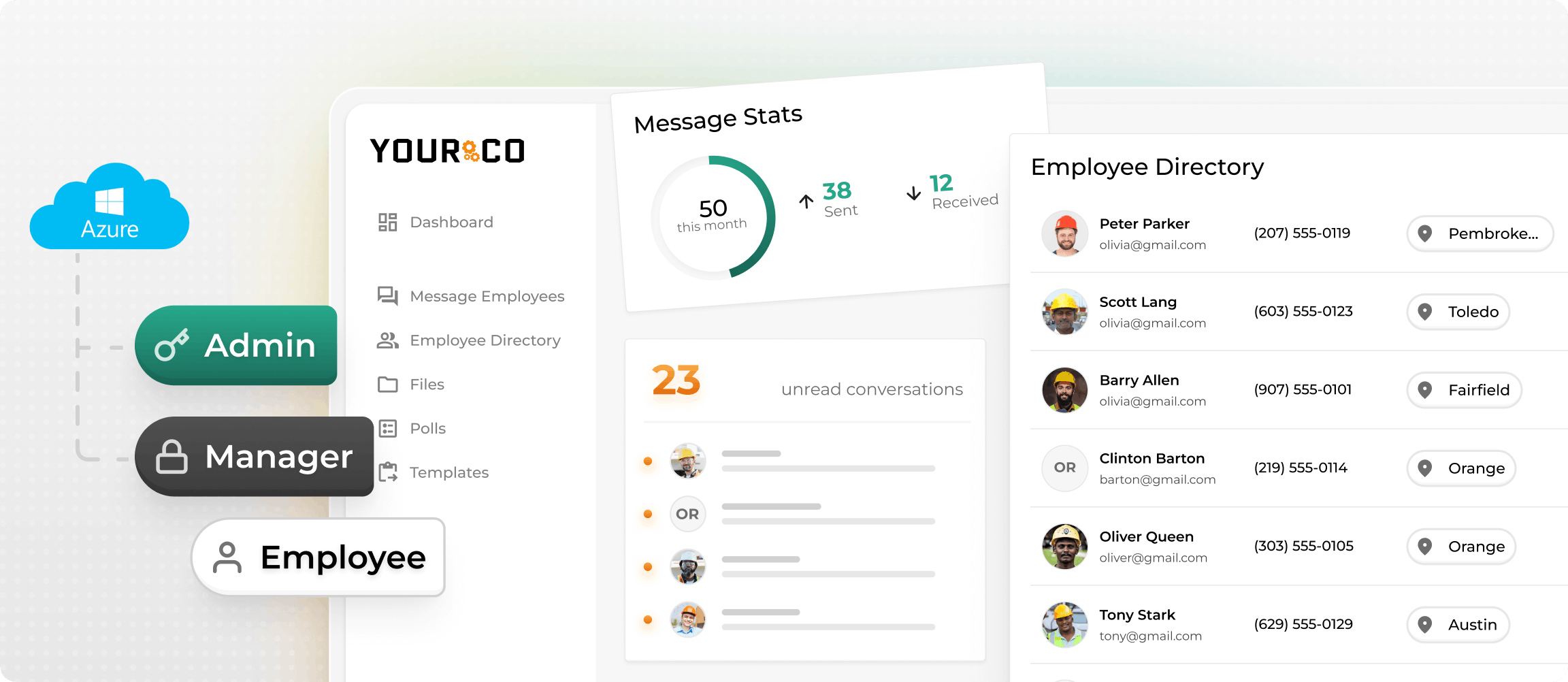
- Instant logging and documentation. Every notification is captured with timestamps and message content, creating a searchable record that eliminates gaps from missed voicemails or misplaced notes.
- Two-way communication. Managers can immediately acknowledge receipt, ask clarifying questions, and confirm coverage arrangements through documented exchanges.
- Multilingual support. AI-powered translation supporting 135+ languages lets employees report absences in their native language while managers receive translated messages.
- Faster response times. Notifications arrive with average response times under 90 seconds. In warehouse and logistics environments where staffing gaps compound quickly, rapid notification reduces disruption from late-noticed absences.
- Seamless system integration. Absence reports automatically update attendance records, payroll calculations, and scheduling workflows. Organizations managing multiple locations benefit from consistency across sites.
- Higher adoption rates. SMS requires no downloads, passwords, or internet. It works on any phone, so employees use it from day one.
- Visibility into attendance patterns. Real-time dashboards help managers identify recurring issues and address trends before they become serious problems.
Essential Features of an Effective Call-Off Hotline Solution
Knowing the advantages is one thing; picking a system that delivers them is another. When evaluating call-off hotline solutions, prioritize features that determine real-world effectiveness and adoption. The following table breaks down what to look for:
For organizations experiencing challenges with last-minute call-offs, where 49% of manufacturers report employees calling out with less than 24 hours' notice once weekly or more, automated escalation and real-time dashboards become especially valuable. Many employers still rely on manual processes or fragmented systems to track absences, so implementing a platform with centralized reporting and automated documentation provides a substantial advantage.
How to Implement an Employee Call-Off Hotline Successfully
Once you have selected the right platform, a structured rollout makes the difference between a tool people use and one they ignore. Organizations that follow these steps experience higher adoption rates and faster operational results.
Set Clear, Accessible Policies
Begin by creating straightforward call-off guidelines that answer practical questions: How much advance notice is expected? What information must be included? Who should employees contact if they cannot reach the hotline? For example, requiring notifications at least two to four hours before shift start gives managers reasonable windows to arrange coverage. Make these policies accessible through employee handbooks, break-room posters, and onboarding materials. Absence management challenges often stem from confusion about procedures rather than deliberate policy violations, so clarity drives compliance. For unionized teams where these procedures must align with collective bargaining agreements, our guide on union call-off communication covers how to standardize reporting rules, document every interaction, and prevent grievances across every shift.
Train Employees and Managers
Walk employees through the complete process: how to text the hotline, what information to provide, and what confirmation to expect. Consider creating wallet cards with step-by-step instructions. Manager training needs greater depth, covering dashboard tools, attendance pattern tracking, report generation, and handling common scenarios such as frequent absences. Given that 57% of U.S. workers believe their managers could benefit from better people management training (SHRM 2025), comprehensive supervisor training helps prevent leave management failures caused by inconsistent application.
Roll Out Through Multiple Channels
Launch the system through coordinated communication to maximize awareness. Use visual reminders near time clocks and break rooms, send company-wide text announcements explaining the benefits, and discuss the system during shift huddles. Emphasize what's in it for employees: faster reporting, no more tracking down a busy supervisor at 4 a.m., and clear confirmation that their notification was received. For organizations with multilingual workforces, translate all communications and confirm employees understand they can report absences in their preferred language.
Build Feedback Loops From Day One
Collect employee and manager input about how well the process is working. Quick surveys, direct questions during shift handoffs ("How's the text-off system working for you?"), And periodic pulse checks help identify issues early. If several employees mention confusion about what information to include, create a simple template they can follow. Demonstrate that feedback leads to visible improvements so employees stay invested in using the system correctly.
Use absence data to spot operational trends: Are certain shifts or departments experiencing higher call-off rates? Are notifications arriving later than policy requires? Are there particular days with predictable spikes that enable proactive scheduling? The real gains from attendance tracking come from acting on the patterns your data reveals, not from the system alone.
Integrating Your Call-Off Hotline Into Comprehensive Workforce Communication
A hotline that lives in isolation solves half the problem. It works best when it connects to your broader communication strategy and feeds data into the systems your managers already use. Reinforce awareness through multiple touchpoints: break-room signage, shift huddle reminders, onboarding wallet cards, and regular team discussions.
Connect your hotline data with workforce management systems so absence reports automatically update scheduling software, payroll calculations, and coverage workflows without manual re-entry. Over time, this data reveals broader patterns, such as consistently higher absence rates in a particular department signaling issues beyond individual attendance.
Make these patterns a regular topic in operational meetings and use plain language when explaining procedures. For a complete framework on turning this attendance data into strategic workforce decisions, explore our workforce analytics playbook for HR and operations that connects frontline communication data to predictive insights across every site. Instead of "initiate absence notification protocols," say "Can't make your shift? Text [number] with your name, department, and why you'll be absent. That's it." Research on effective communication with deskless workers shows that multi-channel approaches achieve significantly better comprehension.
Transform Absence Management With Yourco's Text-Off Hotline
Yourco's SMS-based text-off solution centralizes absence reporting into a system that employees already know how to use, and managers can implement immediately, without extensive training or deployment complexity.
- SMS-based absence reporting that employees send as a regular text message, with no apps, logins, or internet required
- Works on any phone, including basic flip phones, so every employee can report absences regardless of device
- Automatic timestamps and logging that create searchable records for attendance policy enforcement, payroll accuracy, and dispute resolution
- Two-way communication so managers can acknowledge absences, request details, or confirm return dates through documented text conversations
- Automatic translation across 135+ languages and dialects, eliminating barriers that prevent accurate reporting across diverse workforces
- Integrations with 240+ HRIS and payroll systems, so absence data flows automatically to scheduling and payroll without manual re-entry
- Dedicated toll-free number for each company, making every message free for employees with no personal cost
Yourco's Frontline Intelligence takes absence management further by turning daily communication data into real-time workforce insights. Leaders can spot disengagement trends, flag attendance concerns by location, and compare team responsiveness across sites, helping you move from reactive staffing scrambles to proactive workforce planning. After using Yourco for 90 days, companies see a two-way increase in employee engagement to 86%.
Try Yourco for free today or schedule a demo and see the difference the right call-off hotline solution can make in transforming absence management at your organization.
Frequently Asked Questions about Employee Call-Off Hotline
What are the key differences between traditional call-off systems and text-off hotlines?
A call-off hotline typically requires employees to call, often reaching a voicemail or answering service, while a text-off hotline lets employees report by sending a text message to a dedicated company number. Text-off hotlines offer faster response times, automatic timestamps, two-way communication, and a searchable record of every notification without relying on voicemail.
How do text-off hotlines improve response times and reduce operational disruptions?
Text messages are typically read within minutes, so managers receive absence notifications almost instantly compared to voicemails or emails that may sit unchecked for hours. This immediate visibility lets supervisors initiate coverage procedures, reach out to on-call staff, or authorize overtime before the absent employee's shift begins.
What steps should be taken to successfully implement a call-off hotline in an organization?
Start by developing clear policies that specify when and how employees should report absences, then provide hands-on training so workers and managers feel comfortable using the system. Follow with a multi-channel rollout using break-room signage, text announcements, and shift huddle discussions, and collect feedback regularly to refine the process.
How does integrating a call-off hotline with HR and scheduling systems enhance efficiency?
When absence notifications automatically flow into HR, payroll, and scheduling platforms, manual data entry is eliminated, and all departments receive up-to-date information instantly. This means managers can adjust schedules based on real-time data, payroll accurately reflects absences, and HR can track attendance patterns across the organization without manually compiling records.
What are the essential features to look for in an effective call-off hotline solution?
Look for a dedicated toll-free number, automated alerts, real-time dashboards, HRIS and payroll integrations, multilingual support, role-based permissions, and end-to-end encryption. The best solutions also offer two-way messaging so managers can acknowledge absences, request details, and confirm coverage through documented conversations.


