


The way organizations structure and communicate employee benefits has become one of the sharpest levers in the competition for frontline talent. Workers are more benefit-aware than ever, more willing to act on that awareness, and quicker to leave when expectations aren't met. For HR and operations leaders managing hourly workforces, keeping pace with employee benefits trends is an essential retention strategy.
What's changed in 2026 isn't that benefits matter. It's that the gap between what employers offer and what workers actually experience has grown wide enough to drive real turnover. A well-designed package means little if employees can't access it, don't understand it, or never receive the communication that explains it. This guide breaks down the trends shaping benefits decisions this year, what the data says about each, and what practical steps HR leaders can take to close the gap.
TL;DR
- For frontline workers, flexibility means predictable schedules and accessible leave, not remote work.
- Financial wellness is the #1 benefit priority in 2026. The retirement participation gap between low- and high-income workers is stark and closable.
- Workforce burnout hit a 6-year high in 2025. EAP utilization is the real problem: accessibility matters more than the benefit existing on paper.
- HR technology is the biggest driver of changes in benefit priorities, but only if it reaches workers without company email addresses.
- Two SECURE Act 2.0 changes need attention now: Roth catch-up contributions (effective January 1, 2026) and a December 31, 2026, plan amendment deadline.
- Most benefits failures are communication failures. SMS-based platforms like Yourco help frontline teams receive, understand, and act on benefits information from any phone, in any language.
Employee Benefits Trends for 2026
The stakes have never been higher. According to the Aflac 2024–2025 WorkForces Report, 62% of employees would consider leaving their current job for better benefits, even if it meant lower pay, up from 53% in 2023. Benefits now comprise 32% of total compensation packages, making them a direct competitive lever rather than a supplementary cost.
The harder problem isn't what employers offer, it's the gap between what's offered and what workers experience. SHRM research on frontline workers shows that employers often overestimate the effectiveness of their benefits, and many HR leaders struggle to drive benefits utilization among front-line staff.
For frontline workers in manufacturing, construction, logistics, and hospitality, the trends below don't look the same as they do in a corporate setting. Each section covers what the data shows, what's changing in 2026, and what HR leaders can do about it.
Flexible Work
For desk-based employees, workplace flexibility is about hybrid and remote options. For hourly and frontline workers running production lines, managing warehouse shifts, and working construction sites, it means predictable schedules, shift trading, compressed workweeks, and leave that is actually accessible.
Practical Work Policies
For frontline employees, retention consistently hinges on predictable shifts, reliable overtime pay, and performance-based bonuses. Enhancing benefits for frontline workers is gaining traction as employers adapt.
A peer-reviewed study in the International Journal of Manpower found that PTO policies reduced voluntary turnover by 35% among workers who received paid time off, a measurable return for high-turnover industries.
Accommodating Personal Needs
SHRM's 2026 Top Five Workplace Issues report shows that caregiving puts real strain on your workforce:
- 53% say caregiving affects their finances
- 49% say it affects their physical health
- 48% say it affects their mental health
These aren't edge cases. They're mainstream workforce challenges. Employers are also expanding PTO beyond traditional accrual models, with programs that allow workers to convert unused time into cash, student loan payments, 401(k) contributions, or HSA funds, according to Goldman Sachs Ayco's 2025 Benefits and Compensation Trends report.
Financial Wellness and Retirement Benefits
According to the WTW Global Benefits Attitudes Survey, nearly 60% of employees list financial well-being as their top benefit priority. For hourly workers, that pressure shows up in absenteeism and turnover long before it surfaces in exit interviews.
Personalized Financial Planning
Nearly 1 in 2 employers reported that financial well-being has become more important in 2026. Financial planning workshops and incentive compensation guidance ease financial stress and build engagement. When employees understand the full value of their compensation, often exceeding $20,000 annually, they're less likely to leave for a competitor offering $0.50 more per hour.
Enhanced Retirement and Savings Programs
Automatic enrollment boosts participation, 79% of large plans (1,000+ participants) now use it. Vanguard data shows a stark equity gap: only 31% participation among workers earning under $15,000 annually, versus 95% for those earning $150,000+. For employers in manufacturing, construction, and warehousing where plan access has historically lagged, simply offering a retirement plan with automatic enrollment is a meaningful differentiator for hourly retention.
Fidelity's Q1 2025 data show employer 401(k) match averages of 4.8%, with 86.1% of lower-income enrollees receiving contributions. Two SECURE Act 2.0 updates HR managers should address now:
- Student loan matching (available since Q1 2025): A newer option that lets employers extend 401(k) matching to employees paying down student loans, so workers carrying debt don't have to choose between debt repayment and retirement savings.
- Roth catch-up contributions and plan amendments (2026): Higher earners age 50+ will need to direct catch-up contributions into Roth accounts, and all plans have an end-of-year amendment deadline to stay current with SECURE 2.0.
Both are worth a quick conversation with your plan administrator now rather than a scramble later.
Mental Health and Well-being Programs
Workforce burnout reached a 6-year high in 2025, with around three-quarters of employees facing moderate to high work stress according to Aflac's WorkForces Report. For production floors and construction sites, that pressure compounds. Physical demands and mental load stack on top of each other.
Employee Assistance and Counseling Programs Reflecting Trends
According to the TELUS Health 2025 Mental Health Barometer, mental health issues drove productivity declines for most U.S. workers in 2025. The challenge is utilization. Ideal EAP utilization should range between 20–40%, but most programs fall far short, particularly among shift-based workers without easy access to HR. The Hilton case study, documented by SHRM, shows what's possible when friction is removed: after reducing wait times from weeks to a median of 0.8 days.
- 85% of employees reported feeling comfortable discussing mental health with managers
- 88% of hotel-based team members reported feeling balanced and healthy
Reducing access friction (fast response, mobile-first, real people to talk to) matters more than the benefit existing on paper.
Stress Management and Mindfulness Initiatives Following Employee Benefits Trends
75% of wellness programs now include mental and behavioral health support in 2026, up from 52% in 2023 (a 44% increase in just three years), according to the EPIC Brokers 2026 Workplace Wellness Trends Report. Mercer's 2026 benefit strategies research found more than 75% of large employers will offer digital stress management resources in 2026, with 51% offering in-person or live options. SHRM recommends allowing 3–5 years to realize the full ROI, a useful reminder before cutting programs when utilization appears low in the short term.
Technology-Driven Benefits Solutions

Mercer's Employee Benefits and Technology Trends Report found that 65% of employers view HR technology as the biggest driver of changing benefit priorities. For frontline-heavy organizations, the question is whether those tools actually reach frontline workers. Here's what the data shows:
- The access gap is real. SHRM's Deskless Workplace Paradox research found that 61% of HR teams report that frontline workers access HR resources from personal devices, but fragmented platforms create barriers rather than bridges.
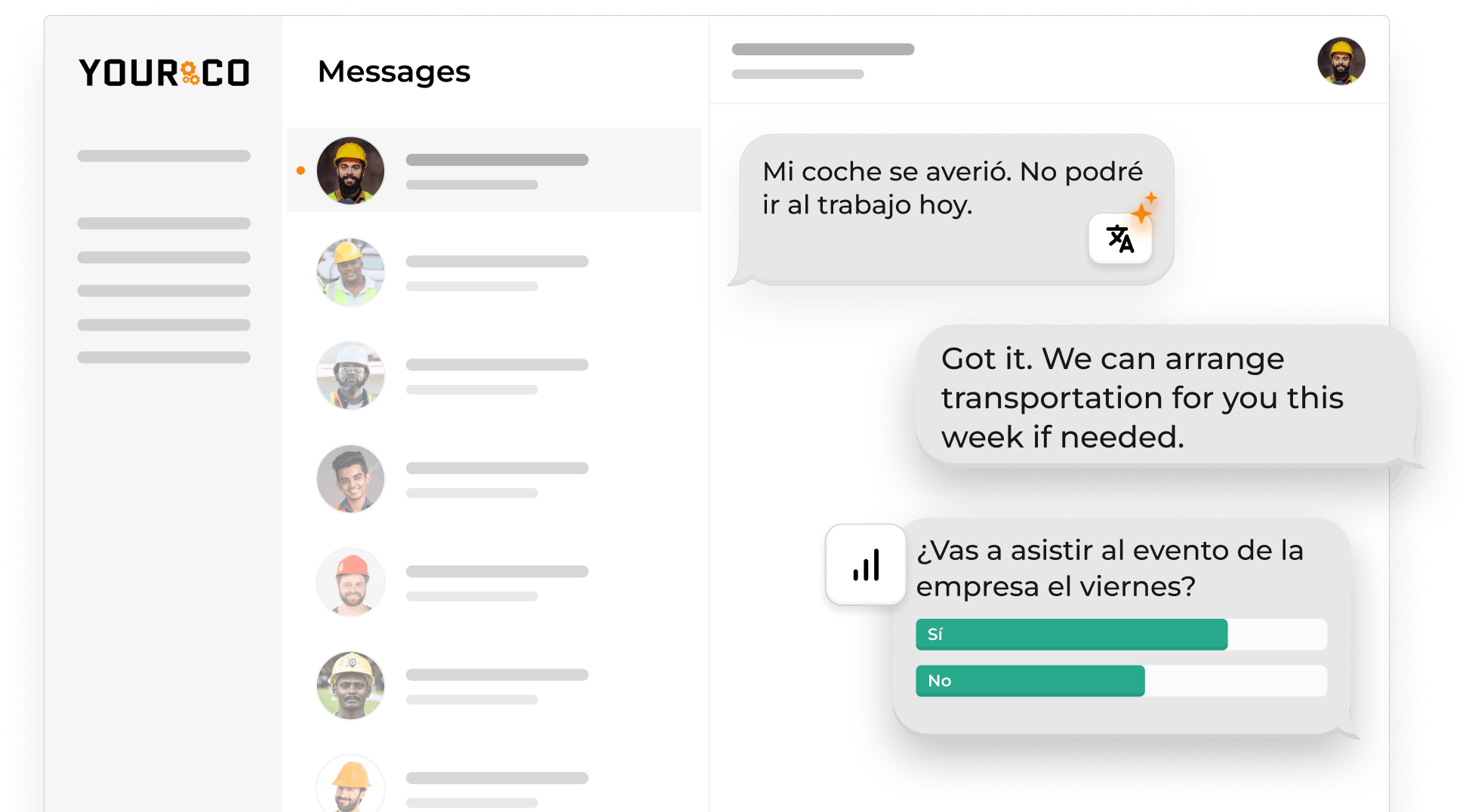
- Most communications don't land. A Yourco-commissioned survey of 150 HR leaders found that only 43% of frontline employees consistently receive the communications their companies send. The benefit exists, but the worker has never heard about it.
- SMS closes the gap. Internal text communication reaches employees on the device they already carry. 98% of texts get read versus 20% of emails, and no downloads or logins are required.
- Human touchpoints still matter. 37% of employees want to speak with a real person during benefits enrollment, but only 28% of employers currently offer this option. AI tools are increasingly available, but SHRM's 2026 workplace research finds nearly 4 in 10 employees still prefer a real person, making AI a useful complement rather than replacement.
Effective Solutions and Best Practices in Employee Benefits Trends
Having strong benefits is only half the equation. Employees need to know about them, understand them, and be able to act on them. A Yourco-commissioned survey of 150 HR leaders found that ineffective communication directly reduces benefits participation for 79% of frontline workforces. Gathering direct input is the most reliable way to close that gap. Consider:
- Regular surveys: covering health benefits, work-life balance, and perks. Anonymity encourages honest feedback.
- Focus groups: to surface nuanced views and unmet needs that surveys miss.
- Flexible packages: options catering to different life stages. Managing employee bonuses is part of a flexible total rewards approach.
Trend monitoring: the SHRM Employee Benefit Trends resource and the KFF Employer Health Benefits Survey are reliable annual benchmarks.
Communicate Benefits to Every Worker With Yourco
A strong benefits package only creates retention value when employees know about it and can act on it. For frontline workforces, getting that message through is the real challenge, and it starts with a channel that works on any phone, in any language, with no app required.
Yourco is an SMS-first employee communication platform built for frontline teams. Core capabilities include:
- SMS to any mobile phone: including basic phones, no app or data plan needed
- Two-way messaging: workers can respond, confirm, and ask questions directly
- AI-powered translation across 135+ languages and dialects: every worker receives benefits information in the language they actually read
Yourco integrates with 240+ HRIS and payroll systems, keeping contact lists and employee records automatically in sync.
For company-wide benefits announcements from senior leadership or corporate HR, Enterprise Bridge provides a dedicated one-way broadcast channel that reaches every employee simultaneously without crowding operational message threads.
Frontline Intelligence uses AI to analyze communication patterns across your workforce, surfacing engagement signals that show whether benefits messages are landing, and flagging teams where communication gaps may be driving disengagement before it shows up in turnover.
"We are absolutely delighted with Yourco, which we use for HR communications with our team. It has significantly improved how we connect with employees, making it easier to share important updates, reminders, and announcements in real time."
— Courtney Martin, Recruiting Manager, The Seagate
After using Yourco for 90 days, two-way employee engagement increased to 86%, the kind of consistent connection that turns a strong benefits package into a genuine retention advantage.
Try Yourco for free today or schedule a demo to see how Yourco helps your benefits communication reach every worker on your team.
Frequently Asked Questions About Employee Benefits Trends
What are the biggest employee benefits trends for 2026?
The dominant trends are healthcare cost management, mental health expansion, financial wellness, SECURE Act 2.0 compliance, and benefits communication technology. Healthcare cost growth is the most pressing challenge, yet most employers plan to hold benefits steady. Financial well-being has overtaken all other categories as employees' top priority.
What benefits do hourly and frontline workers actually value most?
Frontline workers prioritize predictable schedules, reliable overtime pay, accessible PTO, and performance-based bonuses, very different from the remote work flexibility dominating the conversation. Health insurance remains foundational. Don't cut core coverage for office-focused extras. Hourly workers notice, and they leave.
How much do employee benefits cost employers in 2026?
Health insurance premiums have risen sharply, and manufacturers in particular are projecting substantial increases for 2026. Benefits overall represent a significant share of total compensation, often more than 30%, making proactive budget planning essential rather than reactive.
Why do employees leave for better benefits even when pay is competitive?
Because workers often don't know the full value of what they have. Hourly workers frequently move for small wage differences without understanding the total value of their package. When employees can't easily access their benefits, those benefits lose their competitive value. The retention failure is usually a communication failure.
What SECURE Act 2.0 changes do employers need to act on in 2026?
Two changes are most actionable. Roth catch-up contributions are now required for employees age 50+ who earned more than $145,000 in prior-year wages; plans without a Roth feature should add one. All 401(k) and defined benefit plans also need formal amendment by December 31, 2026. Reviewing both with your plan administrator now keeps things manageable.
How can HR teams communicate benefits to workers without the company email?
Workers without company email or intranet access are effectively cut off from benefits delivered through traditional channels, a situation that describes most frontline workers in manufacturing, construction, and logistics. SMS-based platforms like Yourco reach employees on devices they already use, require no downloads, and get seen when it matters most: during open enrollment, 401(k) windows, and EAP campaigns.
What mental health benefits are employers adding in 2026?
Employers are shifting away from traditional wellness programs, health risk assessments, and smoking cessation, toward targeted mental health tools: digital therapy platforms, cognitive behavioral therapy apps, and EAPs with faster access times. For physically demanding roles where burnout and injury stress are ongoing, mental health support reachable from a personal phone, not just a company portal, has become a concrete retention differentiator.


