Internal Text Communication
Email, texting, WhatsApp, Microsoft Teams, Slack: the list of internal communication options keeps growing. For many organizations, defaulting to email feels like the safe choice. But when the majority of your workforce never sits at a desk, that default is costing you more than you realize. Email overload buries important messages in irrelevant noise, and for frontline workers without regular access to a computer, most emails go unopened. For workers on the floor, in the field, or behind the wheel, most conventional tools simply weren't built to reach them, and communication breakdowns in these environments drive safety incidents, missed shifts, and disengagement that sends workers out the door.
TL;DR
- Frontline workers make up approximately 80% of the global workforce, yet most internal communication tools are built for desk-based employees.
- Email and messaging apps consistently fail frontline teams due to low adoption, connectivity requirements, and access barriers.
- SMS-based platforms like Yourco enable two-way, compliant text messaging without group chats, app downloads, or exposure of personal phone numbers.
- SMS achieves approximately 98% open rates and a 90-second average response time, outperforming every other internal communication channel.
- Effective internal SMS communication covers emergencies, staffing changes, company announcements, surveys, and onboarding.
Why Internal Messaging Matters for Frontline Teams
Why Internal Messaging Matters for Frontline Teams
Internal messaging lets you communicate with employees instantly, share updates, manage absences, and document exchanges in real time. Effective two-way SMS systems create a written record that supports compliance and protects both parties. Here's how strong internal communication benefits your business.
Respond to Emergencies
Frontline employees encounter emergencies, including injuries, equipment breakdowns, and severe weather, that demand an immediate response. Without reliable communication in place, the fallout compounds fast. SMS achieves an average open rate of 98%, making it the fastest way to reach your entire workforce when seconds count.
Track Progress
Customers can call at any time to check on project status. Without regular communication with your team, you risk providing inaccurate updates or missing the chance to share positive news. Good communication gives you real-time visibility to respond with confidence.
Increase Employee Retention
Frontline industries like hospitality, construction, and manufacturing experience some of the highest turnover rates across sectors. In hospitality alone, annual turnover rates exceed 100% in some roles, and poor communication is a key driver. When a significant portion of frontline employees don't consistently receive or respond to company communications, that disconnection compounds into disengagement and departure. Improving frontline employee engagement is one of the most direct levers for HR and operations teams seeking to reduce churn.
Monitor Staffing
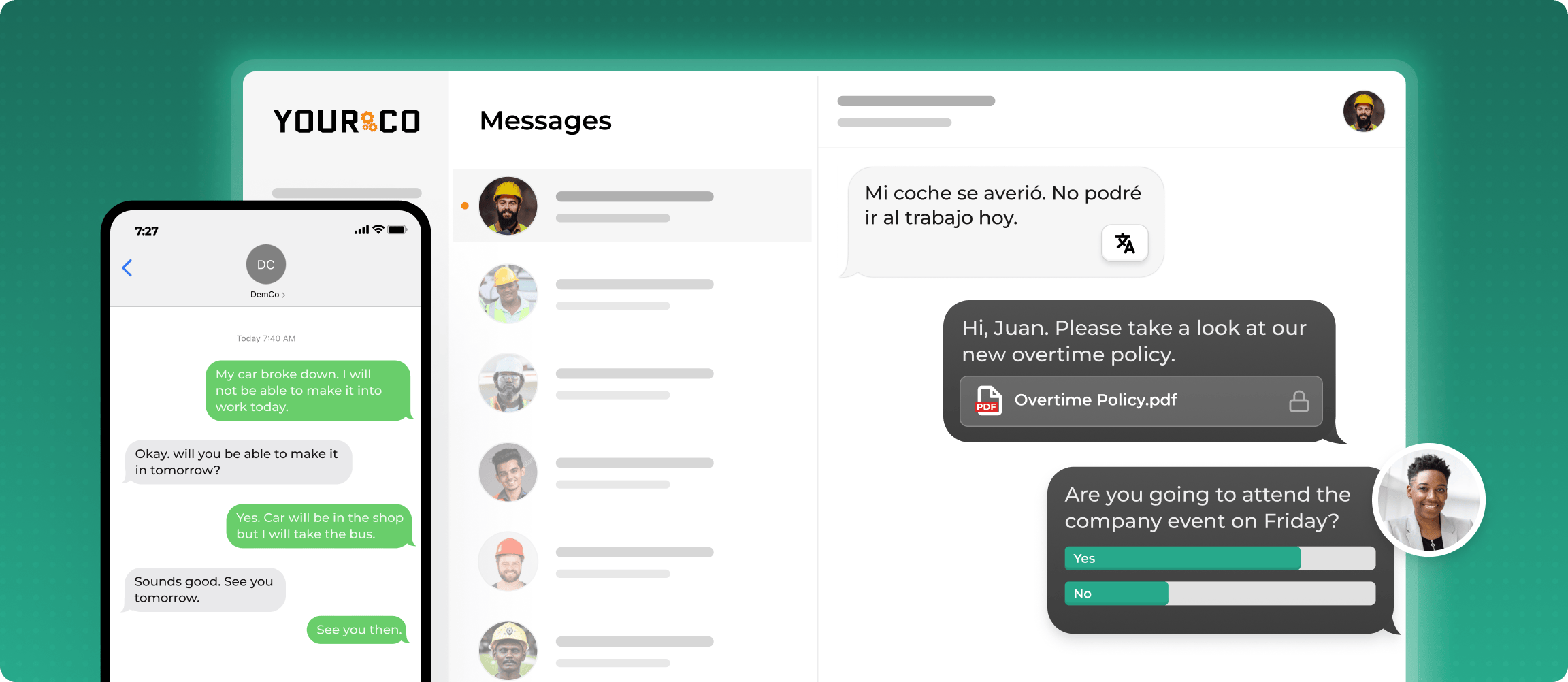
Frontline employees need to show up to get the job done, but life happens. Last-minute call-offs, coverage gaps, and shift changes require fast, reliable communication to resolve. Yourco handles this through a centralized dashboard, where administrators can send individual or mass messages, and employees respond as in a normal text conversation.
Internal Communication Tool Comparison
When choosing the best internal communication system, the right answer depends on what your employees will actually use and what your managers can track. Here's an honest look at how the main options compare.
Internal Communication Tool Differences
SMS Text Messaging
Internal SMS communication is one of the most effective ways to reach frontline employees. Text messages don't require an app, don't depend on Wi-Fi, and achieve approximately 98% open rates within minutes of delivery. Platforms like Yourco assign your business a unique phone number and deliver mass messages as individual conversations, so employees never see each other's contact information and managers never need to manage unwieldy group threads.
Messaging Apps
Apps like Slack, WhatsApp, and Microsoft Teams add group messaging and media features but require account creation and rely on Wi-Fi or data. For frontline workers, these barriers are significant. Many frontline employees lack reliable data plans or smartphones, and app-based platforms exclude them entirely.
Email remains the default for internal communication in many organizations. But for frontline teams, it fails at the most basic level: reach. According to Yourco's frontline communication research, only 43% of frontline employees consistently receive company communications, and just 36% actually read them. An email-first strategy systematically excludes most of your workforce before the message is even written.
How SMS Outperforms Other Internal Communication Channels
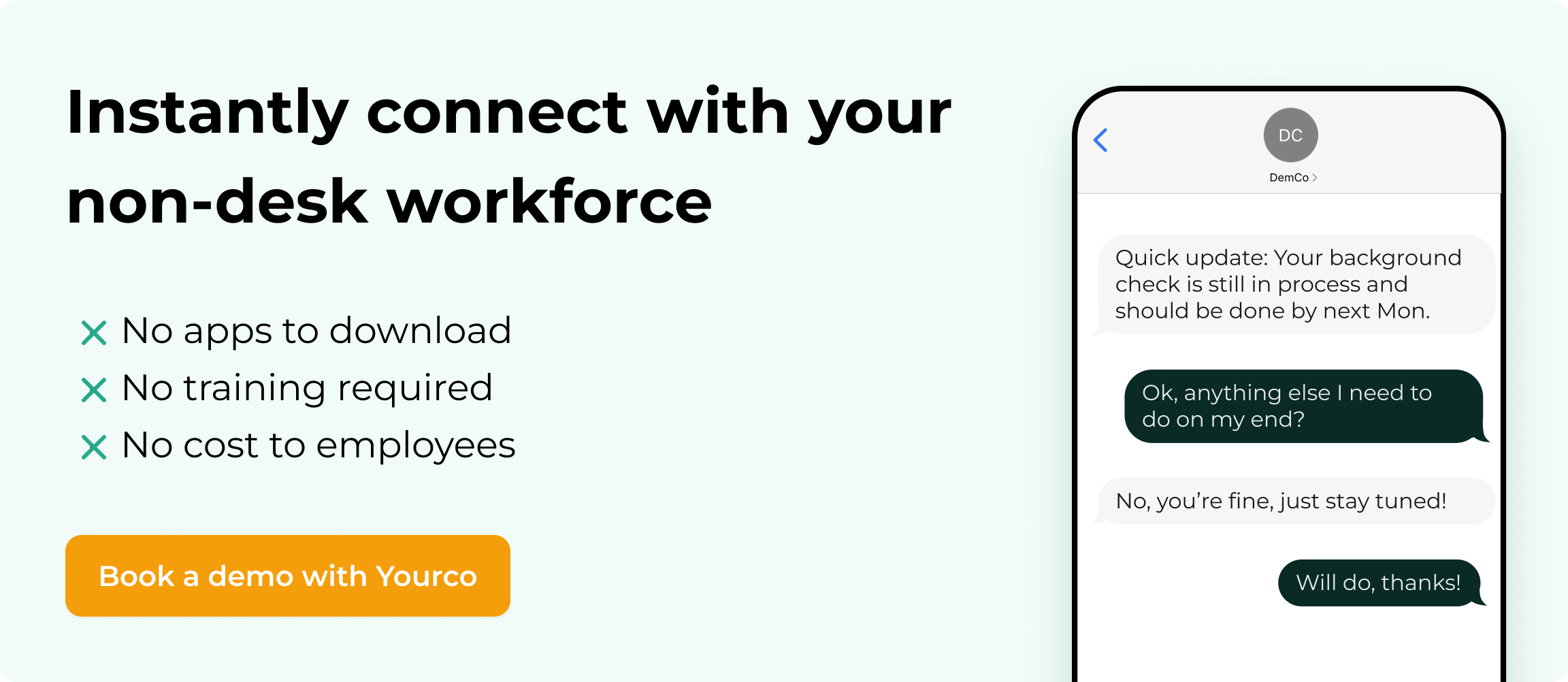
For the roughly 80% of the global workforce that doesn't sit at a desk, SMS is often the only channel that reliably reaches workers regardless of location, shift, or internet access. The speed advantage compounds that accessibility: SMS averages a 90-second response time, compared with 90 minutes for email. In a Yourco-commissioned survey of 150 HR leaders, 91% said SMS increases frontline employee response rates, making it the most effective channel for time-sensitive workforce communication.
Why Personal Phones and Group Chats Fall Short
Most organizations that try to adopt SMS for workforce communication run into the same problems: managers texting from personal phones, unwieldy group threads, and no way to track who responded. Direct texting exposes employee phone numbers, group threads generate noise that workers learn to ignore, and most consumer texting tools can't handle two-way replies at scale. The result is a channel with the right format but no infrastructure to use it reliably.
What a Dedicated Platform Does Differently
A purpose-built SMS platform like Yourco removes those friction points entirely. Employees receive messages as individual, private conversations tied to a business number, not a manager's personal cell. According to Yourco's Closing the Comms Gap study, 92% of HR leaders say improved communication would improve frontline employee engagement, and 88% say better communication tools can reduce employee churn. Automatic contact syncing with your HRIS keeps rosters current without manual upkeep, and all replies are organized in a centralized dashboard with full message history for compliance and follow-up.
Is Texting Effective Communication?
SMS is one of the most effective communication channels for reaching frontline employees. Text messages achieve approximately 98% open rates, with most read within 90 seconds, compared to roughly 20% for email. For workers on factory floors, construction sites, and warehouse operations, texting works because it meets four critical requirements.
Simple. Everyone already knows how to text. There is no training required, no new interface to learn, and no excuses for missing a message.
Accessible. SMS runs on the cellular network, not the internet. Workers at remote job sites, in warehouses with weak Wi-Fi, or in areas with limited data coverage still receive every message. Unlike apps that require downloads and data plans, a text reaches any phone with cell service.
Inclusive. Nearly all American adults own a cell phone, but not all of them have smartphones. SMS reaches every device, including basic flip phones, so no worker is excluded from critical communications because of the phone they carry.
Effective. With platforms like Yourco, two-way messaging lets employees respond, confirm shifts, report absences, and ask questions directly. Every message is logged with delivery tracking, giving HR teams visibility into who received what and when.
Placement: Add this as a new H2 section. The natural position is after the current "Why Internal Messaging Matters for Frontline Teams" section (before or after the comparison section, depending on flow). Since the comment was anchored to P47 ("How SMS Outperforms Other Internal Communication Channels"), placing it just before that section works well.
Key Uses for Internal Text Communication
Knowing SMS works is one thing; knowing how to deploy it across your workforce is another. Here are the most common and highest-impact ways HR and operations teams use internal text communication.
- Company Announcements: SMS has the highest response rates among digital channels, making it the right tool when you need people to actually see the message. Day-to-day uses include benefits enrollment reminders, policy changes, scheduling updates, and company-wide operational notices.
- Employee Alerts: For urgent situations, including safety incidents, weather emergencies, and equipment failures, SMS is the most reliable channel available. Its near-instant delivery and high open rates make it the practical standard for time-critical information reaching workers wherever their shift takes them.
- Text Off Line: A dedicated absence line lets employees report call-offs easily, creating a written record that's more reliable than voicemail and easier for managers to act on.
- Employee Surveys: Employees who feel heard stay longer. Sending survey links via text reaches workers through a channel they already use, and Yourco's frontline communication data shows SMS drives significantly higher completion rates than email-based surveys.
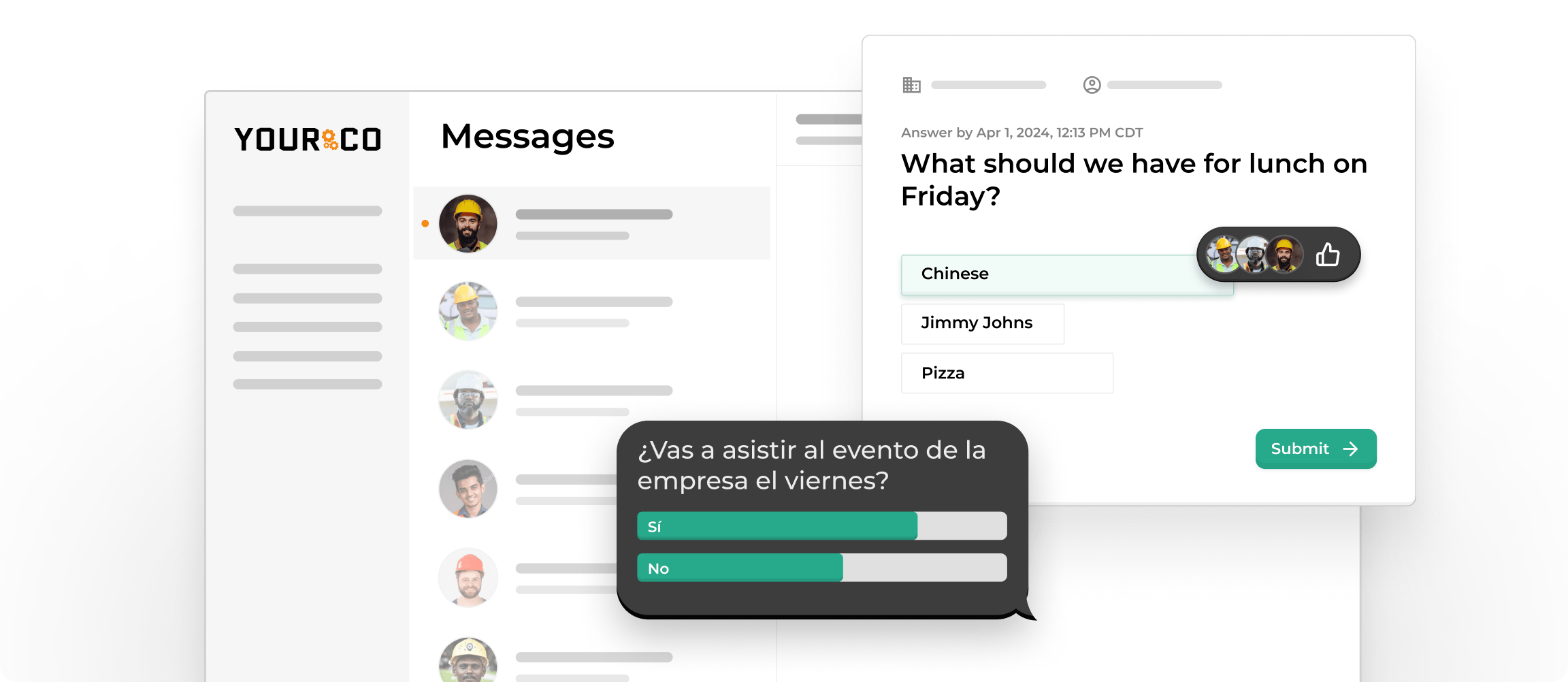
- Onboarding and Referrals: During onboarding, send paperwork deadlines, first-day instructions, and links to training materials via text. New hires get everything before their first shift, without needing app access or a work email. The same channel works for sharing job postings to encourage employee referrals.
To get the most out of each message, keep content focused on a single action, respect work hours, and follow TCPA timing guidelines.
Steps to Send Your First Employee Text With Yourco
Getting started doesn't require a lengthy implementation or IT involvement. Most teams are up and running within a day. Here's how it works:
- Get your number: Yourco assigns your business a unique toll-free number, vetted by major carriers, so messages aren't flagged as spam.
- Import contacts: Upload a spreadsheet or sync directly with your HRIS or payroll system.
- Set permissions: Define which managers can reach which teams.
- Send messages: Individual or mass from the dashboard; each recipient gets a private text, not a group thread.
- Receive replies: All replies appear in a centralized, browser-based dashboard with optional notifications.
Connect Your Frontline Workforce With Yourco
Poor workplace communication costs U.S. businesses more than $2 trillion annually. For the majority of frontline workers in manufacturing, logistics, hospitality, and construction, traditional tools like email and apps fail to reach employees where they are. Yourco bridges that gap with two-way SMS communication that works on any phone, with no downloads, no logins, and no cost to employees.
Here's what you get with Yourco:
- Two-way SMS that works on any phone, including basic models, without an app or internet connection
- AI-powered translation across 135+ languages and dialects, so multilingual teams are never left behind
- 240+ HRIS and payroll integrations to keep employee rosters accurate automatically
- Enterprise Bridge for centralized, one-way corporate announcements to every location simultaneously, while local managers maintain direct two-way conversations with their teams
- Frontline Intelligence to track response rates by location, identify where messages go unanswered, and make proactive decisions before small gaps become bigger problems
"The Yourco texting system has helped the Railroad communicate with a 24/7 workforce. Sharing weather events, safety concerns, and company bulletins have been priceless."
- New Orleans Public Belt Railroad
After 90 days with Yourco, two-way employee engagement increased to 86%.
Try Yourco for free today, or schedule a demo to see the difference a right workplace communication solution can make for your company.
Frequently Asked Questions about Internal Text Communication
What is internal text communication?
Internal text communication is the use of SMS to exchange messages between managers and employees within an organization. Unlike email or apps, SMS works on any phone without an internet connection or app download, making it the most accessible channel for frontline teams.
Can employers legally text employees?
Yes, employers can text employees via a dedicated business platform, provided they follow applicable messaging guidelines and obtain employee consent during onboarding. SMS-based platforms like Yourco integrate consent collection into the setup process, keeping compliance simple.
Why does email fail for frontline workers?
Frontline workers rarely have access to a work computer, and many don't use company email at all. Even when email reaches their phone, low open rates and notification fatigue mean critical messages are easily missed. SMS cuts through by going directly to the channel employees already use every day.
How do you protect employee privacy in text communication?
Platforms like Yourco assign a business a unique phone number and deliver messages as individual conversations. Employees never see coworkers' contact information, and managers never use personal phones. Permission controls also restrict who can send to large groups.
What types of messages work best over SMS?
SMS works well for shift changes, emergency alerts, absence management, survey links, onboarding instructions, company announcements, and employee referrals. The format rewards short, direct, action-oriented messages, with one clear point per text and a specific call to action.
How do you measure internal communication metrics and KPIs?
Track delivery rates, read rates, response times, and survey completion rates as your baseline metrics. Compare these across locations, shifts, and departments to identify where communication gaps exist. Platforms like Yourco provide dashboards that automatically surface these metrics, and Frontline Intelligence analyzes patterns over time to flag disengagement trends before they affect retention or safety.