
Managing employee bonuses across a distributed, frontline workforce presents challenges that go well beyond setting a payout amount. From designing the right incentive structure to ensuring every worker actually understands the program, the complexity multiplies when employees operate across multiple sites without consistent access to email or a company intranet. When communication falls short, even generous bonus programs fail to motivate because workers never learn about them or understand how they qualify. This article offers practical guidance to help HR teams maintain transparency, reward contributions effectively, and drive measurable results in frontline environments.
TL;DR
- Bonus prevalence is lower than most HR teams expect, making a well-designed program a genuine differentiator for frontline talent retention.
- The four most effective bonus structures for frontline teams are performance-based, attendance-and-safety, team-based, and spot recognition.
- FLSA compliance for nondiscretionary bonuses requires careful overtime calculations; consult qualified counsel for hourly-worker programs.
- Reaching non-desk workers requires SMS, not email. Text messages achieve a 98% read rate, compared with roughly 20% for email.
- Most bonus programs fall apart due to communication. Yourco sends updates straight to employees' phones via SMS; no downloads, no email, no barriers.
What Is Employee Bonus Management
Employee bonus management is the systematic approach organizations use to design, implement, and administer incentive programs that reward employees for their contributions and performance.
The landscape is more competitive than many HR teams realize. According to the Bureau of Labor Statistics, only 12% of private industry workers received end-of-year bonuses in 2024, and just 7% received holiday bonuses. With access this limited, a well-designed, clearly communicated program is a genuine differentiator in attracting and retaining frontline talent.
Challenges in Employee Bonus Management
The evolution of work arrangements has introduced new complexities, particularly for frontline workers and hourly teams:
Types of Employee Bonus Structures
Managing employee bonus structures effectively starts with choosing the right type for your workforce. The four options below have proven most effective across manufacturing, construction, logistics, and similar frontline industries.
Use Performance-Based Bonuses
Performance-based bonuses tie rewards directly to individual achievements, such as production quotas, quality metrics, first-pass yield rates, or project profitability. These are a standard part of total compensation strategy in manufacturing, construction, and logistics, where output is measurable, and the link between effort and reward can be made concrete. Keep metrics SMART: Specific, Measurable, Achievable, Relevant, Time-bound, and supplement output numbers with qualitative factors to avoid fueling internal competition.
Offer Attendance and Safety Bonuses
Attendance and safety bonuses work well in industries where consistent staffing and safe operations directly affect profitability. Recognizing accident-free periods or maintained attendance thresholds creates near-term, tangible motivation for hourly teams. Design these carefully; programs that inadvertently penalize legitimate absences or pressure underreporting of safety incidents can do more harm than good.
Introduce Team-Based Incentives
Team-based bonuses reward collective achievement and are particularly valuable in shift-based environments where individuals depend on one another. Research from Boston Consulting Group found that enjoying work reduces frontline worker attrition by 62%. Team bonuses build the shared wins and sense of belonging that drive that outcome. To prevent high performers from feeling their contributions are diluted, build individual recognition alongside team payouts.
Provide Spot Recognition Awards
Spot recognition awards deliver immediate recognition for exceptional effort outside of regular review cycles. For hourly workers, the motivational connection between behavior and reward weakens significantly when recognition is delayed until year-end, but shortening that gap reinforces the behaviors you want to see. Establish clear criteria and equip managers with consistent guidelines to keep awards equitable across locations.
Creating an Effective Bonus Program

A well-designed program requires clear objectives, a sustainable budget, and a communication plan that reaches every employee before payout day.
Set Clear Objectives and Metrics
Vague or shifting criteria are among the most common reasons bonus programs fail to motivate. Employees disengage when they cannot connect their daily effort to expected outcomes.
- Identify specific KPIs that reflect individual, team, or company performance
- Engage employees in goal-setting to build buy-in
- Limit criteria to no more than three to five measurable metrics per role
- Document success criteria so employees know exactly what earning a bonus looks like
WorldatWork's 2025 Incentive Pay Practices research found that changing performance measures is the most common short-term incentive adjustment, with 67% of organizations making it in the most recent year. Start with metrics you can sustain.
Establish Budget and Payout Structure
A 2024 Gartner survey found that 58% of companies expected to match prior-year bonus levels, while only 11% planned to increase short-term incentive budgets. Because employees tend to view a lower bonus as a wage reduction, setting realistic targets early helps preserve the program's motivational value over time.
- Design a tiered payout structure that rewards different levels of achievement
- Choose payout frequency (monthly, quarterly, or annual) based on your workforce's reward cycle
- Express bonuses as a percentage of base wages or a fixed dollar amount, so employees know their earning potential
Develop Communication Plans
Transparent communication is the difference between a bonus program that motivates and one that confuses. Most communication professionals recommend a minimum of three touchpoints:
- Announcement: introduce the program, eligibility, and timeline
- Criteria walkthrough: explain exactly how bonuses are calculated
- Progress reminder: a check-in before the payout period closes
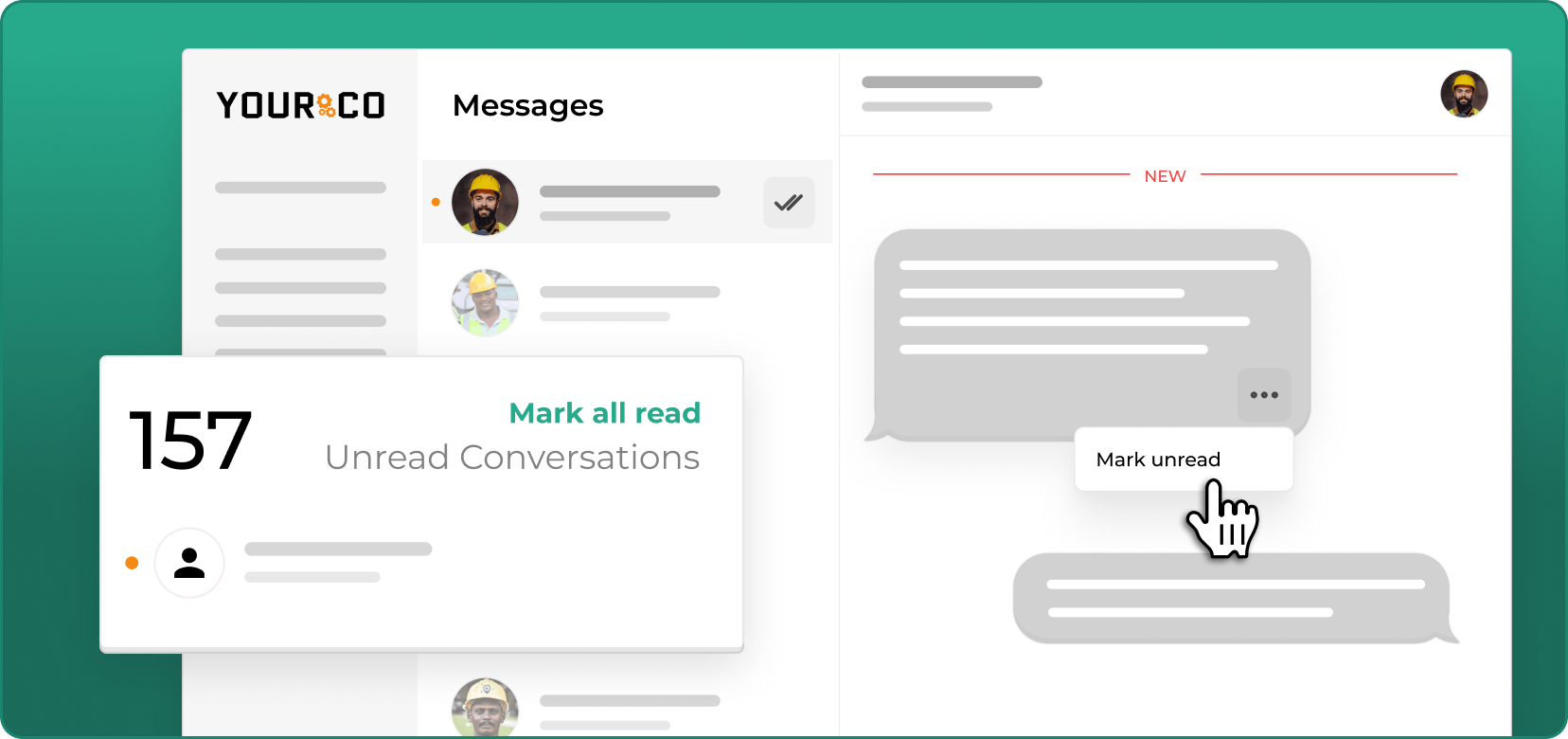
For frontline workers, this cadence is not optional. Studies show that more than 80% of frontline employees report not receiving enough direct communication from their employers. Email does not close that gap. SMS does, with a 98% read rate versus email's 20%.
Compliance Considerations: FLSA and Overtime Calculations
One of the most commonly overlooked challenges in managing employee bonuses for hourly workers involves the Fair Labor Standards Act. While we are not legal professionals, we recommend consulting qualified employment counsel. HR teams should understand the general framework.
The key distinction is between discretionary and nondiscretionary bonuses:
This matters most in construction, manufacturing, and warehousing, where performance-based bonuses are most common and overtime hours are most frequent. Audit your bonus types before implementation, consult employment counsel when designing production or attendance bonuses for non-exempt hourly employees, and use payroll systems that automatically recalculate regular rates.
This information is for general awareness only. For specific compliance guidance, consult qualified legal professionals.
Technology and Tools for Bonus Management
Modern bonus management requires tools that can track performance, automate calculations, and communicate results to every employee, regardless of whether they sit at a desk.
Implement Performance Tracking Systems
Without objective data, managers default to subjective judgment, introducing bias and eroding trust. Performance tracking platforms allow organizations to:
- Set and monitor measurable goals aligned to bonus criteria
- Collect real-time performance data across distributed teams
- Generate consistent reports that reduce manager subjectivity
- Integrate with labor management or production tracking systems so data flows automatically
Use Communication Platforms Built for Frontline Teams
For organizations with non-desk workers, the right communication platform is as important as the bonus structure itself. Email and collaboration apps like Slack or Teams require logins, downloads, and reliable internet access; barriers most frontline workers encounter daily.
SMS workforce platforms like Yourco sidestep all of that, reaching any mobile phone with a 98% read rate and no downloads required. This means HR teams can send automated bonus progress updates, notify employees in their preferred language, and log all communications for compliance purposes, all through a channel workers already use.
Automate Payout Solutions
Automation reduces administrative overhead and errors. Look for platforms that offer:
- Automated bonus calculations based on predefined criteria
- Integration with existing payroll systems
- Automatic regular rate recalculation for hourly employees
- Reporting and analytics to track payout versus performance ratios
Best Practices for Bonus Program Implementation
Even a well-designed bonus program will underperform if it isn't managed consistently on the ground. Keep these three priorities in focus:
- Train managers fairly. Manager behavior determines whether employees perceive bonuses as fair. A common incentive compensation pitfall is spreading bonus pools evenly rather than recognizing differentiated performance. Ensure managers can apply metrics objectively, explain calculations clearly, and understand FLSA overtime requirements for nondiscretionary bonuses.
- Audit eligibility. WorldatWork research found that only 49% of hourly workers at publicly traded companies are eligible for annual incentive plans, compared to nearly all executives. Examine whether your criteria inadvertently exclude frontline contributors, and apply evaluation standards consistently across all locations.
- Close the feedback loop. Anonymous surveys, manager check-ins, and SMS-based pulse surveys all work well for frontline teams. When something changes in response to feedback, communicate it; transparency about program evolution builds the trust that keeps participation high.
Measuring and Optimizing Bonus Program Success
Knowing whether your bonus program is working requires more than checking whether payouts went out on time. Track the right indicators, integrate communication data, and build in a regular review cycle so the program improves with every iteration.
Track Key Performance Indicators
Beyond the numbers, integrate SMS communication data with performance analytics to catch comprehension gaps early. Low response rates to bonus updates or poor enrollment completion often signal confusion before it shows up in turnover. When reviewing the program, watch for criteria employees find unclear, metrics that shift mid-cycle without notice, and payout pools spread too thin to be meaningful. Use feedback and performance data to make adjustments, and always communicate changes before they take effect.
Reach Every Worker on Bonus Day and Beyond
Bonus programs are only as effective as their communication. If frontline employees receive a payout without understanding how it was calculated, or miss an enrollment deadline because the notice sat in an unread inbox, the motivational value evaporates.
Yourco is an SMS-first workforce communication platform built specifically for frontline employees in manufacturing, construction, logistics, and hospitality. HR teams can reach every worker directly on any phone, with no downloads, no email, and no barriers. Yourco helps you communicate bonus programs at every stage:
- Send bonus enrollment reminders, progress updates, and payout notifications directly to employees' phones
- Translate every message automatically into 135+ languages and dialects, so multilingual teams understand program details
- Integrate with 240+ HRIS and payroll systems so program data flows without manual re-entry
- Enable two-way messaging so employees can ask questions about eligibility, timelines, or payout calculations
- Segment messages by location, shift, or department to target the right teams with the right bonus criteria
- Broadcast company-wide bonus announcements from corporate leadership to every location through Enterprise Bridge, while local managers maintain direct two-way conversations with their teams
Frontline Intelligence helps HR teams measure the impact of bonus programs by tracking communication engagement across locations. See which sites have the highest bonus enrollment rates, identify where payout notifications go unread, and monitor how engagement patterns shift after bonus announcements.
After 90 days of using Yourco, two-way employee engagement increased to 86%.
"We have tried 3 text communication tools, and this is the best experience we've had by far. A consistent line of communication to our employees is one of the most important things when it comes to our employee communication strategy, and Yourco is the most reliable system around."
- Terri Kasper, HR Manager, Calumet Carton Company
Try Yourco for free today, or schedule a demo to see the difference a right workplace communication solution can make for your company.
Frequently Asked Questions About Managing Employee Bonuses
What bonus structures work best for hourly and frontline workers?
Performance, attendance, safety, and team-based bonuses all work well when employees understand how they are earned. Monthly or quarterly payouts outperform annual bonuses because they keep the connection between effort and reward tight.
How do you communicate bonus programs to non-desk employees?
SMS is the most reliable channel. Effective communication includes an initial program announcement, a walkthrough of the criteria, and progress reminders leading up to the payout date. Yourco supports multilingual delivery and automated scheduling to reduce manual effort for HR teams.
What is the difference between a discretionary and a nondiscretionary bonus?
A discretionary bonus is one that the employer controls entirely, with no prior promise or established pattern. A nondiscretionary bonus is tied to predetermined criteria such as production targets or attendance thresholds. The distinction matters for overtime compliance under the Fair Labor Standards Act for non-exempt hourly employees. Consult qualified employment counsel for guidance specific to your situation.
How can HR teams measure whether a bonus program is working?
Track retention rates, engagement survey scores, productivity metrics, and program participation rates. For non-desk teams, SMS response rates to bonus-related updates can also surface comprehension gaps before they become retention problems.
How often should the bonus criteria be reviewed?
At a minimum, review criteria annually and after any significant change in business conditions or workforce composition. Build a formal review cycle into the program from the start so adjustments feel planned rather than reactive.
What are typical bonus programs in construction?
The most common types are safety bonuses for incident-free periods, attendance bonuses for consistent schedules, project completion bonuses for on-time delivery, and retention bonuses during peak season. Monthly or quarterly payouts work best since construction workers frequently cycle between employers. SMS-based platforms like Yourco help HR teams communicate bonus criteria, track progress, and send payout notifications directly to crews on any phone.