


Warehousing and storage have consistently recorded an injury rate around 4.8 per 100 full-time workers in BLS data, more than double the private industry average in comparable years. Formal incident logs often miss near-misses, the ergonomic strain that builds over weeks, and hazards workers notice before they become recordable incidents.
Warehouse team intelligence combines frontline reporting, artificial intelligence (AI) video analytics, and centralized dashboards to surface those hidden risks earlier. The sections below cover the data streams, reporting practices, and rollout steps for building that visibility.
TL;DR
- Warehouse team intelligence combines frontline observations, AI video analytics, and centralized data to expose risks that traditional audits miss
- Near-misses, ergonomic strain, and forklift-pedestrian conflicts are the most common hidden hazards in warehouses
- Worker reporting fails when friction, language barriers, or fear of retaliation block participation
- AI-based monitoring catches recurring patterns weeks before they appear in incident logs
- Proactive safety programs deliver positive ROI for many employers, according to OSHA
- SMS-based platforms like Yourco give every frontline worker a zero-friction channel to report hazards in any language
Define Warehouse Team Intelligence as a Safety Framework
A Department of Labor (DOL) audit found meaningful noncompliance with required Occupational Safety and Health Administration (OSHA) injury and illness reporting between 2016 and 2020, with underreporting notably higher in warehousing than in most other industries. A 2024 study by safety researchers confirms that many workplace incidents still go unreported. 93% of HR leaders believe that clear communication on safety reduces workplace incidents, according to a Yourco-commissioned survey of 150 HR leaders, and warehouse team intelligence systems put that conviction into practice.
Warehouse team intelligence is the practice of combining what frontline workers see, what sensors and cameras detect, and what data analysis reveals into a single, continuous view of safety risk.
Most safety programs rely on periodic audits, paper checklists, and post-incident investigations. These approaches capture what already happened. Warehouse team intelligence captures what may be developing by connecting three layers of information:
- Frontline observations: Workers texting in hazard reports, flagging near-misses, and identifying unsafe conditions during every shift
- AI and sensor data: Video analytics detecting forklift-pedestrian proximity violations, personal protective equipment (PPE) non-compliance, and ergonomic risk patterns in real time
- Integrated analysis: Centralized dashboards that aggregate all safety data, map trends by zone and shift, and surface root causes before they produce injuries
When these three layers feed into the same system, patterns that no single source would reveal become visible.
Capture What Workers Already Know Through Frontline Observations
Frontline workers already know where the dangers are. OSHA guidance states that workers are often best positioned to identify safety and health concerns, emerging workplace hazards, unsafe conditions, near-misses, and actual incidents.
The problem is structural, not motivational. Companies with no response to near-miss reports had 1.75 times higher odds of subsequent accidents. Workers stop reporting when they believe nothing will change. Many workers who experience workplace pain never report it, according to a 2025 National Safety Council (NSC) survey.
Three specific barriers suppress frontline reporting in warehouses:
- Friction: Paper forms, app logins, and computer-only reporting systems create steps that workers skip during high-volume shifts
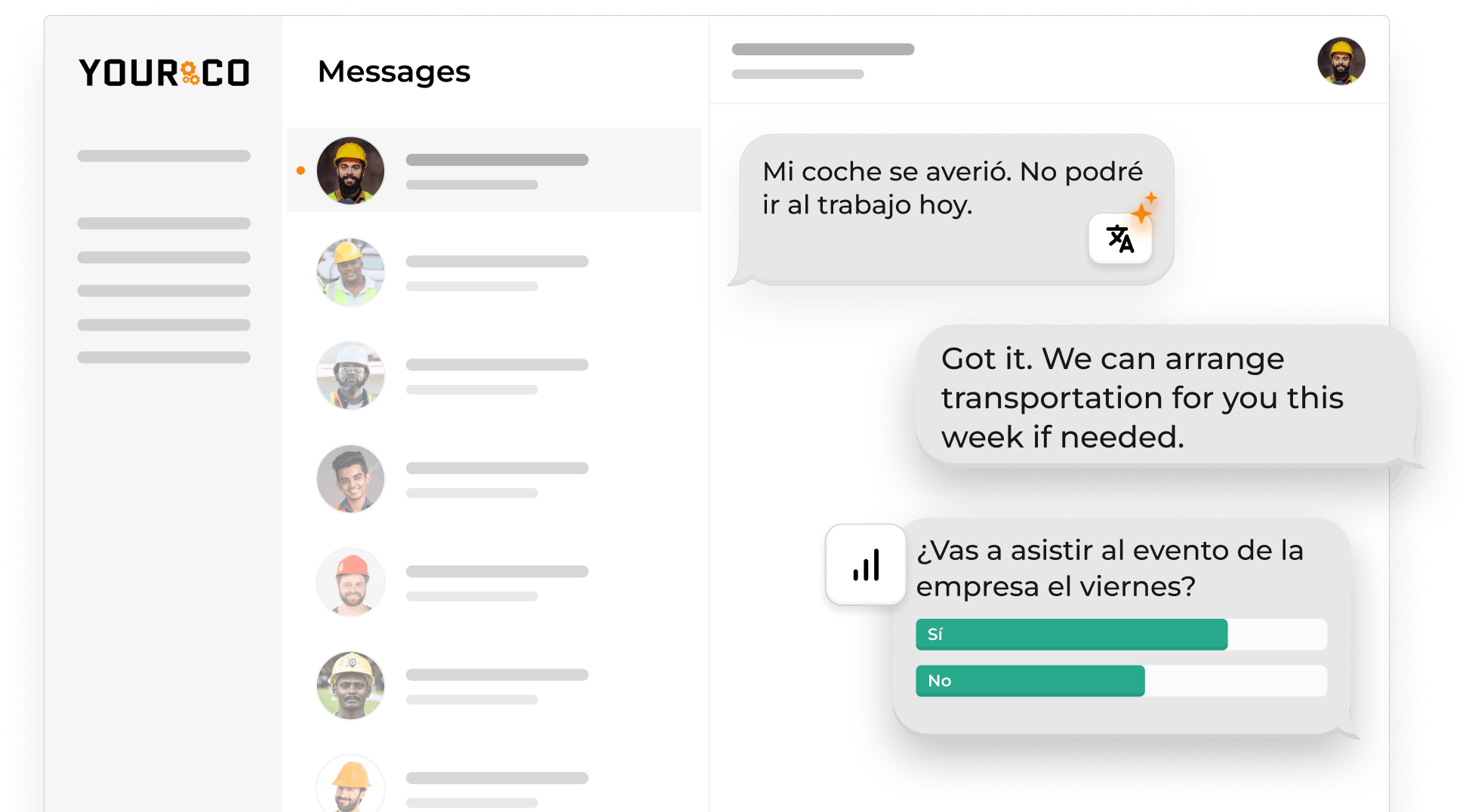
- Language: Many employers provide training in a worker language, but reporting systems rarely offer the same accommodation
- Fear: Without anonymous reporting options and visible follow-through, workers associate reporting with blame rather than improvement
64% of HR leaders say it is much harder to reach non-desk employees than desk-based employees, according to the same Yourco-commissioned survey, and that reach problem directly limits how much frontline observation flows into safety dashboards.
Building a functional observation program starts with removing these barriers. Establish anonymous reporting channels. Respond to every report promptly and visibly. Share outcomes quickly so workers see how their reports lead to action. SMS-based tools with multilingual support can reduce friction for non-English-speaking workers who would otherwise stay silent.
This information is for general awareness only. For specific compliance guidance, consult with qualified legal professionals.
Detect Invisible Hazards With AI and Video Analytics
Some hazards recur dozens of times before a single incident is reported. AI-powered video analytics continuously catch those patterns.
Forklift-pedestrian conflicts are one of the most frequently documented hidden risks in warehousing. Pedestrian-struck incidents are a leading category of forklift fatalities, and attention lapses are a meaningful contributor to forklift injury events. Computer vision systems simultaneously identify forklifts and pedestrians, calculate proximity and trajectories, and trigger alerts when dangerous interactions occur. Vertical Cold Storage deployed such a system and reported substantial reductions in near-misses and recordable injuries, according to vendor case data.
PPE non-compliance follows a similar pattern. In one reported deployment, NSG Group cut safety vest violations by 62% within 30 days of activating AI-powered monitoring, according to vendor case data.
Ergonomic risk is harder to spot with the human eye. Vision-based systems use markerless motion capture to estimate worker postures and map them to established ergonomic risk indices, surfacing recurring bending or lifting patterns that would otherwise go unmeasured.
The table below shows how a team-intelligence approach differs from traditional safety practices in operational terms.
Turn Fragmented Safety Data Into Actionable Insights
Most warehouse operations store safety data in disconnected systems. Incident logs sit in one application. Inspection results live in another. Video footage stays in a third. Large operations increasingly consolidate these into single environment, health, and safety (EHS) platforms.
Centralized safety dashboards pull video analytics, sensor readings, worker reports, and historical incident data into a single view, delivering two capabilities that fragmented systems cannot:
- Root-cause analysis by zone and shift: All data in one platform might reveal that most forklift-pedestrian conflicts cluster at the same cross-aisle during shift changes, or that ergonomic complaints concentrate in a specific picking zone overnight
- Leading indicator tracking: Near-miss report rates, hazard observation frequency, and corrective action closure rates are all leading indicators that support earlier intervention. Integrated platforms calculate them continuously and automatically.
George's Inc. reported a 54% reduction in its Days Away, Restricted, or Transferred (DART) rate after implementing a centralized EHS platform, according to vendor case data. Organizations using integrated EHS technology also reported meaningful reductions in time spent on compliance and safety management tasks.
Design Workflows That Make Safe Behavior the Default
In high-turnover warehouse environments, safety cannot depend on individual memory. Workers cycle through before safety habits form, and injury rates at Amazon warehouses rose 59% during peak periods like Prime Day and Cyber Monday in 2023, according to industry analysis.
A 2024 Safety Science study tested nudge interventions in industrial and warehouse settings and found two effective mechanisms: handprint stickers on handrails that served as action cues, and a gas danger reminder on work jackets that increased compliance with a required safety action.
Five workflow design principles reduce dependence on individual decision-making:
- Issue PPE at shift check-in as a routine entry step, not from a centralized storage room workers visit separately
- Position visual safety reminders at the point of need, near entryways and workstations rather than in break rooms
- Embed safety checkpoints into standard operating procedures as integrated elements, not appended steps
- Route inventory to ergonomically favorable storage locations through pick-planning software, as Amazon's SI-GZ program demonstrated
- Separate pedestrian and forklift traffic through engineered physical flow rather than relying on operator awareness
Many employers also run site-specific training for experienced workers, refresh safety reviews, train temporary workers, and adjust workflows before volume increases arrive.
Build a Warehouse Safety Improvement Plan
The checklist below sequences the transition from reactive incident response to proactive warehouse team intelligence.
- Week 1 to 2: Establish the reporting foundation. Set up an anonymous, zero-friction hazard reporting channel on any mobile phone. Define what qualifies as a near-miss in clear, specific terms. Communicate that reports lead to action, not discipline.
- Week 3 to 4: Audit the data landscape. Identify every system where safety data currently lives, which systems can feed a centralized dashboard and which require middleware or manual bridging.
- Month 2: Deploy targeted AI monitoring. Start with the highest-risk interaction: forklift-pedestrian zones, dock areas, or high-volume picking aisles. Establish baseline near-miss frequency before interventions.
- Month 3: Connect data streams. Integrate worker reports, video analytics, and sensor data into a single dashboard. Begin tracking leading indicators by shift and zone.
- Ongoing: Close the feedback loop. Share safety trend data with frontline teams weekly. Report back on actions taken from worker observations quickly and consistently.
Strengthen Warehouse Safety Communication With Yourco
Warehouse team intelligence depends on every worker having a reliable, immediate way to report what they see. Yourco gives operations and safety leaders a direct line of communication to every frontline worker, on every shift, at every location.
Core communication capabilities:
- SMS that works on any phone, including basic flip phones, with no app download, no Wi-Fi, and no cost to employees
- Two-way messaging so workers report hazards and receive safety updates in real time, with delivery confirmation on every send
- AI-powered translation across 135+ languages and dialects, so multilingual teams send and receive safety information in their preferred language
Yourco integrates with 240+ HRIS and payroll systems, syncing new hires, role changes, and terminations automatically so communication lists stay current during high-turnover periods.
Enterprise Bridge enables corporate leadership to send centralized, one-way safety updates across all locations, while local managers maintain direct communication with their teams.
Frontline Intelligence provides safety and operations teams with centralized visibility into hazard-reporting patterns, worker sentiment, and communication engagement across all locations. It spots risk patterns before incidents occur, identifies which facilities report the most near-misses, and monitors the speed of acknowledgment for safety alerts, so leadership can act on site-level trends from a single dashboard.
"Yourco has been huge for us, especially during the weather crisis. We were able to keep our employees safe and make sure everyone was notified of updates in a timely manner."
— Scott Pfantz, Operations Manager, Nufarm - Alsip
After 90 days on Yourco, companies see two-way employee engagement reach 86%.
Try Yourco for free today, or schedule a demo to see the difference the right workplace communication solution can make for your company.
Frequently Asked Questions About Warehouse Team Intelligence
What is warehouse team intelligence?
Warehouse team intelligence is a safety framework that combines frontline worker observations, AI video or sensor analytics, and centralized dashboards to identify hazards earlier. It helps operations teams shift from reacting to incidents after the fact to spotting patterns and weak signals before they lead to injuries.
Why do warehouse workers underreport near-misses?
Warehouse workers underreport near-misses when reporting feels slow, complicated, or risky. Friction, language barriers, and fear of blame all suppress participation, especially during busy shifts. SMS-based platforms like Yourco reduce that friction by making reporting fast and familiar on any phone.
How does AI video analytics improve warehouse safety?
AI video analytics improves warehouse safety by monitoring recurring risk patterns that supervisors may not catch at the moment. It can surface forklift-pedestrian conflicts, PPE gaps, and unsafe lifting behavior across shifts, giving safety teams faster visibility into where intervention is needed.
What are the most common hidden safety risks in warehouses?
The most common hidden safety risks in warehouses include forklift-pedestrian conflicts, cumulative ergonomic strain, rack damage from unreported impacts, and PPE non-compliance during less supervised periods. These problems often show up as repeated near-misses or informal workarounds before they appear in an incident log.
How much do warehouse injuries cost per incident?
Warehouse injuries cost more than the immediate medical expense because they also disrupt labor, productivity, and investigations. The full impact usually includes replacement coverage, administrative time, and operational delays. Many safety leaders focus on earlier hazard detection rather than waiting for recordable injuries to drive action.


