


Frontline worker benefits have become a critical business priority as organizations face unprecedented retention challenges and rising employee expectations. More than three-quarters of frontline workers now report experiencing burnout, while 56% live paycheck to paycheck despite their essential contributions. Companies serious about retention recognize that generic benefits approaches no longer work. This guide provides practical, research-backed approaches to upgrading frontline worker benefits through tailored compensation, scheduling flexibility, career development, and communication strategies that actually reach non-desk workers.
TL;DR:
- Frontline workers make up roughly 70% of the U.S. workforce, yet traditional benefits packages often fail to address their unique needs around scheduling, financial wellness, and career growth.
- Scheduling flexibility ranks as the second most important retention factor after pay, with organizations offering flexible scheduling seeing 25-40% reductions in voluntary turnover.
- Financial wellness programs, including earned wage access, emergency savings, and financial education, help address the reality that 56% of frontline workers live paycheck to paycheck.
- Traditional communication channels like email and intranet don't reach non-desk employees. SMS-based tools such as Yourco ensure benefits information reaches every worker on any mobile device, with automatic translation for multilingual teams.
- Personalizing benefits by role, demographics, and life stage increases utilization and shows workers the full value of their total compensation.
Understand the Importance of Frontline Workers in 2026
Frontline workers represent approximately 70% of the United States workforce and nearly 80% of the global workforce, according to recent research. These essential employees perform their jobs in person across hospitality, healthcare, retail, manufacturing, logistics, construction, and numerous other sectors. Despite their numerical presence and economic importance, frontline workers have historically received less investment in benefits strategy compared to office-based employees, a disconnect that increasingly threatens organizational stability.
The diversity among frontline workers highlights the need for more equitable support systems. Frontline workers are disproportionately women, people of color, and individuals over 50, often facing lower wages and limited access to comprehensive benefits. This demographic reality means that improving frontline worker benefits directly addresses workplace equity and creates more inclusive organizations that serve diverse employee populations effectively.
As manufacturing reshoring initiatives expand and demographic challenges such as shrinking birth rates and declining workforce participation intensify, organizations face a critical juncture in attracting and retaining frontline talent. High-turnover industries such as hospitality (75-80% annual turnover), retail (up to 60%), and logistics underscore the urgent need for comprehensive support systems.
Recognize the Challenges Frontline Workers Face Today
Frontline workers experience a crisis-level combination of burnout, financial stress, and limited advancement opportunities. Specifically, 76% of frontline employees report experiencing burnout, according to a comprehensive 2026 survey. This burnout encompasses anxiety, feelings of isolation, and difficulty maintaining healthy lifestyles, given current work schedules.
Financial stress compounds the problem. Research shows 56% of frontline employees live paycheck to paycheck, a slight improvement from 64% in 2024, yet still indicating that most frontline workers lack an adequate financial cushion. This widespread financial instability correlates strongly with reduced productivity, increased absenteeism, and higher turnover intentions. When workers mortgage their future financial security to address immediate needs, they remain trapped in cycles that prevent long-term career advancement.
Schedule inflexibility makes things worse. After wages, scheduling flexibility emerges as the single most important retention factor. Half of frontline workers said making last-minute shift changes is challenging, and 57% report being unable to take enough time off. In hospitality, 58% said their schedules made it impossible to maintain a healthy lifestyle.
Career advancement limitations lead to long-term dissatisfaction: 28% report insufficient opportunities to move up, while 20% lack opportunities to learn new skills. Organizations that fail to address these interconnected challenges will continue experiencing costly turnover that threatens operational stability.
Design Benefits Strategies That Address Frontline Priorities

According to global research on frontline priorities, flexibility, financial wellness, and work-life balance represent the most pressing issues for frontline workers entering 2026. Among manufacturers specifically, compensation remains the most valued factor, followed closely by benefits and work-life balance. Strategies for engaging non-desk employees prove vital in delivering these enhanced benefits effectively.
Prioritize scheduling flexibility as a core benefit
Flexible scheduling consistently ranks among the strongest levers for reducing voluntary turnover among frontline teams. Implement self-scheduling capabilities that let workers choose shifts that match their availability, establish peer-to-peer shift-swapping mechanisms for schedule adjustments, and consider compressed workweeks when operationally feasible. The key is providing genuine worker agency over scheduling rather than simply offering variable schedules that workers cannot influence or predict.
Address financial wellness beyond base compensation
Wages matter, but they're only part of the picture. Implement earned wage access so employees can receive pay when they need it rather than relying on payday loans for unexpected expenses. Establish emergency savings programs that help workers build a financial cushion, provide financial education workshops covering practical budgeting and debt management, and consider student loan repayment assistance for younger workers entering the workforce with educational debt.
Build clear career development pathways
Frontline workers who can see a path forward are far more likely to stay. Create transparent career ladders that show exactly how workers advance from entry-level positions to higher roles, establish skills-based development programs that identify the specific competencies required for advancement, and provide paid training during work hours rather than expecting workers to develop on their own time. Emerging HR research and vendor case studies indicate that organizations shifting from classroom-heavy training to skills-based development approaches often see faster time-to-competency and stronger employee satisfaction.
Expand healthcare and mental health support
With healthcare costs climbing year over year, comprehensive health benefits are becoming both more valuable and more expensive for employers to provide. Focus on affordable health insurance that covers frontline workers' occupational needs, mental health benefits designed for shift workers who struggle to access traditional counseling during business hours, and telehealth options that don't require time off for routine appointments. Mobile-first mental health platforms that don't require corporate email access are particularly valuable for reaching workers where they are.
Personalize benefits for diverse workforce needs
Younger workers may prioritize student loan assistance and career development, while workers with families may value childcare support and flexible scheduling more. Implement a modular benefits design that allows employees to build their own benefit bundles from available options, use data to understand which benefits different segments value most, and communicate options in multiple languages to serve multilingual workforces. Organizations that tailor benefits across flexibility, financial wellness, career development, healthcare, and personalization position themselves to compete effectively for talent in tight labor markets.
Implement Communication Channels That Reach Every Worker
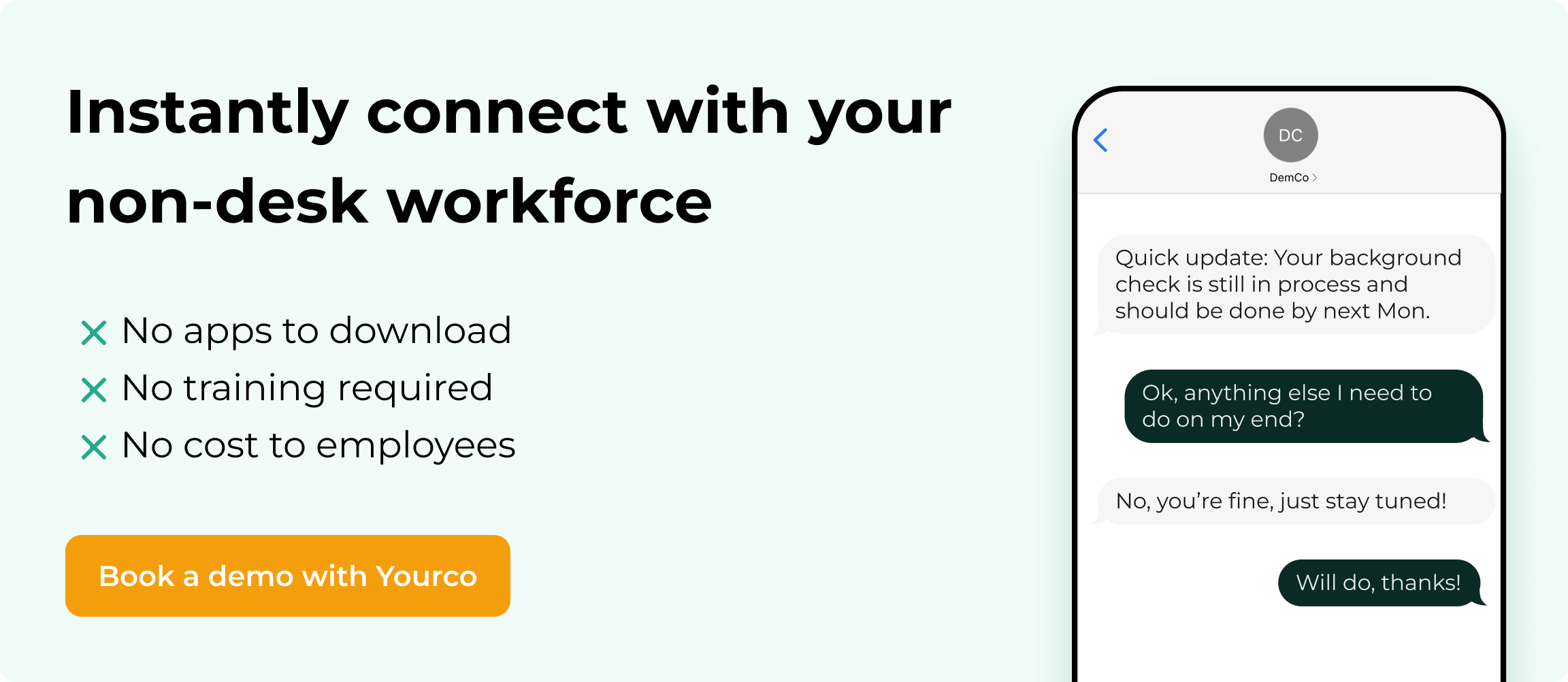
Traditional communication methods like email and intranet portals don't reach non-desk employees who lack regular computer access during shifts. Approximately 62% of deskless workers have limited computer access, creating gaps that prevent them from using benefits even when employers invest substantially. The right mix of communication strategies and effective benefits communication ensures all employees stay informed regardless of work location or schedule.
Use SMS-based communication as your foundation
An employee texting platform proves essential since frontline workers carry phones yet may lack internet access or a company email. Text messages achieve 98% read rates compared to 20% for emails, with average response times of 90 seconds, making SMS ideal for time-sensitive benefits information like open enrollment deadlines, new benefit announcements, or urgent policy changes. Leveraging the advantages of text communication helps overcome the communication challenges that affect most deskless workers, enabling them to be reachedacross all shifts and locations.
Layer multiple channels for complex benefits information
Complex decisions, such as healthcare plan selection, require additional channels. Incorporate digital signage in break rooms, schedule small-group sessions with benefits specialists, and create printed materials workers can reference at home. This multi-channel approach helps engage non-desk workers regardless of schedule, communication style, or access to technology.
Personalize communication based on workforce segments
Deliver targeted benefits information based on roles, locations, demographics, and enrollment status. New hires need different information than long-tenured employees, workers approaching retirement need different guidance than those starting careers, and employees in different locations may have access to different benefit options.
Track which communication strategies drive actual benefit utilization and adjust your approach based on results. Regular measurement of engagement metrics, including message open rates, enrollment completion rates, and benefits utilization statistics, helps refine your approach over time.
Provide multilingual communication for diverse workforces
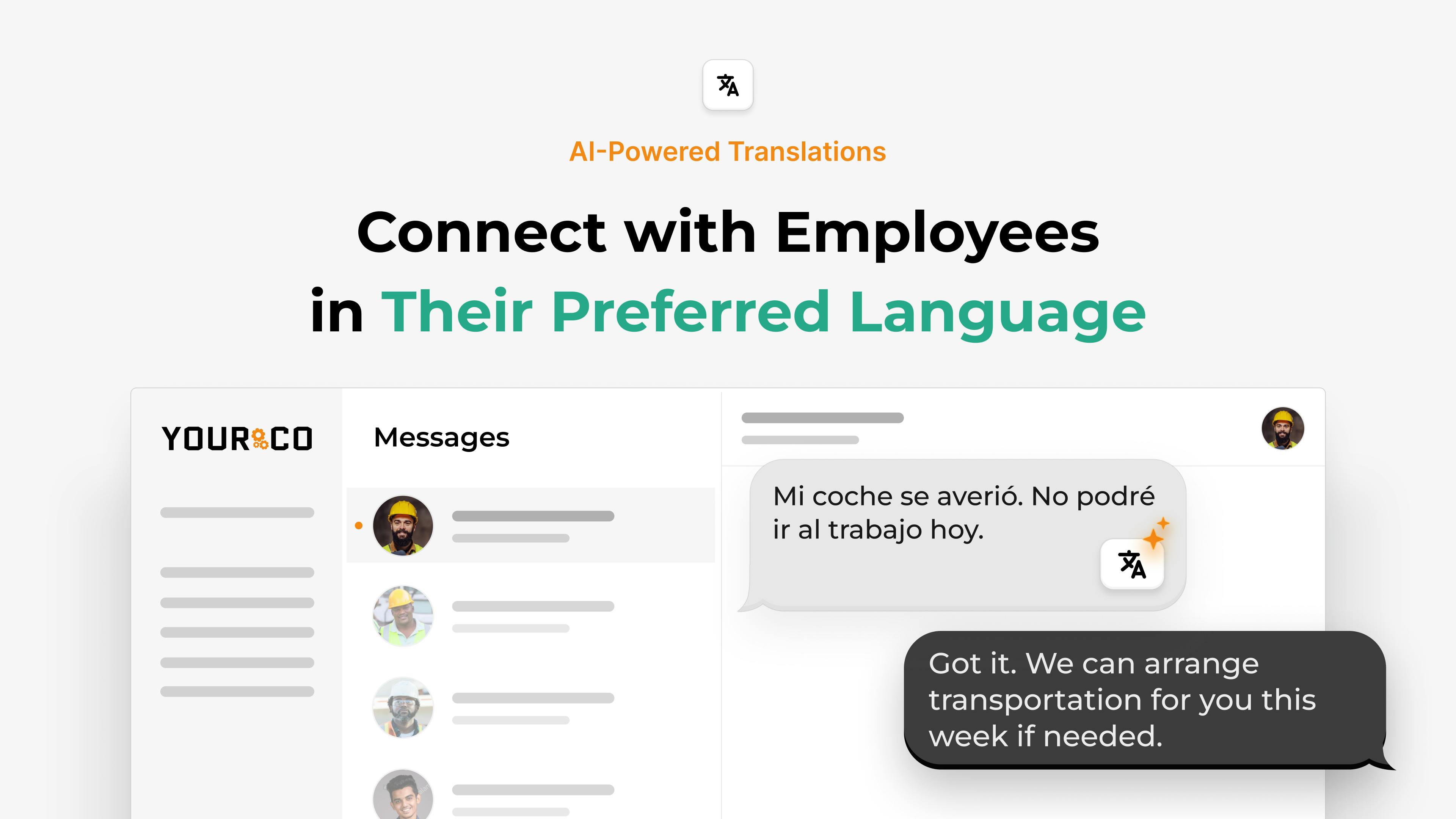
Implement platforms with built-in translation that automatically convert benefits messages into employees' preferred languages. Provide materials in multiple languages rather than English-only, and ensure benefits counselors can communicate in the languages your workforce actually speaks. This linguistic accessibility ensures that language differences don't become barriers to workers' understanding and access to valuable benefits.
Prioritize accessibility and consistency across all segments. When frontline workers actually understand available benefits through accessible communication, utilization rates increase, satisfaction improves, and workers recognize the full value of their total compensation rather than focusing solely on base pay.
Connect Your Frontline Team to Better Benefits With Yourco
Enhancing frontline worker benefits only matters if employees actually know about them. When your workforce operates across shifts, job sites, and languages without regular computer access, traditional communication channels leave most workers in the dark. Yourco's SMS-based platform closes that gap:
Reach every worker instantly. Deliver benefits announcements, open enrollment reminders, policy updates, and personalized messages directly to any mobile phone, including basic flip phones, with no app download, no WiFi, and no cost to the employee.
Communicate in any language. AI-powered translation across 135+ languages ensures that every worker automatically receives benefits information in their preferred language.
Enable two-way conversations. Workers can ask questions about their benefits and get answers through simple text messaging, turning one-way announcements into real dialogue. At the same time, Enterprise Bridge enables corporate teams to send controlled, one-way announcements when needed, while still allowing local HR managers to maintain two-way conversations with employees.
Sync with your existing systems. Yourco connects to 240+ HRIS and payroll systems to automate employee data syncing, keeping benefits enrollment data and employee records up to date across all locations.
Frontline Intelligence goes beyond message delivery to provide actionable insights into employee engagement, sentiment, and recurring concerns. By analyzing response patterns and trends across locations, shifts, and departments, leadership gains real-time visibility into what's happening across the workforce. These insights enable proactive workforce planning, from adjusting benefits programs based on employee feedback to identifying emerging issues before they escalate. With clearer visibility into workforce behavior and concerns, organizations can improve productivity, strengthen engagement, and reduce turnover over time.
"We are absolutely delighted with Yourco, which we use for HR communications with our team. It has significantly improved how we connect with employees, making it easier to share important updates, reminders, and announcements in real time. Yourco has become an essential tool in streamlining our internal communication and helping us maintain a strong, connected team. We couldn't be happier with the results."
— Courtney Martin, Recruiting Manager, The Seagate
After using Yourco for 90 days, two-way employee engagement increased to 86%, giving your frontline workforce the consistent communication they need to understand and take full advantage of the benefits you offer.
Try Yourco for free today, or schedule a demo to see the difference the right workplace communication solution can make in your company.
Frequently Asked Questions about Enhancing Frontline Worker Benefits
What are the most important benefits for frontline workers?
After competitive wages, frontline workers prioritize scheduling flexibility, financial wellness programs like earned wage access and emergency savings, career development opportunities, and accessible healthcare, including mental health support.
How can employers communicate benefits to workers without email access?
SMS-based platforms like Yourco reach workers on any mobile device without requiring downloads, internet access, or company email accounts. Supplementing text messages with digital signage, in-person sessions, and multilingual printed materials creates a multi-channel approach that reaches every worker.
Why do frontline workers underutilize their benefits?
Most frontline workers lack regular computer access during shifts, meaning they never see email-based benefits communications. Language barriers, complex enrollment processes, and information delivered only during office hours also prevent workers from accessing available benefits.
How does scheduling flexibility improve frontline retention?
Organizations that offer self-scheduling, shift swapping, and compressed workweeks consistently report significant reductions in voluntary turnover. After wages, scheduling flexibility is the single most important factor determining whether frontline employees stay or leave.
What role does financial wellness play in frontline worker satisfaction?
A large share of frontline workers live paycheck to paycheck, and financial wellness programs directly reduce stress and improve retention. Earned wage access, emergency savings programs, and financial education workshops help workers build stability and stay focused on their roles.


