


With a 98% open rate, Short Message Service (SMS) reaches frontline workers in ways traditional channels cannot. Yet most Human Resources (HR) leaders still operate without clear visibility into their hourly workforce: no corporate email, limited desktop access, and workforce data trapped in call-offs, attendance patterns, and message responses that traditional HR systems were never built to capture. New hires often drop off in their first months, and managers lose hours to phone trees instead of coaching their teams. Frontline analytics surfaces those signals so HR and operations teams can act before small problems become expensive ones.
TL;DR
- Frontline analytics tracks workforce data for hourly and shift-based workers traditional HR systems miss
- Attendance, engagement, sentiment, and safety metrics become actionable when managers get real-time alerts
- Early-tenure analytics help teams spot turnover risk before exit interviews reveal the problem
- Artificial Intelligence (AI) coaching, mobile microlearning, and workflow automation are moving into daily frontline operations
- Manager training on dashboards matters more than dashboard sophistication
- SMS-based platforms like Yourco reach every frontline worker on any phone without app downloads
What Is Frontline Analytics, and How Does It Differ From Traditional HR Data?
Frontline analytics is the practice of collecting, measuring, and modeling workforce data for employees who do not sit at desks, do not have corporate email, and often do not carry smartphones. A Society for Human Resource Management (SHRM) report describes the shift this way: HR's future involves using AI to analyze workforce data and surface issues before they become problems.
Traditional HR analytics relies on Human Resource Information System (HRIS) data, desktop logins, performance reviews, and periodic engagement surveys. Frontline analytics pulls from a fundamentally different set of sources shaped by mobile platforms and operational devices, including Internet of Things (IoT) sensors. The differences cut across data source, access model, cadence, workforce type, and core metrics:
Frontline analytics draws from six core data domains:
- Attendance and scheduling
- Engagement and communication metrics
- Productivity and performance
- Turnover risk signals
- Safety and compliance data
- AI-analyzed sentiment from open-text responses
Together, these domains give HR leaders and operations managers visibility into a population that desktop-based systems have historically overlooked.
Build a Data-to-Action Workflow for Frontline Teams
Data only delivers value when someone acts on it, which means analytics depend on a structured flow from collection through analysis to manager intervention. A typical frontline analytics workflow includes four connected layers:
- Data collection layer: Clock-in and clock-out records, SMS-based survey responses, absence reports, safety acknowledgments, and training completions feed into a centralized system
- Integration layer: HRIS, payroll, learning management, and operational task platforms sync automatically so data is not siloed
- Analytics and dashboard layer: Real-time views show attendance status and task completion by site; trend views track absenteeism and engagement over weeks; predictive views flag turnover risk and burnout signals
- Action layer: Automated alerts trigger manager conversations, trend data informs scheduling adjustments, and sentiment analysis surfaces engagement risks before they drive attrition
In a healthcare setting, an analytics dashboard flags a clinical team whose engagement scores have declined four consecutive weeks while overtime hours climbed. HR intervenes with manager coaching and temporary staffing relief, then measures recovery through the next pulse survey cycle.
Use Analytics to Prevent Turnover Before Exit Interviews
Frontline turnover is especially high early in employment, and Gallup finds that much voluntary turnover is preventable when managers catch warning signs and intervene early.
88% of HR leaders believe better communication tools can reduce employee churn, according to a Yourco-commissioned survey of 150 HR leaders. Analytics make warning signals visible, and the strongest indicators tend to cluster in three areas. Operational indicators include rising unplanned absences and short-burst Paid Time Off (PTO) usage, both of which are documented proxies for disengagement.
Early-tenure indicators appear at 30, 60, and 90 days, allowing tracking to reveal whether new hires are losing interest during onboarding or struggling with their shift assignments.
Analytics platforms succeed or fail based on whether they deliver these signals to managers in time to act. Pairing structured communication with workforce analytics can support both retention and proactive safety, since missed shifts, burnout, and weak communication often surface together in the same operating patterns.
Automate Workflows That Drain Frontline Manager Time
Frontline managers spend disproportionate time on administrative coordination: phone trees for finding shift coverage, manual attendance tracking, paper-based safety acknowledgments, and chasing down training completions. Every hour spent on logistics is an hour that cannot be spent coaching or running the one-on-one conversations that drive retention.
Workflow automation for frontline teams targets several specific bottlenecks:
- Absence reporting via SMS: Replaces voicemail-based call-off systems with timestamped, documented records that automatically notify supervisors and HR
- Scheduled messaging: Delivers shift reminders, safety alerts, and policy updates at pre-set times without manual effort
- Certification tracking: Flags workers whose credentials expire within 30 days, triggers training assignments, and confirms completion digitally
- Survey distribution: Reaches workers who never see email through SMS, making participation easier than desktop-only tools
96% of HR leaders agree that better communication tools boost productivity, according to the same Yourco-commissioned survey of 150 HR leaders. Automating call-offs, certifications, and surveys returns hours each week that managers can spend coaching and running direct conversations with their teams.
Deliver Reskilling and AI Coaching for Frontline Workers
McKinsey says frontline workers often lack the skills needed to work effectively with AI, while the World Economic Forum projects that AI and automation will continue reshaping job tasks and employment. Many workers also say they still need more training and support to use AI confidently in day-to-day work.
Reskilling for frontline workers requires delivery methods that fit their reality: no desktop access, limited break time, and often no corporate email.
AI coaching for frontline teams typically takes three forms. In-flow assistants pull instant answers from verified organizational knowledge bases so workers do not have to leave the task. Simulation tools let workers practice complex workflows with real-time feedback before handling live situations, and SMS-based microlearning delivers short training content and quizzes through the one channel available to every worker regardless of device.
Build Your Implementation Plan: Pilot First, Scale on Evidence
- An HR tech implementation survey shows that many rollouts fall short of expectations, with user training standing out as a common weakness. A phased approach protects against these failure modes.
- Phase 1: Foundation (Weeks 1-8). Identify two to three operational pain points, then select a pilot site with an engaged supervisor, representative conditions, and usable baseline data. Define three to five starter Key Performance Indicators (KPIs), such as absenteeism by shift, 30/60/90-day turnover, overtime as a share of labor, shift fill rate, and time-to-productivity for new hires.
- Phase 2: Manager training (Weeks 3-10). Train frontline managers to interpret KPIs, identify red flags, and turn findings into coaching conversations. Use the pilot site's actual data in every session to keep training practical.
- Phase 3: Pilot execution (Weeks 5-12). Set success criteria before launch, including regular dashboard use by target managers, documented decisions made from the data, and neutral or positive worker sentiment by week eight.
- Phase 4: Scale on evidence (Week 12 onward). Standardize what worked, recruit pilot champions as peer trainers, and roll out by site similarity. Feed lessons from each wave back to the central team before expanding further.
Transparent communication with frontline workers matters at every phase. SHRM cautions that frontline workers forced to adapt to poorly executed systems may experience frustration, mistrust, or diminished morale. Explain what data is being collected, what it will not be used for, and share early wins back to the workforce.
Turn Frontline Communication Into Actionable Intelligence With Yourco
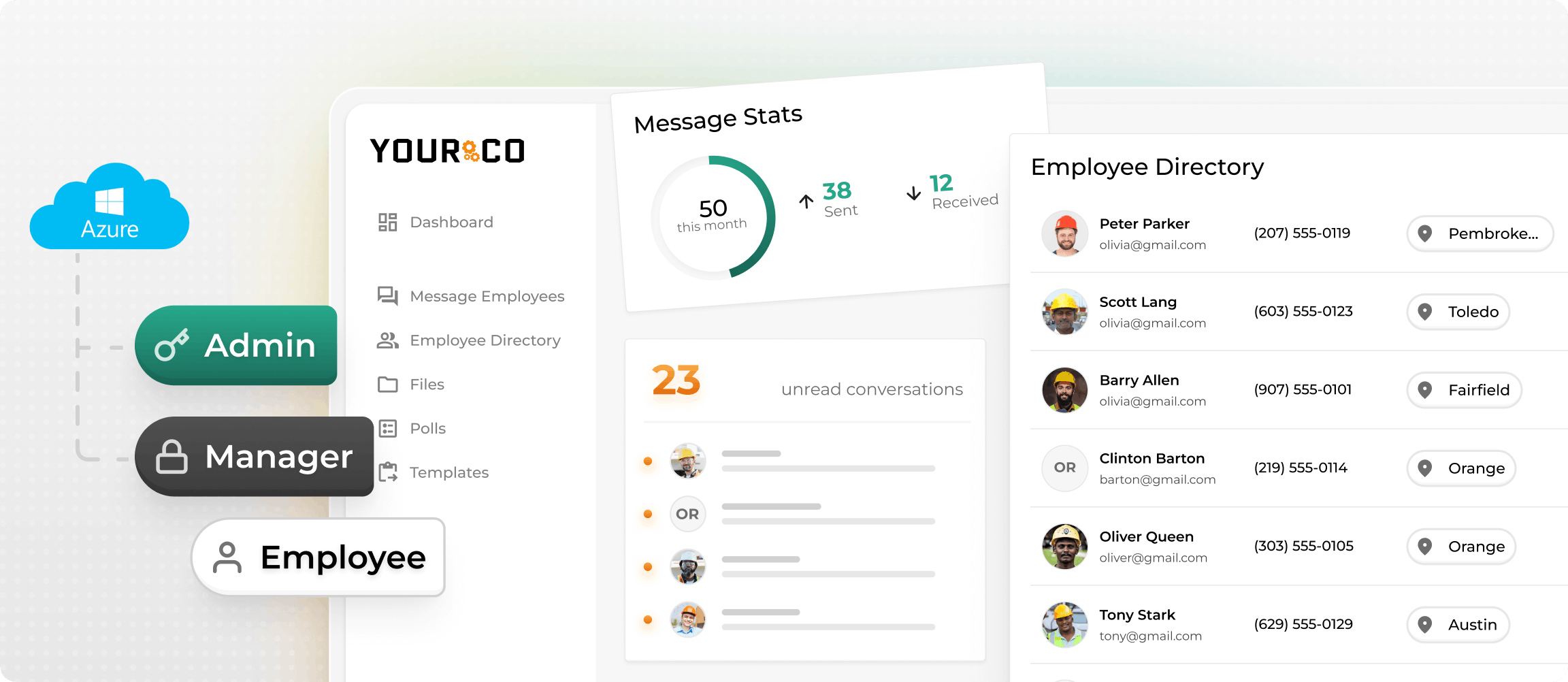
Yourco gives HR leaders and operations managers a single platform to reach frontline workers and turn their everyday operational data into clear, real-time signals. Because every message flows through SMS, Yourco reaches workers that app-based and email-based tools miss entirely.
Core capabilities include:
- SMS to any phone: No app download, no Wi-Fi, and no cost to employees, including basic and flip phones
- Two-way messaging: Direct communication between managers and workers for absence reporting, feedback, and real-time coordination
- AI-powered translation: 135+ languages and dialects, delivered automatically in each worker's preferred language
Yourco connects with 240+ HRIS and payroll systems, keeping employee rosters, language preferences, and role data in sync without manual entry.
Enterprise Bridge enables corporate leadership to send one-way broadcasts to every frontline location simultaneously, keeping the organization aligned on policy changes, safety directives, and company announcements while local managers maintain direct two-way conversations with their teams.
Frontline Intelligence turns everyday SMS communication into a strategic data asset for HR and operations leaders. Centralized dashboards surface engagement patterns, absence trends, and sentiment signals across every location, so corporate teams can spot site-level issues without waiting for quarterly reports. The platform scans messages for safety concerns and conflict indicators in real time, flags shifts in engagement across teams, and lets leaders query AI-powered reports on call-offs, attendance patterns, and shift communication activity by site or department.
"Yourco has helped to change the way we communicate at McCarthy Auto Group. We have nearly 700 employees and 80% are non-desk based, communication is a challenge. Yourco provides a quick easy way to reach everyone within our organization and a secure way for employees to reach HR and leadership without a computer."
— Felisha Parker, VP Human Resources, McCarthy Auto Group
After 90 days on Yourco, companies see two-way employee engagement reach 86%.
Try Yourco for free today, or schedule a demo to see the difference the right workplace communication solution can make for your company.
Frequently Asked Questions About Frontline Analytics
What is frontline analytics?
Frontline analytics collects and analyzes workforce data for hourly, shift-based, and frontline employees. It tracks attendance patterns, engagement signals, safety incidents, and sentiment in real time so managers and HR leaders can see issues earlier and respond faster.
How does frontline analytics reduce employee turnover?
Frontline analytics reduces turnover by surfacing early warning signs before employees quit. When managers can see patterns such as rising absenteeism, declining engagement, or recurring communication breakdowns, they can step in with coaching, schedule adjustments, or additional support sooner.
What KPIs should frontline managers track first?
Start with a small group of operational metrics that managers can act on quickly. Absenteeism by shift, early-tenure turnover, overtime levels, shift fill rate, and time-to-productivity are practical starting points because they connect directly to staffing stability and day-to-day performance.
How do you collect analytics data from workers without email or smartphones?
SMS-based platforms like Yourco collect survey responses, absence reports, and safety acknowledgments through standard text messaging on any phone. In more restricted environments, companies can also use shared devices or kiosk-based workflows. The goal is to meet workers on channels they already use.
What is the biggest risk when implementing frontline analytics?
The biggest risk is rolling it out without enough manager training or worker communication. If supervisors do not know how to act on the data, or workers do not understand what is being collected and why, adoption and trust break down quickly.


