
Human resources (HR) reporting is the practice of collecting and analyzing workforce data, and it works for office staff. An attendance report or an engagement score takes minutes to pull. The shift workers running plants and distribution centers barely register the same data, because the channels feeding it are email and a human resources information system (HRIS) portal that nobody on the floor can log into. Leadership then plans from numbers that describe only the workers those channels reach.
TL;DR
- Email and intranet reporting over-represents desk staff and misses frontline workers.
- Standard definitions for absenteeism, overtime, and headcount come before dashboards.
- SMS call-offs create timestamped records at the point of work, with no manual entry.
- Live dashboards surface attendance spikes and show which sites have not replied.
- Four KPIs matter: attendance, response rates, sentiment trends, and acknowledgments.
- SMS-based platforms like Yourco reach any phone and automatically log call-offs.
Recognize Why Email-Based HR Reporting Fails Frontline Teams
Email- and intranet-based HR reporting assumes workers have a desk and regular access to those systems. Vendors built HRIS portals and email survey tools for people sitting in front of a screen. On a second-shift plant floor, those messages sit unread until the shift ends, if workers open them at all.
88% of HR leaders say they need a reliable way to reach frontline employees, while only 55% are confident they have one, according to a Yourco-commissioned survey of 150 HR leaders. The reporting consequence is worse than the communication one. When engagement surveys and policy acknowledgments default to email, responses skew toward desk-based employees, and dashboards over-represent management and office voices.
Leadership then reads adequate-looking numbers and underinvests in frontline communication. The disengagement shows up later as turnover, which the data never predicted.
Standardize HR Reporting Metrics Before Scaling
74% of chief human resources officers (CHROs) rate their HR analytics maturity as basic or descriptive only, according to a Korn Ferry survey of more than 750 global CHROs. Inconsistent definitions of terms such as "turnover" and "headcount" across systems are a documented contributor to poor people analytics data quality, according to SHRM.
If the overtime metric means one thing at a plant and another at a distribution center, no dashboard reconciles the difference later. The same inconsistency appears between the first and third shifts inside one building when each supervisor logs a late arrival differently.
A workable starting point is three to five core metrics tracked with identical definitions and workflows at every site, and HR writes each definition down, so a late arrival means the same thing on every shift. Two mechanics keep those definitions from drifting:
- Assign one named owner per metric
- Set alert thresholds that trigger before problems compound
Only after definitions hold across locations is it worth building analytics on top of them.
Choose an HR Reporting Channel Employees Actually Use
The phone in a worker's pocket is one of the few reporting channels that needs no provisioning, and SMS reaches it. Text messages work on basic flip phones without Wi-Fi, and workers need no app download or login. For pulse surveys by text and acknowledgment requests, that reach translates directly into more complete data. SMS-based platforms like Yourco send to the phone numbers already held in worker records, so each new site only requires adding numbers.
Language is the second channel decision, and it affects data accuracy as much as inclusion. An English-only call-off form or pulse survey pushes workers who cannot read it to skip the question or guess, and both outcomes bias results toward what English-reading workers report. Translating employee surveys into each worker's preferred language keeps multilingual workers in the dataset.
Capture HR Reporting Data Automatically at the Point of Work
When employees report call-offs through voicemail or personal phone calls, supervisors document each call by hand. They may delay that documentation or approximate timestamps, which leaves no evidence for disputes about unanswered calls.
An SMS-based call-off workflow fixes the record at the source. The system timestamps the message in the employee's own words, drops the absence into attendance reporting, and notifies the supervisor without anyone re-keying the record.
SMS-based platforms like Yourco run this flow end-to-end through the AI Call-Off Agent, which collects the dates and reason, confirms the request, notifies the supervisor, and produces a downloadable call-off report. A call-off hotline policy built around that channel gives employees one number to text, and supervisors stop reconstructing absences from memory at the end of a shift.
Build Real-Time HR Reporting Dashboards and Close the Loop
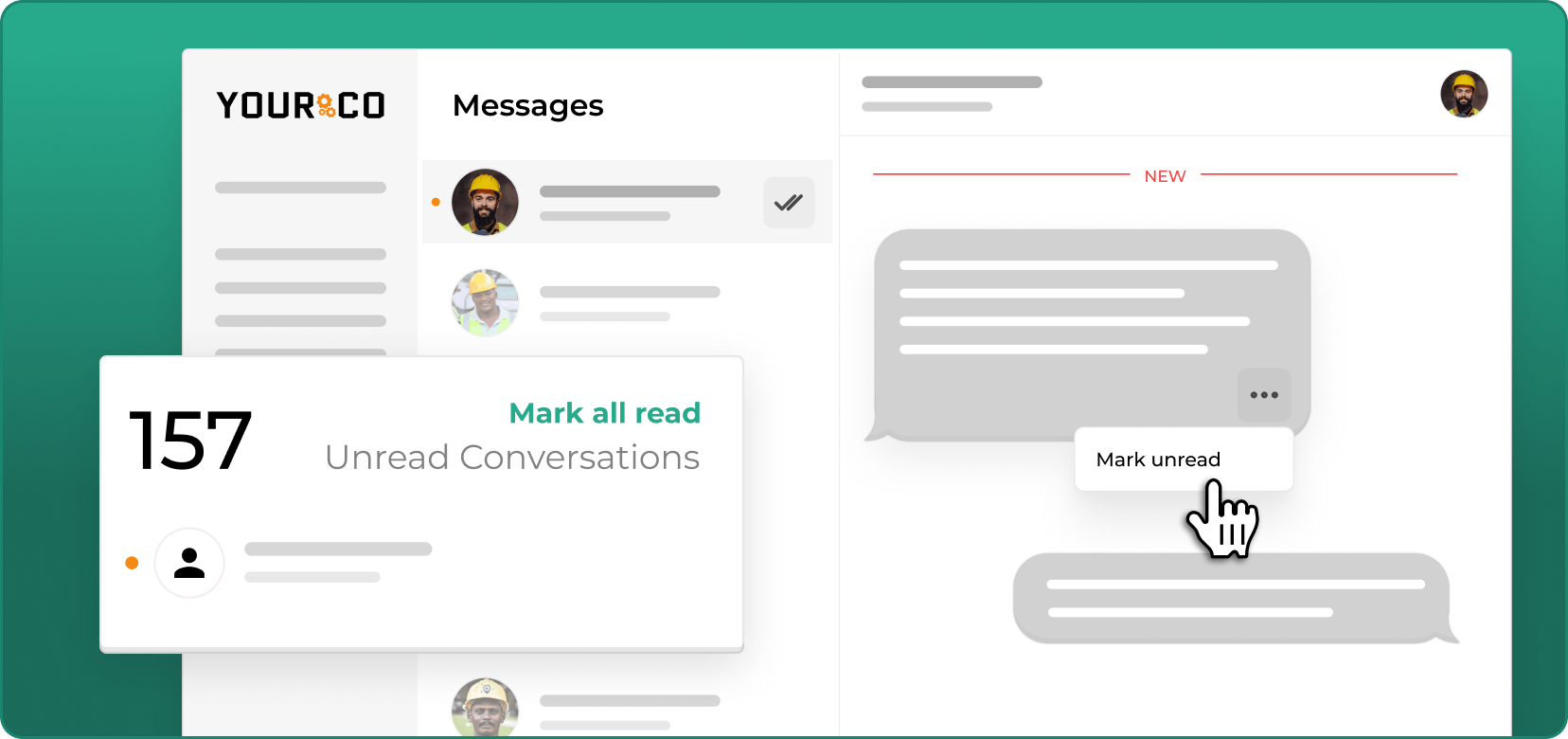
Reviewing attendance data two weeks late cannot fix the shift it describes. A live dashboard shows call-offs clustering on a single plant's night shift, or absence rising at one distribution center, the week the pattern starts, while a manager can still adjust coverage.
When administrators configure call-off categories, an SMS-based system organizes absence records in real time. Online absence management dashboards then show which teams lose the most shifts to absence, which shifts see the most last-minute call-offs, and whether certain absence types are rising.
The same live view applies to communication itself. Delivery and confirmation tracking by location shows which sites received a critical message and which need follow-up.
Employees answer the next survey when the last one produces something visible. Naming findings quickly, saying what will change, and giving a date for each change keeps that credible. Splitting findings into items a plant manager can fix on their own shift and items corporate owns keeps each list actionable, and each site gets its own view of its data.
Frontline managers face employees' questions on the next shift, so clear actions belong alongside the results. When results never come back, trust erodes, and the next survey draws fewer responses.
Give Corporate HR Visibility Across Every Frontline Location
Corporate visibility means HQ reads the same workforce data as every site manager, in one view, without waiting for a local report. Reporting that stops at the site level leaves corporate HR assembling a national picture from a dozen spreadsheets, each defining absence a little differently.
Enterprise reporting needs both flows. Corporate leadership broadcasts one-way policy and safety updates to every location through Enterprise Bridge, while local managers keep direct, two-way conversations with their crews. Both flows feed the same record, so the acknowledgment a plant manager collects on Tuesday is the acknowledgment corporate reports on Wednesday.
What that gives an enterprise HR team:
- One dashboard covering every location, with segmentation by site, shift, department, and role
- Cross-site comparison of response, acknowledgment, and call-off rates on identical definitions
- Sentiment and message themes as early signals, before they surface as turnover
- HRIS and payroll syncing that keeps headcount and segmentation current as systems and org structures change
Great Day Improvements runs this model across 338 locations and 5,000 employees, using one channel for corporate announcements alongside local two-way communication, with real-time visibility into engagement across brands.
Track the HR Reporting KPIs That Matter for a Frontline Workforce
Four key performance indicators (KPIs) carry most of the value in frontline HR reporting, provided the collection channel reaches workers:
- Attendance and call-off rate: absent days divided by available workdays, multiplied by 100. 2.9% of full-time manufacturing workers were absent in a given week during 2025, against 3.1% in transportation and warehousing and 3.4% in leisure and hospitality, according to Bureau of Labor Statistics annual averages for full-time wage and salary workers. Those figures give a multi-site employer a benchmark for each location.
- Message and survey response rates: tracked by site and shift, with separate reporting by role, since a response pool skewed toward desk staff distorts every conclusion.
- Sentiment trends: no reliable outside benchmark exists, so the baseline has to be internal. Aggregating the tone of two-way messages and survey verbatims over time by location can catch disengagement before it becomes attrition.
- Compliance acknowledgment rate: the share of workers who confirmed receipt of a policy or safety directive. The same measure applies to handbook updates, with timestamps kept for audit records.
Benchmarking each metric across sites surfaces more than a single company average does. Pairing these lagging measures with frontline workforce metrics that flag what is coming, such as absence patterns that precede turnover, gives leaders warning rather than history.
Evaluate HR Reporting Tools Against Frontline Realities
Six conditions separate a tool that fits a frontline workforce from one that does not, and each is worth testing before a demo:
- Every worker can access it without a corporate email address, app download, or login
- Segmentation by location, department, shift, and role supports multi-site reporting
- It produces timestamped acknowledgment and call-off records that support audit and recordkeeping needs
- Workers can use the languages the workforce actually speaks
- HRIS and payroll syncing keeps headcount and segmentation current
- Corporate teams get real-time dashboards with cross-location visibility alongside site managers
The segmentation condition is worth testing against a real question: can the tool show third-shift call-offs at one distribution center next to first-shift call-offs at another plant, in one view, without an export? A tool that fails the first condition fails all the others, because HR teams cannot standardize, translate, or report on data the tool never collects.
See Every Site's Workforce Data in Real Time With Yourco
Reliable HR reporting for a frontline workforce starts with a channel that reaches every worker. Yourco is an SMS-based employee communication platform that turns everyday text messages into attendance and engagement data, including acknowledgment records. Three capabilities do most of that work:
- SMS to any mobile phone, including basic flip phones, with no app download
- Two-way messaging for call-offs, surveys, policy acknowledgments, and feedback
- AI-powered translation across 135+ languages and dialects, so multilingual workers respond in their own words and stay represented in the data
Employee records stay synced through Yourco's 240+ HRIS and payroll integrations, so segmentation and reports stay accurate as people join, leave, or change roles.
Corporate leaders can use Enterprise Bridge for one-way broadcasts to the entire frontline, while local managers maintain direct two-way communication with their teams.
Frontline Intelligence gives HR and operations leaders real-time visibility into frontline engagement and communication across every location, including sentiment trends. Corporate teams can compare engagement by site, identify patterns, and see which locations have the lowest response rates, working from live data instead of last month's export. Great Day Improvements lifted its communication score from 49% to 53%.
"Getting a lot more response from employees than we have in the past, and it's so easy to just send out a quick text company-wide or to a specific group."
— Maddy Kristjanson, Human Resources Generalist, Plymouth
After 90 days on Yourco, companies see two-way employee engagement reach 86%.
Try Yourco for free today or schedule a demo and see the difference the right workplace communication solution can make in your company.
Frequently Asked Questions About HR Reporting for Frontline Workforces
What is HR reporting?
HR reporting collects and analyzes workforce data, including attendance, turnover, and engagement, so leaders can make informed decisions. For frontline teams, effective HR reporting depends on collection channels that reach workers without company email or regular computer access.
How do you track attendance for employees without computer access?
Attendance tracking works through a channel that runs on any mobile phone. SMS-based platforms like Yourco let employees report absences by text, timestamp each report, automatically notify supervisors, and feed the record into attendance dashboards without manual entry. That creates a consistent record across every shift and location.
Why are frontline employee survey response rates so low?
Response rates stay low because email surveys do not reach workers who lack corporate inboxes or rarely check them during shifts. Language barriers and post-shift timing compound the problem. Short surveys delivered by text during paid time, in each worker's preferred language, improve participation.
What HR KPIs should you track for frontline workers?
The core four are attendance and call-off rates, message and survey response rates by site and shift, sentiment trends from two-way messages, and compliance acknowledgment rates. Identical definitions and workflows across locations make cross-site comparisons reliable and help leaders spot patterns before local issues spread.
How often should you review frontline workforce data?
Cadence follows the metric. Shift-level indicators such as absenteeism, overtime, and coverage deserve daily review through live dashboards, while engagement and retention trends work better on weekly or monthly cycles. Real-time visibility matters most for issues a manager can address the same day.