
Change is hitting HR teams faster than ever, and 2026 is shaping up to be the busiest year yet. Gen Z now fills many frontline roles, bringing new expectations around instant communication, transparency, and feedback. At the same time, HR leaders face mounting pressure to attract talent, retain workers with more options than ever, and maintain compliance across multiple locations.
The organizations that act on these shifts before their competitors will thrive. What follows are the key trends shaping the year ahead and practical steps to implement them, especially for teams with distributed, non-desk workers.
You'll discover how frontline intelligence, generational communication preferences, skills-based hiring, automated compliance, inclusive communication, and continuous feedback systems turn today's challenges into tomorrow's advantages.
Transform Frontline Data Into Strategic Intelligence
Every text message, shift confirmation, safety report, and survey response from your frontline teams contains valuable information. The challenge is that most organizations let this data sit unused. Daily communications flow in, get answered, and disappear into archives nobody searches. Meanwhile, HR leaders wait weeks for quarterly reports that tell them what already went wrong.
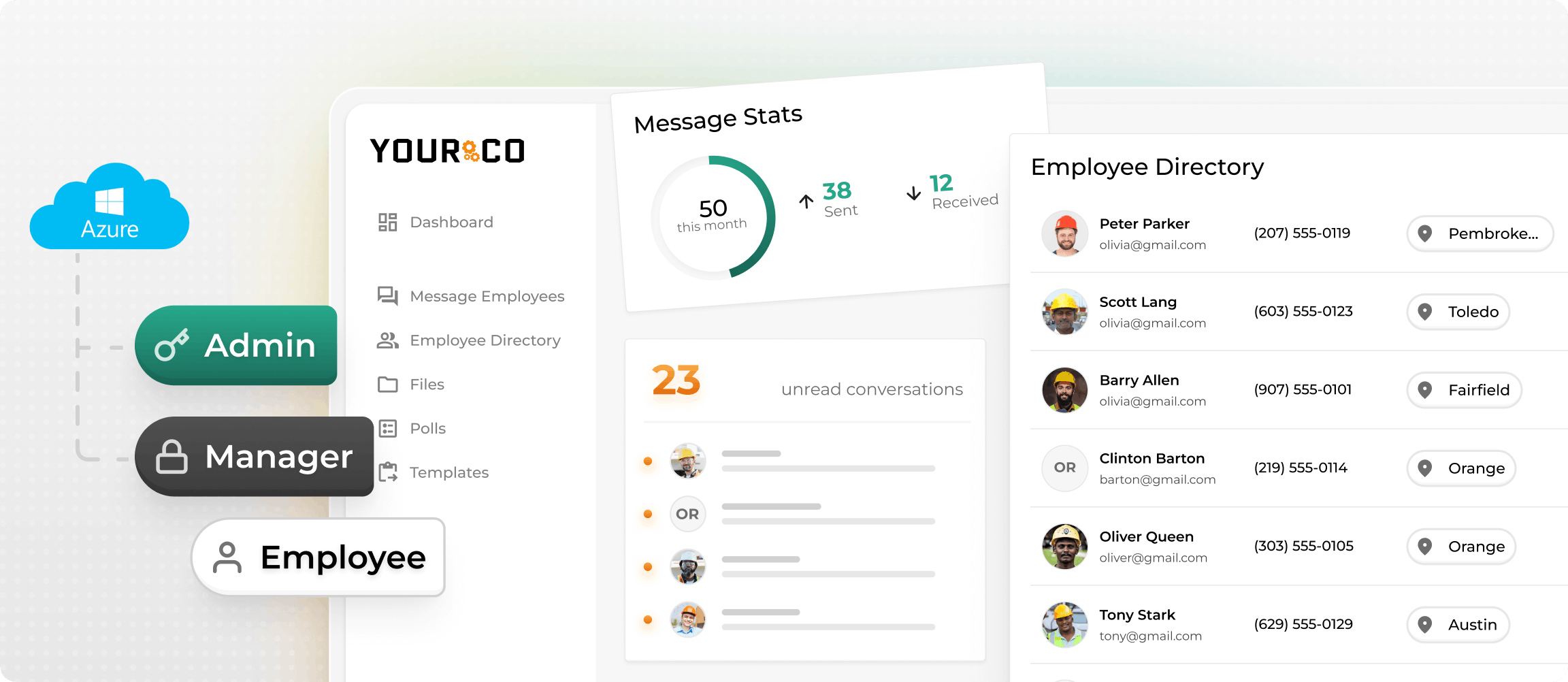
Frontline intelligence changes this equation entirely. By applying AI to the communication data you're already generating, patterns emerge that would take human analysts weeks to uncover:
- You see which locations show slowing response times before turnover spikes
- You catch clusters of safety questions that signal confusion about a new procedure
- You notice engagement dropping on the night shift while day crews stay steady
These insights arrive in time to act, not after the damage is done.
Close the Visibility Gap With Real-Time Data
Traditional HR reports look backward. Quarterly engagement scores tell you morale dipped, but only after people quit. Gallup's State of the Global Workplace 2025 report found that global employee engagement fell to 21%, with the primary driver being manager disconnection that cascaded through teams.
Smart data collection pulls information from daily communications, attendance logs, and safety checks, then uses AI to spot trends in minutes. For example, you might notice response rates sliding in one warehouse on Tuesday and send a quick pulse survey that afternoon to learn why.
Most frontline workers spend shifts on their feet, often left out of email-based feedback loops. The result is a costly blind spot. These teams are usually the first to leave when they feel unheard. Frontline intelligence closes that gap by capturing input from every worker, even those who only have a basic mobile phone.
Shift From Reactive Management to Predictive Leadership
The real power comes from turning reactive management into predictive leadership. When AI analyzes message volume, response patterns, and sentiment trends across all your locations, you stop asking "what happened" and start asking "what's about to happen." Which site is showing early signs of burnout? Where is confusion building around a policy change? "Why did absenteeism jump 12 percent this week?"
These questions get answers based on actual frontline data rather than guesswork or delayed reports. For a hands-on framework to build this kind of data-driven approach, explore our workforce analytics playbook for HR and operations that connects frontline metrics to actionable decisions.
Tight labor markets and rising wages make early warning signals invaluable heading into 2026. Organizations that spot disengagement on Monday and course-correct by Wednesday will keep skilled workers and cut recruiting costs. Teams still relying on monthly dashboards find out too late, after shifts go unfilled and customers walk away.
Build AI Capability Across Your Workforce
Capturing frontline intelligence is only half the equation. The other half is building a workforce that knows how to use these insights effectively. This means training managers to interpret AI-generated dashboards, ask the right questions of the data, and translate patterns into action plans their teams can execute.
The skills gap here is real. A Gallup survey found that AI use at work in the US sits at 40%. That's a big improvement from last year, but it still means most managers lack the hands-on experience needed to turn frontline intelligence into action.
Organizations that invest in AI literacy now will build a lasting advantage. Their managers will know how to spot a sentiment dip in the analytics dashboard and respond with a team huddle that same day. Their supervisors will understand that a spike in repeated questions signals a training gap, not employee laziness. This kind of insight-to-action speed separates high-performing organizations from everyone else.
Start small with AI training. Introduce managers to the specific tools they'll use daily, like sentiment dashboards or response rate tracking. Show them real examples from your own locations so the data feels relevant rather than abstract.
Build confidence through practice before expanding to more sophisticated analytics. The goal isn't to turn every supervisor into a data scientist. It's to give them enough fluency to act on the insights frontline intelligence surfaces.
Meet Gen Z and Gen Alpha Where They Are
The next challenge lies in connecting with younger workers who want fast, two-way communication that feels as natural as texting a friend. Still sending long emails or posting updates on break room walls? You'll lose their attention fast.
Gen Z, commonly defined as those born starting from 1997 with the end year ranging from 2010 to 2015, depending on the source, already fills many frontline shifts. Gen Alpha, born in the early-to-mid 2010s and later, is just beginning to explore learning opportunities such as early tech programs or informal work experiences.
Both groups grew up with smartphones and fast-refreshing social feeds, leading to rapid information scanning online rather than a universally short attention span.
This upbringing shapes what they expect from work communication. Messages should be short, direct, and interactive. Email threads feel slow. Password-gated portals seem outdated. When updates arrive late, younger workers see it as a sign that leadership doesn't get it. Poor communication ranks as a top reason for turnover among Gen Z.
These workers also want transparency. They ask questions, share ideas, and expect proof that their input matters. A one-way broadcast that ends with "Do not reply" sends the wrong message entirely. In frontline settings, where shifts change quickly, being the last to hear about a new schedule or safety rule does more than annoy people. It breaks down trust.
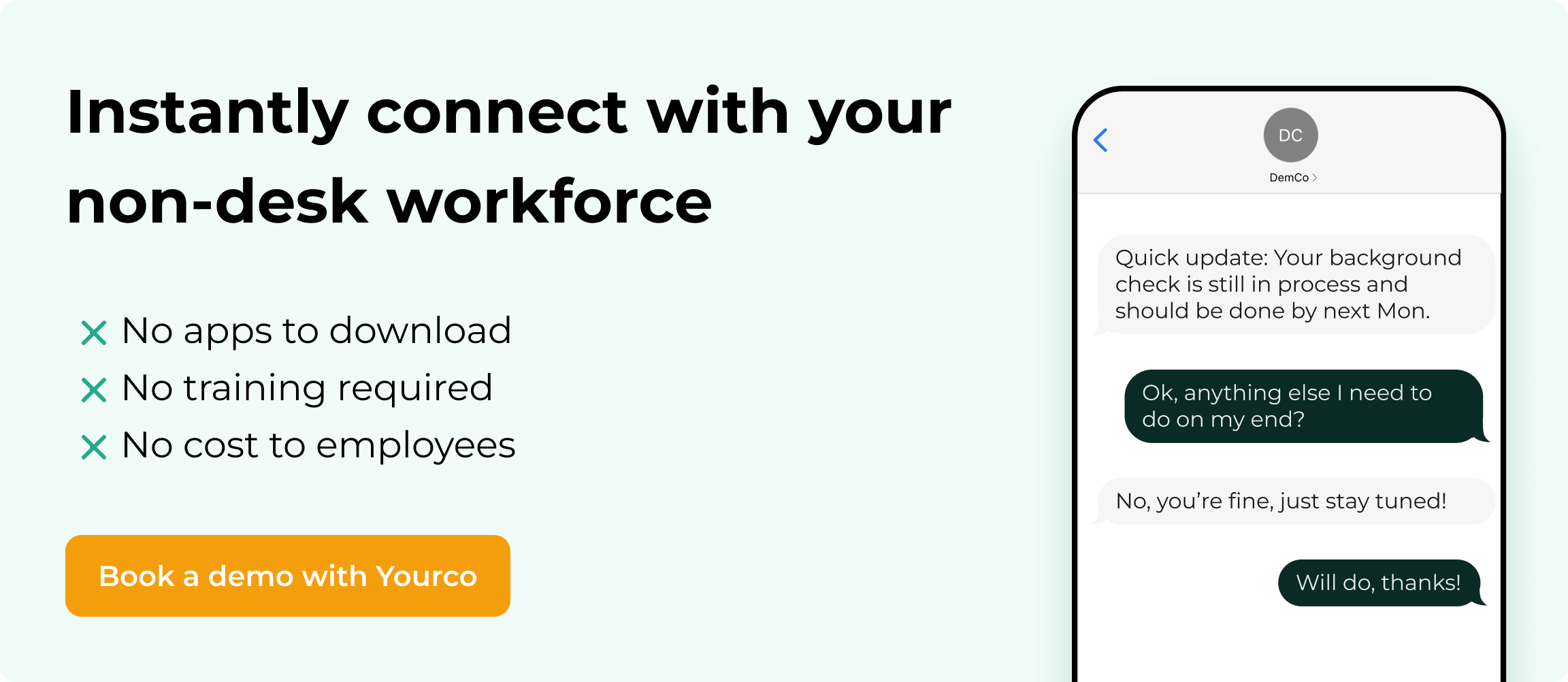
The fix is straightforward: replace broadcast notices with two-way SMS. Text messages reach any phone, even without data plans, and invite instant responses. You can:
- Confirm a shift swap
- Answer a policy question
- Gather quick feedback in minutes instead of days
The format matches how younger employees already communicate and shows them that their voice matters.
This two-way communication also feeds directly into frontline intelligence. Every response, question, and confirmation becomes a data point that helps you understand what's working and what needs attention.
Prioritize Skills-Based Hiring and Internal Mobility
Finding the right people is harder than ever, so hiring for proven skills and then moving workers into roles where those skills shine gives you a measurable advantage.
Skills-based hiring centers on what someone can do, not where they went to school. Focus interviews and assessments on customer empathy, problem-solving, equipment know-how, or language abilities to tap a wider talent pool and avoid degree bias.
SHRM data shows that 73% of employers now use skills-based hiring, up from 56% in 2022, and LinkedIn research indicates that employers who focus on skills are 60% more likely to make successful hires. Companies that adopt this approach report stronger job fit, faster onboarding, and more diverse teams because demonstrated abilities matter more than credentials.
Internal mobility comes next. Once workers show new abilities on the floor, move them up or sideways. This approach keeps talent in-house, lowers recruiting costs, and signals that entry-level roles are the start of a career, not a dead end. Clear skill ladders help employees see a future with the company, whether that's cashier to lead or picker to trainer.
Looking ahead to 2026, automation will change job requirements overnight. A skills-first, mobility-friendly approach keeps your workforce ready, engaged, and eager to grow with the business.
Make Compliance Effortless With Automated Documentation
Compliance paperwork keeps piling up, but you can make documentation nearly invisible by weaving automatic record-keeping into your daily communications. Safety guidelines, wage rules, and policy acknowledgments grow every year, and the challenge multiplies when you manage teams across multiple states or countries.
Paper forms, email threads, and scattered spreadsheets create gaps fast. A missed signature or outdated roster seems minor until an auditor asks for proof and you spend hours digging through folders. Manual tracking wastes time and opens the door to costly errors.
Automated documentation fixes this at the source:
- Every message you send to employees about policies or training gets timestamped with the employee's ID
- When someone replies "YES" to confirm they read the update, that response gets logged instantly
- The system stores each entry in one secure location, creating a living audit trail without extra work.
The benefits show up immediately. Instead of panicking when regulators visit, you open a dashboard, filter by date, and download the records they need. Managers spend less time hunting signatures and more time supporting their teams. Consistency improves because every location follows the same process.
Regulatory scrutiny isn't going anywhere. By 2026, organizations that treat compliance as a natural result of clear, trackable communication will avoid fines, reduce stress, and focus on serving customers rather than shuffling paperwork.
Close the Communication Gap for Non-Desk Workers
Building on the compliance benefits, there's a broader communication challenge that affects most workforces. Most employees spend their shifts on shop floors, job sites, and delivery routes, yet the tools many HR teams rely on were built for office life.
Frontline employees now make up roughly four-fifths of the workforce, but many still learn about schedule changes or policy updates long after their desk-bound peers.
Email and app portals don't work because they assume regular internet access, company logins, and time to browse. That isn't realistic when shifts flip overnight, and personal data plans run low. Printed notices can't keep up either. Once the bulletin board is updated, the information is already out of date.
A simple text message solves this problem. Every worker carries a phone, and SMS arrives in the inbox they check most often. With a 98% open rate compared to about 20% for email, texts actually get seen.
No downloads, usernames, or training required. Just send the information and get replies back in minutes. Two-way texting also lets you hear directly from field workers, including questions, concerns, and quick confirmations, without tracking anyone down.
Effective SMS communication helps you:
- Share last-minute shift openings, so you're not scrambling for cover
- Send safety reminders the moment a new risk appears
- Remind teams about benefits enrollment before the deadline
- Celebrate wins on busy days to keep morale high
When communication becomes this straightforward, workers stay informed, managers stay ahead of issues, and operations run smoothly. Organizations that reach every employee directly will keep talent longer and avoid costly surprises.
Use AI-Powered Translation to Build Inclusive Workplaces
Every employee deserves to understand the messages they receive at work. When safety alerts, schedule changes, and policy updates arrive only in English, non-native speakers miss critical information that affects their jobs and safety.
Language barriers create real problems. A worker might miss a schedule change, misunderstand a safety procedure, or feel excluded from company updates. These gaps drive mistakes, accidents, and disengagement. AI translation solves this by automatically converting your messages into each employee's preferred language.
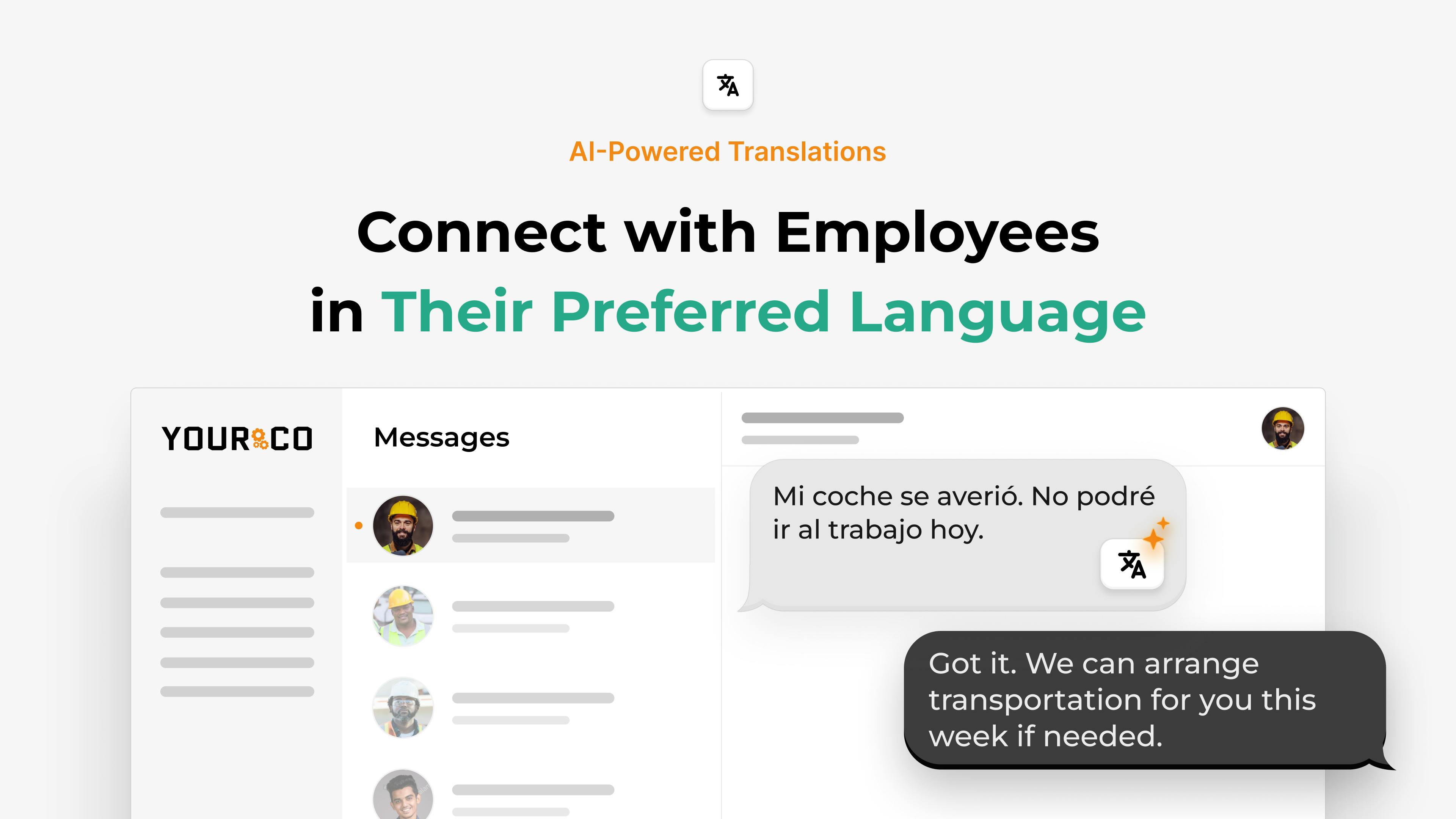
The technology works seamlessly. You write one message in English, and workers receive it in Spanish, Polish, Vietnamese, or any of the languages and dialects their teams speak. Modern translation produces natural, clear text that employees can understand immediately. No waiting for manual translations or hiring interpreters.
Foster a Culture of Continuous Feedback
The final piece of your 2026 strategy involves rethinking how you gather employee input. Waiting a full year to check how your team feels isn’t ideal. By the time you analyze those annual survey results and create action plans, half the issues have already caused people to quit.
Short surveys and quick polls throughout the year keep you connected to how people feel. Instead of lengthy forms that distributed workers never see, try one-question texts that reach them wherever they are. A simple "How supported did you feel during today's shift, 1-5?" takes seconds to answer and gets you real insights immediately.
The key is acting fast once you hear something. Share what you learned, explain the first change you're making, and update everyone when it's done. Workers who see their feedback create real improvements will keep sharing honestly. Those who feel ignored stop participating entirely.
Every quick survey also reveals patterns you'd miss otherwise. Track responses across locations to spot early warning signs, such as declining morale or rising safety concerns. This continuous feedback becomes another input stream for frontline intelligence, enriching the data that helps you understand workforce sentiment and anticipate problems before they escalate. For a complete guide to building this capability, learn how to monitor employee sentiment and improve engagement using real-time feedback loops across every shift and site.
Quick feedback collection works because it meets workers where they are. Text messages get read immediately while emails sit unopened for days. In 2026, teams that listen continuously and respond quickly will keep their best people while competitors wonder why everyone keeps leaving.
Future-Proof Your Workforce Strategy With Yourco
The biggest takeaway from the 2026 HR landscape is clear: you need to reach every employee fast, collect reliable data on the spot, and respond before small issues snowball. From real-time workforce insights to competency-based recruitment, the common thread across the latest HR developments is speed and inclusivity.
Yourco gives you exactly what you need to stay ahead. It connects HR and operations leaders to non-desk teams through simple text messages, so no one gets left out, and nothing slips through the cracks.
With Yourco, you can capture two-way feedback, incident reports, and attendance details as they happen. Every message gets automatically translated into 135+ languages and dialects, keeping multilingual teams connected and informed. When compliance questions arise, you have auto-timestamped records you can pull in seconds.
Yourco's AI-powered Frontline Intelligence takes this further by turning your daily communications into real-time workforce insights. Instead of waiting for quarterly surveys or filtered manager reports, you can spot disengagement before it turns into turnover, flag safety concerns as they emerge, and compare sentiment and response rates across all your locations from one dashboard.
Ask questions like "What's employee sentiment been like this month?" or "Which sites are showing early signs of burnout?" and get answers based on actual frontline data.
Whether you're adapting to Gen Z communication preferences, bridging language barriers, or catching problems before they spread, Yourco helps you act fast and lead proactively. Try Yourco for free today or schedule a demo and see the difference the right workplace communication solution can make in your company.
Frequently Asked Questions
What are the biggest HR trends for 2026?
AI-powered frontline intelligence, skills-based hiring, flexible work models, and real-time data from distributed teams are some of the biggest HR trends for 2026. Organizations that combine daily communication data with AI analytics gain a significant advantage in spotting workforce issues early and responding before problems escalate.
How is frontline data changing HR strategy?
Daily information from schedules, attendance, and worker feedback becomes actionable insights you can use right away. By combining people data with operational numbers, platforms help managers catch early warning signs of burnout, rising absenteeism, or safety risks before they become bigger problems.
Why do Gen Z workers need different communication approaches?
Gen Z grew up with smartphones, chat apps, and quick video content. Long emails or complicated portals feel slow and outdated. They want short, two-way messaging and fast feedback. Match their communication style, and they stay engaged longer.
How can HR teams reach non-desk workers better?
Start with the devices they already carry. Mobile-first approaches like timely SMS updates, quick surveys, and clear shift alerts skip the hassle of logins or app downloads. Best practices for effective workforce management show that instant, direct messages reduce confusion and keep every worker informed, even without an email address.
What skills do managers need to use frontline intelligence effectively?
Managers need basic AI literacy to interpret dashboards, recognize meaningful patterns, and translate insights into action. This doesn't require deep technical expertise. Focus training on the specific tools your organization uses, show real examples from your own locations, and build confidence through practice. The goal is fast insight-to-action speed, not data science credentials.