
Three workers call off within an hour of shift start, and your production line grinds to a halt. A hotel front desk scrambles when the morning receptionist texts "can't make it." These scenarios play out daily across industries, forcing expensive overtime decisions and leaving teams stretched thin. The right systems can reduce these disruptions by 20-30% while keeping you compliant with labor laws.
TL;DR
- Schedule predictability (14+ days advance notice) reduces absenteeism by 20-30%
- SMS communication achieves 98% open rates vs. 20-30% for email, enabling faster coverage coordination
- Point-based attendance policies work best when they explicitly exempt legally protected leave (FMLA, ADA, workers' comp)
- Cross-training creates backup coverage pools you can mobilize within minutes
- Peer support programs can reduce turnover by over 50%
Calculate the True Cost of Unplanned Absences
Worker illness and injury costs U.S. employers $225.8 billion in lost productivity annually. Each employee's unplanned absences cost between $1,685 and $3,600 per year. For a 100-employee operation, that adds up fast.
Industry absence baselines:
- Manufacturing and construction: ~3% absenteeism rate
- Transportation and warehousing: slightly higher
- Hospitality: falls in between
These costs extend beyond wages to include overtime, temporary staff, quality drops, and customer service issues when short-handed.
Create Schedule Predictability to Prevent Call-Offs
Research shows schedule predictability reduces turnover and absenteeism by 20-30% when workers receive schedules at least 14 days in advance.
Why it works:
- Workers can arrange childcare and transportation
- Fewer last-minute conflicts that force call-offs
- Better work-life balance improves attendance
Set a policy of providing schedules 14 days ahead whenever possible. For manufacturing, post the full two-week rotation. In hospitality, establish consistent shift patterns so Tuesday morning workers always know they're scheduled Tuesday mornings.
When workers have input into scheduling decisions, attendance improves further. Peer-reviewed research shows worker involvement in operational processes measurably reduces absenteeism.
Build Cross-Training for Immediate Coverage
When call-offs happen despite prevention efforts, cross-trained employees provide rapid internal solutions. Start by mapping which roles create the biggest disruptions when unstaffed:
- Production-critical roles in continuous manufacturing
- Customer-facing positions in hospitality and retail
- Safety-critical positions with regulatory requirements
Effective cross-training doesn't mean everyone learns everything. It means strategic skill overlap between adjacent positions. Train Line A workers on Line B basics. Cross-train front desk staff in housekeeping essentials and vice versa.
Reach Every Worker Instantly With SMS
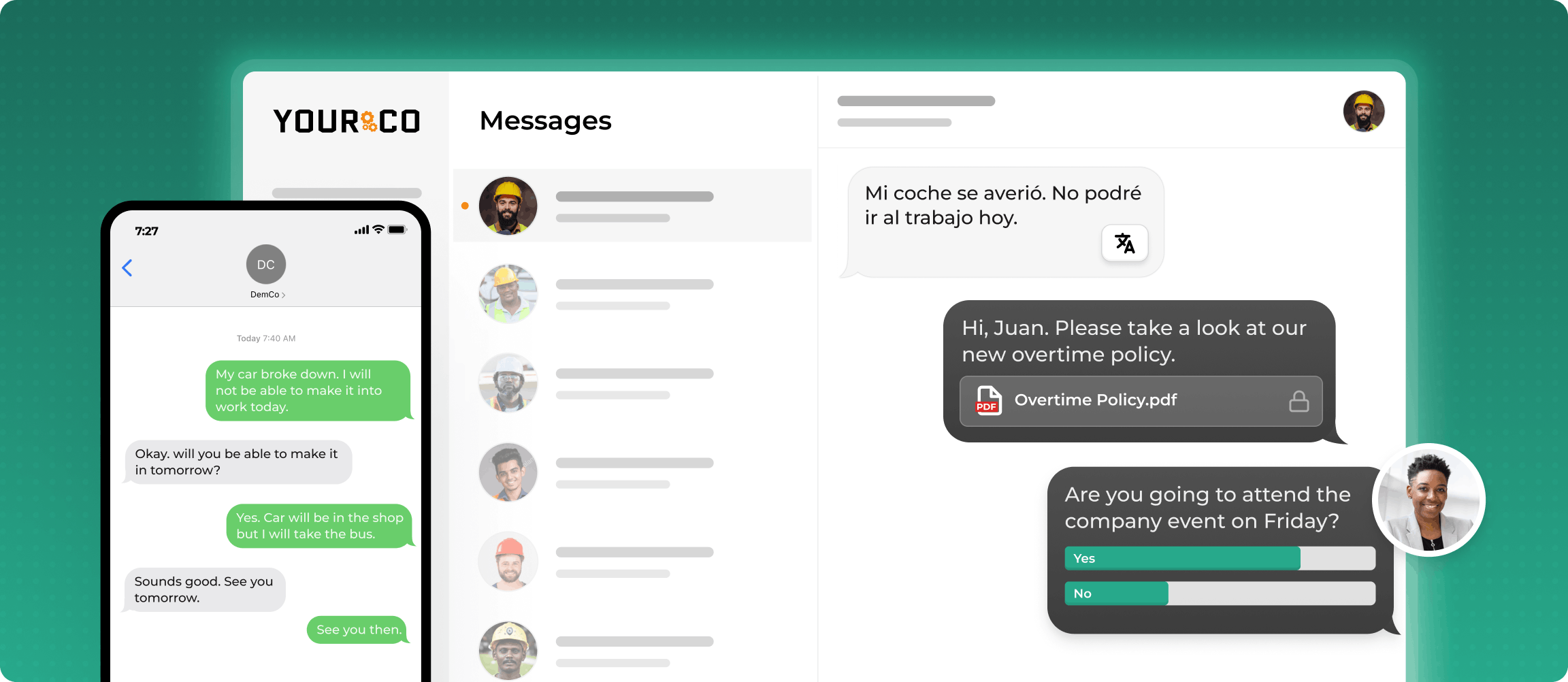
The communication method you use for absence reporting directly impacts coverage response times. SMS achieves 98% open rates versus 20-30% for email, with messages typically read within three minutes.
Establish clear reporting procedures:
- Workers text a designated number with name, shift time, and brief reason
- System automatically logs the report with timestamp
- Supervisor receives immediate notification to begin coverage
- Confirmation text goes back to the employee
This creates a clear audit trail protecting both employees and managers. When someone calls off, you can text your cross-trained backup pool simultaneously to find coverage within minutes.
When employees have a simple, reliable way to report absences, they're more likely to follow through consistently, which helps managers plan coverage faster and keep shifts running smoothly
Implement Point-Based Policies With Legal Protections
Point-based systems assign points per absence with progressive discipline at defined thresholds. They work better than vague "excessive absenteeism" policies because everyone understands exactly where they stand.
Build explicit legal exemptions for:
- FMLA (Family and Medical Leave Act)
- ADA (Americans with Disabilities Act) accommodations
- Workers' compensation
- Jury duty and military service
- State-protected leave categories
While we're not legal professionals, employment attorneys commonly advise exempting legally protected leave. "No-fault" policies that accrue points regardless of reason create substantial legal exposure.
Progressive discipline typically includes:
- Verbal warning (documented)
- Written warning (formal documentation, employee signature)
- Suspension (unpaid, 1-3 days typical)
- Termination (continued violations or job abandonment)
Cut Turnover With Peer Support Programs
Prevention works better than discipline. Research shows peer support programs can achieve over 50% turnover reductions.
One study with frontline workers found a six-week anonymous peer support program delivered remarkable outcomes: burnout decreased significantly and resignations dropped by greater than 50% within four months.
Consider implementing:
- Resource navigation connecting workers to childcare, transportation, and mental health support
- Peer recognition programs accessible via mobile
- Anonymous peer connection platforms enabling asynchronous support
- On-site or virtual counseling scheduled around shift times
Workplace stress factors often drive call-offs. Research shows identifying and addressing workplace stressors, including job demands, control, and support, measurably reduces absences.
Eliminate Call-Off Chaos With Yourco
Last-minute call-offs will always happen. But the right communication infrastructure turns potential crises into manageable inconveniences through instant notification, rapid coordination, and clear documentation.
After using Yourco for 90 days, companies see two-way employee engagement increase to 86% (Yourco's internal data). The platform implements evidence-based strategies proven to reduce absenteeism in frontline workforces.
Yourco capabilities:
- Two-way messaging between frontline employees and local managers, with one-way corporate broadcasts for leadership and company-wide updates (Enterprise Bridge)
- Free tier for up to 50 employees, with pilot programs available for Mid-market teams (up to 500 employees) and Enterprise organizations (500+ employees)
- SMS-first approach, no app download or Wi-Fi required
- Works on flip phones and basic mobile devices
- AI-powered translation across 135+ languages and dialects
- Integrates with 240+ HRIS and payroll systems
- AI-powered Frontline Intelligence to detect disengagement and call-off signals, surface safety risks, and support staffing predictions, and deliver actionable reporting
- Surveys and forms to collect real-time employee feedback and workforce data
- Enterprise-grade security and compliance, including SOC 2 compliance and GDPR readiness
When a worker needs to call off, they simply text your designated number from any phone. No app download, no email account, no smartphone required. You receive immediate notification with 98% read rates, letting you coordinate coverage before operational disruption occurs.
Try Yourco for free today or schedule a demo and see the difference the right workplace communication solution can make in your company.
Frequently Asked Questions
What are the key differences between FMLA and ADA leave requirements?
FMLA provides 12 weeks of unpaid leave annually for employers with 50+ employees and workers meeting tenure requirements. ADA applies to employers with 15+ employees, has no tenure requirement, and may require leave beyond FMLA as a reasonable accommodation.
How quickly should workers report absences?
Establish clear expectations in your policy, typically requiring notification at least two hours before shift start for planned absences and as soon as possible for emergencies. SMS text messaging enables fastest response, letting you begin coverage coordination immediately rather than discovering gaps when someone doesn't show up.
How do I handle chronic absenteeism without legal risk?
Document absences with dates and reasons. Before discipline, evaluate whether operational factors contribute to the pattern. Apply policies consistently while ensuring HR verifies absences aren't legally protected. If medical conditions are involved, engage in the interactive accommodation process. For specific guidance, consult with qualified legal professionals.