A relief operator who texts nothing and walks in at 7:14 for a 7:00 line start leaves the outgoing operator on unwanted employee overtime and the floor manager guessing whether to hold the line or pull a floater. Multiply that by a crew that drifts in five to ten minutes late a few times a week and quietly clocks out early on Fridays, and the cost shows up in handoffs and overtime. It also affects the morale of the people who arrive on time. Most of that cost traces to reporting rather than policy, because an occurrence reaches the attendance record in whatever shape the channel it arrived through left it, and a warning ladder is only as good as the record underneath it.
TL;DR
- Give employees one consistent way to report attendance changes instead of relying on texts to individual managers, voicemails, or information passed between supervisors.
- With Yourco's AI Call-Off Agent, employees report a late-in or early-out in their own words, and the Agent collects the details, confirms the report, and notifies the appropriate manager.
- Notification is separate from approval. The occurrence still counts, and repeat occurrences move up a set ladder from check-in to verbal warning to written warning.
- Define late-ins and early-outs by station readiness, not the time clock, and keep them as separate occurrence types so an early-departure pattern stays visible.
- Before escalating discipline, rule out schedule instability, transit gaps, or childcare conflicts as the real cause.
- SMS-based platforms like Yourco let workers text a late arrival from any phone, including basic flip phones, with every message timestamped and logged.
Route Every Late-In and Early-Out Through One Reporting Channel
The real problem with late-in reporting is fragmentation. HR gets one text, a supervisor gets another, operations hears something verbally, and someone leaves a voicemail. Nobody has the full picture, and whether an occurrence reaches the attendance record at all depends on which channel the message lands in.
One reporting channel fixes that without asking anyone to memorize a code or a format. With Yourco's AI Call-Off Agent, employees report a late-in or early-out in their own words. A worker stuck behind a closed rail crossing can text that they will be in around 7:20, and the Agent reads that as a late-in and takes it from there.
The Agent runs the rest of the intake without a manager in the loop:
- It collects the required details, including the expected arrival or departure time and the reason.
- It follows up automatically when something is missing, so no supervisor has to chase the employee for a time.
- It confirms the report back to the employee, who replies to confirm or correct it.
- It notifies the appropriate manager once the report is confirmed.
- It logs the occurrence with a timestamp, captures total hours missed on a partial-day absence, and sorts the entry into the leave category the employer has configured.
What comes out the other side is the part everything below depends on: one standardized record, built the same way at every site, no matter what words the employee used. The manager has a confirmed gap rather than a rumor, which turns coverage into a decision instead of a scramble, and the relief or floater plan comes out against the shift coverage options for the uncovered time.
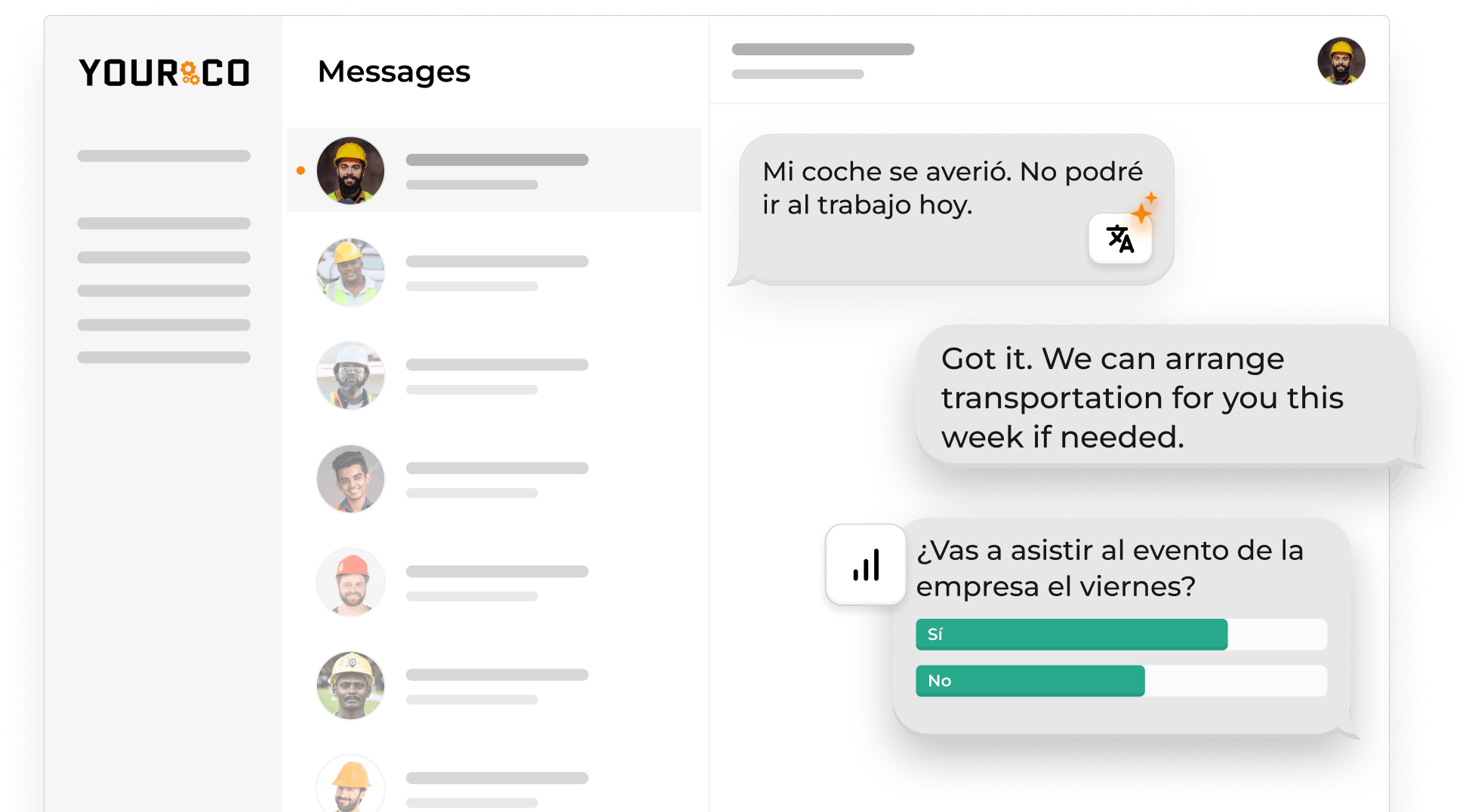
Treat notification separately from approval. Reporting a late-in or early-out does not automatically excuse the occurrence, and a manager's acknowledgment in the thread confirms receipt and nothing more. 85% of HR leaders say improved communication would reduce absenteeism, according to a Yourco-commissioned survey of 150 HR leaders, which is why the intake itself, not just the discipline that follows it, is worth getting right.
Define Late-Ins and Early-Outs and Your Grace Period Before You Enforce Them
A late-in occurs when an employee arrives past the scheduled start plus whatever grace period the policy allows. A policy may allow a short grace period of five or ten minutes. Continuous-relief operations may instead use zero tolerance because a 3:12 p.m. arrival for a 3:00 p.m. shift puts the outgoing worker into twelve minutes of unwanted overtime.
Set the trigger by station readiness. Under this rule, an operator who badges in at 3:00 and reaches the line at 3:08 is late. The Texas Workforce Commission frames the expectation as being ready for work by the start of the shift, while payroll time-clock rounding is a separate practice that does not set the tardiness threshold.
This information is for general awareness only. For specific compliance guidance, consult with qualified legal professionals.
A late-in and early-out policy sample a manager can adapt directly:
- Late-in: An employee is late-in when they are not at the assigned station and ready to work more than [5] minutes after the scheduled start of the shift; managers record a late return from a meal or rest break the same way.
- Early-out: Managers record leaving before the scheduled end of the shift without prior approval from the supervisor on duty as an unapproved early-out.
- Notification: Employees report an expected late-in or an unapproved early-out before the shift starts, in their own words, through the attendance reporting channel. The occurrence stands once the report is confirmed.
- Occurrences: Managers count each late-in or unapproved early-out as one-half occurrence and track it over a rolling [12]-month period.
The bracketed values are the two numbers worth debating locally. The rest should read identically at every site, so a logged occurrence means the same thing wherever it came from.
Walk the Example Attendance Process for Late-Ins and Early-Outs
A single late-in is a data point, not a case. Escalate only as the record does, moving from a logged occurrence to a private conversation to formal, signed discipline. Each rung below adds the manager's judgment to a record the intake already built, rather than reconstructing dates and minutes from memory.
First Late-In: Log It and Move On
A single occurrence tells you nothing about a pattern, so there is no conversation to have yet. The record already exists, carrying the date, the reported reason, and the minutes missed, and no manager had to write any of it down.
Second Late-In Inside 30 Days: Informal Check-In
Pull the employee aside privately after shift and open with facts and a question: "You were in at 7:14 Tuesday and 7:20 today. Our start is 7:00. Is something going on?" Both dates and times come straight off the record, so the conversation starts on agreed facts rather than a dispute about what happened. Ask whether transit or childcare is interfering with arrival time. A second job may also affect attendance. SHRM guidance says to ask why attendance changed, set expectations, and keep a record of absences and tardiness with the reasons employees give. Write a dated note describing the discussion and the improvement both sides agreed on.
Third Occurrence: Documented Verbal Warning
This is the first formal discipline step. Restate the dates, the policy clause, and the expectation, write it up the same day, and have the employee sign to acknowledge receipt rather than agreement. A point schedule may assign 0.5 points to a late-in of 1 to 30 minutes and place the verbal warning at 3 points; a dedicated guide to attendance point systems covers the weighting and reset window.
Continued Pattern: Written Warning
Issue it when the employee repeats the same rule violation after the verbal warning. Most of what the attendance warning write-up needs is already in the attendance record, and the rest is the manager's to supply:
- each date and exact number of minutes late, pulled from the logged occurrences
- whether the employee reported the late-in in advance, and what the report said
- the leave category each occurrence was sorted into
- the occurrence count against the rolling window
- the operational impact, including who covered the station and for how long
- the specific policy clause, the expected behavior, and the next-occurrence consequence
- both signatures and copies, with a copy to the employee and to the file
A sample sentence: "On March 8, you arrived at 7:31 for the 7:00 shift, and the outgoing operator held the assigned station for 31 minutes."

Track Late-Ins and Early-Outs as Separate Occurrence Types
A manager adds an early-out to the record only when the employee lacks supervisor approval. Employees report planned departures in advance and report unexpected ones before leaving. A manager records an approved departure as actual hours worked with no occurrence. The manager classifies a denied request, or a departure the employee never requested, as unapproved.
Separation holds better when it happens at intake than when someone sorts it out later. Because each report is sorted into a leave category and carries its own hours-missed figure as it arrives, late-ins, early-outs, and full-day absences stay distinct without anyone re-coding a spreadsheet at month-end. Rolling them into a general total is what hides a Friday early-out pattern.
An attendance policy decides whether an unapproved early departure carries the same weight as a short tardy, and the policy sets the exact value. Tailor the attendance improvement plan goal to the specific behavior, whether tardiness, no-shows, or early departures, so every follow-up stays on the one that needs to change.
Late-ins and early-outs can sit on the same warning ladder when the policy treats them as the same type of violation.
Fix the Schedule Before You Escalate Discipline
Public transportation typically follows standard rush-hour schedules and routes, which don't always support shift workers' needs. For some employees, chronic late-ins and early-outs start with that mismatch, not disregard for the attendance policy.
A root-cause check-in before the second formal step does double duty. Sort what you hear into causes the plant can fix and causes the employee controls. A 6:00 a.m. start that misses the first bus by ten minutes may be a schedule problem; possible responses include a 30-minute shift change, a bus pass, or a swap onto a later crew. Oversleeping after a second job is the employee's to manage, and the ladder continues.
One check-in explains one employee. A cluster of late-ins on the same shift at the same site is a different question, and no single conversation surfaces it. Frontline Intelligence reads reporting activity across locations, so attendance leads can ask which sites generate the most late-in reports this month, or where early-outs cluster by day of the week. A 6:00 a.m. start that produces late-ins at one plant but not another points to something local, not the crew.
Punctuality recognition and other floor-level strategies for reducing tardiness sit outside this process.
Standardize Every Late-In Report With Yourco
The process above runs on any phone that can text. Yourco gives operations and Human Resources (HR) teams an SMS-based employee communication platform where the report arrives in the employee's own words, the manager confirms coverage in the same thread, and the searchable, timestamped record the warning ladder rests on builds itself.
Core capabilities for attendance work:
- SMS reaches any phone with no app download, so a late-in report works from a basic flip phone in the parking lot.
- Two-way messaging lets the floor manager confirm the report and arrange coverage in one thread.
- The AI Call-Off Agent collects a late-in or early-out in the employee's own words, confirms it, notifies the manager, and logs missed hours and the leave category.
- Artificial intelligence (AI) detects the language an employee writes in and translates automatically across 190+ languages, so policy acknowledgments and warning follow-ups are read in each worker's preferred language.
Together, these capabilities keep attendance communication accessible and documented.
Rosters stay current without anyone re-keying phone numbers by site because Yourco connects to 240+ Human Resource Information System (HRIS) and payroll system integrations.
For centralized, one-way attendance policy updates across all locations, corporate leadership can use Enterprise Bridge, while local managers maintain direct communication with their teams.
Frontline Intelligence reads the late-in and early-out records as they accumulate, so HR and operations leaders can see across locations what no single plant manager sees from one site. Leaders can ask it directly: which shifts are producing the most late-in reports before a holiday weekend, or whether one site's early-out rate is drifting while the rest hold steady.
"Getting a lot more response from employees than we have in the past, and it's so easy to just send out a quick text company-wide or to a specific group."
— Maddy Kristjanson, Human Resources Generalist, Plymouth
After 90 days on Yourco, companies see two-way employee engagement reach 86%.
Try Yourco for free today or schedule a demo to see how SMS can capture late-in reports and keep timestamped attendance records.

Frequently Asked Questions About Late-Ins and Early-Outs
What Is the Standard Grace Period for Attendance?
A policy may set a brief grace period, while continuous-relief operations may allow none because late relief keeps the outgoing worker on unwanted overtime. For late-ins and early-outs, choose a threshold that fits the handoff and apply it consistently across shifts, sites, supervisors, and frontline teams.
Do Employees Need to Use a Specific Code to Report a Late Arrival?
No, an employee can describe the situation in their own words, and an AI intake agent on an SMS-based platform like Yourco reads the message, asks for anything missing, and confirms the report back. Removing the format requirement is what keeps reporting consistent across shifts and supervisors.
How Do You Deal With Chronic Lateness Without Going Straight to a Write-Up?
Hold a private check-in once the late arrivals form a pattern, open with the documented dates, and ask what is going on. Sort the answer into causes the plant can fix and causes the employee controls. Fix what you can, restate the attendance expectation, and document the conversation.
Does Texting Excuse a Late Arrival?
No, the report provides notice and lets the floor manager plan coverage. The late-in remains an occurrence unless the supervisor approved a schedule change beforehand. Write that distinction into the process for late-ins and early-outs so managers distinguish a simple acknowledgment from approval.
Should a Policy Count Early-Outs the Same as Late-Ins?
They can follow the same warning ladder when the policy classifies late-ins and early-outs as the same rule type. Track them in separate report columns anyway. Separate tracking keeps a recurring early-departure pattern from disappearing inside a general attendance total and helps managers address the specific behavior.
Where Can I Get an Attendance Policy Template for Late-Ins and Early-Outs?
Start with the sample clauses in this article, covering definitions, notification, occurrences, and the warning ladder, then fill in your grace period and rolling window. SMS-based platforms like Yourco can send the finished policy to frontline workers' phones, including basic flip phones, with translation for multilingual crews.