Your shift leads are relaying updates by word of mouth, your second-shift team never got the safety alert from first shift, and half your workforce can't access the company app you spent six months rolling out. These aren't minor inconveniences. They're the same frontline communication breakdowns that drain productivity, drive preventable safety incidents, and push good workers out the door across manufacturing, logistics, healthcare, and construction. This article breaks down the four most damaging communication failures hitting frontline operations right now and walks through exactly how to fix each one.
TL;DR
- Frontline communication failures create real operational costs by slowing work, forcing rework, and leaving workers without the information they need.
- The four biggest breakdowns are digital disconnect, shift-based information silos, language barriers that raise safety risk, and one-way communication gaps.
- The most effective fixes remove access barriers rather than add new ones for frontline workers.
- Structured handoffs, multilingual messaging, and simple feedback channels help teams stay aligned across shifts and locations.
- SMS-based platforms like Yourco can help you reach workers on any phone without requiring apps, email, or smartphones.
Count the Real Cost of Frontline Communication Failures
Poor communication across frontline industries accounts for major annual U.S. losses, driven by fragmented messaging and outdated tools. The impact is not abstract. It shows up in stalled work, repeated mistakes, delayed decisions, and frontline teams spending too much time trying to get information they should already have.
The delivery gap behind these costs is concrete: according to a Yourco-commissioned survey of 150 HR leaders, only 43% of frontline employees consistently receive the communications their companies send, and just 36% actually read them. When the majority of your workforce never gets the update, every downstream failure, rework, missed shift, and delayed decision traces back to a channel that didn't deliver.
In manufacturing specifically, many frontline workers report being unable to do their jobs for long stretches due to limited access to resources. Across industries, many also lose part of the workday waiting for safety-critical information or approvals.
Failure #1: Close the Digital Disconnect Before It Widens
The digital disconnect is the most widespread breakdown in frontline communication. Your office teams have email, internal chat tools, intranets, and mobile apps, while your floor workers, drivers, and other frontline workers have none of that. Only 23% of frontline workers say they have access to the technology they need to be productive.
Many frontline employees still lack company email addresses or access to company intranets. Many organizations also still lack the technology to adequately engage their frontline workforce, even though those workers make up most of their headcount.
Here's what closing this gap looks like in practice:
- Default to SMS as your foundation. SMS reaches any mobile phone, including basic flip phones, without app downloads, logins, or data plans. SMS achieves 98% read rates compared to roughly 20% for email, with an average response time of 90 seconds.
- Eliminate cost barriers for workers. If your communication tool costs employees money or requires a smartphone, you've already excluded part of your workforce. Toll-free messaging removes this obstacle entirely.
- Deploy shared kiosks at transition points. Touchscreen kiosks at clock-in areas and break rooms give workers without personal devices access to company announcements, shift notes, and safety updates.
- Segment messages by role, location, and shift. Workers tune out when messages are not relevant to them. Targeted messaging ensures a warehouse associate in Building C gets the updates that matter to their job, not every announcement across the entire organization.
The key principle: if your communication tool requires email, an app, or a smartphone, it's not a frontline communication tool. It's an office tool you're trying to force onto a workforce it was never designed for.
Failure #2: Fix Shift-Based Information Silos With Structured Handoffs
When critical information dies at the end of every shift, the incoming team walks in blind. Equipment malfunctions go unreported, safety incidents from the morning are not communicated to the evening crew, and quality issues compound because no one documented what went wrong.
This is not a minor coordination hiccup. In healthcare, patient handoff failures cause preventable harm; in manufacturing, unlogged equipment issues on one shift lead to repeated breakdowns on the next.
Fixing shift silos means moving from verbal, paper-based handoffs to digital protocols. Outgoing shifts document ongoing production processes, work orders, machine performance, and operational challenges. Incoming teams acknowledge receipt, ensuring accountability on both sides.
Asynchronous communication tools make this possible across 24/7 operations where workers on different shifts can never attend the same meeting. When shift notes live in a centralized, SMS-accessible system, every worker starts their shift with the same information, regardless of when they clock in.
Failure #3: Break Down Language Barriers That Create Safety Risks
Language barriers are not just an inconvenience. They are a safety risk. Language barriers are associated with a meaningful share of on-the-job accidents, and Hispanic or Latino workers face the highest fatality rate of any demographic group.
In construction, the picture is especially stark. Fatal injuries among Hispanic construction workers rose sharply over the last decade, significantly outpacing employment growth during the same period.
Many employers follow OSHA guidelines to provide safety training in a language and vocabulary workers can understand, recognizing this as essential to effective hazard communication.
This information is for general awareness only. For specific compliance guidance, consult with qualified legal professionals.
But implementation remains inconsistent, especially in industries with high concentrations of multilingual workers.
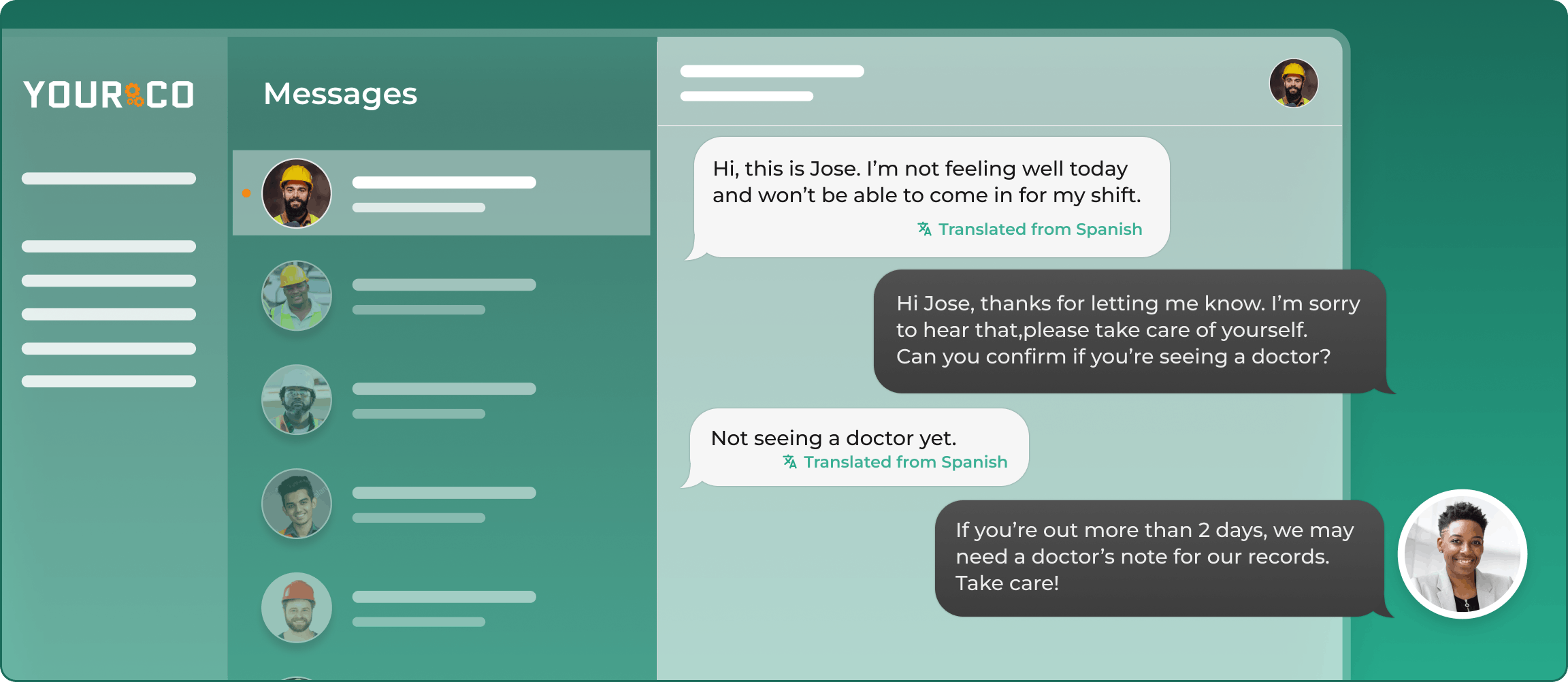
Manual translation of safety messages takes 20–30 minutes, per Yourco's "Closing the Comms Gap" research. On a multilingual job site, that delay means some workers start tasks without the safety information that others received before the shift began.
Here's what effective multilingual communication looks like:
- AI-powered real-time translation is built directly into your communication platform, automatically converting outbound messages into each worker's preferred language. Language preferences are stored per employee, so translation happens without any manual steps.
- Safety-specific terminology handled correctly: not just a generic translation but an accurate rendering of the technical vocabulary workers encounter on the floor or at the job site.
- Coverage across 135+ languages and dialects through platforms like Yourco, reflecting the diversity of today's frontline workforce.
Spanish-language safety training initiatives have been associated with fewer claims among Hispanic and Latino construction workers over time. That's the kind of impact accurate, accessible communication delivers when language barriers no longer slow people down.
Failure #4: Build Two-Way Feedback Channels That Workers Actually Use
Most frontline employees don't believe their ideas and feedback actually reach company leadership. That is not because workers have nothing to say. It is because the channels either do not exist, are not accessible, or have taught workers through experience that their input does not matter.
The same pattern shows up on the management side, 69% of HR leaders say missed communication with frontline teams is a recurring frustration. When the outbound channel is already failing, expecting meaningful inbound feedback through the same infrastructure is unrealistic. Two-way communication requires a channel that works in both directions for workers who never check email.
Closing this gap means creating feedback channels that match how frontline workers actually operate:
- SMS-based pulse surveys with simple response options that workers can complete in seconds between tasks.
- Two-way SMS conversations where employees can report issues, ask questions, or flag concerns directly from any phone.
- Anonymous feedback options that remove the fear-of-retaliation barrier are particularly important in industries with significant power differentials between workers and supervisors.
- QR codes in break rooms and at time clocks linking to simple feedback forms, giving workers who prefer not to use SMS another low-barrier option.
The critical follow-through: workers need to see that their feedback leads to action. Organizations where frontline employees describe internal communication as effective report higher connection, satisfaction, and retention. The channel matters, but so does what happens after the message arrives.
Stop Treating Frontline Turnover as Inevitable
The most expensive assumption in frontline operations is that high turnover is just part of the job. The data says otherwise: 93% of HR leaders say improved communication would improve frontline retention, and 88% say better communication tools directly reduce employee churn, and that's what 150 HR leaders told Yourco. The turnover most operations accept as inevitable is often a communication failure they haven't yet measured.
Communication is the thread connecting it all. Workers who feel informed, heard, and connected stay longer. Workers who learn company news from external sources, never receive important alerts, or watch their feedback disappear into a void, start looking for the exit.
Start by auditing which workers actually receive company updates and which do not, then close the gaps with accessible channels that do not require email or an app. Fix the communication infrastructure, and you address turnover at its root.
From Breakdown to Fixed: What Each Failure Looks Like Before and After
Each breakdown has a concrete fix. Here is what the shift looks like across all four failure types.
Reach Every Frontline Worker Instantly With Yourco
The breakdowns in this article all come back to the same challenge: getting timely, usable information to frontline workers and giving leadership a reliable way to hear back. Yourco solves that by using an SMS-based approach that works across shifts, locations, and language preferences without forcing workers into apps or office-only tools.
Yourco's core capabilities directly address each failure type:
- SMS to any phone with no app download, no Wi-Fi, and no data plan required, working on smartphones and basic flip phones alike.
- Two-way messaging that gives workers a direct line to managers for reporting issues, confirming shifts, or texting off.
- AI-powered translation across 135+ languages and dialects, automatically converting every message to each worker's preferred language and translating responses back for managers.
Yourco integrates with 240+ HRIS/payroll systems, keeping your employee roster synced automatically so you never have to maintain manual contact lists.
Enterprise Bridge enables corporate leadership to broadcast one-way announcements, policy updates, and safety alerts to every frontline location simultaneously, while local managers maintain direct two-way conversations with their teams.
Frontline Intelligence gives HR and operations leaders centralized visibility into communication patterns, engagement trends, and safety signals across all locations. Leadership can identify patterns across sites, spot disengagement trends before they lead to turnover, and make more proactive decisions rather than reacting after the damage is done.
"We have tried 3 text communication tools, and this is the best experience we've had by far. A consistent line of communication to our employees is one of the most important things, and Yourco is the most reliable system around."
— Terri Kasper, HR Manager, Calumet Carton Company
After 90 days with Yourco, two-way employee engagement increased to 86%.
For the full dataset on frontline communication barriers, explore Yourco's "Closing the Comms Gap" research.
Try Yourco for free today, or schedule a demo to see the difference the right workplace communication solution can make for your company.
Frequently Asked Questions About Frontline Communication Breakdowns
How much do frontline communication breakdowns actually cost?
More than most teams realize. When fewer than half of frontline workers consistently receive company communications, every downstream problem, rework, missed shifts, and delayed decisions trace back to a channel that didn't deliver. The cost compounds across every shift and every location.
What are the biggest communication failures on the frontline?
The biggest problems are digital disconnect, shift-based silos, language barriers, and one-way communication, which prevent workers from sharing their knowledge.
How do you communicate with frontline workers who don't have smartphones or email?
SMS-based platforms like Yourco send messages to any mobile phone, including basic phones, so workers can stay connected without an app or company email.
Can language barriers really cause workplace accidents?
Yes, when workers do not receive clear safety information in a language they understand, the risk of confusion and preventable mistakes increases significantly.
What's the connection between poor communication and frontline turnover?
Workers are more likely to stay when they feel informed, heard, and connected. Poor communication creates frustration, disconnection, and avoidable turnover pressure, and 93% of HR leaders agree that better communication would directly improve frontline retention.