


80% of the global workforce works outside traditional office settings: on factory floors, in warehouses, behind retail counters, and out in the field. Yet most workplace communication and management tools were built for the minority desk-based workforce. If you're an HR leader struggling to reach, engage, and retain frontline workers, you're facing a systemic problem that traditional solutions weren't designed to solve. This guide explains what mobile workforce management is, why it matters for your organization, and how to implement it effectively.
TL;DR
- Mobile workforce management covers the strategies, tools, and processes used to coordinate employees who work outside traditional office settings.
- The biggest challenge is a communication gap: most frontline workers lack regular computer or email access, so standard tools simply don't reach them.
- Compliance complexity multiplies across locations, with varying break laws, predictive scheduling rules, and industry-specific regulations.
- Essential platform features include mobile-first scheduling, universal communication access (including SMS for basic phones), multilingual support, and automated compliance monitoring.
- Implementation success depends on phased rollouts, champion networks, and tracking adoption metrics from day one.
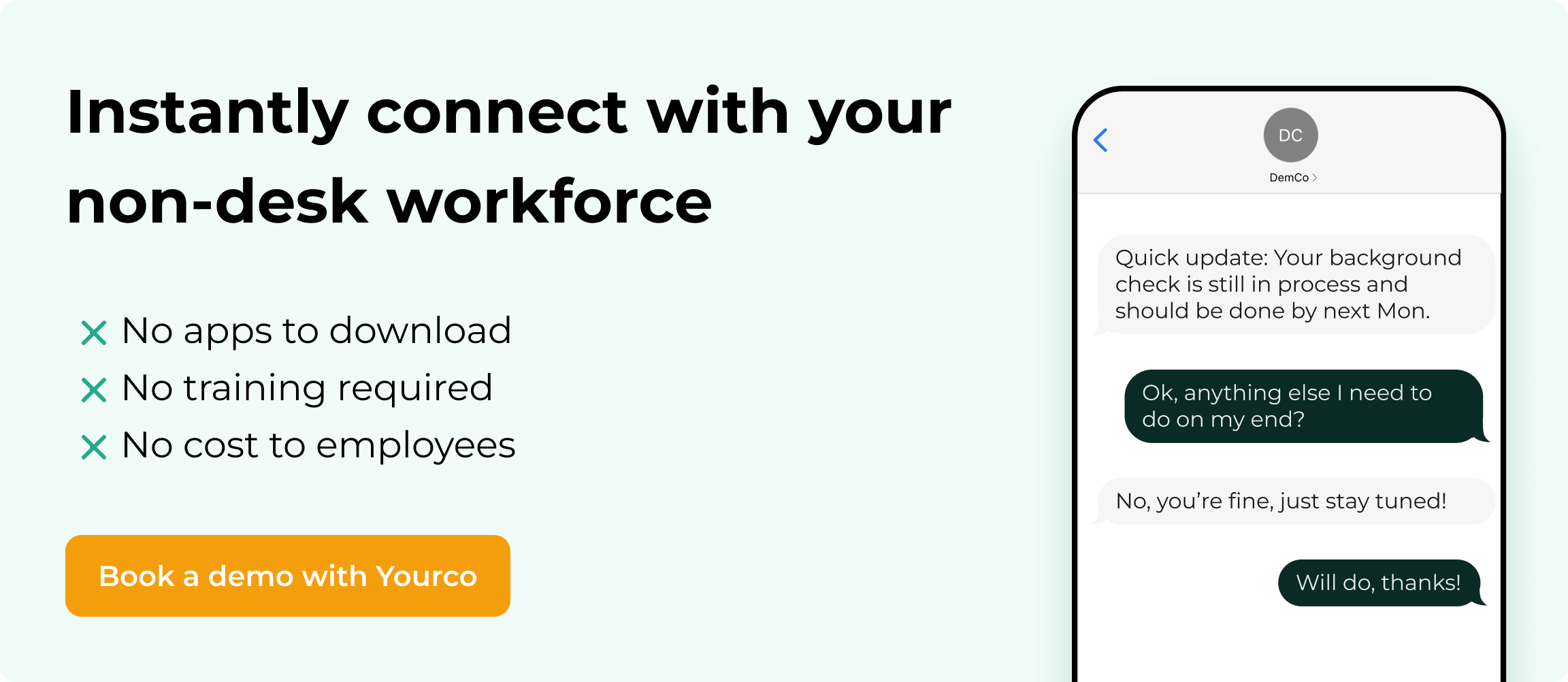
- SMS-based tools such as Yourco bridge the communication gap by reaching every phone instantly, with no apps, Wi-Fi, or email required.
Understand What Mobile Workforce Management Really Means
Mobile workforce management refers to the strategies, processes, and digital tools organizations use to coordinate employees who work outside traditional office settings, such as shift workers, field teams, delivery drivers, manufacturing crews, and others whose work doesn't happen at a desk with a company laptop. Effective mobile workforce management encompasses communication systems that reach every worker regardless of device access, compliance tracking across multiple locations, self-service HR capabilities accessible from any phone, and analytics that give leaders visibility into workforce patterns.
The goal is to create an equitable employee experience where frontline workers receive the same level of communication, support, and engagement as their office-based counterparts. Organizations taking this strategic approach can realize $17,000 to $34,000 annually per frontline employee through improved retention, productivity gains, and reduced compliance risks.
Recognize the Communication Gap Costing You Talent
The most pressing challenge HR leaders face with mobile workforces is a fundamental communication breakdown. Frontline workers spend most of their shifts away from a computer, which means carefully crafted emails, intranet posts, and messaging platforms simply don't reach the majority of the workforce.
The consequences are measurable and severe. Firstup's 2025 survey of 1,000 U.S. non-desk workers found that about one-third say their organization communicates less effectively with them compared to office workers, many cite poor timing of updates as a barrier, and nearly one-third cannot access critical information when needed. Boston Consulting Group's 2024 research found that most workers report feeling burned out and that many are actively seeking new jobs.
This isn't just a technology problem; it's a retention crisis. When workers feel disconnected from company culture, miss policy updates, or don't receive safety communications, they disengage and leave.
Address Compliance Complexity Across Locations
Managing compliance for mobile workforces requires navigating a patchwork of federal, state, and local regulations, as well as sometimes international regulations. According to research, employers generally comply with employment laws where work is performed, which means a single organization can face obligations under dozens of regulatory frameworks.
Mobile workforce compliance creates challenges across multiple areas:
- Break and meal period requirements: Federal law doesn't mandate breaks, but state laws frequently impose more stringent requirements that vary significantly by jurisdiction
- Predictive scheduling laws: According to SHRM, many jurisdictions now have advanced schedule posting requirements with premium pay provisions for last-minute changes
- Multi-state wage variations: Different minimum wages, overtime thresholds, and pay transparency requirements apply depending on work location
- Industry-specific regulations: Transportation workers face federal ELD requirements and Hours of Service regulations; construction sites follow OSHA safety guidelines; hospitality employers must navigate Fair Workweek laws
In practice, manual compliance tracking becomes nearly impossible at scale. Modern workforce systems address this complexity by embedding compliance safeguards directly into scheduling processes, reducing managerial burden while protecting workers and organizations.
This information is for general awareness only. For specific compliance guidance, consult qualified legal professionals familiar with the jurisdictions in which your workforce operates.
Identify Essential Features for Your Platform
When evaluating mobile workforce management solutions, focus on capabilities that address frontline-specific needs.
Essential platform features include:
- Mobile-first scheduling: Workers need to view, confirm, and swap shifts from any phone, including basic devices without app capabilities, via SMS
- Time and attendance tracking: Mobile time capture with real-time visibility prevents payroll errors that create immediate financial hardship for hourly workers
- Universal communication access: Systems must function for workers using basic phones, without data plans, or without reliable WiFi, with two-way communication for feedback and absence reporting
- Self-service HR functions: Mobile-accessible pay stubs, PTO balances, benefits information, and document access
- Automated compliance: Rules built directly into scheduling to prevent violations before they occur
- Multilingual support: Automatic translation without requiring manual intervention
- AI-Powered Analytics: Gain real-time insight into employee engagement, sentiment trends, and call-off patterns. Corporate leadership can see what's happening across locations and shifts, turning daily frontline communication into actionable workforce intelligence.
These features work together to create an accessible, compliant, and efficient workforce management ecosystem. Don't prioritize advanced features over basic accessibility; the most sophisticated platform fails if half your workforce can't access it.
Evaluate Mobile Workforce Management Vendors
Selecting the right vendor requires a systematic evaluation that prioritizes frontline worker realities over enterprise feature lists.
Use these criteria to guide your decision:
- Accessibility: Does the platform reach workers without requiring app downloads, corporate email accounts, or WiFi access? SMS-based solutions eliminate barriers that prevent workers with basic phones or limited data plans from participating.
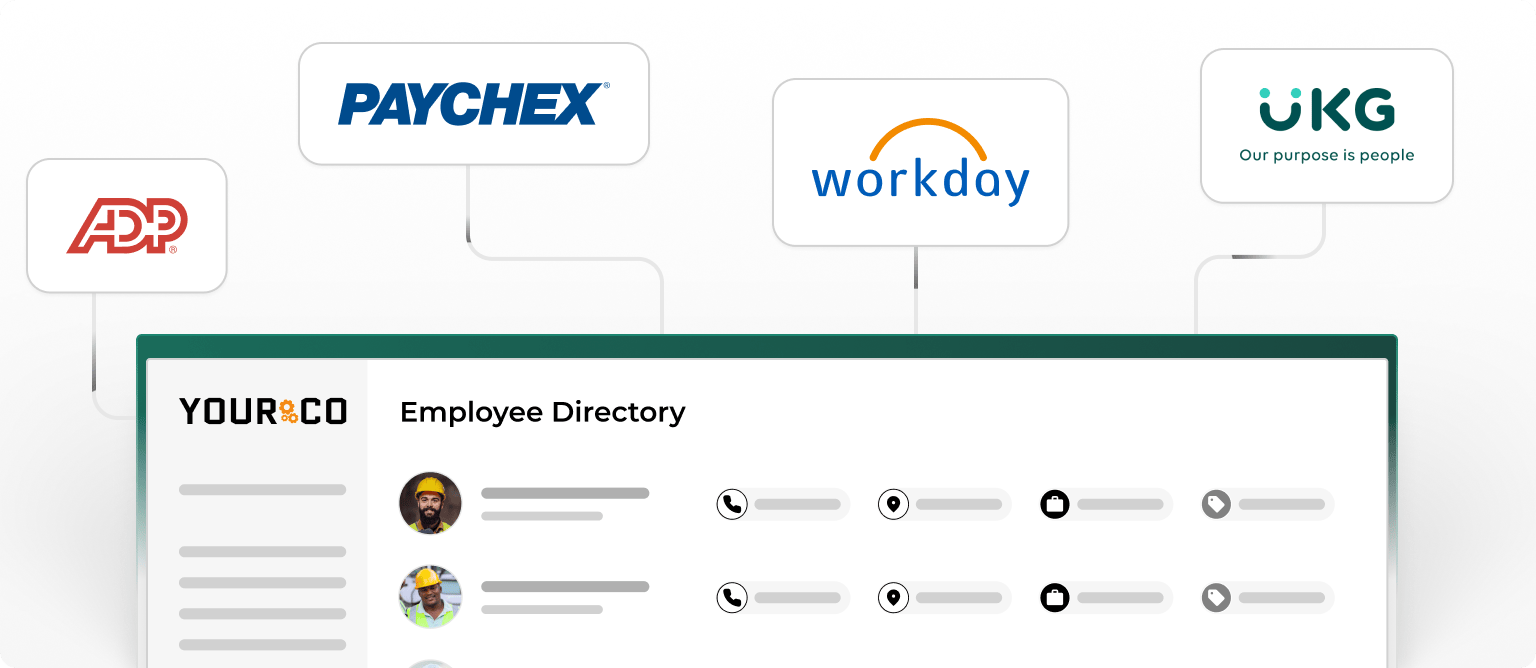
- Integration capability: Does it connect seamlessly with your existing HRIS, payroll, and benefits systems to prevent data discrepancies and manual reconciliation?
- Compliance automation: Does it embed jurisdiction-specific rules directly into scheduling workflows, preventing violations before they occur?
- Analytics and reporting: Does it provide visibility into workforce engagement patterns, adoption rates, and retention risk?
- Scalability: Can it support multiple locations, a growing headcount, and varied shift structures without requiring a platform replacement?
- Implementation support: Does the vendor offer change management resources and training tailored to frontline populations?
- Total cost of access: Are there hidden costs to employees, such as required app downloads or data usage?
These evaluation factors ensure you select technology that effectively serves your entire workforce.
HR-specific benefits to prioritize: Real-time visibility into workforce engagement and communication adoption, retention analytics that identify at-risk populations before turnover spikes, reduced administrative burden through automated compliance monitoring, streamlined onboarding workflows for new frontline hires, and data-driven workforce planning capabilities that connect HR metrics to operational outcomes.
The vendor evaluation process should weigh accessibility and integration as heavily as feature depth. The most powerful platform delivers zero value if your workforce cannot access it.
Build Your Implementation Roadmap
Implementation strategy determines ROI more than technology selection. Organizations tracking adoption are 2.5 times more likely to achieve their implementation goals.
Avoid enterprise-wide "big bang" launches. Phased rollouts allow you to catch issues early, refine messaging, and build internal advocates before scaling across the organization.
Apply Solutions to Your Industry Context
Mobile workforce management needs vary by regulatory requirements and operational environment.
Prepare for Emerging Workforce Technology Trends
The tools HR leaders use to manage frontline teams are evolving fast. Staying ahead of these trends helps you make smarter investments and avoid platforms that will feel outdated within a year or two.
- AI-powered analytics analyze communication patterns, engagement trends, and real-time workforce signals to surface actionable insights, helping leaders identify risks early and make data-backed decisions across locations.
- AR-assisted training and guidance uses augmented reality overlays to provide step-by-step instructions for complex tasks, equipment maintenance procedures, and safety protocols directly in workers' field of view, reducing training time and error rates for distributed teams.
- Most organizations have adopted mobile self-service. According to research, flexibility and schedule autonomy rank among the most pressing issues for frontline workers worldwide.
- Integrated communication platforms are consolidating fragmented channels. Frontline workers using modern communication technology report lower burnout rates and improved engagement.
Real-time compliance automation is becoming essential as regulatory complexity grows, embedding safeguards directly into workflows while enabling flexible scheduling.
Connect Every Worker With Yourco's SMS-First Platform
The challenges outlined throughout this guide share a common root cause: most workforce management tools weren't built for how frontline organizations actually operate. Yourco solves this by reaching every employee through the one technology they already have: text messaging. The platform delivers critical communications, policy updates, and schedule information directly to any mobile phone, including basic flip phones, without requiring app downloads, email accounts, or WiFi access, and at no cost to employees.
Yourco's AI-powered translation supports 135+ languages, so every worker receives messages in the language they understand best. Integration with 240+ HRIS integrations keeps employee data flowing seamlessly, and the Enterprise Bridge connects Yourco to your existing workforce management tools for real-time synchronization.
"Yourco has helped to change the way we communicate at McCarthy Auto Group. We have nearly 700 employees and 80% are non-desk based, communication is a challenge. Yourco provides a quick easy way to reach everyone within our organization and a secure way for employees to reach HR and leadership without a computer."
— Felisha Parker, VP Human Resources, McCarthy Auto Group
After using Yourco for 90 days, two-way employee engagement increased to 86%.
Try Yourco for free today, or schedule a demo to see the difference a right workplace communication solution can make for your company.
Frequently Asked Questions about Mobile Workforce Management
How do I communicate with employees who don't have email addresses?
SMS-based platforms like Yourco reach workers through the mobile phones they already carry. Unlike email or app-based tools, text messaging works on any device and doesn't require a corporate account, data plan, or technical setup.
What features matter most for managing a multilingual workforce?
Look for platforms that automatically translate messages into each employee's preferred language. Translation functionality is particularly critical for safety communications and compliance updates, where miscommunication can create liability risk.
How long does mobile workforce management implementation typically take?
Plan for a phased approach: pilot groups take two to four weeks, departmental rollout takes four to eight weeks, then full enterprise deployment. Rushing implementation consistently leads to poor adoption rates.
What compliance considerations affect mobile workforce scheduling?
Scheduling rules vary significantly by location and industry. Many jurisdictions have predictive scheduling laws that require advance notice and premium pay. Transportation workers are subject to federal Hours of Service regulations. Multi-state employers must navigate different wage, overtime, and scheduling rules. Consult qualified legal professionals for guidance specific to your operations.
How do I measure success after implementing a mobile workforce platform?
Track user activation rate, daily active users, and feature adoption rates. Operational metrics include time-to-complete tasks versus legacy processes, scheduling accuracy, and employee satisfaction scores.


