
Most shift leaders are promoted for being the best technician on the floor, then handed leadership responsibility without structured communication training or a clear daily framework. The gap between what shift leaders are expected to do and what they're equipped to do creates real problems: safety incidents, spikes in turnover, and production delays. This guide breaks down the core responsibilities, essential skills, and communication practices that turn good technicians into effective frontline leaders.
TL;DR
- Shift leaders own four core domains: task delegation, attendance oversight, safety compliance, and shift handover documentation
- Structured handovers using the SBAR framework (Situation, Background, Assessment, Recommendation) prevent critical information loss between shifts
- The three skills most new shift leaders lack are conflict resolution, execution-focused time management, and performance coaching
- Clear communication practices, including real-time escalation protocols and two-way feedback loops, support safer, more consistent operations
- A daily checklist covering pre-shift, mid-shift, and end-of-shift phases keeps operations consistent across every shift change
- SMS-based tools like Yourco ensure shift leaders can reach every frontline worker instantly, in any language, without requiring apps or email access
Who Is a Shift Leader? Four Core Domains That Define the Role
Shift leaders in manufacturing, logistics, construction, and hospitality share four core responsibility domains. The specifics vary by industry, but the framework stays consistent.
- Task delegation and workforce management. Shift leaders assign crew positions based on qualifications, monitor progress against targets, and adjust assignments as conditions change. The AGC conference identifies trust as "an essential, but often overlooked, leadership skill that needs to be developed to complement strong technical skills," especially in diverse or multilingual crews.
- Attendance oversight and scheduling. Shift leaders confirm attendance at the start of the shift, arrange coverage for absences, and manage last-minute schedule changes. The Restaurant Association highlights ongoing understaffing pressures that make attendance management harder.
- Safety compliance and risk management. According to the MANTEC guide, personal liability exists when supervisors knowingly allow dangerous conditions or practices. OSHA's manual outlines supervisors' obligations, including monitoring unsafe conditions, correcting hazards within their authority, and serving as safety leaders.
- Shift handover duties. Handovers are the highest-risk communication point in any shift operation. The Marsh paper defines a three-step framework: preparation by outgoing personnel, two-way communication exchanging relevant information, and ensuring accurate and reliable information transfer.
When shift leaders clearly own these four domains, they create accountability that operations managers can measure and improve.
How Shift Leaders Handle the Highest-Risk Moment in Any Operation
Verbal-only handovers with no verification mechanism leave incoming shift leaders guessing about what happened, what's pending, and what's dangerous. Lord Cullen's inquiry into the 1988 Piper Alpha offshore platform explosion, which killed 167 people, found that the failure to communicate information at shift handover was a contributing factor, with no written procedure or structure for what items to include.
The SBAR technique, documented by the WHO guide, provides a repeatable structure for every handover:
- Situation: Current operational status and immediate issues requiring attention
- Background: Equipment condition, previous shift activities, ongoing projects
- Assessment: Safety concerns, production bottlenecks, and quality issues identified
- Recommendation: Actions needed by incoming shift, priorities, resource requirements
Using the same structure every shift reduces omissions and makes handovers easier to verify.
The BP procedure reinforces that rushing handovers to achieve a "lean operation" compromises safety. Build handover time into the schedule for proper transitions. Where major safety or equipment issues are present, a gemba walk at shift boundaries helps catch risks before the incoming crew takes over.
What Skills Separate Effective Shift Leaders From the Rest
The most common failure mode in frontline supervision is promoting the best technical performer without providing leadership training. The MANTEC guide found that structured preparation and mentorship lead to significantly better supervisor transitions.
- Conflict resolution. According to Unique Development, the most common mistake is moving directly to problem-solving before addressing the emotional component of a conflict. Let the employee articulate grievances first, then facilitate dialogue to find mutually agreeable solutions. SHRM's toolkit also notes that supervisors need to know when to report disputes to HR.
- Time management for execution. Shift leaders focus on immediate execution rather than strategic planning. Effective time management means identifying peak times and required skills, managing real-time schedule adjustments, and standardizing transition processes.
- Performance coaching. The MANTEC guide identifies the required behavioral shift: effective coaches ask questions that build problem-solving skills rather than always providing answers. Focus feedback on observable, specific behaviors rather than personality judgments.
Investing in these three skills before or immediately after promotion closes the gap between technical ability and leadership readiness.

How Shift Leaders Keep Every Worker Informed and Safe
The PwC research makes the gap clear: clear communication matters greatly, but many shift leaders have not been trained to do it well. According to frontline communication data from a Yourco-commissioned survey of 150 HR leaders, 85% say frontline employees express frustration with manager communication, and only 43% consistently receive the communications their companies send. Shift leaders sit at the center of that gap. A few repeatable practices can make communication more consistent across every shift.
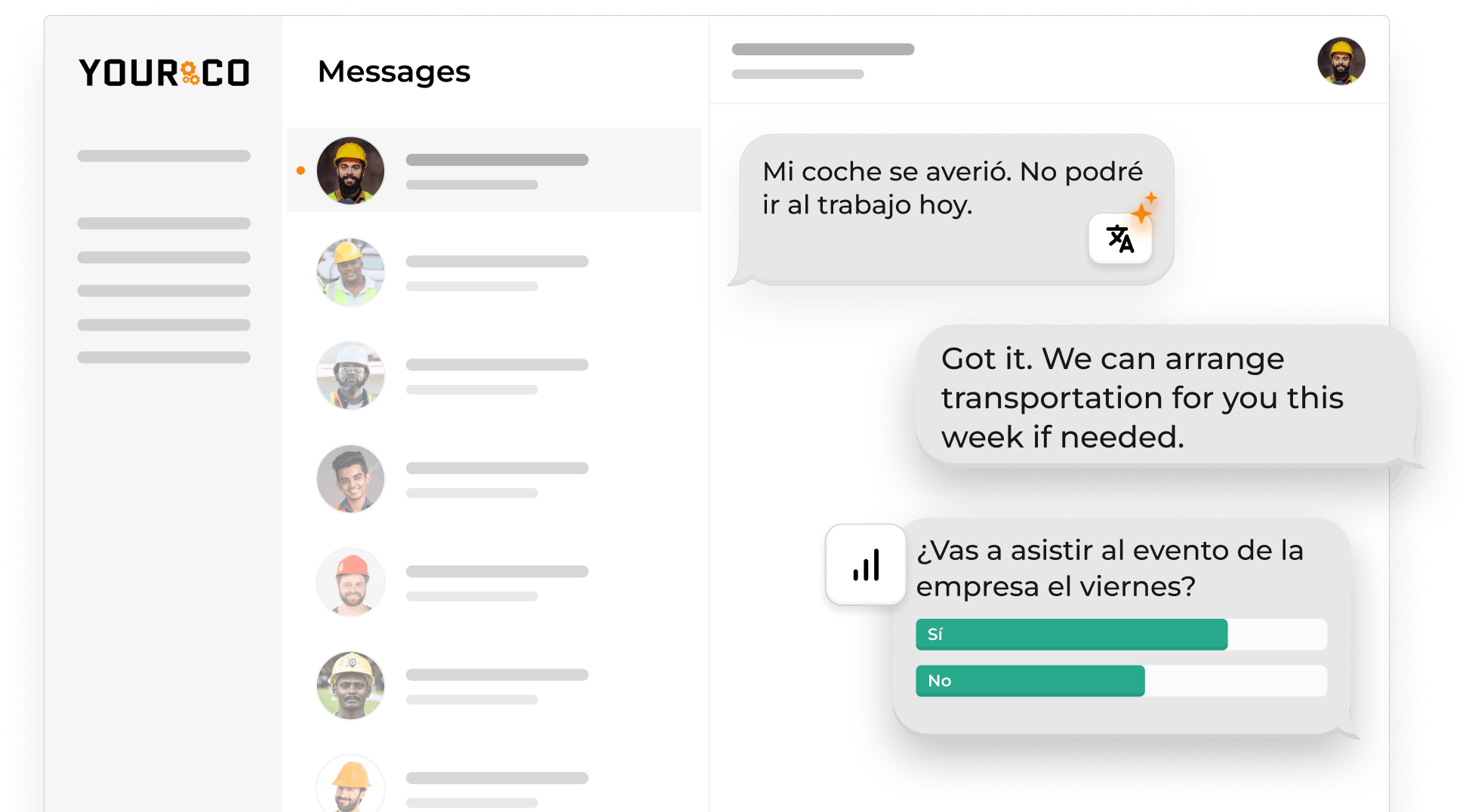
- Real-time issue escalation. Use pre-categorized alert structures with predefined categories such as Quality, Safety, Maintenance, and Supply Issues so alerts are standardized and immediately actionable. OSHA's practices recommend that employers develop a simple procedure for workers to report hazards or concerns without fear of retaliation.
- Two-way feedback loops. Frontline workers are often the first to spot equipment problems and safety risks before they escalate. Create channels for employees to share concerns, then visibly follow up. The Gallup report reinforces the value of regular manager conversations in keeping teams engaged.
- Multilingual team communication. OSHA's standard notes that employers may provide information in other languages alongside English. For shift leaders managing diverse crews, this can help workers understand critical instructions more clearly. SMS-based tools with automatic translation create a written record of safety-critical communications that supports documentation.
The data reinforces why these practices matter: 93% of HR leaders believe clear safety communication reduces workplace incidents, according to safety communication research from a Yourco-commissioned survey of 150 HR leaders. Shift leaders who build consistent communication habits aren't just running smoother operations. They're directly influencing safety and retention outcomes.
These templates help shift leaders communicate quickly and consistently in the moment:
- Safety alert: "SAFETY: [Location/Line]: [hazard description]. Do not enter the area until cleared. Report to [alternate location]."
- Schedule change: "SCHEDULE: Your shift tomorrow [date] starts at [time] instead of [original time]. Reply YES to confirm."
- Shift update: "UPDATE: [Issue] on [line/area] resolved. Normal operations resumed. See your shift leader for updated assignments."
Together, these communication practices create the infrastructure for consistent, safe, and inclusive shift operations.
This information is for general awareness only. For specific compliance guidance, consult with qualified legal professionals.
What Shift Leaders Do Every Day: A Phase-by-Phase Checklist
This framework draws from OSHA's guide, the BP procedure, and Marsh's paper. Use it as a simple way to keep the shift organized from start to finish.
- Pre-shift (before start): Verify access to PPE and emergency equipment. Conduct a face-to-face handover with the outgoing shift leader using written backup. Confirm attendance, identify staffing gaps, and assign crew positions. Hold a pre-shift huddle covering safety priorities and production targets.
- Mid-shift (continuous): Monitor PPE compliance and address violations immediately. Track progress against production or service targets. Verify lockout/tagout procedures during maintenance activities. Document incidents, near misses, and system overrides in real time.
- End-of-shift (handover period): Record production versus targets and all downtime with causes. Document all safety incidents and hazards identified, including actions taken. Conduct a face-to-face handover with the incoming shift leader using the SBAR format. Walk the floor together if major safety or equipment issues are present.
When the pace picks up, the detail falls away. Keep this short version visible where shift leaders can check it quickly during transitions: PPE check, handover review, attendance confirm, and safety huddle before every shift; compliance monitoring, target tracking, and real-time incident documentation during; and production log, SBAR handover, and a floor walk with the incoming leader at the end. A checklist only works if it is used consistently every day, so keep the format simple and repeatable.
Where Shift Leader Authority Ends and Manager Escalation Begins
Post this matrix in break rooms, include it in communication training materials, and review it during supervisor onboarding.
This kind of visibility reduces confusion about where the shift leader's authority starts and where manager escalation begins. Strong shift leadership ultimately shows up in operational outcomes, not just in effort. Research, such as the Gallup Q12, links engagement to improved safety, attendance, and productivity outcomes. For operations managers tracking attendance across multiple shifts, a clear accountability structure is what makes those patterns visible and improvable.
Equip Every Shift Leader With Instant SMS Communication Through Yourco
Everything in this guide points to the same operational need: shift leaders need a fast, simple way to reach every worker, document what was communicated, and keep every location aligned. Yourco is built for exactly that kind of shift-based environment.
- SMS to any phone with no app download, no Wi-Fi, and no cost to employees
- Two-way messaging for confirming attendance, reporting hazards, or requesting time off
- AI-powered translation across 135+ languages and dialects, so each crew member receives messages in their preferred language
Yourco seamlessly syncs with 240+ HRIS and payroll systems, so new hires are automatically added and terminated employees are removed.
Enterprise Bridge enables corporate leadership to send one-way announcements, policy updates, and safety bulletins to every frontline location simultaneously, while local managers maintain direct two-way conversations with their shift teams.
Frontline Intelligence gives operations and HR teams centralized visibility into communication patterns, attendance trends, and engagement signals across all locations. For organizations running multiple shifts, this means corporate and HQ leadership can monitor shift handover completion rates, track acknowledgment speed for safety alerts, and spot attendance-pattern risks before they become staffing crises. Instead of waiting for incident reports to surface problems, operations leaders can see which shifts and locations are communicating effectively and which need intervention.
"Yourco has been huge for us, especially during the weather crisis. It is such a fast and easy way to communicate with everyone. We were able to keep our employees safe and make sure everyone was notified of updates in a timely manner."
— Scott Pfantz, Operations Manager, Nufarm
After 90 days with Yourco, two-way employee engagement increased to 86%.
For the research behind SMS-based frontline communication, explore Yourco's Closing the Comms Gap study of 150 HR leaders.
Try Yourco for free today, or schedule a demo to see the difference the right workplace communication solution can make for your company.
Frequently Asked Questions about Shift Leaders
What are the main responsibilities of a shift leader?
Shift leaders usually own task delegation, attendance oversight, safety follow-through, and shift handover documentation. They also act as the main communication link between frontline workers and managers.
What skills do new shift leaders need most?
The biggest gaps are usually conflict resolution, execution-focused time management, and performance coaching. Training in those areas helps new leaders transition more smoothly.
How can shift leaders communicate with workers who don't have email?
SMS-based platforms like Yourco can reach workers on any mobile phone, including basic phones, without requiring app downloads or a company email. That makes them practical for fast-moving shift environments.
How do you measure whether a shift leader is effective?
Look at outcomes such as safety consistency, attendance reliability, smoother handovers, and whether the team meets daily targets. Regular feedback from both managers and crew members also helps.
What should a shift leader's daily checklist include?
A daily checklist should cover pre-shift preparation, mid-shift monitoring, and end-of-shift handover tasks. It should be simple enough to use every day and detailed enough to prevent missed steps.