
Effective shift change management determines whether your organization runs smoothly or struggles with persistent coverage gaps and turnover. When handled well, organizations report 8-12% improvements in profit per labor hour and 18% reductions in absenteeism. Scheduling flexibility now ranks alongside wages as a top retention lever, with 74% of hourly workers identifying it as a top factor in choosing and staying at jobs. In this guide, we cover how to develop clear shift-change policies, communicate changes to every employee, stay compliant, and use the right technology to keep your teams aligned.
TL;DR
- Clear, documented shift change policies reduce scheduling conflicts, perceptions of favoritism, and the management time lost to ad-hoc arrangements
- Predictive scheduling laws in many jurisdictions now require advance notice and may penalize last-minute changes, making compliance a scheduling priority
- Effective communication channels determine whether shift updates reach every employee or get lost in email inboxes and bulletin boards no one checks
- SMS-based communication achieves nearly 98% read rates and 90-second response times, making it the most reliable channel for non-desk shift notifications
- Organizations that combine scheduling flexibility with fast, transparent communication see measurably lower turnover and stronger frontline engagement
Establish Clear Shift Change Policies
Every smooth shift change starts with a clear policy. Well-designed rules give employees consistent expectations and give managers a framework for approving or denying requests, reducing confusion and perceptions of favoritism. Without documented protocols, organizations default to ad-hoc arrangements that lead to scheduling conflicts, uneven coverage, and excessive time spent mediating disputes. Establishing clear policies is also important when communicating safety protocols and compliance updates, as consistent practices build trust in your management approach.
Include These Essential Components in Every Shift Change Policy
An effective shift change policy should define several key elements that answer the practical questions your employees will have:
- Eligibility criteria: Specify which employees can request shift changes or swaps and under what conditions, such as whether probationary employees can participate.
- Trading partners: Define who employees can trade shifts with, ensuring substitutes have appropriate skills and certifications for the work being covered.
- Eligible shifts: Indicate which shifts can be traded based on your business needs, and whether overtime or on-call shifts are included.
- Approval process: Detail how to submit requests, who has the authority to approve them, and how quickly managers will respond.
- Notice period: Specify how far in advance requests must be submitted. Many organizations require 24-72 hours' notice, except for emergencies.
- Documentation requirements: Outline the information required in requests, including the reason for the change and confirmation from both parties
Create Transparency and Fairness in Shift Change Processes
Communicate shift change policies clearly during employee orientation, document them in handbooks, and apply the same standards consistently to all employees. Periodically review and adjust policies based on employee feedback and changing business needs. Implementing internal communications best practices enhances transparency and fairness in your shift change processes.
The goal is to balance business needs with employee well-being, creating a system that maintains service quality while giving employees a reasonable ability to manage personal responsibilities. Organizations that achieve this balance consistently report stronger retention and engagement than those with rigid, one-size-fits-all scheduling.
Communicate Shift Changes to Every Employee
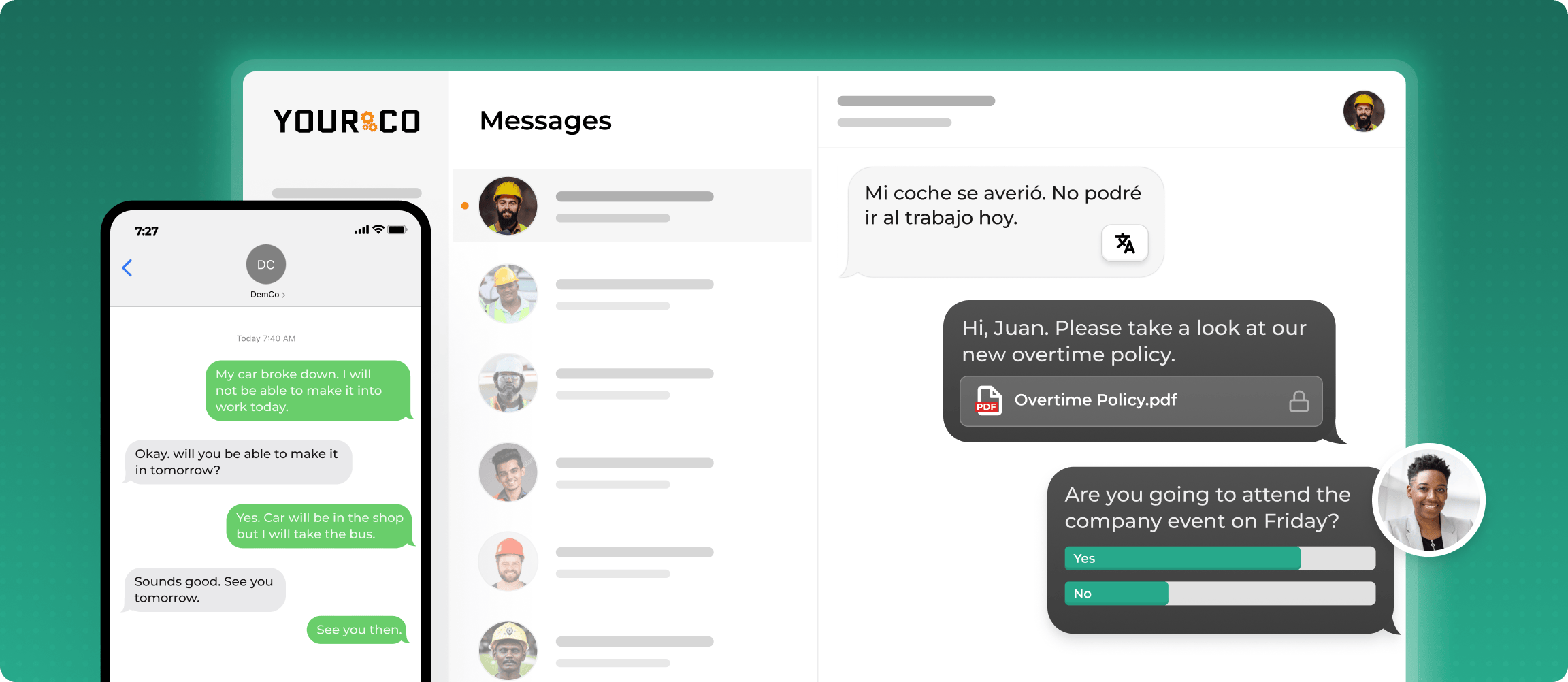
Organizations using two-way communication strategies see 54% of their workforce understand changes, compared to just 20% with top-down communication approaches. Before communicating any shift changes, address existing communication issues by implementing solutions to improve team communication.
How to Announce Shift Changes to Your Team
Before making any shift change announcement, define what's changing, why it's happening, and what benefits the change provides. Be forthright about the reasons, particularly when driven by operational needs. Employees appreciate honesty, even when the news isn't what they want to hear. Only 42% of employees feel included in the change strategy, even though 74% of leaders report involving employees. Close that gap deliberately.
Use Multiple Communication Channels for Shift Changes
Not every channel works equally well for non-desk teams. Here's how the most common options compare:
For non-desk employees who may not have regular access to computers or email, SMS-based platforms become particularly valuable. Text messages receive responses within minutes, ensuring shift changes are communicated and acknowledged promptly, even when employees are in the field or on production floors. For teams that operate overnight where timing is even more critical, our guide on what messaging system works for night shift employees covers how to structure after-hours communication so shift updates land at the right time without disrupting off-duty workers.
Prepare Managers and Leaders to Support Shift Changes
Frontline managers play the most visible role in implementing shift changes. Before announcing changes, ensure they understand the technical details, business rationale, and timeline. Only 27% of employees agree their leadership is trained to lead teams through change, so closing that gap pays off quickly. Equip managers to explain the reasoning in terms their teams find relevant, prepare them to answer questions about individual schedules and compensation, and empower them to gather feedback and flag issues early.
Stay Compliant With Predictive Scheduling Laws
Understanding predictive scheduling laws, also known as "fair workweek" laws, helps you avoid potential violations and build scheduling practices that balance operational needs with employees' rights to reasonable notice and schedule predictability.
Fair Workweek Laws and Shift Change Requirements
These regulations typically require covered employers to provide advance notice of schedules, usually 10-14 days before shifts begin. Laws mandate premium pay for last-minute changes and require 9 to 11 hours of rest between shifts unless employees give written consent to shorter intervals. Coverage typically extends to retail, food service, hospitality, and warehouse sectors. Be familiar with professional overtime rules to ensure compliance across all scheduling scenarios.
Prevent Costly Legal Missteps With Proper Records
Several issues surface in shift change management that carry serious consequences, even when unintentional:
- Unintentional discrimination occurs when scheduling practices disproportionately impact protected groups, such as consistently denying requests from employees with caregiving responsibilities.
- Wage and hour violations stem from failure to pay required overtime when shift changes push employees over 40 hours per week.
- Retaliation claims arise when employees who voice scheduling concerns face adverse consequences.
Maintain detailed records of all scheduling decisions, including the date schedules were posted and whether required premium pay was paid. Fair workweek laws impose recordkeeping obligations, with records typically retained for 3-7 years depending on jurisdiction.
Use Technology to Streamline Shift Changes
Organizations implementing workforce management technology report 50-75% reductions in time spent creating schedules and 3-8% reductions in labor costs through better demand matching. Modern platforms create centralized systems where schedules are visible to all stakeholders and compliance requirements are automatically validated.
Good policies and compliance awareness set the foundation, but the right tools enable fast, consistent execution. Organizations implementing workforce management technology report 50-75% reductions in time spent creating schedules and 3-8% reductions in labor costs through better demand matching.
Why SMS-Based Platforms Work Best for Non-Desk Teams
Many non-desk workers lack consistent access to computers and email, making complex applications impractical. SMS-based platforms notify employees about schedule changes via text message, reaching workers regardless of location or internet access. Workers confirm or decline shifts via a simple reply. With 98% read rates and average response times of 90 seconds, SMS ensures shift changes are communicated and acknowledged quickly.
Manage Emergency Shift Changes With Technology
Technology shines when handling unexpected call-offs or emergencies. Team members can volunteer for available shifts via SMS, eliminating the need for managers to contact dozens of employees individually. This matters most at 5 a.m. when a line operator calls off, and the shift starts in two hours. Instead of working through a phone tree, a manager sends one text to qualified workers and gets a confirmed replacement before most of the crew arrives. The entire exchange is automatically logged, providing the documentation you need for compliance without additional paperwork. To quantify the full financial impact of faster call-off handling like this, read our breakdown of the ROI of streamlined call-off communication and how reducing scramble time translates directly into lower overtime and coverage costs.
Improve Employee Retention With Fair Shift Changes
Scheduling practices now rank among the top factors employees weigh when deciding whether to stay at a job. SHRM research identifies respectful treatment at all levels as the leading contributor to job satisfaction. Fair and transparent shift change management is a key way operations leaders demonstrate this respect in practice.
Why Poor Shift Change Practices Drive Turnover
Research shows close to two-thirds of hourly workers in retail and food service receive schedules with less than two weeks' advance notice. That unpredictability makes it difficult to arrange childcare, attend appointments, or maintain consistent routines, and the frustration compounds over time. Voluntary turnover rates average 26.7% in retail and wholesale and 28.6% in manufacturing, and replacing an employee costs 40-200% of their annual wages. When perceptions of unfairness emerge, even your most reliable workers start looking elsewhere.
Build Flexibility and Recognition Into Shift Changes
Organizations that enable shift requests, swaps, and opt-outs are most likely to see meaningful reductions in absenteeism. Self-service scheduling capabilities drive 34% higher retention rates among Gen Z employees.
Employees who feel recognized are more likely to stay engaged and committed. Simple, consistent appreciation makes a difference, acknowledging those who work less desirable shifts, step in during emergencies, or adjust their schedules to support the team. Recognition doesn’t have to be elaborate; a quick thank-you message from a supervisor or a brief shout-out in a team meeting shows that effort is noticed and valued, not taken for granted.

Send Shift Updates That Reach Every Employee With Yourco
How you manage shift changes is one of the most visible ways you show respect for your employees' time and personal lives. For non-desk workers in particular, effective shift change communication is fundamental to engagement and retention. Yourco's SMS-based platform makes shift management simple and reliable across manufacturing, construction, warehousing, logistics, and similar industries.
- SMS-based shift notifications that reach every employee as a regular text message, with no apps, logins, or internet required
- Works on any phone, including basic flip phones, so schedule updates reach 100% of your workforce
- Targeted messaging by location, department, shift, or role to keep notifications relevant to each team
- Two-way communication that lets employees confirm shift changes, request swaps, or report call-offs directly via text
- Automatic translation across 135+ languages and dialects, so every worker receives schedule updates in their preferred language
- Full message archiving with timestamps to support compliance with predictive scheduling laws and audit requirements
- Integrations with 240+ HRIS and payroll systems to keep employee schedules and contact data automatically in sync
Yourco's Frontline Intelligence turns daily communication data into real-time workforce insights, helping leaders spot disengagement trends, flag scheduling concerns, and compare team responsiveness across locations. After using Yourco for 90 days, companies see a two-way increase in employee engagement to 86%.
Try Yourco for free today or schedule a demo and see the difference the right workplace communication solution can make in managing shift changes effectively across your organization.
Frequently Asked Questions about Shift Changes
What are the essential components that should be included in a clear shift change policy?
A clear shift change policy should define who can request changes, how requests are submitted, who approves them, and required notice periods. It should also outline any restrictions, role requirements, and documentation needed to keep scheduling fair and operationally sound.
How can effective communication strategies improve the process of managing shift changes?
Clear communication reduces confusion by ensuring employees understand their schedules and any changes in advance. Using multiple channels, such as SMS for quick alerts, helps messages reach all employees promptly and supports smoother coordination.
What legal compliance issues should managers be aware of when implementing shift changes?
Managers must comply with labor laws around advance notice, rest periods between shifts, overtime, and fair scheduling practices. Failure to comply with these requirements may result in penalties, wage violations, or claims of unfair treatment.
How does technology, such as SMS-based platforms, streamline the management of shift changes?
Technology automates shift change workflows, sends instant notifications, and updates schedules in real time. SMS-based platforms are especially effective for non-desk workers, reducing errors, missed shifts, and administrative effort.
Why is flexible scheduling important for employee retention, and how can it be effectively implemented?
Flexible scheduling supports work-life balance, increasing job satisfaction and making employees more likely to stay. It works best when supported by clear policies, transparent decision-making, and easy-to-use scheduling tools that allow swaps and time-off requests.