Frontline turnover costs are among the most undercounted expenses in modern operations. Direct hiring expenses account for only a small share of total replacement cost, which means many organizations undercount turnover.
Every time a frontline worker leaves, the cost reaches well beyond the price of posting a new job. Lost productivity, safety gaps during ramp-up, and burnout among the teammates left behind compounds quickly. This article breaks down where that money goes and what organizations can do to keep more of it.
TL;DR
- Frontline turnover cost runs far higher per departure than most organizations estimate, with direct hiring expenses representing only a fraction of the total
- Hidden costs like productivity loss, safety risk spikes, knowledge loss, and turnover contagion multiply the financial impact beyond what most organizations measure
- Engagement, burnout, schedule flexibility, and career development shortfalls drive far more departures than pay alone
- Structured onboarding, manager training, and closed-loop feedback systems improve retention
- Better analytics help leaders spot patterns earlier and shift from reactive backfill to proactive retention work
- SMS-based platforms like Yourco give frontline teams a direct, two-way channel that helps reduce disengagement and attrition
Calculate the True Frontline Turnover Cost
Frontline turnover costs typically range from 50% to 200% of annual wages, depending heavily on role complexity. Gallup's analysis differentiates turnover drivers and costs by skill level, and Deloitte and UKG's 2025 manufacturing outlook indicates that many manufacturing Human Resources (HR) leaders estimate skilled frontline replacement costs in the five-figure range.
The table below illustrates how replacement cost scales with role type; actual figures vary by organization and labor market.
A sample calculation illustrates the scale: In a manufacturing facility with 100 frontline workers earning an average of $40,000 annually, losing roughly a quarter of its workforce per year at $16,000 per departure results in roughly $400,000 in direct and indirect costs annually. Factor in mid-skill technicians or supervisors, and the annual bill for a single location can climb far higher.
Per-employee replacement cost is also rising. Manufacturing unit labor costs climbed sharply in late 2025, according to recent BLS productivity data.
Account for the Hidden Costs Most Organizations Miss
Direct hiring expenses, such as job postings, recruiter fees, and background checks, represent only a small share of total replacement cost. The rest hides in operational disruptions that rarely appear on a turnover report.
Productivity loss is the most immediate hit. Replacement workers typically produce less output than the employees they replace during their first months, and often take substantial time to reach full productivity in safety-sensitive or technical roles.
Beyond productivity loss, several other hidden costs compound the financial impact of frontline turnover:
- Safety risk during transitions: Workers early in a role tend to be at higher risk of incidents, and higher turnover rates are associated with higher injury rates.
- Turnover contagion: When a team member quits, remaining employees, especially newer hires, often reconsider their own positions. Qualtrics' 2024 Employee Experience Trends Report found that employees with less than six months of tenure had a 27-point lower intent to stay long-term than the broader workforce, underscoring how quickly early-tenure attrition can cascade through a team.
- Knowledge loss: When experienced frontline workers leave, they take institutional knowledge with them: equipment quirks, customer preferences, informal shortcuts, and safety lessons learned through close calls. That knowledge rarely lives in a manual, so the next hire effectively starts from scratch.
- Reputation damage: High turnover signals problems to job seekers, current employees, and customers. A workforce in constant churn struggles to deliver consistent quality, and reviews from former workers can suppress applicant flow for months.
Together, these hidden costs often outweigh the visible line items on a turnover report.
This information is for general awareness only. For specific compliance guidance, consult with qualified legal professionals.
Identify What Drives Frontline Workers to Leave
Pay is not the primary reason frontline employees quit. Major datasets consistently rank compensation lower than engagement, burnout, career development, schedule flexibility, and management quality as drivers of departures.
Gallup's thematic analysis groups departure reasons into recurring themes that organizations can act on:
- Engagement and culture deficits: Many frontline workers report feeling like "a number, not a person."
- Burnout and work-life imbalance: Frontline workers also report high burnout and pressure to produce more without additional pay.
- Lack of schedule flexibility: Predictable schedules and meaningful input on hours rank among the top reasons frontline workers stay or leave, especially in hospitality, retail, and logistics.
- No career development: Career-related exits remain a major reason employees leave.
- Poor management and lack of recognition. Employees receiving high-quality recognition are less likely to leave, according to Gallup's recognition research, whereas weak management remains a consistent driver of attrition.
- Inadequate pay: Pay matters, but it ranks below engagement, burnout, flexibility, and development in major datasets.
Organizations that focus retention spending on engagement, flexibility, career development, and manager quality address more preventable departures than wage increases alone. Many of those same issues show up in how frontline workers experience communication, recognition, and day-to-day support.
Build Retention Into Onboarding and Career Pathing
A significant share of frontline attrition in manufacturing occurs in early tenure, and many U.S. employees say their onboarding experience leaves them unprepared. Structured onboarding that extends beyond the first week yields measurable gains in retention and time-to-productivity, according to research from Brandon Hall Group.
A 30-60-90 day onboarding framework is a widely used structure that gives frontline managers a practical roadmap for the first three months on the job:
- Days 1 to 30: Assign a peer buddy, explain unwritten norms, and confirm role clarity.
- Days 31 to 60: Provide meaningful assignments and check in on confidence levels, especially in safety-sensitive roles.
- Day 60 onward: Hold regular check-ins with both the direct supervisor and HR, and begin career development conversations.
Career pathing matters just as much after the first 90 days. Many manufacturers have found that targeted training programs and visible advancement opportunities meaningfully reduce turnover. A common best practice is to sit down with new employees during onboarding to draft a sample career path tied to their goals, with advancement opportunities documented from day one.
Use Communication and Feedback Loops to Reduce Attrition
Communication is an important retention lever for manufacturing organizations, according to a 2025 Walden University dissertation that studied five companies. When frontline employees do not receive timely company information and their feedback does not reach leadership, the connection to the mission can weaken. Gallup has also reported declines in mission connection, with frontline employees among those most affected.
A Yourco-commissioned survey of 150 HR leaders found that text messaging ranks as the most effective channel for reaching frontline employees. That perception aligns with broader retention research: healthcare and hospitality organizations have reported retention gains after adopting real-time, two-way communication platforms that reach frontline staff directly, with some early deployments pointing to lower first-year turnover and faster ROI.
For frontline supervisors, a practical playbook includes a few consistent moves that close the distance between leadership intent and frontline experience:
- Replace annual reviews with weekly or biweekly 15-to-30-minute check-ins focused on current work conditions
- Act visibly on feedback and close the loop so employees see results
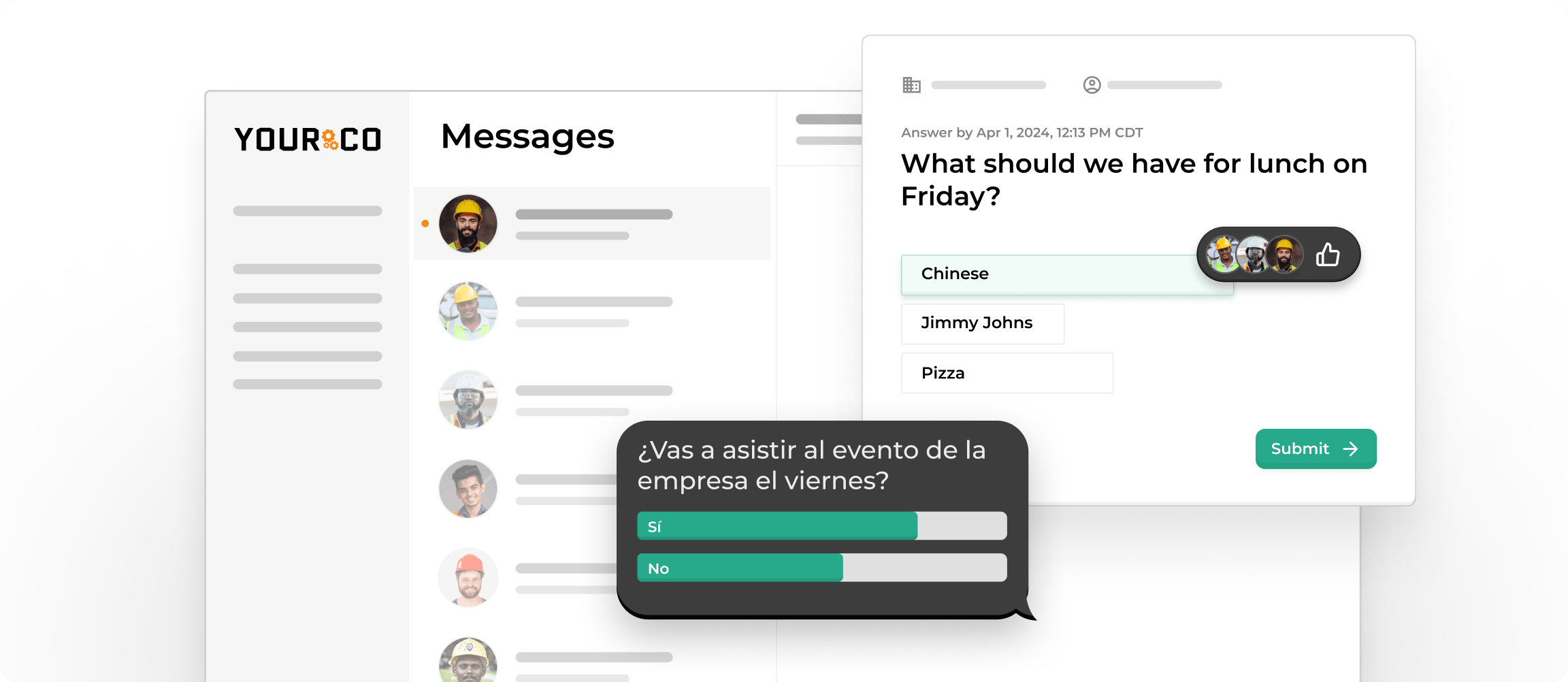
- Use SMS-based employee surveys to reach workers who never open email
- Recognize contributions regularly
The shift from annual engagement surveys to continuous pulse conversations makes frontline employee engagement efforts more practical, as they reach workers through channels they already check.
Apply AI-Driven Analytics to Predict Attrition Before It Happens
Artificial Intelligence (AI) adoption in HR has accelerated sharply over the past two years, and mature people analytics programs can help organizations spot attrition risk earlier and support productivity improvements. Data quality and integration with frontline communication channels remain critical constraints.
AI tools can analyze language patterns in employee communications to surface early signals of disengagement, burnout, or conflict, subject to appropriate privacy, consent, and governance controls. On the frontline, those signals may include:
- Repeated mentions of fatigue or short-staffing in absence messages from a single shift
- Falling acknowledgment rates on safety messages at one location
- Sentiment shifts in two-way replies after a policy rollout or schedule change
- Recurring concerns about a specific supervisor across multiple conversations
For illustration, a retail HR team might use these patterns to flag a store where supervisor friction appears to be driving exits before the quarterly turnover report lands. A manufacturer might notice declining acknowledgment rates for safety messages at one plant and follow up before an incident occurs.
These tools tend to deliver the most value when they connect to the channel frontline workers already use every day, and when their use is grounded in clear internal policies on worker communications.
Reach Every Frontline Worker and Help Reduce Turnover With Yourco
Reducing frontline turnover starts with closing the communication divide between leadership and the people doing the work. Yourco gives HR teams and frontline supervisors a direct line to every employee, from the warehouse floor to the job site, through the one channel every worker already carries: their phone.
Yourco's core capabilities span the essentials frontline organizations need to keep every worker informed and engaged:
- SMS to any phone, including basic flip phones, with no app, no Wi-Fi, and no cost to employees
- Two-way messaging between managers and their teams for feedback, questions, and training follow-up
- AI-powered translation across 135+ languages and dialects, so safety protocols and SOPs reach every worker in their preferred language
Yourco integrates with 240+ HRIS and payroll systems to keep employee data synchronized across the systems HR teams already use.
Enterprise Bridge enables corporate leadership to broadcast one-way announcements, policy updates, and safety directives to every frontline location simultaneously, while local managers maintain direct two-way conversations with their teams.
Frontline Intelligence gives HR and operations teams centralized visibility into communication trends, sentiment patterns, and attendance-related signals across all locations. It tracks patterns by location, department, or custom group and surfaces AI-powered reporting that helps leadership understand what is happening across sites and inform retention conversations earlier.
"Yourco has allowed us to scale frontline employee communications through rapid growth of the organization, while driving increased levels of engagement, employee retention, and productivity. We use it daily for HR and operational communications at the local level, and for organization-wide communications and frontline employee data analysis at the corporate level. The ease of use and implementation has driven full adoption across our workforce, becoming our most effective frontline employee communication channel."
— Madison Farrell, Director of Culture and Internal Communications, Great Day Improvements
After 90 days on Yourco, companies see two-way employee engagement reach 86%.
Try Yourco for free today, or schedule a demo to see the difference the right workplace communication solution can make for your company.
Frequently Asked Questions About Frontline Turnover
How much does it cost to replace a frontline employee?
It depends on the role. Hourly frontline roles often cost a meaningful share of annual wages to replace, while supervisory and technical roles cost much more once productivity losses, training time, and team disruption are factored in.
What are the hidden costs of frontline turnover?
The highest hidden costs are lost productivity, higher safety exposure during ramp-up, overtime burden on remaining team members, institutional knowledge loss, and follow-on resignations from the same team. These indirect costs are often harder to track than hiring expenses, but they usually make up most of the financial impact.
Why do frontline workers quit if pay is not the top reason?
Frontline workers often leave because they feel disconnected, burned out, unsupported, or stuck without a clear path forward. Pay still matters, but retention usually improves more when organizations strengthen communication, offer flexibility in scheduling, provide manager support, increase recognition, and expand development opportunities.
How does communication reduce frontline turnover?
Communication reduces turnover by helping workers feel informed, heard, and connected to the organization. Closed-loop feedback builds trust because employees can see action taken on their input. SMS-based platforms like Yourco are especially useful when teams do not rely on email or workplace apps.
What is turnover contagion, and how does it affect frontline teams?
Turnover contagion is the pattern where one employee's departure makes other team members more likely to consider leaving, too. On small frontline teams, that effect can spread quickly because workload shifts, morale drops, and uncertainty grow after each exit.