
Navigating the complexities of hiring non-English speaking employees can feel overwhelming, but it unlocks significant benefits like increased diversity and access to a wider talent pool. As HR managers or operations leaders in industries like manufacturing or construction, you're already balancing multiple priorities.
Understanding legal language requirements and enhancing communication are crucial steps in this process. In this article, we'll explore the strategic advantages of a multilingual workforce and share practical strategies for effective recruitment and onboarding, helping you optimize operations and steer clear of potential pitfalls.
Understand the Importance of a Diverse Workforce
According to research by McKinsey, companies with racial and ethnic diversity are 35% more likely to outperform their industry peers financially. Diversity directly impacts your bottom line, as demonstrated by this striking statistic.
Non-English speaking employees bring unique perspectives and cultural insights that can transform your business operations. Their diverse backgrounds contribute to more creative problem-solving approaches and innovative solutions.
When you embrace linguistic diversity, you're incorporating new ways of thinking and approaching challenges, enriching your workplace beyond merely adding different languages.
By fostering an environment that values linguistic diversity and engaging frontline employees, you position your company to compete more effectively in the global marketplace while building a more resilient and adaptable organization.
Challenges in Hiring Non-English Speaking Employees
While hiring non-English speaking employees can enhance workforce diversity, employers face several significant challenges in this process. The primary challenge lies in ensuring effective communication of workplace expectations and safety requirements while maintaining legal compliance.
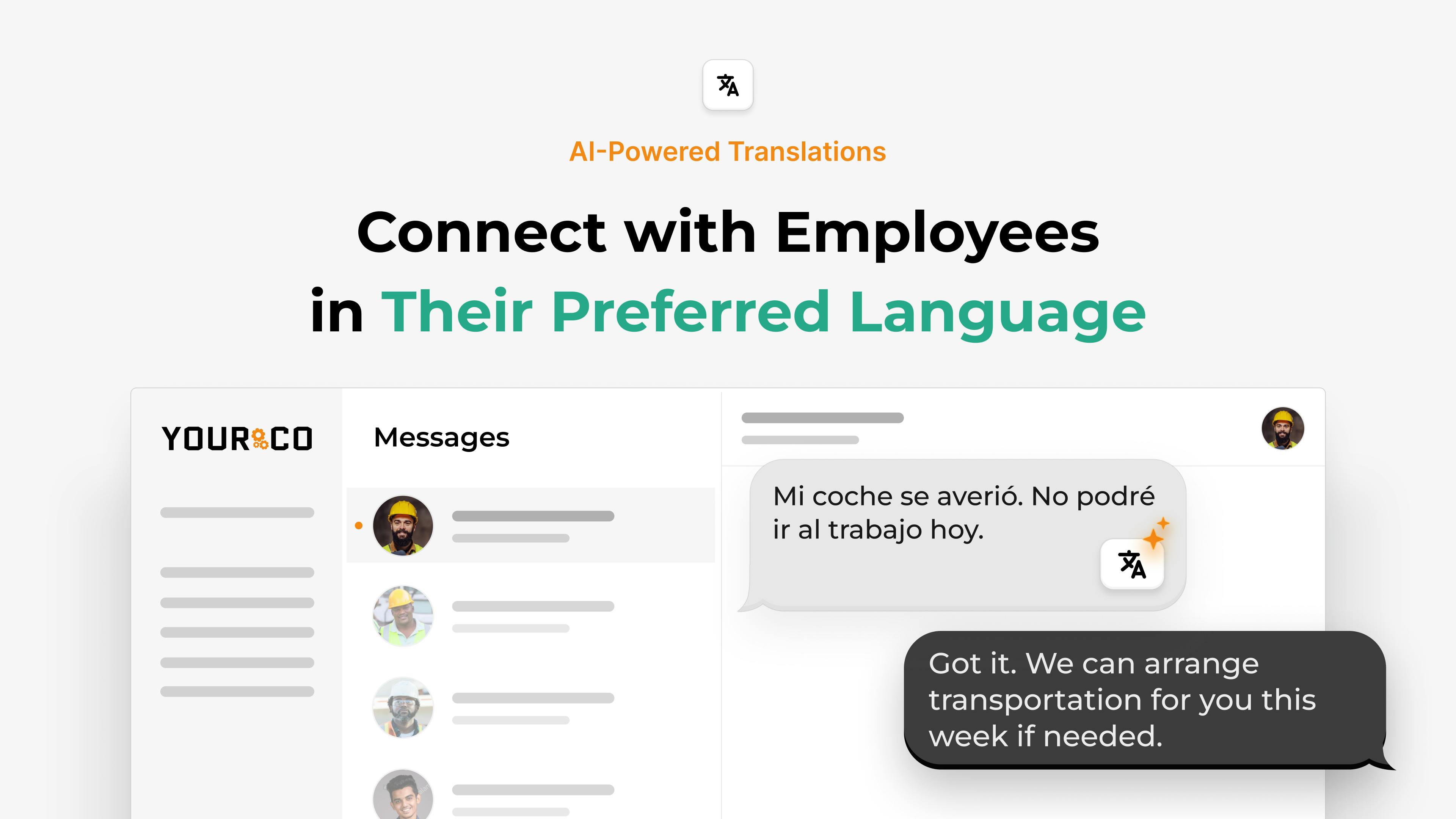
One critical challenge is meeting legal obligations while managing language barriers. You must provide safety training and important documentation in languages your employees understand, as required by OSHA regulations. Simply having employees sign attendance sheets for English-language training sessions without ensuring comprehension puts both your workers and your company at risk.
Communication barriers also affect day-to-day operations. If managers struggle to communicate with their team, it affects everything from simple task instructions to important feedback. For instance, disciplinary meetings or coaching sessions require clear, two-way communication, often necessitating the presence of translators.
Documentation presents another significant hurdle. You need to provide work instructions, company policies, and mandatory government postings in multiple languages. Providing these documents goes beyond mere translation, as you must ensure the materials are culturally appropriate and technically accurate while maintaining their legal validity.
These challenges also affect how well employees integrate and engage in the workplace. Simple gestures like saying "hello" in another language are nice, but aren't enough to create genuine inclusion or ensure effective workplace communication.
Recruit Non-English Speaking Candidates Effectively
To successfully recruit non-English speaking employees, you'll need a multi-faceted approach that combines community outreach with clear communication strategies. Here are key tactics to implement in your recruitment process:
Expand Your Recruitment Channels
Build relationships with local immigrant support groups, community organizations, and cultural centers. These partnerships can help you tap into diverse talent pools and establish trust within these communities. Consider participating in specialized job fairs targeting multilingual candidates.
Create Inclusive Job Postings
Develop job descriptions in multiple languages that clearly outline:
- Essential job functions and requirements
- Required language proficiency levels only if they're tied to job performance
- Safety requirements and expectations
- Benefits and growth opportunities
Link language requirements directly to job necessities to avoid discriminatory practices while keeping operations running smoothly.
Train Your Hiring Team
Prepare your recruitment team by:
- Providing cultural competency training
- Teaching them to recognize and value diverse experiences
- Ensuring they understand legal requirements around language discrimination
- Equipping them with proper translation resources for interviews
Follow Legal Compliance Guidelines
When recruiting non-English speaking employees, you must maintain compliance with anti-discrimination laws while meeting operational needs. Make sure your hiring process:
- Avoids unnecessary language requirements
- Documents the business necessity for any language proficiency requirements
- Provides reasonable accommodations during the interview process
- Includes clear communication about safety training requirements and OSHA compliance
Remember that requiring English proficiency is only permissible when it's essential for performing core job functions. Document your reasoning carefully when language skills are truly necessary for the position.
Engaging frontline workers effectively is essential during recruitment. By implementing these strategies thoughtfully, you can create an effective recruitment process that attracts qualified non-English speaking candidates while maintaining legal compliance and operational efficiency.
Best Practices for Onboarding Non-English Speaking Employees

When onboarding non-English speaking employees, providing translated documentation is just the starting point. You need a comprehensive approach that ensures a clear understanding and sets up your new hires for success, leading to effective onboarding.
Translate Documentation and Materials
Start by translating all onboarding materials into your employees' primary languages. This includes employee handbooks, safety protocols, and workplace policies. According to OSHA guidelines, safety training should be provided in a language that employees understand. Include visual aids and diagrams whenever possible to reinforce written instructions.
For teams with Spanish-speaking employees, having ready-to-use Spanish onboarding templates can speed up the process and ensure nothing gets missed. Similarly, organizations with Filipino workers benefit from Tagalog onboarding templates that provide bilingual checklists and welcome materials.
Keep in mind that onboarding practices may vary between industries. Adapting your approach to your specific industry enhances effectiveness.
Set Up Training and Support Systems
Implement a buddy system where you pair new employees with bilingual team members who can provide guidance and support during the initial weeks. Such a peer-to-peer approach helps create a more comfortable learning environment and ensures that questions get answered promptly.
Consider using hands-on demonstrations and visual training methods rather than relying solely on verbal instructions.
Strengthen Communication During Onboarding
Set up regular check-ins with new hires using qualified interpreters when needed. Regular check-ins help identify any challenges early and demonstrate your commitment to their success.
Create a visual communication system using universal symbols and color-coding for important workplace information. And for discussions about performance or safety, always have a translator present to ensure a clear understanding.
Remember to maintain detailed records of all training sessions and translated materials provided. This documentation demonstrates your good-faith effort to communicate effectively with all employees, which supports compliance and risk management.
Strengthen Workplace Communication
Creating an effective multilingual workplace doesn't require a massive budget. Text messages reach 98% of recipients, compared to about 20% for email, making SMS the most reliable way to connect with frontline teams.
You can also use technology-driven solutions like real-time translation tools and comprehensive platform capabilities to facilitate immediate communication across language barriers. By using these tools for day-to-day conversations, you can reserve professional translation services for critical documents and safety protocols.
Visual communication serves as a universal language in diverse workplaces. Implement diagrams, pictograms, and demonstration videos for training and safety procedures. These visual aids transcend language barriers and ensure a clear understanding of processes and protocols.
To maintain communication quality, combine automated translation tools with human oversight. While AI-powered translation can handle routine communications efficiently, having bilingual staff review messages helps catch cultural nuances and maintain accuracy. Regular feedback from your multilingual workforce can help identify areas where communication needs enhancement.
Keep written and verbal communication simple and clear. Avoid industry jargon and complex terminology when possible, and create standardized terms for common workplace processes. This approach helps ensure that all employees, regardless of their language proficiency, can understand and follow instructions. Understanding how to communicate with non-English speaking employees effectively can transform your workplace culture.
By implementing these effective communication strategies, you create an inclusive environment where employees feel valued and understood, leading to improved productivity and engagement.
Navigate Legal and Ethical Guidelines
When hiring non-English speaking employees, you must navigate specific legal requirements while fostering an inclusive workplace. The U.S. Equal Employment Opportunity Commission (EEOC) prohibits discrimination based on national origin and ethnic background, meaning you can't impose English language requirements unless they're essential for job performance.
OSHA guidance indicates that employers should provide safety training in languages their employees understand. You must make a "good faith effort" to communicate all workplace policies, procedures, benefits, and expectations in a way that's accessible to every employee, including effectively communicating employee benefits.
Your legal obligations extend to documentation as well. Federal and state governments require you to display mandatory workplace postings in languages appropriate for your workforce. When employees sign training or policy documents, ensure they truly understand the content; a signature without comprehension won't protect your company legally.
While you can establish language requirements based on genuine business needs, these must be tied to essential job functions rather than convenience. For instance, a customer service position might legitimately require English proficiency, while a manufacturing role might not. Consider providing documentation in multiple languages and using translators for important meetings, especially those involving discipline or safety procedures.
Remember that creating an ethical workplace goes beyond mere legal compliance. Building an inclusive environment where all employees can understand and participate in workplace communications fulfills your legal obligations and promotes a more productive and engaged workforce.
Connect Your Multilingual Workforce with SMS
Hiring and onboarding non-English speaking employees gets easier when you have the right communication tools in place. Yourco's SMS-based platform is built specifically for industries with frontline workers, connecting you with your team directly through their phones.
With AI-powered translations in 135+ languages and dialects, every employee receives updates, safety protocols, and company announcements in their preferred language. The platform works without apps or downloads, so even employees with basic phones stay informed. Every message is delivered instantly and logged automatically for compliance purposes.
By bridging the language gap, you enhance safety and compliance while fostering a more inclusive and engaged workforce.
Try Yourco for free today or schedule a demo and see the difference the right workplace communication solution can make in your company.
Frequently Asked Questions
What documents should I translate for non-English speaking employees?
Start with safety-critical materials like emergency procedures, equipment operation guides, and hazard communication documents. Then prioritize employee handbooks, benefits information, and onboarding paperwork.
OSHA guidance indicates that safety training should be delivered in a language employees understand, so focus translation efforts there first.
How can I communicate with employees who speak different languages?
SMS platforms with built-in translation capabilities can automatically convert messages into each employee's preferred language. This eliminates the need to manually segment your workforce by language group or create multiple versions of the same message.
Set each employee's language preference in your directory, and messages will translate automatically.
What's the best way to verify that non-English speaking employees understand safety training?
Use hands-on demonstrations paired with translated written materials, then follow up with short quizzes or check-ins in the employee's native language.
SMS-based polls work well for quick comprehension checks. Pair new hires with bilingual mentors who can answer questions and clarify confusing points during their first weeks.
How do I handle onboarding paperwork for employees who can't read English?
Provide translated versions of all forms, or use bilingual documents with side-by-side text. Additionally, you should have a translator available during the signing process to explain each document and answer questions.
Some organizations use SMS to deliver onboarding documents and collect confirmations, which creates a timestamped record of receipt and acknowledgment.
Can I require English proficiency for certain jobs?
You can set language requirements only when they're directly tied to job performance and safety. A forklift operator in a warehouse may not need English proficiency to do their job safely, while a supervisor who needs to communicate with English-speaking management might.
Document your reasoning carefully and apply requirements consistently to avoid discrimination claims.