
Frontline workers often have the clearest view of what is keeping people staying, struggling, or leaving. The problem is that most feedback systems were built for office-based teams, not for people moving between shifts, job sites, routes, or production lines. When feedback is hard to give, leaders end up making retention decisions with only part of the picture. This playbook shows how to collect better input, organize it into clear themes, and turn it into changes workers can actually see.
TL;DR
- Traditional feedback systems miss many frontline workers because they rely on email, desktop access, or long surveys that do not fit the workday.
- SMS pulse surveys, manager-led huddles, and kiosk stations work best because they meet workers where they already are.
- Group open-ended comments into themes like scheduling, manager support, career growth, recognition, and safety, then prioritize changes that are high impact and realistic to implement.
- Act on at least one visible change within a few weeks of collecting feedback, because inaction quickly erodes trust.
- Combine feedback themes with operational signals such as attendance, tenure, and shift patterns to spot retention risks earlier.
- SMS-based platforms like Yourco help you reach every frontline worker on any phone, with no app and built-in translation.
Why Your Annual Survey Misses the Workers Most Likely to Leave
Most employee feedback systems were designed for people who sit at desks, check email, and have regular access to computers. That is not how frontline teams work in manufacturing, hospitality, logistics, and construction. Workers are on the floor, on the road, or on a job site, and the systems companies use to measure engagement were not built with them in mind.
SHRM research shows that legacy communication methods are built around office-based teams, not the majority of workers who rarely touch a computer during a shift. Gallup research also points to a clear engagement gap for on-site workers.
The result is a feedback blind spot. Your annual engagement survey might show decent scores, but those scores reflect the voices you already hear from. The workers most at risk of leaving are often the ones your current system never reaches. According to frontline communication data from a Yourco-commissioned survey of 150 HR leaders, only 43% of frontline employees consistently receive the communications their companies send, and just 36% actually read them.
When your feedback survey travels through the same channels workers already ignore, the responses you collect represent only the workers your system happened to reach, not the ones most at risk of leaving.
Which Feedback Methods Actually Reach Frontline Workers
There is no single feedback method that works for every frontline team. The SHRM report shows frontline workers have 1.6 times higher turnover (26% vs 16% for office-based roles), and 75% of HR pros find retention hard; the strongest programs meet workers where they are via SMS rather than computer-based surveys.
Use a mix of methods when possible:
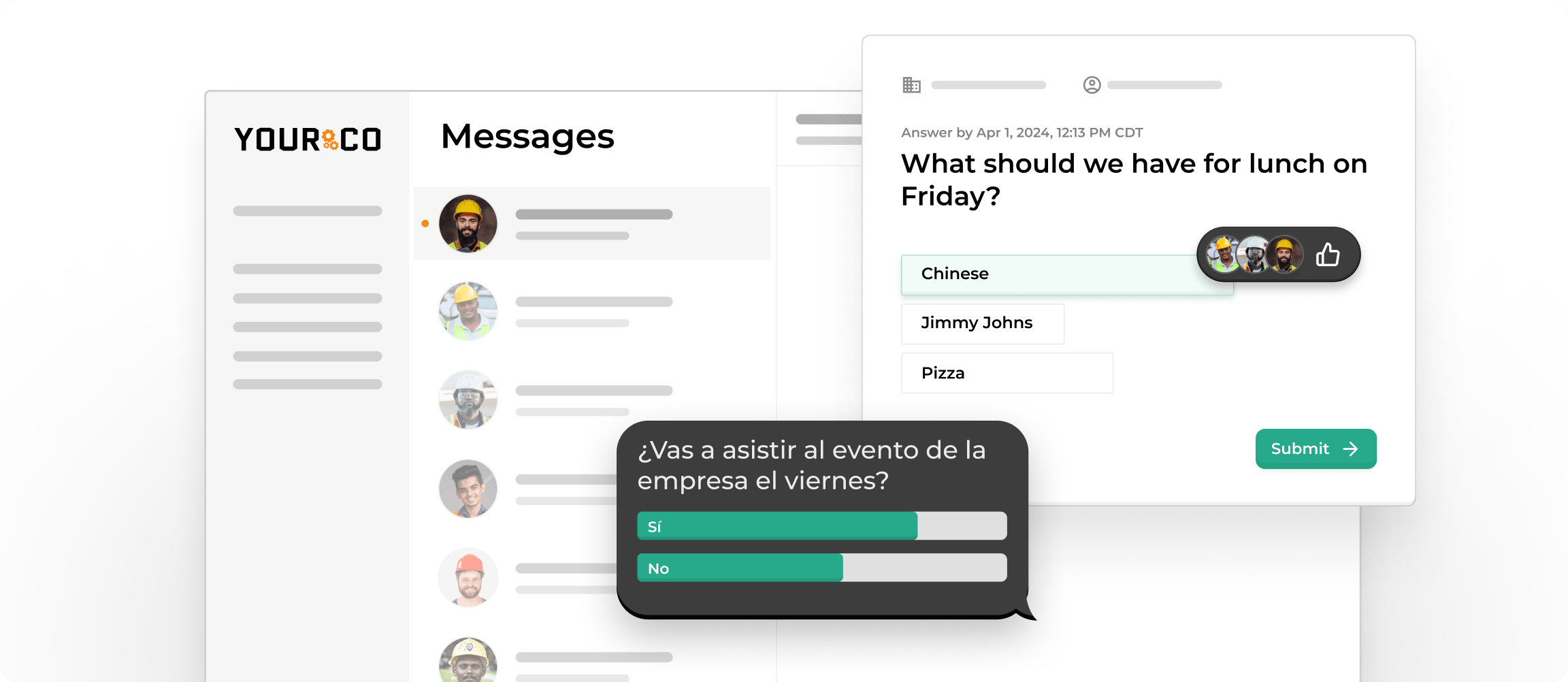
- SMS pulse surveys: Short questions sent directly to workers' phones. No app, no internet, and no email required. This works on any device, including basic phones. For question inspiration, employee survey templates designed for frontline teams are a good starting point.
- Manager-facilitated huddles: Supervisors lead brief, structured feedback conversations during existing shift meetings or safety huddles.
- Kiosk stations: Tablets near break rooms or time clocks give workers an anonymous, always-available way to share feedback.
A multi-channel approach helps you avoid excluding workers based on language, shift, or access to technology. The easier feedback is to access, the more likely workers are to respond honestly and consistently.
When and How to Survey Without Interrupting the Workday
Frontline workers have limited time for anything outside core tasks. Keep surveys short, focused on a single theme per round, and easy to complete in under two minutes. One well-timed question about scheduling, safety, or manager support will get more honest responses than a ten-question form sent at the wrong moment.
Timing matters just as much as length. The most useful surveys land at natural pauses: the end of a shift, right after a safety huddle, or in the days following a schedule change. SHRM research highlights scheduling input as a particularly important retention lever and recommends building onboarding pulses into the first year, as that is often the hardest retention period for frontline workers.
How to Turn Open-Ended Comments Into Themes You Can Act On
Collecting feedback is only half the job. The harder part is turning open-ended comments into something you can act on. You do not need advanced analytics, but you do need a repeatable process.
Start by sorting comments into common retention themes. HBR guidance and SHRM research point to a few themes that often matter most:
- Manager relationship: Feeling left out of decisions, inconsistent communication, favoritism, or lack of support
- Career stagnation: Feeling stuck, unclear advancement paths, or weak skill development
- Workload and scheduling: Unpredictable schedules, unrealistic expectations, or work-life balance concerns
- Recognition gaps: Feeling undervalued or unseen by leadership
- Safety and operations: Inefficient processes, missing resources, or unresolved safety issues
Once themes are clear, focus on two or three areas where action will make the biggest difference. A simple impact-versus-feasibility matrix, based on HBR guidance, helps you choose what to fix first.
One important caution: do not build your action plan solely on comments. Negative comments naturally draw attention, but they do not always tell the whole story. Pair qualitative themes with survey scores, participation trends, and operational context before deciding what to do next.
How to Spot Flight Risk Before It Becomes a Resignation
The strongest insights come from connecting what workers say with what operational data already shows. When you layer feedback themes onto attendance records, shift patterns, and tenure data, you can spot potential flight risk earlier.
Predictive analytics research shows that certain combinations of signals can reveal turnover risk well before resignation. Watch for rising unscheduled absences paired with work-life balance comments, or frequent shift-swap requests combined with scheduling frustration. Those overlapping signals point to teams that need intervention now, not at the next quarterly review.
The context matters: 69% of HR leaders (Yourco survey) say missed communication with frontline teams is a recurring frustration. When that frustration shows up alongside attendance and scheduling signals in your data, the combination points to a retention risk that neither source alone would reveal.
Why Acting Fast on Feedback Is the Retention Strategy Most Teams Skip
Across retention research, one theme is consistent: feedback follow-through matters. If workers take time to respond and nothing changes, trust drops quickly.
The Retention Report makes the larger point clearly. Many exits are tied to issues like career growth, work-life balance, and manager support, which are exactly the issues feedback can surface early. 93% of HR leaders (Yourco survey) say communication improvements boost retention. The feedback loop is itself a communication act: collecting input, making changes, and informing workers of the changes. When that loop runs through a channel workers actually use, the retention signal compounds.
Follow a simple timeline to keep credibility with frontline teams:
- Week one: Review scores and group open-ended responses by theme.
- Weeks two to three: Pick two to three priorities using an impact-versus-feasibility matrix.
- Weeks three to four: Validate those themes with employee groups and co-create solutions.
- Month two: Implement visible quick wins so workers can see change within a few weeks.
- Ongoing: Communicate what changed and why through the internal tools workers actually use.
Turn broad themes into specific behaviors. Instead of saying "improve scheduling," define the new standard: supervisors communicate schedules in advance, and changes are sent via SMS. Clear follow-through builds trust. SHRM research also recommends replacing infrequent surveys with a more continuous, action-oriented feedback system.
What Feedback Methods Work Best for Your Industry
Feedback works better when it reflects the realities of each workplace. Industry barriers and retention drivers differ across frontline environments, so generic programs often fall flat.
A practical way to adjust by industry is to focus on what workers can realistically respond to:
- Manufacturing: The biggest gap is often between how floor workers and HQ teams experience the same workplace. Use shift-level feedback through kiosks and multilingual SMS.
- Construction: Time away from the job site is limited. Build feedback into safety meetings and keep questions focused and practical.
- Hospitality: Honest feedback often surfaces better in small-group conversations. Listening circles and culture committees that include frontline workers can help.
- Logistics and transportation: Keep surveys very short after routes or shifts. Use survey distribution to quickly gather feedback on dispatch communication, route changes, and home-time expectations.
The method matters, but fit matters more. The easier feedback is to give in the normal flow of work, the more useful and honest it will be.
Capture Feedback Faster With Yourco
Turning employee feedback into retention wins is much easier when your system reaches every worker, not just the ones with easy access to email or company software. Yourco helps frontline teams collect feedback quickly, respond in real time, and give HR and operations leaders a clearer view of what is happening across locations.
- SMS to any phone with no app download, no Wi-Fi, and no cost to employees
- Two-way messaging so workers can respond to surveys, ask questions, and raise concerns directly
- AI-powered translation across 135+ languages and dialects, so more workers can participate in the language they prefer
Yourco also integrates with 240+ HRIS and payroll systems, helping you connect feedback activity with workforce data such as tenure, attendance, and shift patterns.
Enterprise Bridge enables corporate leadership to send centralized, one-way announcements to every frontline location, while local managers continue to maintain direct two-way communication with their teams.
Frontline Intelligence gives HR and leadership teams centralized visibility into feedback trends, participation patterns, and retention signals across all locations. It helps leadership identify recurring issues by site, shift, or department, and spot disengagement patterns early enough to act before turnover rises.
"A consistent line of communication to our employees is one of the most important things when it comes to our employee communication strategy, and Yourco is the most reliable system around."
— Terri Kasper, HR Manager, Calumet Carton Company
After 90 days with Yourco, two-way employee engagement increased to 86%.
For the research behind SMS-based frontline communication, explore Yourco's Closing the Comms Gap study of 150 HR leaders.
Try Yourco for free today, or schedule a demo to see the difference the right workplace communication solution can make for your company.
Frequently Asked Questions about Employee Feedback Analytics
How do you collect feedback from employees who do not have email or smartphones?
Use SMS, kiosk stations, and short manager-led huddles. SMS-based platforms like Yourco can send surveys to any mobile phone, including basic phones, so workers do not need an app or email account.
How often should you survey frontline workers?
Short pulse surveys work best when they are regular and easy to answer. Many teams do well with quick weekly or biweekly check-ins, plus milestone surveys during onboarding.
What should you do first after collecting employee feedback?
Group comments into a few clear themes, then choose the top issues based on retention impact and how quickly you can act. The first goal is to identify one or two visible changes workers will notice.
How do you get honest feedback when workers fear retaliation?
Use channels that feel private, keep surveys short, and show follow-through on past feedback. Trust grows when workers see that honest input leads to change rather than negative consequences.
How do you analyze feedback from a multilingual workforce?
Let workers respond in their preferred language, then group translated responses into the same themes you use for everyone else. This gives you a more complete picture and helps you avoid hearing only from the most comfortable English speakers.