
Most companies respond to weak recognition results by buying new software, when the underlying issue is delivery. A points system or nomination form does nothing for a warehouse worker who never opens a company app or checks a work email. The real work is designing a recognition message that someone on the shop floor will receive.
TL;DR
- Recognition only works if the message reaches the worker, so the delivery channel matters more than the software behind it
- Text messages reach frontline workers who don't have company email or app access
- Peer shout-outs and manager texts build a recognition habit faster than an annual awards platform
- Safety and milestone recognition should be automated so no shift gets skipped
- Night and weekend workers need the same recognition and visibility as day-shift teams
- SMS-based platforms like Yourco deliver recognition messages to any phone, in any language, on any shift
Understand Why Recognition Messages Never Reach the Frontline
Most recognition tools assume workers check email or open an app during the workday. Only 43% of frontline employees consistently receive the communications their companies send, and just 36% read them, according to a Yourco-commissioned survey of 150 HR leaders. A recognition message that never lands has zero retention value, no matter how well the underlying program is designed.
That disconnect carries a real cost. Well-recognized employees are 45% less likely to have turned over after two years, according to Gallup workplace research. How recognition fits into a company's broader communication structure is the first decision that determines whether a program works on the front line.
Send Recognition Messages Directly to Every Worker's Phone
Recognition only lands when it reaches the device already in a worker's pocket. Text messages work on smartphones and basic flip phones alike, with no corporate email address, app download, or Wi-Fi connection required. That removes the biggest barrier standing between a recognition message and the worker it's meant for.
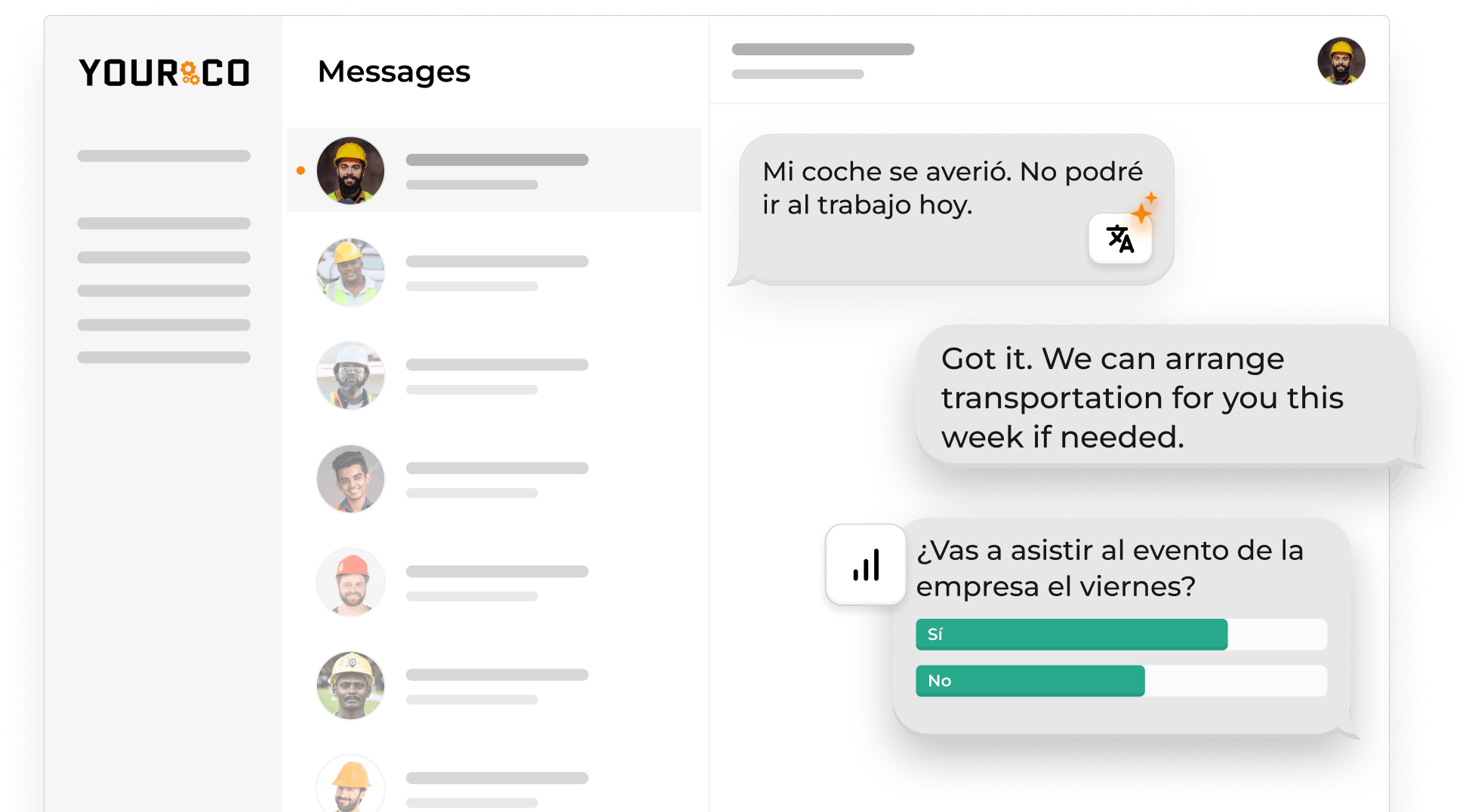
98% of text messages are opened within three minutes, an industry-standard benchmark for SMS engagement. Sending recognition by text also solves the timing and language problems that trip up other channels. Messages arrive instantly regardless of shift schedule, and recognition sent in a worker's preferred language lands the same way it would for a native English speaker. When employee alerts and recognition messages are delivered to the same device, recognition becomes one more reliable message type rather than a separate system to maintain.
Turn Peer Recognition Into a Text-First Habit
Peers often see contributions a manager misses during a shift. Regular peer recognition builds stronger belonging and trust across teams, but only when giving it doesn't add another thing for a busy worker to keep track of.
Text-based submission removes the friction that paper cards and in-person nominations can't solve in shift environments. A worker texts a nomination to a shared recognition line, and a manager relays it to the recognized employee and posts it where the team can see it. Keeping submission one-way lets peer recognition stay simple to give without turning into another running thread that busy workers have to check between shifts. Naming the specific behavior, rather than sending a generic compliment, makes a peer recognition text meaningful rather than routine.
Pair Recognition Texts With Instant Rewards
Timing matters more than size for frontline recognition. A text that pairs a specific shout-out with an immediate reward carries more weight than a larger reward that arrives weeks later.
Delivery mechanics decide whether that reward gets used. A digital gift card sent by text lets a worker redeem it at a major retailer without a corporate account, and a pre-allocated manager budget removes the approval delay that stalls momentum mid-shift. Removing that friction is what separates a recognition message that gets acted on from one that gets ignored.
Automate Milestone Recognition Messages
One-time recognition fades quickly. Automated texts tied to milestones such as 30, 60, and 90 days, or annual anniversaries, give workers a consistent reason to stay engaged through the first year, when frontline turnover risk runs highest.
Automation matters because rotating schedules make manual tracking unreliable. A milestone message fires the same day, whether a worker is on nights, weekends, or a rotating shift, so recognition timing doesn't depend on a manager remembering to check a calendar.
Build Safety Recognition Into the Messaging Routine
Safety recognition works best when it rewards proactive behavior, such as hazard reporting and training completion, alongside injury-free milestones. Many employers layer behavior-based messages, milestone celebrations at set day counts, and spot recognition for observed safe behavior into a single messaging routine.
Many employers follow guidance from the Occupational Safety and Health Administration (OSHA) when designing injury-free milestone rewards, since safeguards against underreporting matter as much as the recognition itself.
This information is for general awareness only. For specific compliance guidance, consult with qualified legal professionals.
Broadcast Public Recognition Across Every Shift
Recognition that only a manager sees has limited cultural impact. Broadcasting acknowledgments through company announcements, break room displays, and pre-shift huddles ensures a specific, behavioral recognition message reaches every shift, not just the one where it happened.
Multichannel submission, including paper cards, digital kiosks, and a text line, helps ensure that night and weekend workers, who managers often recognize less consistently, receive the same visibility as day-shift teams. Cross-shift nominations allow workers to recognize colleagues they never directly overlap with.
Give Managers Recognition Templates They'll Use
Frontline managers are the most important recognition touchpoint for shift workers, but many lack the time or training to consistently convey a specific message. Structured tools remove that friction: recognition message templates give managers language to start from, and automated prompts fire when a team member hits an anniversary or certification.
88% of HR leaders say they need a reliable way to consistently communicate with frontline employees, but only 55% are confident they have one, according to the same Yourco-commissioned survey of 150 HR leaders. Shift-level dashboards showing which workers a manager has and has not recognized help close that shortfall before it becomes a retention problem, particularly for night and weekend teams that are easy to overlook.
Send Recognition Messages Every Worker Actually Receives With Yourco
Every method in this guide depends on one requirement: the message has to reach the worker. Yourco is the SMS-based employee communication platform built to close that shortfall for teams in manufacturing, logistics, construction, and healthcare.
Yourco delivers recognition and engagement messages through capabilities designed for frontline access:
- SMS to any phone, including basic flip phones, with no app download or Wi-Fi required
- Two-way messaging so workers can respond, ask questions, and give feedback
- AI-powered translation across 135+ languages and dialects, so every worker receives recognition in their preferred language
Yourco integrates with 240+ HRIS/payroll systems, so milestone triggers and roster changes stay up to date without manual updates.
Enterprise Bridge lets corporate leadership broadcast one-way recognition announcements and company-wide milestones to every frontline location at once.
Frontline Intelligence gives HR and operations teams centralized visibility into engagement and sentiment trends across every location, helping leaders spot shifts or sites showing early signs of disengagement before they surface in turnover. Site and shift managers see the same view for their own location, not just corporate HR.
"Yourco has significantly improved how we connect with employees, making it easier to share important updates, reminders, and announcements in real time. It has become an essential tool in streamlining our internal communication."
— Courtney Martin, Recruiting Manager, The Seagate
After 90 days on Yourco, companies see two-way employee engagement reach 86%.
Try Yourco for free today, or schedule a demo to see the difference the right workplace communication solution can make for your company.
Frequently Asked Questions About Recognition Messages for Frontline Workers
What is the best way to send recognition messages to frontline workers?
The best way to send recognition messages to frontline workers is by text, since SMS reaches employees directly without a company email address, app download, or desktop access. Combining manager texts, peer shout-outs, and automated milestone messages helps recognition reach workers consistently across every shift.
How do you recognize employees who don't have a company email address?
Recognize employees without a company email address by sending recognition through text messages instead. SMS-based platforms like Yourco deliver messages directly to personal phones, including basic flip phones, with no app download or email required, so recognition reaches workers regardless of computer access.
How often should frontline recognition messages go out?
Frontline recognition messages work best when they go out consistently rather than only during occasional campaigns. Pairing automated milestone texts with regular manager and peer recognition keeps recognition frequent enough to matter, since consistency drives engagement more than the size of any single message.
Can peer-to-peer recognition work over text?
Peer-to-peer recognition over text works better as a one-way nomination than direct group messaging between workers, since frontline employees rarely have time to scroll through unread messages between shifts. A worker texts a specific shout-out to a shared line, and a manager relays it to the recognized employee and the team, without adding another thread to monitor.
Do safety recognition messages need to follow OSHA guidelines?
Safety recognition messages should reward proactive behaviors, like hazard reporting, alongside injury-free milestones. Many employers structure these messages around behavior-based recognition, and specific compliance questions about safety incentive programs should be reviewed with qualified legal professionals.