
20% of employees worldwide were engaged in 2025, according to Gallup's State of the Global Workplace report, and frontline teams are often the least visible in corporate dashboards. If you manage a shift-based frontline workforce, the data you collect on those teams can feel thin and slow. Thin engagement data usually comes from tools that only see the small slice of workers who downloaded an app and logged in. Frontline engagement analytics work best on a channel workers can actually use, so the numbers are more complete and the interventions actually land.
TL;DR
- Employee analytics for frontline teams means tracking turnover, absenteeism, sentiment, and feedback to understand engagement across locations and shifts.
- App-based metrics like logins and read receipts only capture workers who use the app, which produces a skewed picture and misdirected interventions.
- The KPIs that matter for frontline teams are communication reach and response, early turnover and absenteeism by shift and location, recognition frequency, and feedback participation.
- Listening loops, quarterly pulse surveys, onboarding check-ins, and exit data segmented by manager turn raw numbers into patterns you can act on.
- Recognition programs, targeted microlearning, and manager dashboards convert analytics into support that is data-led rather than top-down.
- SMS-based platforms like Yourco help frontline teams reach workers on any phone, including basic flip phones, with no app download required.
Define Employee Analytics in a Frontline Context
For frontline teams, employee analytics means collecting, analyzing, and interpreting workforce data to understand how engagement, retention, and performance move across your organization. That means tracking turnover, absenteeism, sentiment, and feedback by location, shift, and tenure, then connecting those signals to retention and productivity outcomes.
Frontline analytics differs from generic corporate people analytics. Frontline workers are usually paid hourly, work unpredictable shifts, and often lack a company email or computer, so traditional HR systems never capture them cleanly. Shift complexity, multilingual teams, and multi-site operations add layers that desk-based analytics models simply ignore. Treating a warehouse crew the same as a corporate office team hides the differences that drive attrition.
Stop Measuring Engagement Through App Logins and Read Receipts
Most frontline engagement analytics rest on app adoption, logins, and read-rate metrics. When your data comes from an app, you are measuring the workers who downloaded and used it, then treating that sample as if it represents the whole floor.
A company-wide average can hide the fact that a warehouse team sits far below the corporate office, and without segmentation those realities cancel out and nobody acts. Read rates show basic message visibility alone. A login tells you nothing about whether a worker feels seen, supported, or likely to quit.
Representative analytics depend on a mobile channel most workers already have, and that channel is SMS. An industry-standard 98% SMS open rate helps explain why SMS can work as both a communication channel and a measurement layer. When survey and pulse-check invitations go through SMS, HR and operations teams can hear from a broader frontline group than app-only tools typically reach.
Track the Engagement KPIs That Actually Matter for Frontline Teams
Frontline engagement metrics should focus on signals that predict retention. The KPIs worth tracking measure reach, response, and risk. The following set gives HR and operations leaders an honest read on engagement:
- Communication reach and response rate: track message reach, or the share of workers who actually receive and respond to messages, segmented by shift and location. A wide difference between corporate and floor response rates usually points to the communication channel itself.
- Early turnover and turnover by location and shift: early-tenure turnover runs especially high for frontline roles, so segmenting voluntary and involuntary exits by tenure cohort matters more than a blended annual rate.
- Absenteeism by location and shift: absenteeism can signal disengagement as well as a staffing shortage. Monitor shift refusals and swap frequency as adjacent warning signs.
- Recognition frequency: track how often recognition is given and what share of workers receive it, since recognition is one of the strongest engagement drivers for frontline workers.
- Feedback participation: calculate completed surveys divided by invited employees, and watch for low rates that introduce bias.
Connect these into real-time dashboards segmented by location, shift, and tenure. Even modest retention gains can justify the measurement investment when turnover is already straining frontline operations.
Design Listening Loops That Reach Every Shift
Listening loops turn scattered feedback into a trend line you can act on. For frontline teams, that cadence has to run on a channel workers can reach during a shift.
Start with quarterly pulse surveys, kept short enough to sustain participation across the year better than one long annual survey. Layer onboarding check-ins on top, because early tenure is a high-risk window. A 30/60/90-day structure catches problems while they are still fixable. The touchpoints below give you a practical starting framework:
- 30 days: focus on role clarity and integration.
- 60 days: assess culture fit and development. Low team-integration scores warrant a peer mentor within days.
- 90 days: evaluate overall effectiveness and performance readiness.
Then close the loop with lifecycle and exit data segmented by location, shift, and manager. Managers shape daily engagement, so exit trends tied to a specific site or supervisor reveal patterns a blended number would bury. The point of any survey is action: name what changed in response, or participation collapses. SMS-based delivery is what makes this reachable for workers who cannot open a survey link during their shift.
Turn Analytics Into Action Through Recognition, Microlearning, and Manager Dashboards
Data only matters when it changes what happens on the floor. The strongest interventions for frontline engagement are recognition, targeted microlearning, and equipping managers with the visibility to act.
Recognition has the greatest impact because Gallup research shows a clear relationship between recognition quality and engagement. Use recognition analytics to spot workers receiving insufficient acknowledgment, ensure equitable reach across every shift and location, and reduce praise patterns that follow only the teams managers already notice. 88% of HR leaders say they need a reliable way to consistently communicate with frontline employees, according to a Yourco-commissioned survey of 150 HR leaders, but only 55% are confident they have that solution today.
Targeted frontline microlearning modules close knowledge shortfalls without pulling workers off the line. Short, self-paced modules fit into breaks and shift transitions, which makes them more practical for frontline workers than long training sessions. When analytics flag a knowledge problem, say a site with rising safety incidents or low policy acknowledgment, microlearning lets you target that site precisely instead of retraining everyone.
Finally, give frontline managers engagement dashboards focused on the actions they can take. Each dashboard should surface location and shift-level sentiment tied to a clear next step, because data without direction creates frustration rather than progress. Done well, this makes support data-led: corporate sees patterns across all sites while managers act on their own teams in real time.
See Every Location and Shift Clearly With Yourco
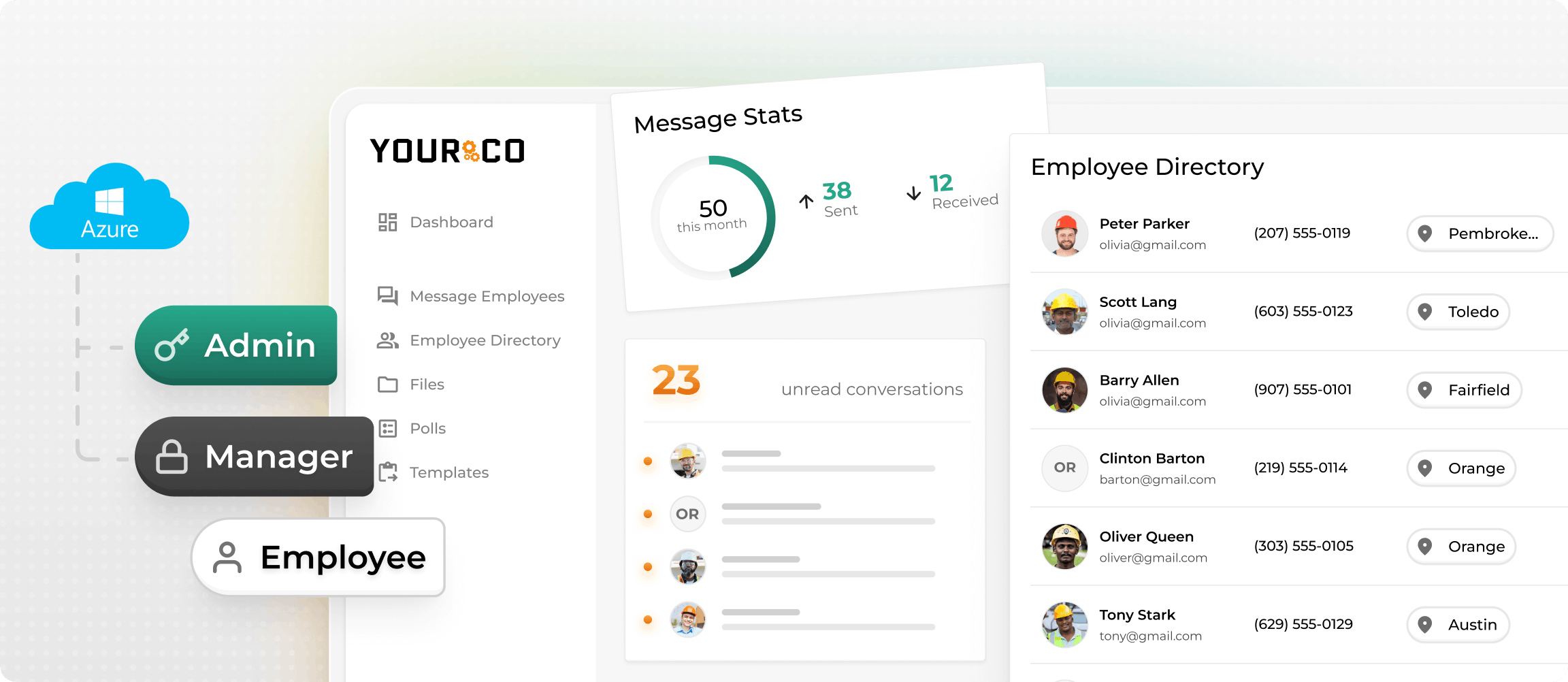
Building accurate frontline engagement analytics starts with reaching workers where they already are. Yourco helps teams reach frontline workers through SMS on any phone, including basic flip phones, with no app download required. Because messages arrive through SMS, the data you collect from surveys and pulse checks reflects a broader frontline audience than app-only tools.
Yourco's core capabilities for frontline engagement include:
- SMS to any phone, including basic flip phones, with no app download required
- Two-way messaging for surveys, pulse checks, and feedback
- AI-powered translation across 135+ languages and dialects
Yourco connects to 240+ HRIS and payroll systems, so employee records stay current without manual updates.
Enterprise Bridge enables one-way broadcasts from corporate leadership to the entire frontline. Every location stays aligned while local managers maintain direct two-way communication with their teams.
Frontline Intelligence gives HR and leadership teams centralized visibility into engagement signals across all locations. It consolidates polls, surveys, and daily SMS interactions into sentiment and retention-risk patterns, helps leadership identify trends by location and shift, and supports proactive follow-up before disengagement turns into attrition. Both frontline managers and corporate leaders get a shared, real-time view that keeps headquarters and the floor connected.
"Getting a lot more response from employees than we have in the past, and it's so easy to just send out a quick text company-wide or to a specific group."
— Maddy Kristjanson, Human Resources Generalist, Plymouth
After 90 days on Yourco, companies see two-way employee engagement reach 86%.
Try Yourco for free today or schedule a demo and see the difference the right workplace communication solution can make in your company.
Frequently Asked Questions About Employee Analytics for Frontline Teams
What is employee analytics for frontline teams?
Employee analytics for frontline teams is the practice of collecting and interpreting workforce data to understand engagement and act on it. It covers turnover, absenteeism, sentiment, and feedback, segmented by location, shift, and tenure, because shift-based frontline teams behave differently from office staff.
Which engagement KPIs matter most for frontline teams?
The most useful KPIs are communication reach and response rate, early turnover and turnover by location and shift, absenteeism by shift, recognition frequency, and feedback participation. These predict retention more reliably than app logins or read receipts, which only capture workers who actively use an app.
Why do app-based engagement metrics give an incomplete picture?
App logins, read rates, and in-app surveys only measure frontline workers who downloaded and regularly use the app. That skews the sample and hides how the rest of the workforce feels. Measuring through a channel workers already have, most commonly SMS, produces more representative data.
How can I measure engagement for workers without desks or computers?
Use a channel workers can reach during a shift, which for most frontline teams means SMS. SMS-based platforms like Yourco deliver pulse surveys, onboarding check-ins, and feedback requests to any phone, then consolidate responses into engagement and retention patterns by location and shift.
How often should I survey frontline employees?
Quarterly pulse surveys, kept short enough for frontline teams to complete during the workday, work better than one long annual survey. Layer structured onboarding check-ins during early tenure, and review exit feedback continuously to spot trends by location, shift, or manager.
How can we encourage employees to engage with and respond to company communications?
Keep messages short, direct, and relevant to the employee's role, shift, or location. Using a channel workers already have access to during their shift, SMS-based platforms like Yourco make it easy for frontline employees to respond without needing an app or a computer. Closing the loop by sharing what changed because of their feedback is what sustains participation over time.