


Yes, in most states, an employer can generally fire an employee over text under at-will employment rules. Employers still need to consider discrimination and retaliation laws, employment contracts, required notices, final-pay rules, documentation, and the message's professionalism and respectfulness.
Firing an employee is never easy, and doing it over text raises legal and ethical concerns. For HR professionals managing frontline workers, texting might seem practical for reaching staff across job sites or shifts.
However, is it legally allowed? The way termination is communicated matters, especially for frontline workers who may receive the news on-site or between shifts. Proper termination practices help prevent legal risks, protect privacy, and ensure clear documentation. Handling terminations professionally also shows respect for employees, reduces miscommunication, and helps maintain team morale during difficult transitions.
TL;DR
- In most states, at-will employment permits a text-based termination when the reason is lawful.
- Discrimination, retaliation, contracts, union agreements, and public-policy exceptions can change the analysis.
- Final-pay deadlines and required separation notices vary by state, and a text does not replace them.
- A documented, consistent termination process matters more than the channel.
- A logged text creates a timestamped record when paired with compliant policies and follow-up.
- SMS-based platforms like Yourco keep termination communications documented in one archived channel.
Legal Framework and Employment Laws
Workplace regulations shape the answer to "Can I fire an employee over text?" At the federal level, agencies such as the Equal Employment Opportunity Commission (EEOC) closely monitor employment practices, and laws like the Family and Medical Leave Act (FMLA) impose additional requirements on covered employers.
Text terminations are not exempt from employment laws, and digital communications often face closer scrutiny around privacy and documentation. A text message can create a timestamped written record of what was communicated and when, which supports documentation when paired with compliant policies, required notices, and appropriate follow-up.
Understanding the legal considerations surrounding SMS matters is important because the termination process should be equally thorough and applied uniformly across the workforce, regardless of channel. State and local laws may impose additional requirements, so consistency and documentation carry more weight than the delivery method.
At-Will Employment and Exceptions
In most states, employment is generally at will. That means an employer can terminate employment at any time, with or without advance warning, as long as the reason is lawful and no contract or legal protection changes the analysis. Because at-will rules usually focus on the reason for termination rather than the channel, a text message may be a legally possible way to communicate the decision.
That does not make every text-based termination low risk. Employers should review the circumstances for common exceptions before sending a termination message:
- Discrimination: A termination cannot be based on protected characteristics such as race, sex, disability, religion, age, or other legally protected categories.
- Retaliation: Firing an employee for reporting harassment, raising safety concerns, requesting protected leave, or engaging in other protected activity can create legal exposure.
- Breach of Contract: An employment agreement, offer letter, or collective bargaining agreement may require specific procedures, notice, or cause before termination.
- Implied Contract: Handbook language, repeated promises, or consistent company practices may create expectations that limit immediate termination in some situations.
- Public-Policy Exceptions: Employers should not terminate someone for reasons that violate public policy, such as refusing to break the law or exercising a legal right.
- Montana: Montana is the main state exception to at-will employment, so employers with Montana staff should review applicable requirements first.
For unionized frontline workplaces, the collective bargaining agreement should be reviewed before any termination text is sent. A CBA may require just cause, progressive discipline, grievance rights, or union notice, and a text serves documentation purposes only if it fits the required process.
This information is for general awareness only. For specific compliance guidance, consult with qualified legal professionals.
Review Text Termination Cases and Legal Precedents
Legal disputes show where the costliest termination mistakes tend to sit.
In Nevada, two Black employees at a repair facility were terminated through text messages after reporting racial harassment by their supervisors. The EEOC filed a lawsuit alleging racial harassment and retaliation, and the employer settled for $400,000.
The circumstances created the exposure. The termination followed protected complaints; one of the accused supervisors sent the message, and no documented process supported the decision. Impersonal digital notice compounds the damage, leaving employees feeling disposable.
Firing employees via text without a documented process may open the door to wrongful termination claims, breach-of-contract disputes, or accusations of bad faith, and in tightly regulated industries it may conflict with notification requirements. Consistent policies, thorough documentation, and respectful communication reduce risk far more than the choice of channel.

Best Practices for Digital Communication in Terminations
So, can you fire an employee over text? This approach requires careful planning to avoid legal issues while maintaining professionalism.
Compliance and Risk Minimization
Most employers establish a clear legal foundation before sending any termination message, aligning the process with applicable federal, state, and local employment laws. The convenience of text does not offset the potential exposure, so documentation, required notices, and policy alignment still carry the process.
Data security deserves equal attention. Promptly removing system access after termination, alongside recovering company property, limits liability and protects sensitive business information.
Role of Company Policies
Well-defined company policies provide the structure. A termination policy should cover all termination scenarios, including digital notifications, and be easily accessible in the employee handbook and on the secure company network.
Effective policies generally address:
- Procedures: Detailed steps for managing terminations consistently and in line with legal requirements.
- Offboarding Checklists: Lists covering final pay, benefits, return of company property, and system access removal.
- Communication Protocols: Standards for respectful, clear termination messages that align with best practices.
Policies should also specify how termination records are stored and what support departing employees receive. Documented workplace texting rules reduce misunderstandings and support consistent treatment across sites.
Steps for Conducting a Text-Based Termination
When a text termination becomes necessary for frontline employees, these steps help maintain dignity and professionalism:
- Set a Respectful Tone: Open with a professional greeting that acknowledges the message's seriousness.
- Be Clear and Concise: State the decision directly, without ambiguity. Business messaging examples can guide the wording.
- Provide Details on Next Steps: Explain final pay timing, benefits continuation, and property return.
- Offer Support: Point the employee to transition assistance resources available to them.
- Document Everything: Keep records of every communication related to the termination.
- Follow Up Appropriately: Schedule a phone call where possible to address follow-up questions.
- Respect Privacy: Send to the intended recipient only, with no sensitive company information included.
- Provide Contact Information: Include HR contact details for questions about final pay and benefits.
- Acknowledge Contributions: Where appropriate, recognize the employee's contributions.
- Maintain Consistency: Apply the same standards used for in-person terminations.
A short, factual message handles the notification cleanly.
Sample termination text:
"Hi [Name], this message confirms that your employment with [Company] is ending effective [date/time]. HR will send details about final pay, benefits, and return of company property. If you have questions, please contact [HR name] at [phone/email]. We appreciate your contributions and will support you through the offboarding process."
Final Pay Timing and Required Notices
Final-pay deadlines vary by state, and a text message does not replace those obligations. California, for example, generally requires employers to provide final wages on the same day when an employee is involuntarily terminated. Confirming the deadline for final wages and accrued benefits comes before relying on a text alone.
Some states also require separation notices, unemployment-related forms, or other written materials at termination. Layoff-driven terminations may trigger the federal Worker Adjustment and Retraining Notification WARN Act or similar state mini-WARN laws, depending on the size and circumstances of the workforce reduction. Where those requirements apply, the text should form part of a broader compliant notice and offboarding process.
This information is for general awareness only. For specific compliance guidance, consult with qualified legal professionals.
Post-Termination Considerations
The period after a termination shapes team morale and organizational culture.
Addressing Remaining Staff and Cultural Impact
Honest communication with the remaining team matters. Supervisors should explain any changes to workload or responsibilities, which builds trust during periods of transition.
Supervisors should also be ready to answer questions without breaching confidentiality. Addressing job security concerns directly prevents unnecessary anxiety, and reinforcing company values helps maintain morale. Support resources, such as HR check-ins, help keep remaining staff engaged.
Documentation and Offboarding
Recording the reasons, procedures followed, and communications exchanged supports consistency and legal protection, and helps prevent disputes. A comprehensive offboarding checklist keeps details from slipping:
- Collect Company Property: Retrieve uniforms, equipment, keys, ID badges, and other company assets.
- Revoke Access: Disable system access, remove email credentials, and restrict data permissions.
- Exit Interview: Where appropriate, gather feedback and identify workplace improvements.
- Final Pay and Benefits: Issue the final paycheck, including any accrued benefits, in line with wage laws.
- Notify Relevant Teams: Inform payroll, IT, and security to support a smooth transition.
Completing these steps in the same order keeps the record easy to retrieve if the termination is questioned later.
Handle Termination Communications With Respect Using Yourco
Text-based terminations require careful handling, especially for frontline employees. While firing someone over text is possible, the process must remain empathetic, comply with labor laws and be documented.
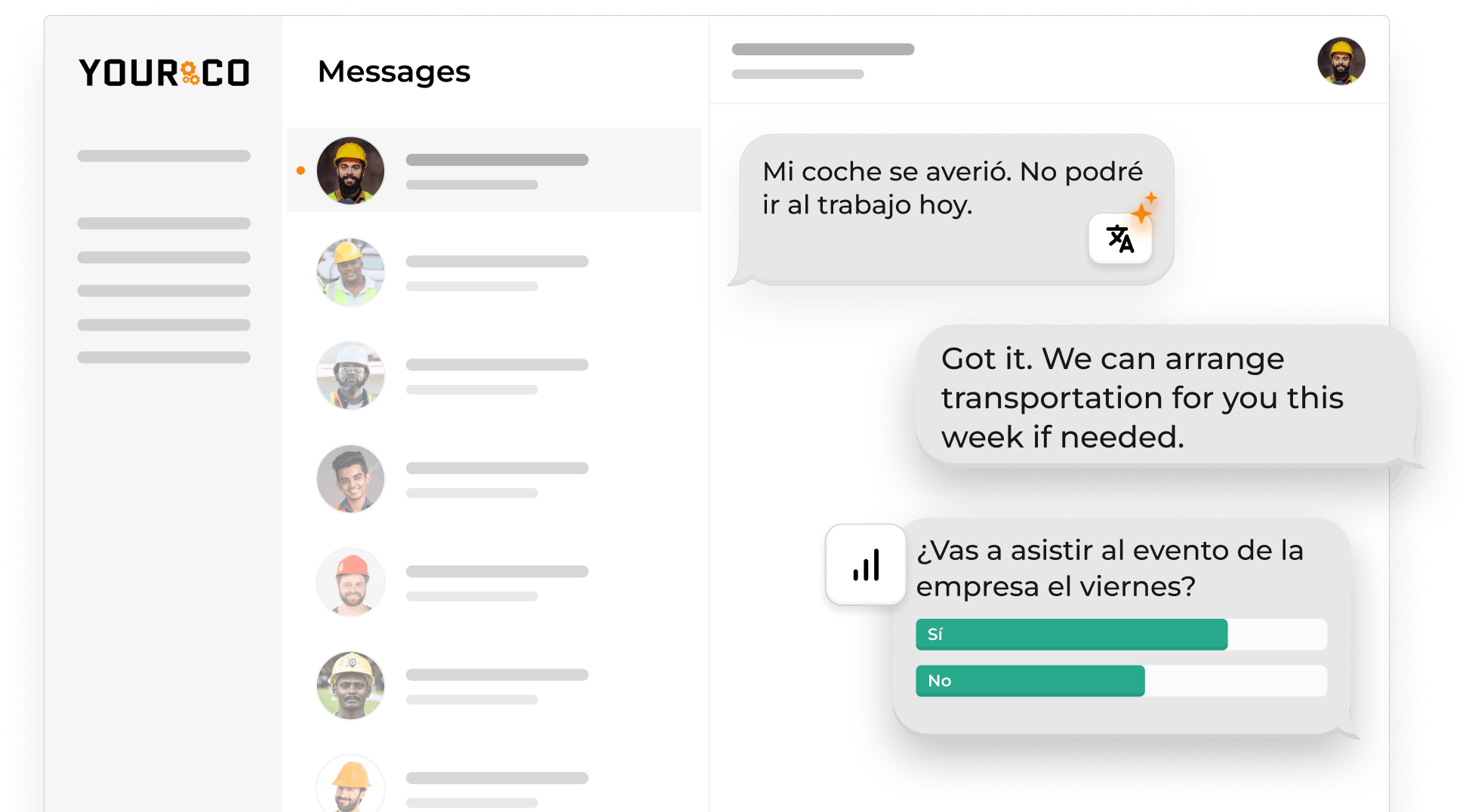
Yourco provides an employee texting platform designed for frontline workers, delivering direct, documented communication without the drawbacks of email or complex apps. Every message is timestamped and archived in one centralized channel, which gives HR the record a termination process depends on.
Yourco delivers the core capabilities frontline teams rely on:
- SMS to any phone, including basic flip phones, with no app download required
- Two-way messaging so employees can ask follow-up questions through the same documented thread
- AI-powered translation across 135+ languages and dialects, so sensitive communications arrive in the language each worker reads
Yourco connects to 240+ HRIS and payroll integrations, keeping employee records up to date through offboarding. For multi-location organizations, Enterprise Bridge enables one-way broadcasts from corporate leadership to the entire frontline, keeping every location aligned on the same policies.
Frontline Intelligence gives HR and leadership teams centralized visibility into frontline communication across all locations. Corporate teams can review message activity by site or department rather than requesting records from individual managers, helping leadership identify patterns and act early during periods of workforce change.
Organizations with large frontline workforces describe the difference a single secure channel makes.
"We have nearly 700 employees and 80% are non-desk based, communication is a challenge. Yourco provides a quick easy way to reach everyone and a secure way for employees to reach HR and leadership without a computer."
— Felisha Parker, VP Human Resources, McCarthy Auto Group
After 90 days with Yourco, two-way employee engagement increased to 86%.
Try Yourco for free today, or schedule a demo to see the difference the right workplace communication solution can make for your company.

Frequently Asked Questions About Firing an Employee Over Text
Is it illegal to fire someone over text?
In most states, it is not automatically illegal to fire someone over text. Under at-will employment rules, employers can generally terminate employment when the reason is lawful and no contract, policy, union agreement, or notice procedure says otherwise. Legal risk increases when discrimination, retaliation, protected leave, or wage issues are involved.
Can you be fired without warning?
In many at-will employment situations, an employee can be fired without advance warning. Employers should check whether a contract, collective bargaining agreement, handbook policy, progressive discipline process, or state law requires warning, just cause, or specific steps before termination. Documented performance history also matters.
What should a termination text say?
A termination text should be brief, respectful, and factual. It should confirm the termination decision and effective date, explain that HR will provide details about final pay, benefits, and company property, and include a contact person for questions. Employers should avoid discriminatory language, emotional statements, unnecessary detail, or legal conclusions.
Does a termination text count as legal documentation?
A timestamped text can serve as part of the termination record when it is logged in a system the employer controls. A message on a supervisor's personal phone is harder to retrieve and easier to dispute. The text supplements, rather than replaces, required notices, final-pay compliance, and the personnel file.
How should employers send sensitive messages to frontline workers?
Through a channel that is documented, secure, and accessible on any phone. SMS-based platforms like Yourco archive every message with a timestamp in a single centralized channel, so HR maintains a retrievable record of what was communicated and when, without relying on personal devices.


