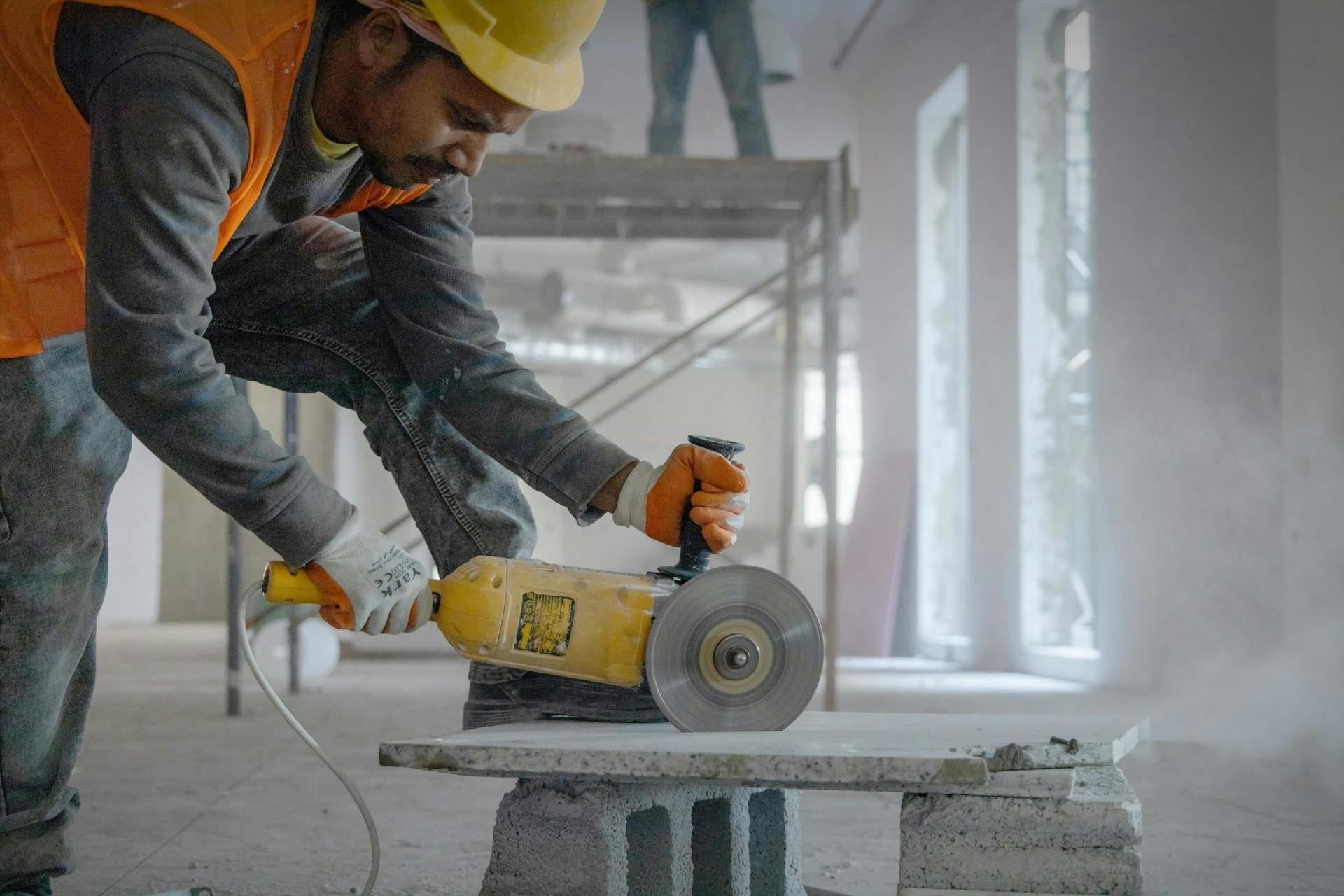
The Bureau of Labor Statistics (BLS) recorded 2.5 million nonfatal workplace injuries and illnesses in private industry in 2024. Behind each of those cases is a moment someone got hurt, a form someone filed, and a lagging number that told leadership what they could no longer prevent.
Most frontline safety programs are built around exactly this kind of after-the-fact data, which means the goals look solid on paper while the real risks go untracked. Catching hazards before they become incidents requires a different approach: leading indicators, SMART goals built around them, and frontline workers with a real way to report what they see.
TL;DR
- Lagging indicators measure past harm; leading indicators, such as near-miss reports and completed inspections, signal where risk is building.
- The SMART framework only works if your leading-indicator data is reliable, and most programs fall short because frontline workers can't easily report what they see.
- Fear of blame, language barriers, and limited access to reporting distort the near-miss data your goals depend on.
- A blame-free culture turns near-miss reports into a usable signal rather than a measure of workers' reluctance to speak up.
- Track leading and lagging indicators on the same cadence and review goals regularly to keep them aligned with conditions on the floor.
- SMS-based platforms like Yourco make leading indicators easy to collect by letting any worker report hazards from any phone.
Understand the Difference Between Leading and Lagging Indicators
Lagging indicators measure events that already happened: injuries, illnesses, and fatalities. Leading indicators are proactive measures that reveal where risk is building before it becomes an incident, according to OSHA's leading indicators guidance. OSHA frames the relationship simply: a good safety program uses leading indicators to drive change and lagging indicators to measure effectiveness.
Many frontline organizations still anchor their goals to lagging numbers, and those metrics carry real limits. The American Society of Safety Professionals (ASSP) describes Total Recordable Incident Rate (TRIR) as having severe statistical and philosophical limitations. Common safety indicator metrics fall on each side, according to OSHA's leading indicators guidance:
- Lagging: TRIR, DART rate, Lost Time Injury Frequency Rate, workers' compensation claims, and days without a recordable incident.
- Leading: inspections completed on schedule, hazards identified, near-misses reported and resolved, corrective actions closed on time, and training modules finished.
The distinction matters because lagging data tells you where harm occurred while leading data shows where to act next.
This information is for general awareness only. For specific compliance guidance, consult with qualified legal professionals.
Apply the SMART Framework to Each Metric
OSHA defines strong leading indicators using SMART principles: Specific, Measurable, Accountable, Reasonable, and Timely. A vague goal like "hold monthly safety meetings" fails the test because it does not say who must attend. A SMART version states it plainly: workers will attend a monthly safety meeting, with a 97% attendance target you can track.
The same logic applies whether the goal is leading or lagging. Specifically names the activity and the owner. Measurable expresses it as a number or rate. Timely sets a cadence that can reveal trends. Concrete SMART safety goals worth adapting include:
- Near-miss reporting (leading): increase reporting of high-quality near-misses over the next 12 months.
- Corrective action (leading): close high-risk corrective actions within a defined window, such as 30 days.
- Training (leading): every assigned worker completes the required safety training, with completion tracked by completion rate and language delivered.
- Survey participation (leading): employees complete a safety perception survey every six months.
- Audit findings (lagging): reduce repeat findings from audits and inspections.
Each goal connects an activity to a number and an owner, which is what turns a slogan into a measurable target.
Fix the Reporting Gap That Breaks Leading Indicators
Leading indicators only exist if frontline workers can easily report what they see, and many programs fail quietly right here. Studies of injury underreporting show that workers often do not report injuries through available channels, so near-miss targets based only on reported counts may reflect reporting culture and reporting barriers as much as actual event frequency.
Workers may face language barriers, a lack of information, or disincentives to report. Reporting may also feel too time-consuming, or workers may simply not recognize what counts as a near-miss event. 93% of HR leaders believe that clear communication on safety reduces workplace incidents, according to a Yourco-commissioned survey of 150 HR leaders.
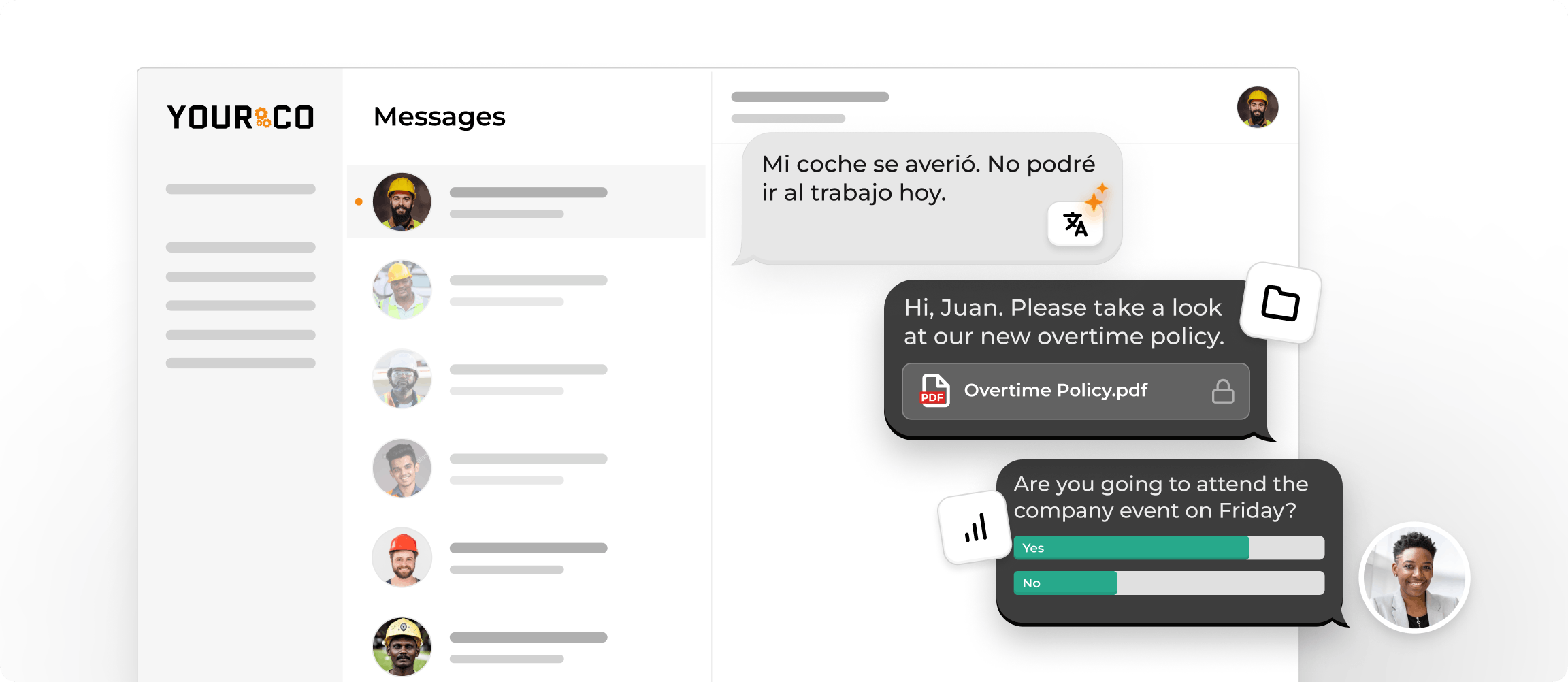
SMS-based platforms like Yourco change the equation. When a worker can text a hazard from any phone, including a basic flip phone, send a photo, and have the communication captured in timestamped records, reporting stops being a chore that goes nowhere. That accessibility is what makes leading-indicator data collectible in the first place, and it is the foundation on which every SMART goal depends.
Build a Blame-Free Culture and Engage Safety Committees
When workers fear blame, they stay silent or report only what feels safe to share. A blame-free or just culture encourages self-reporting by separating honest mistakes from reckless choices. In a just culture, organizations are accountable for the systems they design and respond to staff behaviors fairly. They distinguish human mistakes and at-risk behaviors from reckless actions.
Reporting typically rises when workers trust the process. A rise in near-miss reporting after trust-building often means workers finally believe speaking up is safe and useful. Practical moves that build that trust include:
- Responding to reports with curiosity, asking "Help me understand what happened."
- Thanking people for reporting, even when it surfaces a problem.
- Sharing lessons learned without naming individuals.
- Route near-miss information through safety committees so workers help assess risk.
- Addressing retaliation swiftly and seriously.
Giving frontline teams a real voice keeps your leading indicators honest and your committees engaged.
Track Progress and Train Consistently Across Every Shift
Tracking leading indicators as often as lagging ones keeps risk from building undetected. Connect every key performance indicator (KPI) to an action owner and a due date, use consistent definitions across sites, and review patterns by task, location, shift, and exposure type.
Training only works if it lands in a language workers understand. OSHA requires safety training to be delivered in a language and vocabulary workers can understand; simply translating English materials is not enough if dialect, literacy, or vocabulary barriers still prevent comprehension. Tools that handle company announcements, training reminders, and material distribution with acknowledgment make consistent, multilingual training realistic across distributed teams.
This information is for general awareness only. For specific compliance guidance, consult with qualified legal professionals.
Review and Adapt Goals on a Regular Cadence
A safety goal set once and forgotten drifts away from reality. OSHA's leading-indicators guidance prescribes a continuous loop: communicate progress with workers by posting data against goals, periodically reassess whether the goal still fits, and act on what you learn by sharing it and adjusting the indicator. Many organizations pair annual safety goals with quarterly reviews that cover serious injuries, timeliness of corrective actions, and training completion.
Watch for hidden drift; if hazard reports drop while incidents rise, check whether reporting is accessible and trusted before drawing conclusions about workplace risk. 88% of HR leaders say they need a reliable way to consistently communicate with frontline employees, but only 55% are confident they have that solution today, according to the same Yourco-commissioned survey of 150 HR leaders. Reviewing data on a steady cadence, rather than reacting to single data points, keeps your goals connected to what is actually happening on the floor.
Make Leading Indicators Collectible With Yourco
Strong safety goals require a channel that reaches every worker and captures their reports. Yourco is an SMS-based employee communication platform built for frontline teams. It gives frontline leaders a reliable way to collect leading-indicator data and push safety communication to every site.
- SMS to any phone, including basic flip phones, with no app download, WiFi, or data plan required
- Two-way messaging so workers can report hazards and near-misses with photos, with communication captured in timestamped records
- AI-powered translation for SMS safety messages across 135+ languages and dialects
Yourco connects to your existing systems through 240+ HRIS and payroll integrations. This keeps employee data unified across brands and locations.
Enterprise Bridge enables one-way broadcasts from corporate leadership to the entire frontline workforce. It keeps every location aligned on safety directives and company-wide updates without requiring responses.
Frontline Intelligence gives leadership centralized visibility into safety data across all locations. It scans everyday communication for high-risk language as it appears and tracks leading-indicator participation by location and shift, so leaders can see which sites report the most near-misses and how quickly safety alerts are acknowledged. That turns quarterly snapshots into continuous visibility leaders can act on.
"The Yourco texting system has helped the Railroad communicate with a 24/7 workforce. Sharing weather events, safety concerns and company bulletins have been priceless."
— Carl Kocur, Vice President, Engineering, New Orleans Public Belt Railroad
After 90 days on Yourco, companies see two-way employee engagement reach 86%.
Try Yourco for free today, or schedule a demo to see the difference the right workplace communication solution can make for your company.
Frequently Asked Questions About Workplace Safety Goals
What is the difference between leading and lagging safety indicators?
Lagging indicators measure events that already occurred, while leading indicators show where risk may be building. Examples that lag include recordable injuries and lost workdays. Leading examples include completed inspections, near-miss reports, corrective action closures and completed training. Strong programs use both types together.
What are examples of SMART safety goals?
A SMART safety goal defines the activity, target, owner, and timeframe. Examples include increasing near-miss reporting, closing high-risk corrective actions within a defined window, completing assigned safety training, and improving safety-meeting attendance. Each goal should be tracked consistently over time.
Why do safety programs struggle to collect leading-indicator data?
Frontline reporting often breaks down before leading-indicator data ever reaches decision-makers. Workers may fear blame or doubt that anything will change. Many also lack easy access to the channels needed to report hazards or receive safety updates during the workday.
How does a blame-free reporting culture improve safety outcomes?
A blame-free or just culture encourages workers to report hazards and near-misses, including mistakes that expose system problems before harm occurs. It focuses on understanding behavior and system conditions rather than punishing outcomes. When workers feel safe speaking up, leaders get earlier warning signs and better data to act on.
How can technology help frontline workers report safety concerns?
SMS-based platforms like Yourco let workers report hazards from any phone, including basic flip phones, with photos, and receive safety messaging in their preferred language. This removes common access and language barriers for teams without company email or reliable computer access during shifts.
How often should safety goals be reviewed?
Safety goals should be reviewed on a regular cadence covering both leading and lagging indicators. Checking incident rates frequently while leaving near-miss trends untouched creates a skewed picture. Regular reviews help leaders spot drift and compare patterns across sites and shifts, allowing them to adjust goals as conditions change.