
Fewer than a third of U.S. employees are actively engaged at work, and the toll on productivity is substantial. The frustrating part for HR leaders and operations managers is that the early warning signs of disengagement are already sitting inside the same scheduling, attendance, and overtime systems discussed throughout this article. Most organizations treat workforce management data as an administrative record rather than a diagnostic tool, only reacting after resignations pile up. This article walks through how to transform that raw WFM data into proactive engagement strategies that keep your frontline teams stable, safe, and connected.
TL;DR
- Attendance patterns, overtime concentration, and shift swap frequency are leading indicators of burnout and disengagement hiding in your existing WFM system
- Publishing schedules further in advance and enabling self-service shift swaps directly address the top reasons frontline workers leave
- Algorithmic overtime distribution eliminates favoritism and prevents the overwork spiral that drives your best people out
- Pairing WFM signals with stay interviews, pulse surveys, and real-time recognition creates an early intervention system that managers can actually act on
- Routing alerts directly to frontline supervisors closes the gap between data insight and meaningful conversation
- SMS-based platforms like Yourco make it possible to reach every frontline worker with surveys, recognition, and two-way feedback without requiring app downloads or email access
Spot Burnout Signals in Your Attendance and Overtime Data
Your WFM system already contains the earliest warning signs of disengagement, but most organizations look only at aggregate numbers rather than the patterns within them.
ILO guidance lists absenteeism rate, sick leave trends, overtime levels, and shift changes as operational indicators that flag psychosocial risk. Gallup meta-analysis confirms that highly engaged business units experience far less absenteeism than disengaged ones. That means team-level attendance differences within your own organization can function as a practical signal of engagement gaps. A Yourco-commissioned survey of 150 HR leaders reinforces the urgency: 69% say missed or poor communication with frontline workers is a recurring source of frustration, one that compounds over time when the early signals go unaddressed.
Here are the specific WFM data points to monitor as burnout indicators:
- Short-duration absence frequency: multiple brief episodes, not just total days missed
- Monday/Friday clustering that signals avoidance behavior rather than illness
- Post-overtime absences where call-offs spike immediately after extended shifts
- Rising shift swap requests from previously stable employees, especially combined with increased no-shows
- Over time, concentration in the same individuals week after week, rather than being distributed across the team
- Declining voluntary shift pickup from workers who previously accepted extra hours
The most dangerous pattern is the recursive staffing loop: absences create gaps, overtime falls on remaining team members, fatigue increases, and more absences follow. Breaking this cycle requires catching it early through data, not waiting until exit interviews confirm what the numbers already showed.
Optimize Work-Life Balance Through Predictable Scheduling
Scheduling is one of the most underused retention levers for frontline organizations. SHRM research describes scheduling practices as effective, cost-efficient retention tools, while retention data shows most departures are driven by engagement or work-life balance concerns rather than pay.
For frontline workers, flexibility does not mean remote work. It means knowing their schedule well in advance to plan for childcare, second jobs, and personal commitments. Schedule notice research shows many hourly workers receive less than a week's advance notice, and that same study links precarious scheduling to higher job turnover.
An HBS paper found that consistency in scheduling increases cashier productivity. Related findings from the same research show that stores where managers consulted workers about schedules had lower turnover, less work-life conflict, and higher productivity. In practice, that means publishing schedules one to two weeks ahead, collecting availability preferences early, and tracking alignment between actual schedules and stated preferences.
Ensure Fairness With Algorithmic Shift and Overtime Distribution
Nothing erodes trust faster than the perception that shift assignments depend on who the manager likes rather than transparent rules. Using WFM data to distribute shifts and overtime algorithmically eliminates favoritism and lays the foundation for the fairness engagement that depends on it.
Practical implementation starts with these steps:
- Auto-approve shift swaps that meet defined skill and seniority guardrails, routing only non-compliant swaps for manager review
- Track cumulative overtime by individual so the system distributes extra hours equitably across eligible workers rather than defaulting to the same volunteers
- Set minimum skill-mix requirements per shift so swaps maintain adequate coverage without manager intervention for every request
- Use multi-factor rules for shift bidding, incorporating seniority, skills, and fairness rotation, rather than a single criterion that creates its own inequities
Self-service swap capabilities also free manager time for the coaching conversations that actually move engagement. The goal is to remove manager discretion from routine scheduling decisions while preserving it for exceptions that genuinely require human judgment.
Reduce Burnout With WFM Analytics and Manager Alert Systems
The most consequential shift in workforce analytics is routing insights directly to frontline supervisors rather than burying them in centralized HR dashboards. Gallup research establishes that team engagement is heavily attributable to the manager. Delivering actionable signals where behavior change can actually occur is the difference between data collection and retention intervention.
Build automated alerts that notify supervisors when WFM data reveals:
- A previously reliable employee has repeated no-call/no-shows in a short period
- An individual's overtime exceeds a defined threshold for multiple consecutive weeks
- A new hire approaches the critical retention window with declining attendance
- Shift swap requests from a specific team accelerate beyond the trailing average
These alerts are only valuable if they trigger a specific action. Gallup finds that when a manager has one meaningful conversation per week with each direct report, employees are much more likely to be highly engaged. Those conversations should be brief, regular, and focused on goals, recognition, and the sustainability of the employee's current schedule and workload.
Connect Pulse Surveys and Stay Interviews to Scheduling Data
WFM data tells you what is happening. Pulse surveys and stay interviews tell you why.
In shift-based environments, employee surveys must reach workers on their personal mobile devices, as frontline employees often lack access to corporate email or desktops. Keep each cycle short, rotate question sets to build a complete picture without fatigue, and segment results by shift, location, and supervisor. Aggregate scores mask the unit-level patterns that are actually actionable.
Stay interviews are especially critical for new hires. SHRM finds that year one is the highest-risk retention period for frontline workers. Conduct them early in tenure with questions that map directly to what your WFM data already flags: Is the schedule working for you? Do you feel the overtime distribution is fair? What would make you want to stay?
Track eNPS on a recurring basis alongside your operational data. A declining trend in a specific shift or location, paired with rising swap requests or overtime concentration in that same group, gives you a targeted intervention rather than a company-wide initiative that misses the actual problem
Tie Real-Time Recognition to WFM-Tracked Milestones
A longitudinal study found that well-recognized workers are less likely to turn over. The most impactful recognition moments for frontline workers are already captured in your WFM system: perfect attendance streaks, voluntary shift coverage, safety milestone periods, and training completions.
Connect WFM platforms to recognition workflows so these milestones generate automated prompts to supervisors. The recognition should be immediate, behaviorally specific, and reference the actual operational detail. "Thanks for covering open shifts this month when the team was short-staffed" lands differently than a generic quarterly award.
Explicitly recognize scheduling-related contributions, such as accepting difficult shifts or providing last-minute coverage. Teams with below-average recognition activity visible in your analytics are a leading indicator of disengagement signs that can precede broader deterioration.
Build the Feedback Loop That Makes WFM Data Actionable
None of these strategies works in isolation. A controlled study in an ICU setting found that after organizational interventions targeting work schedules and workloads, absenteeism dropped sharply. The WEF report also documents frontline organizations achieving substantial turnover reductions through proactive, data-driven attrition monitoring.
The stakes for getting this right are real. A Yourco-commissioned survey of 150 HR leaders found that 88% believe better communication tools can directly decrease employee churn, which means the feedback loop you build is not just an engagement initiative but a retention lever with measurable cost impact.
Start with what you already have. AONL guidance recommends integrating existing scheduling, time and attendance, and HRIS data into a centralized view before layering on new technology. The gap is turning those signals into conversations, and those conversations into structural changes your frontline workers can feel.
Reach Every Frontline Worker and Act on What the Data Tells You With Yourco
Turning workforce management insights into real engagement improvements requires a communication channel that actually reaches your entire frontline team. Yourco is the SMS-based employee communication platform built specifically to close that gap, connecting HR, operations, and frontline workers through the one device every employee already carries.
- SMS to any phone with no app download, no Wi-Fi, and no cost to employees
- Two-way messaging so frontline workers can respond to surveys, report absences, and share feedback directly
- AI-powered translation across 135+ languages and dialects, ensuring every worker receives and understands messages in their preferred language
- 240+ HRIS and payroll system integrations that automatically sync employee data so your engagement efforts stay current without manual maintenance
- Enterprise Bridge enables corporate leadership to send one-way company announcements, policy updates, and operational directives to all frontline locations simultaneously, while local managers maintain direct two-way conversations with their teams
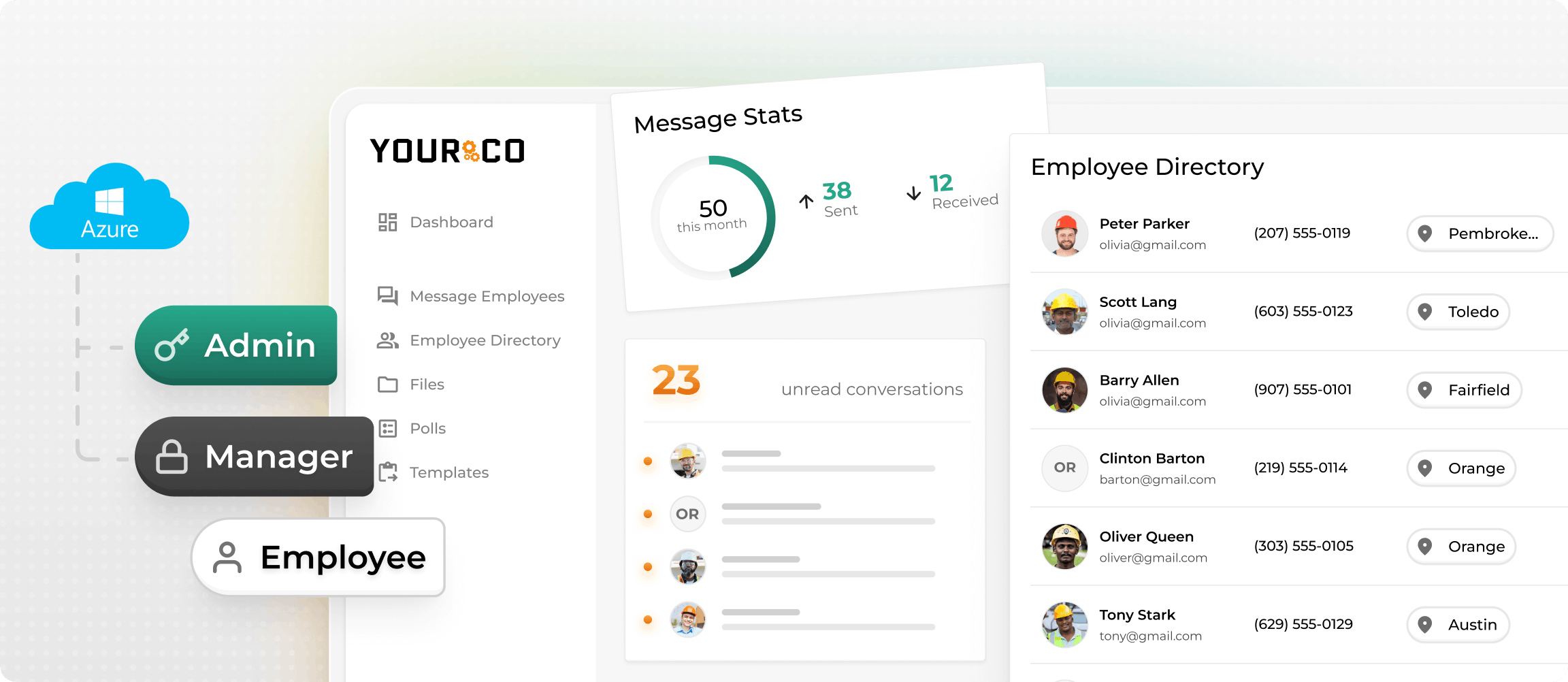
- Frontline Intelligence gives HR and operations teams centralized visibility into engagement trends, sentiment shifts, and call-off patterns across all locations: leaders can identify which sites show signs of disengagement, track absence patterns by department, and surface retention risks before they become resignations
"We have nearly 700 employees and 80% are non-desk based, communication is a challenge. Yourco provides a quick easy way to reach everyone and a secure way for employees to reach HR and leadership without a computer."
— Felisha Parker, VP Human Resources, McCarthy Auto Group
After 90 days on Yourco, companies see two-way employee engagement reach 86%.
Try Yourco for free today, or schedule a demo to see the difference the right workplace communication solution can make for your company.
Frequently Asked Questions About Workforce Management Data
What workforce management data points predict employee burnout?
The strongest early signals include rising short-duration absence frequency, over time concentrated in the same individuals over consecutive weeks, increasing shift-swap requests, and post-overtime call-offs. Tracking these patterns at the team level, rather than only at company-wide averages, helps supervisors see where burnout risk is building.
How does scheduling fairness affect frontline employee retention?
Scheduling fairness shapes whether workers trust the system and the people running it. Transparent shift and overtime rules reduce perceived favoritism, while self-service swaps with clear guardrails give frontline workers more control without creating extra bottlenecks for managers.
How often should frontline organizations run pulse surveys?
Pulse surveys work best on a recurring cadence that teams can sustain and act on. Keep them short, rotate question sets, and review results by shift, location, and supervisor so the feedback points to specific operational changes. SMS-based platforms like Yourco help reach workers who do not use email during the day.
Can stay interviews actually reduce turnover for shift-based workers?
Stay interviews can reduce turnover when they are timed early and tied to real operational issues. For shift-based teams, that means asking about schedules, workload, and fairness, then following through with visible changes that show employees their feedback matters.
What is the best way to deliver manager alerts from workforce data?
Manager alerts work best when they go straight to frontline supervisors and prompt a clear next step. Useful triggers include repeated no-shows from reliable workers, overtime buildup, and sudden increases in swap requests, followed by a short check-in conversation rather than a formal review.