
Most HR and operations leaders rely on delayed reports, scattered voicemails, and secondhand updates to understand what's happening across their frontline teams. By the time attendance issues or safety concerns show up in a spreadsheet, problems have already snowballed: shifts went understaffed, incidents went unreported, and small issues became expensive ones.
Workforce intelligence platforms change this by turning everyday communications into real-time insights. When employees text in call-offs, report safety hazards, or respond to check-ins, that data flows into dashboards where patterns become visible immediately. Instead of reacting to last week's problems, you spot issues as they form and act before they spread.
Understand What a Workforce Intelligence Platform Does
Think of a workforce intelligence platform as the control tower for your frontline communication data. Instead of waiting weeks for a static HR report, you see what happens across every shift in real time.
The system captures information from daily text messages, call-offs, incident reports, and survey responses, then organizes it automatically. That single stream of live data replaces the voicemails, paper forms, and disconnected inboxes that many teams still manage.
Traditional methods depend on hand-entered updates and secondhand reports from supervisors, so information goes stale fast. A workforce intelligence platform solves that problem by logging every interaction the moment it happens: when an employee texts in sick, reports a hazard, or responds to a shift reminder, that data is captured and categorized instantly.
You also gain deeper insight than basic tracking can provide. The platform applies analytics to spot trends and flag issues before they become bigger problems, turning raw communication data into practical steps you can take. That shift from backward-looking reports to forward-looking guidance separates true intelligence from a simple dashboard.
Most importantly, these platforms work for teams that don't sit at desks. Because data arrives through plain SMS, every frontline worker contributes without downloading an app, and leaders can search those messages just like any other data point.
See Why Traditional Reporting Falls Short for Frontline Teams
Traditional reports leave you reacting after problems surface instead of stopping them early. The reason: information sits in too many places and arrives too late.
Most frontline employees don't check email during shifts, so updates get lost before they ever reach decision-makers. Here's where traditional reporting breaks down:
- Scattered call-off data: Absences land in voicemails, text threads, and word-of-mouth messages. By the time those notes reach the office, supervisors have already spent half the morning scrambling for coverage.
- Fragmented attendance records: Absence data lives in separate systems, paper sign-ins, and supervisor memories. Pulling it together takes hours you don't have, and data copied by hand invites mistakes.
- Hidden safety patterns: Paper incident forms get tucked into binders instead of being fed into dashboards. Without searchable logs, patterns in slips, trips, or equipment issues hide in plain sight, and the same hazard may cause another injury before anyone notices.
The result is that supervisors spend their day firefighting instead of preventing tomorrow's problems.
Track Absenteeism and Call-Offs With Real-Time Data
Missed shifts used to mean frantic voicemails, sticky notes on a manager's desk, and a headache for anyone scrambling to fill the gap. A text-based call-off system turns that chaos into clean, searchable data.
When an employee texts in sick, the system instantly logs the message, stamps the time, and alerts the supervisor, HR, and the scheduling team. Nobody digs through inboxes or paper forms because the information is already in the dashboard.
Since every absence gets captured the moment it happens, you start seeing patterns you could never spot by hand. The system highlights trends: maybe call-offs spike on Friday nights, or one location consistently runs short on Monday mornings. When you can see these patterns clearly, you can address the root cause instead of scrambling for last-minute coverage.
Those insights help you ask better questions and make smarter decisions:
- If one shift consistently shows higher call-off rates, you can investigate whether scheduling issues, supervisor relationships, or workload might be driving the problem
- You also avoid the blind spots that creep in when absence data sits scattered across voicemails and paper forms for days before anyone compiles it
Consider a distribution center that noticed Friday night call-offs were 30 percent higher than any other shift. After this trend surfaces, managers can introduce voluntary half-shifts and a small attendance bonus for that slot.
Within a few weeks, you’re likely to see no-shows dropping and weekend overtime costs reducing significantly. To quantify these savings for your own operation, read our breakdown of the ROI of streamlined call-off communication and how better processes translate directly into lower overtime and coverage costs.
Monitor Engagement and Response Patterns Across Locations
Beyond tracking individual absences, real-time dashboards reveal engagement patterns across your entire operation. Instead of waiting for end-of-month reports to surface issues, you see which locations and shifts are responding quickly to messages and which ones have gone quiet.
Every message an employee sends, and how quickly they respond, creates a trail of useful data. Workforce intelligence platforms highlight recurring patterns automatically, helping you catch issues early:
- Response rate drops: See which locations or shifts have stopped confirming messages, signaling possible disengagement or supervisor issues.
- Call-off spikes: Spot shifts or sites where absence texts have increased, so you can investigate root causes before staffing gaps widen.
- Cross-site comparisons: Filter by location, shift, or department to identify which teams follow best practices and which ones need support.
Advanced platforms like Yourco go further by analyzing the content of employee messages, not just the timing. The system automatically identifies tone and emotion signals in everyday texts, categorizing them by topic: scheduling concerns, pay questions, safety issues, equipment problems, HR matters, or general feedback.
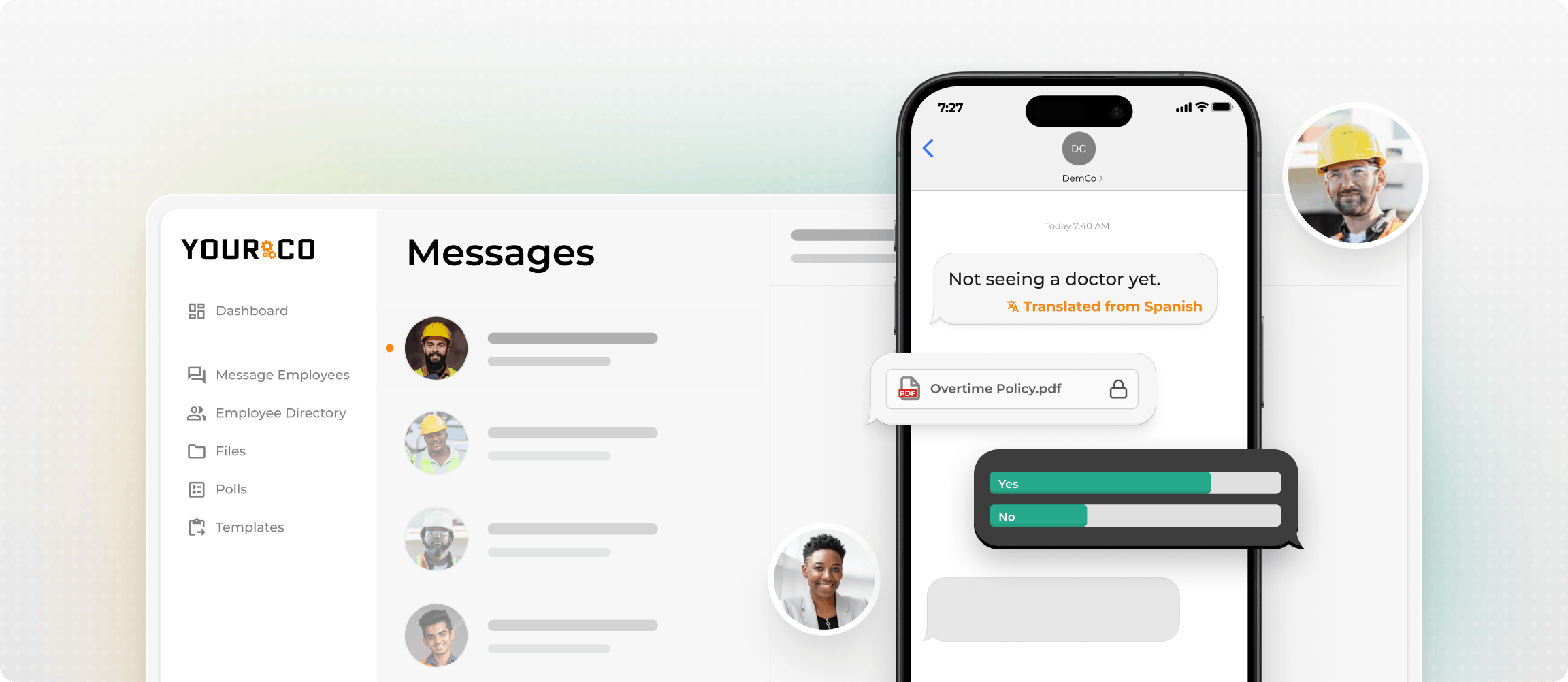
When frustration starts showing up in messages from a specific location or shift, you see it in your dashboard before it turns into turnover or a formal complaint. This sentiment analysis transforms routine communication into an early warning system, helping you understand not just how often employees respond, but how they actually feel about their work.
This visibility also supports compliance. Every message is timestamped and stored, creating searchable records for audits or disputes. Plus, leaders get early alerts when engagement drops, helping address issues before they turn into turnover or safety incidents.
Strengthen Safety With Centralized Incident Reporting
Paper forms sit in binders for weeks, so hazards stay hidden. When you switch to a text-based incident hotline, workers can pull out any phone the moment something goes wrong, send a quick message, and attach a photo.
The system stamps each report with the exact time, then stores everything in a searchable log that stays ready for audits. Since the record starts digital, no one hunts for paperwork, and nothing quietly disappears.
Once reports reach the platform, smart software gets to work. Using pattern-spotting tools that identify trends in safety events, such as slip-and-falls on wet loading docks or near misses around faulty conveyors, the system groups similar incidents and ranks them by frequency.
Managers can spot trends that manual reviews miss and address root causes faster. This real-time insight is becoming standard as blue-collar teams adopt practical technology to keep people safe.
Speed makes the difference. Let’s consider a logistics site that moves from paper logs to mobile reporting. Supervisors can now respond to wet-floor alerts within minutes, replacing mats and adding signage on the same shift.
Over the following weeks, slip-and-fall incidents are likely to drop noticeably, a direct result of catching problems early rather than filing them away for later discussion.
Easy reporting also shows employees you value their safety. When submitting a photo and short text takes less effort than tracking down a supervisor, workers speak up more often. For a step-by-step walkthrough of building this kind of frictionless reporting process, read our guide on how field workers can report safety incidents quickly from any location — the foundation that feeds the safety analytics described here.
More reports create:
- Richer data
- Clearer patterns
- Fewer surprises
Centralized, phone-friendly incident reporting turns everyday messages into a live safety dashboard that protects your team and strengthens your operations.
Choose the Right Workforce Intelligence Platform for Your Team
Start by thinking about how information flows through your operation each day. The right platform should work with your current processes, not force everyone to learn complex new systems. When evaluating options, focus on these factors:
- SMS-first communication. Text messaging beats apps and email every time, with open rates near 98% and responses within two minutes. Look for platforms that send alerts and collect feedback through simple SMS instead of requiring app downloads.
- Multilingual support. When your team can report issues or ask questions in their native language, you get faster responses and fewer misunderstandings. This cuts down on confusion and helps you address problems before they grow.
- HRIS integration. The best systems connect with your HRIS and payroll systems to keep employee directories current, so you always message the right people. Platforms that capture data automatically give you the real-time view that traditional reports can't match.
- Built-in compliance. Automatic timestamps, clear audit trails, and secure document storage keep you ready for audits or safety inspections without extra paperwork. Two-way texting helps supervisors get details quickly, so you have accurate records instead of guesswork.
- Scalability. Choose a solution that works whether you have one location or twenty, without forcing costly upgrades every time you expand. The right platform feels simple to use today and still fits when your team doubles in size.
Get these fundamentals right, and you'll have a communication system that reaches every worker and grows with your operation.
Turn Workforce Data Into Smarter Decisions With Yourco
Yourco turns your everyday texts into clear insights you can act on right away. When an employee sends a text about calling out sick, reporting a safety issue, or responding to a check-in, that message gets automatically timestamped and stored. No more chasing down voicemails or piecing together attendance patterns from scattered sources.
Frontline Intelligence analyzes those conversations and spots the trends you need to see. Maybe one location has more call-offs on Mondays, or response times are slowing down at a particular site. The system flags disengagement signals and safety concerns as they emerge, so you can act before small issues become costly problems.
Leaders can prompt the platform directly with questions like "What's employee sentiment been like over the past two weeks?" or "Which sites are falling behind on safety check-ins?" and get immediate, location-specific answers. The AI consolidates poll responses, survey data, and daily SMS interactions to surface sentiment trends and retention risks by location and team.
Instead of waiting for quarterly surveys or filtered manager reports, you see what's happening across your workforce as it unfolds.
Comparing communication patterns across your locations becomes simple with Yourco's dashboard. You can quickly see which sites have strong engagement and which ones need extra support. Since Yourco supports 135+ languages and dialects, every worker can report absences or safety concerns in their preferred language, and you'll understand exactly what's happening.
Your team gets faster answers, employees feel heard, and your compliance records stay organized without extra paperwork.
Try Yourco for free today or schedule a demo and see the difference the right workplace communication solution can make in your company.
Frequently Asked Questions
What is a workforce intelligence platform?
It’s a smart system that captures everyday interactions like call-off texts, shift confirmations, and incident reports, then turns that information into clear insights you can actually use. Instead of waiting for monthly reports or digging through voicemails, you get real-time visibility into what's happening across your teams.
How does a workforce intelligence platform help reduce absenteeism?
Every time someone texts in a call-off, the system logs it immediately with the time, date, and reason. Over time, it identifies patterns like frequent Friday absences or spikes during certain seasons.
When it spots a trend, you can investigate the root cause and address the issue before it gets worse. This early warning system helps companies reduce last-minute staffing gaps by catching problems while they're still manageable.
Why do frontline workers need a different approach to reporting?
Frontline workers aren't sitting at computers all day. Their updates come through phone calls, texts, or word-of-mouth messages that traditional systems can't easily capture. By the time that information makes it into a report, it's often too late to act on.
Workforce intelligence platforms bring all those scattered touchpoints together in real time, eliminating the manual work that slows down busy managers.
How do these platforms improve safety reporting?
Employees can report incidents instantly by text, including photos, right from their phone. Each report gets timestamped automatically for compliance records, and the system organizes everything into searchable logs.
This makes it easier to spot recurring safety issues like wet floors or equipment problems, so you can fix them before someone gets hurt.
What should I look for when selecting a workforce intelligence platform?
Pick a system that works through SMS so employees don't need to download apps, translates messages automatically for multilingual teams, and integrates with your HRIS to keep employee data current.
Look for real-time dashboards that compare engagement across different sites and shifts, secure records for audits and compliance, two-way messaging capabilities, and the ability to scale easily from one location to many.
These features ensure everyone from warehouse workers to HR gets the information they need to make quick, informed decisions.