
A 98% Short Message Service (SMS) open rate makes scheduled communication as important as the schedule itself. If you manage shift workers in retail, manufacturing, logistics, or field services, a single scheduling slip can lead to a no-show or a coverage issue. Seven common staff scheduling mistakes quietly drive burnout and compliance risk; fixing them takes clearer communication and better visibility.
TL;DR
- Staff scheduling mistakes drive frontline no-shows and turnover when managers rely on manual planning or publish shifts late.
- Advance notice and two-way communication build trust and reduce last-minute coverage scrambles.
- Skill mix and overtime controls protect workplace safety and overtime compliance.
- Scattered texts, notes, and emails create confusion; one reliable channel keeps every shift worker aligned.
- SMS-based platforms like Yourco reach every frontline worker on any phone, so workers see schedule updates and shift reminders.
Why Fixing Staff Scheduling Mistakes Matters
Staff scheduling mistakes rarely show up as one big failure. They surface as a slow drip of late arrivals, unfilled shifts, fatigued crews, and quiet resignations. When workers can't plan their lives around their hours, morale drops, productivity suffers, and your best people start looking elsewhere.
Scheduling affects employee experience and operations in equal measure. When managers improve visibility, publish earlier, and communicate changes clearly, the fixes below start to pay for themselves in retention and reliability.
1. Stop Relying on Manual Methods
Spreadsheets, paper schedules, and group texts feel familiar, but these methods compound errors at every step: availability gets missed and skill matching slips. Last-minute changes also go undocumented. Managers using these tools spend hours each week rebuilding plans and chasing confirmations. Mistakes then surface at the last minute, fueling overtime spikes and coverage shortfalls.
A digital scheduling process reduces those errors and frees up time. Reliability improves when changes are applied instantly, and every worker sees the same version through a clear, centralized process. Moving away from manual methods is the first step toward a better shift-planning guide.
2. Capture Availability and Preferences
Schedulers often assume hourly workers are available whenever managers need them. They aren't. When you overlook time-off requests and preferred hours, you set people up to fail, and you set the operation up for no-shows.
A part-time worker may flag a conflict weeks in advance, and then a manager schedules that worker anyway. That short-staffs the shift, slows service, and gives that worker one more reason to leave. Research from The Shift Project at Harvard Kennedy School shows that schedule instability and unpredictability harm worker well-being, making more predictable shift planning an important way to improve retention and performance. To capture availability well, focus on a few practical habits:
- Collect time-off requests and preferred hours through a single, consistent intake method, then confirm receipt so workers know their request has been received.
- Rotate undesirable shifts equitably instead of repeatedly assigning them to the same people.
Honor what workers tell you, and you'll see fewer call-offs and stronger loyalty.
3. Publish Schedules Earlier
Among staff scheduling mistakes, late schedules are especially disruptive because they make it impossible for workers to plan childcare, second jobs, appointments, or rest. That uncertainty is one of the strongest predictors of turnover among shift workers. Gallup’s 2025 workplace scheduling report finds that roughly one in four U.S. employees face schedule unpredictability, with the problem especially common in hourly and frontline roles.
Advance notice is also becoming a legal benchmark. Fair Workweek laws, including rules in Oregon and Los Angeles County, set advance-notice and recordkeeping rules for covered employers; some also address predictability pay.
This information is for general awareness only. For specific compliance guidance, consult with qualified legal professionals.
Publishing schedules two weeks in advance gives workers more predictability, regardless of jurisdiction. Posting schedules early gives your team time to plan their lives and fewer scrambles to cover.
4. Communicate Updates Through One Clear Channel
Communication-related staff scheduling mistakes occur when updates are scattered across texts, emails, paper notes, and a chat app. Context gets lost, and workers miss critical changes. For frontline employees without company email or regular screen time, shift changes and policy updates frequently fail to reach them at all.
Use a single source of truth: pick one place for every official update, including schedule changes and coverage requests. Scattered group texts also leave no timestamped record of what managers published and when, which creates version-control and documentation problems.
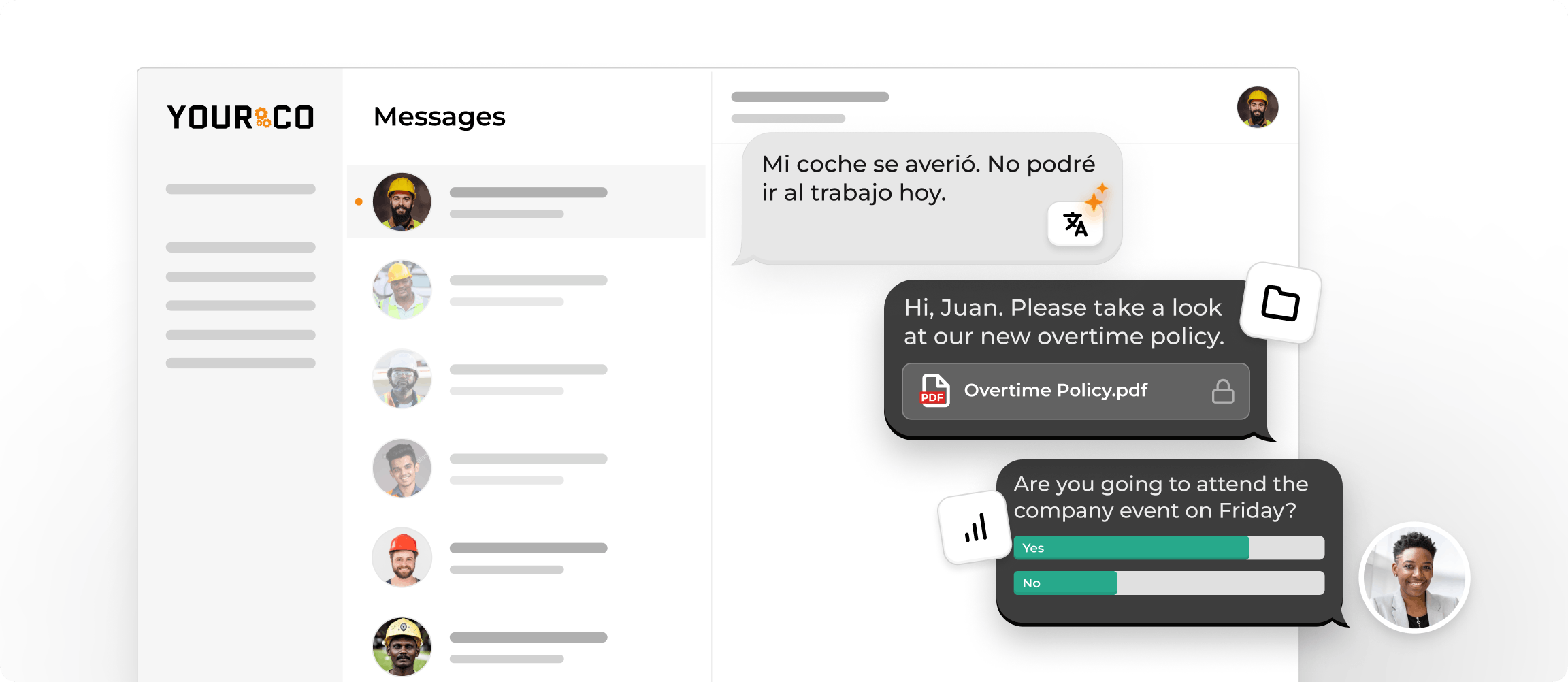
69% of HR leaders say missed or poor communication with frontline employees is a recurring source of frustration, according to a Yourco-commissioned survey of 150 HR leaders. SMS solves the reach problem because it works on any phone, without an app, internet access, or a company email.
5. Account for Skill Mix and Certifications
A filled slot still needs the right qualified worker. When you schedule without checking certifications or training levels, you risk safety incidents and production bottlenecks. In manufacturing, efficient labor allocation that avoids both understaffing and overstaffing is what keeps production flowing.
Skill-blind scheduling gets worse when absences hit. Covering a no-show by extending another worker's hours compounds fatigue and can leave a shift without the right qualified person on hand. OSHA's Employer Responsibilities guidance requires employers to train workers on the safety and health aspects of their jobs before they begin a task to promote workplace safety. To keep skill mix from breaking down, build a few safeguards into your process:
- Tag shifts with the certifications or training they require, and maintain a current list of who is qualified for each role.
- Cross-train workers so that qualified backups exist for critical positions.
Match the right people to the right shifts, and you protect both safety and output.
6. Manage Overtime and Compliance Before You Publish
Overtime is usually a symptom of deeper scheduling problems: volatility, skill bottlenecks, and inconsistent handoffs. Left unchecked, it drives fatigue and can create compliance exposure and cost.
The best time to catch a problem is before the schedule goes out. The Fair Labor Standards Act establishes a federal overtime framework for covered employees who work more than 40 hours in a workweek. Commercial carriers also often review the Federal Motor Carrier Safety Administration (FMCSA) Hours-of-Service rules, which address driving and on-duty time limits. This information is for general awareness only. For specific compliance guidance, consult with qualified legal professionals.
Review overtime totals and rest gaps during the build, then check qualification matches before payroll flags corrections.

7. Build a Backup Plan for Absences
No-shows and emergencies are inevitable. Scheduling in isolation, with no contingency, turns every absence into a crisis. Unplanned absences can trigger last-minute changes and extra workload for peers. They can also raise agency costs or leave a shift without qualified coverage, which hurts service and safety.
Keep backup planning current as availability and coverage needs change. Start with cross-training and clear swap policies that respect skill and overtime limits. Then keep a fast way to reach qualified workers when a shift opens up. When you can text a vetted group of backups in seconds and confirm coverage, a call-off becomes a quick fix instead of a stalled shift.
Poor Scheduling vs. Better Shift Planning
Each of the seven mistakes has a direct fix, and most require process changes rather than new tools
Adopting even a few of these shifts addresses the most common staff scheduling mistakes that frontline teams keep repeating.
Reach Every Shift Worker Instantly With Yourco
Better shift planning depends on one thing above all: every worker actually getting the message. Yourco gives operations and HR leaders a reliable, SMS-based way to reach the entire frontline, so schedule changes and coverage requests land where workers already look.
- SMS to any phone, including basic flip phones
- No app download or internet connection required
- Two-way messaging so workers can confirm shifts, request swaps, and report absences
- Artificial Intelligence (AI)-powered translation for 135+ languages and dialects
Yourco connects to existing Human Resources Information Systems (HRIS) and payroll tools through 240+ HRIS and payroll integrations, keeping employee data synced as your workforce changes.
For multi-location organizations, Enterprise Bridge enables corporate leadership to send centralized, one-way schedule policies and company-wide updates across all locations, while local managers maintain direct communication with their teams.
Frontline Intelligence gives leadership centralized visibility into attendance and scheduling patterns across all locations. It tracks shift confirmations and response times by site or department, surfaces call-off activity that signals coverage strain, and lets operations leaders make staffing decisions backed by real data rather than secondhand reports.
After 90 days on Yourco, companies see two-way employee engagement reach 86%.
Try Yourco for free today, or schedule a demo to see the difference the right workplace communication solution can make for your company.
Frequently Asked Questions About Staff Scheduling Mistakes
What are the most common staff scheduling mistakes?
The most common staff scheduling mistakes are relying on manual methods, ignoring worker availability, publishing schedules too late, using scattered communication channels, overlooking skill mix, mismanaging overtime, and having no backup plan for absences. Each one can drive no-shows, burnout, and turnover. Fixing them starts with clearer communication and earlier, more reliable scheduling.
How can managers ensure compliance with state labor laws on overtime across multiple locations?
Managers can ensure compliance with state labor laws across multiple locations by centralizing time and attendance data, making hours visible by site, role, and pay period rather than being tracked separately at each location. Overtime and predictable scheduling rules vary by state, so many employers review requirements on a location-by-location basis.
How far in advance should I publish employee schedules?
Many employers aim to publish employee schedules as early as possible, since predictability improves attendance and trust. Fair Workweek laws in Oregon, Los Angeles County, and other jurisdictions can affect covered employers. This information is for general awareness only. For specific compliance guidance, consult with qualified legal professionals.
How can I reduce no-shows on frontline shifts?
No-shows on frontline shifts drop when managers capture availability and preferences up front and publish schedules early enough for workers to confirm. Two-way communication lets workers flag conflicts before they become absent. SMS-based platforms like Yourco reach frontline workers on any phone, so reminders and changes don't get missed.
Why do manual scheduling methods cause so many problems?
Manual scheduling methods cause problems because spreadsheets and paper schedules compound errors across availability and skill matching. Group texts make compliance harder to track and last-minute changes hard to communicate. Managers waste hours rebuilding plans and chasing confirmations, while a centralized digital process keeps everyone on the same version.
How can managers check overtime and compliance before publishing a schedule?
Managers can check overtime and compliance by reviewing overtime totals and rest gaps between shifts, then checking qualification matches during the build. Many employers review FLSA guidance and applicable predictable-scheduling or rest-break rules in jurisdictions such as Oregon and Los Angeles County.
This information is for general awareness only. For specific compliance guidance, consult with qualified legal professionals.
What should a backup coverage plan include?
A backup coverage plan should include cross-trained workers and clear swap policies that respect skill and overtime limits. Managers also need a fast way to reach qualified backups when a shift opens up. Planning for realistic daily absences keeps a single call-off from stalling a shift.