
Under EEOC regulations, employers must retain all personnel and employment records for 1 year, measured from the termination date when a separation is involuntary. That period assumes the records exist somewhere that they can be retrieved. A supervisor texts a safety instruction from her personal phone, call-offs land in voicemail, and policy updates go out through channels HR never sees. Months later, someone needs to confirm what managers communicated and when, and the answer sits on a dozen personal devices.
TL;DR
- Retention periods vary by record type and by the rules that apply to the employer, so no single number covers everything.
- An audit trail is a chronological, timestamped record of who did what and when.
- E-discovery involves locating and producing electronic records, including text messages, chat messages, and voicemail.
- A legal hold is the term for pausing scheduled deletion while a matter is open.
- Work messages sent on personal phones leave no company copy, and the history leaves when the employee does.
- SMS-based platforms like Yourco keep frontline messages in one centralized, timestamped channel.
How Long to Keep Employee Records
Retention has no single answer. It varies by record type and by the employer's industry or jurisdiction, and state rules often run longer than federal ones. Federal guidelines give reference points many employers use as a starting point:
Sources: EEOC, FLSA, IRS, 45 CFR 164.316, OSHA, USCIS.
Most employee records fall between one and seven years, with regulated areas such as exposure monitoring running considerably longer. The spread is wide enough that a single company-wide retention rule rarely fits every record type.
This information is for general awareness only. For specific compliance guidance, consult with qualified legal professionals.
Why Retention Schedules Exist at All
Under normal circumstances, organizations delete records intentionally. A retention schedule lists how long the organization keeps each record type and what happens when the period ends. Routine deletion on a schedule is ordinary information management, since keeping everything forever creates storage costs and clutter that make useful records harder to find.
The schedule only governs records the organization can actually see. A message sitting on a supervisor's personal phone falls outside every system the company manages, so it is neither retained nor deleted on any schedule. It stays on the device until someone deletes it or the phone changes hands.
That is the practical difference between a record and a message. A record has a known location, a known retention period, and a way to retrieve it. A message on a personal device has none of those.
What an Audit Trail Actually Records
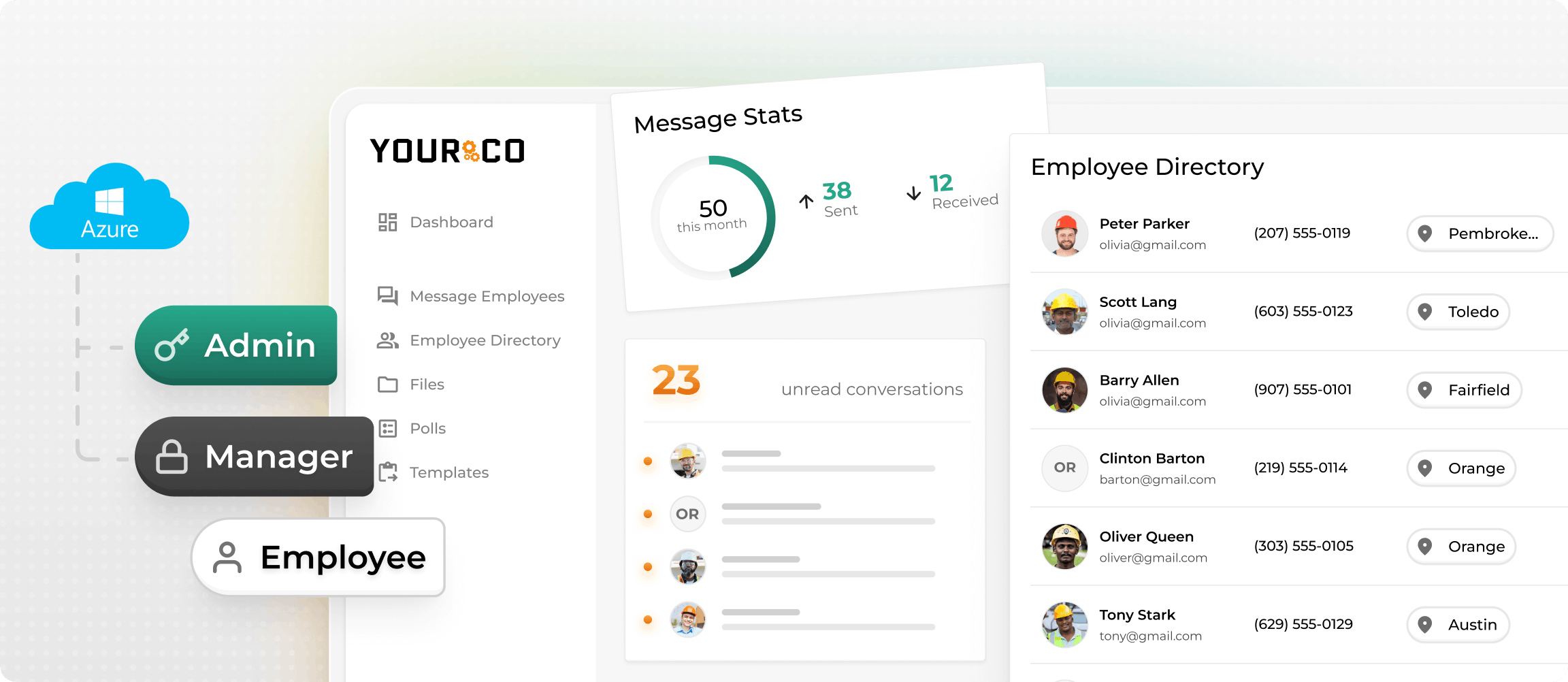
An audit trail is a chronological, timestamped record of who did what and when. A good one lets someone reconstruct a sequence of events without guesswork or interviews. If a pay rate changed, the trail shows who changed it and when. If a policy went out, the trail shows who received it and who confirmed it.
Most HR and operations teams already work with audit trails in familiar systems. A policy acknowledgment log captures which employee confirmed which document, and when. Personnel file trails record changes to classification, pay rate, and title, while time and attendance systems log every entry and every edit.
The audit trail and the audit log are used interchangeably. An audit log usually refers to the raw, system-generated record, while an audit trail describes the reconstructable sequence tied to a business process. The distinction matters less than whether the record is complete when someone goes looking for it.
What Does E-Discovery Mean?
E-discovery, short for electronic discovery, is the general term for identifying, collecting, reviewing, and producing electronic records when a formal process calls for them. The word appears most often in legal contexts, though the underlying activity is familiar to anyone who has been asked to pull records for an audit or a records request.
The material it covers reaches well beyond email:
- Emails and attachments, with timestamps and sender information
- Text messages and SMS threads
- Instant messages on workplace chat tools
- Voicemails and audio recordings
- Cloud-stored documents, spreadsheets, and PDF files
- Social media posts and mobile device data
Business-record status generally follows information content rather than format or storage technology. A message counts because of what it says and why it was sent, not because of which app carried it. Text messaging and workplace chat can qualify when an organization creates them in the course of business. A complete audit trail ties those communications to sender, recipient, date, and content.
A related term worth knowing is the legal hold, which refers to pausing scheduled deletion of particular records while a matter is open. It is the reason retention schedules include exceptions rather than running automatically in every case.
This information is for general awareness only. For specific compliance guidance, consult with qualified legal professionals.
Where Frontline Communication Records Go Missing
Frontline workers rarely have email or desk access, so day-to-day communication drifts to personal texts and consumer messaging groups. In a Yourco-commissioned survey of 150 HR leaders, 69% named poor frontline communication as a recurring source of frustration. These are sometimes called off-channel communications, meaning business messages sent on tools the company has not set up for business use.
Messages that never enter company systems leave holes in the audit trail where it matters most. When texting occurs on personal phones, the company has no visibility into what managers said or what employees agreed to. When the employee leaves, the message history leaves with them. A supervisor trying to confirm who received a safety instruction has to ask people to scroll through weeks of personal threads.
Call-offs show the same pattern. When absences arrive via voicemails and side-channel texts, call-off records remain incomplete just when attendance history is most useful. Asking a phone carrier for message content after the fact is neither quick nor dependable. A company-controlled channel is the only place a retrievable copy exists.
What Organized Records Change Day to Day
Complete, centralized records help not only during formal reviews but also during ordinary weeks. When an auditor, state agency, or insurer asks for records, a centralized repository turns a week of searching into a focused query. HR and operations teams stop asking supervisors to forward screenshots or checking whether a voicemail still exists.
Centralized records also settle the history behind everyday decisions. A verbal handover or a deleted chat leaves nothing to check later, while a logged message shows the named recipient, the acknowledgment, and the timestamp. That record resolves routine disagreements about who received which update, and it provides new managers with a reference for decisions made before they arrived.
Speed matters when someone needs a record fast. Electronic, centralized files remove the misfiled-folder problem, since a search by employee name or date finds the record in seconds. One central channel also provides employees with a single reference point and reduces duplicate or conflicting messages.
Keep Every Frontline Message Logged With Yourco
Organized records start with where the conversation happens. Yourco gives frontline teams one centralized channel for everyday communication. Logged exchanges create timestamped records and message archives from the moment someone sends them, and those records do not scatter across personal devices.
Yourco delivers the core capabilities frontline teams rely on:
- SMS to any phone, including basic flip phones, with no app download required
- Two-way messaging so employees respond, confirm instructions, and report absences in a thread that stays logged
- AI Call-Off Agent that gathers the dates and reason over SMS, confirms the request, and logs each call-off as a complete, timestamped record, automatically generating reports that can be used for e-discovery and auditing purposes.
- AI-powered translation across 135+ languages and dialects
Yourco connects to 240+ HRIS and payroll integrations, which keeps message records matched to current employee rosters as people join and leave. For multi-location organizations, Enterprise Bridge supports one-way broadcasts from corporate leadership to the entire frontline, keeping every location aligned without requiring responses.
Frontline Intelligence gives HR and operations leaders centralized visibility into communication activity across all locations. Leadership can see acknowledgment and response patterns by site without piecing together records location by location.
Organizations in regulated industries describe what a single logged channel changes.
"Yourco has helped us organize staff communications and drive many operational efficiencies."
— Jennifer Nestor, HR Coordinator, 1st Step Behavioral Health
After 90 days with Yourco, two-way employee engagement increased to 86%.
Try Yourco for free today or schedule a demo to see how centralized SMS records work for frontline teams.
Frequently Asked Questions About How Long to Keep Employee Records
How long should employers keep employee records?
Retention depends on the record type and on the employer's industry and jurisdiction. Federal reference points range from one year for personnel records to thirty years for employee exposure records. Consult qualified legal professionals for specific compliance guidance.
How long should records be kept after termination?
Post-termination retention depends on the record type. Personnel files, payroll records, Form I-9 records, benefit records, and regulated safety records follow different timelines, and state rules may run longer than federal reference points.
What is an audit trail?
An audit trail is a chronological, timestamped record of who did what and when. In HR and operations, that covers policy acknowledgment logs, personnel file changes, and message records showing what managers sent, who received it, and who confirmed it.
What happens to work texts on a personal phone when an employee leaves?
They leave with the device. Unless the messages were routed through a company system, the employer has no copy of them and no way to retrieve them, which leaves a gap wherever that person's conversations mattered.
How do employers keep frontline communication records organized?
Route work messages through one centralized channel and keep personal phones out of work-message routing. SMS-based platforms like Yourco keep frontline messages timestamped and archived in one place. A complete record exists beyond any single device, so HR can retrieve it without asking employees to search personal threads.