


HR teams often struggle to collect documents from employees who don't check email regularly or lack access to computers. When workers are spread across warehouse floors, construction sites, or retail locations, chasing down paperwork becomes a time-consuming task that delays payroll processing, slows onboarding, and creates compliance risks. The situation gets worse when language barriers add another layer of confusion. Texting offers a straightforward solution: employees can snap a photo of their documents from any phone and send them directly to HR without needing apps, internet access, or technical skills.
This guide shows managers how to set up document submission via text in a secure, trackable, and compliant way that works for multilingual teams across multiple locations.
Why Document Collection Via Text Matters
Text messaging gives HR a faster, more reliable way to collect documents from employees across locations. SMS reaches workers with a 98% read rate, compared to roughly 20% for email. That difference matters when you're waiting on tax forms, license renewals, or doctors' notes that affect payroll and compliance.
Text-based submissions eliminate common excuses like "I couldn't access my email" or "I forgot to upload it." Workers already know how to send photos and reply to texts. There's nothing new to learn, no passwords to remember, and no apps to download. For frontline workers using basic phones or limited data plans, SMS remains the one channel they can access reliably.
Choose a Secure Text-Based System That Supports File Submissions
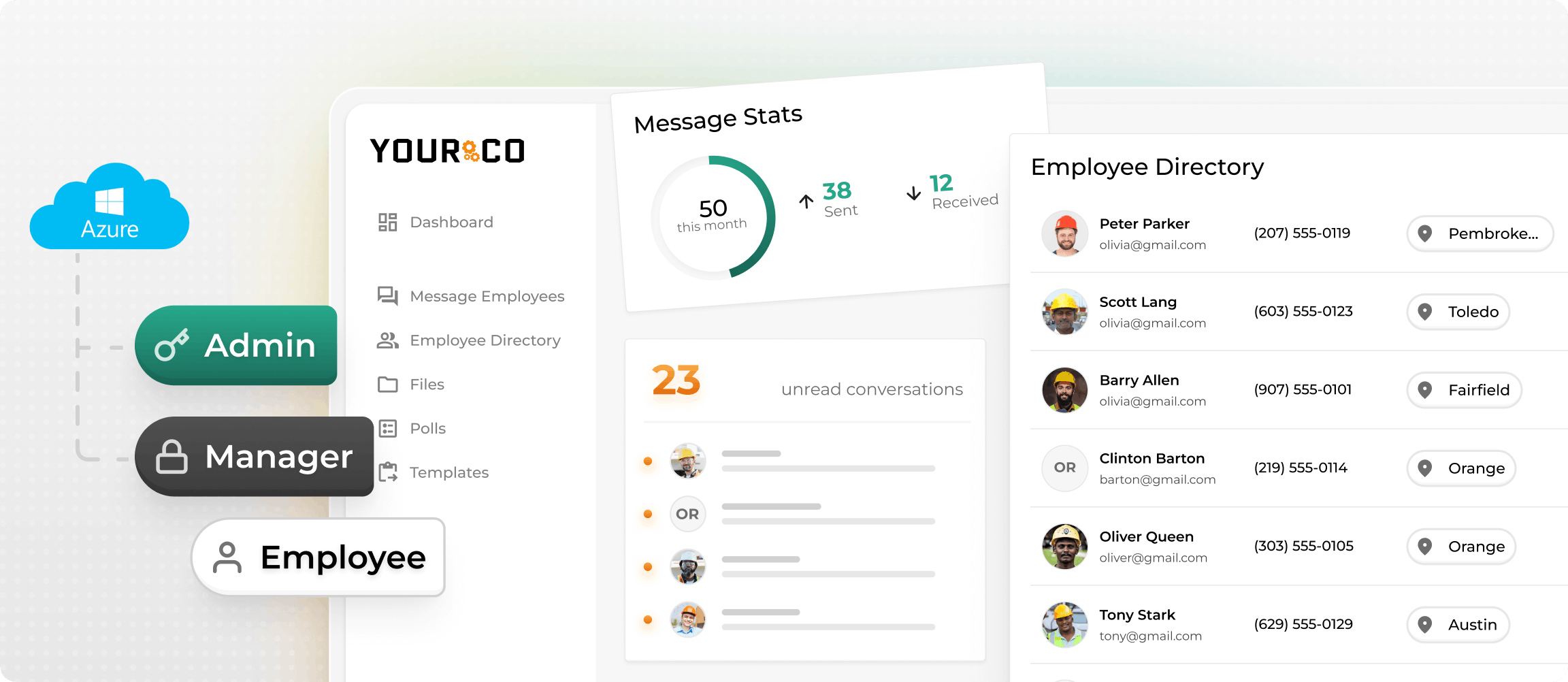
When employees send sensitive documents like ID photos, tax forms, or medical notes, security becomes a primary concern. While we are not legal professionals, many HR teams look for platforms with encryption and role-based access controls to protect employee data.
A secure SMS system for document collection should include encrypted message delivery and storage, role-based permissions controlling which staff can view submissions, private one-to-one communication threads, SOC 2 and GDPR-aligned safeguards, and automatic message logs for audits.
Tell Employees Exactly What They Can Submit Via Text
HR leaders should make the process simple and specific by clearly communicating which documents employees can submit via text. Common documents that work well for text-based submission include work eligibility documents like ID cards and authorization forms, proof of address, license renewals, doctor's notes, training confirmations, and time-sensitive HR forms.
When instructing staff on acceptable submissions, explain what counts as a usable photo: good lighting, all corners visible, no blur, and readable text. A quick example photo in your instructions helps workers understand exactly what you need, reducing resubmissions and follow-up messages.
Set Up Clear Instructions for How to Submit Documents
Employees follow through when instructions are simple and repeatable. A straightforward submission workflow looks like this: take a clear photo of the document with all text visible, text it to the company's dedicated number, wait for confirmation, and keep the original copy for personal records.
Consistent instructions dramatically reduce errors. Missing pages, unreadable photos, and wrong file types drop when employees know the exact steps ahead of time. When everyone follows the same process, HR spends less time chasing corrections.
Use Automatic Translation So Every Employee Understands the Instructions
Multilingual teams struggle when document requests arrive only in English. Workers who don't fully understand what's being asked may submit incomplete paperwork, delay their response, or simply ignore the message altogether.
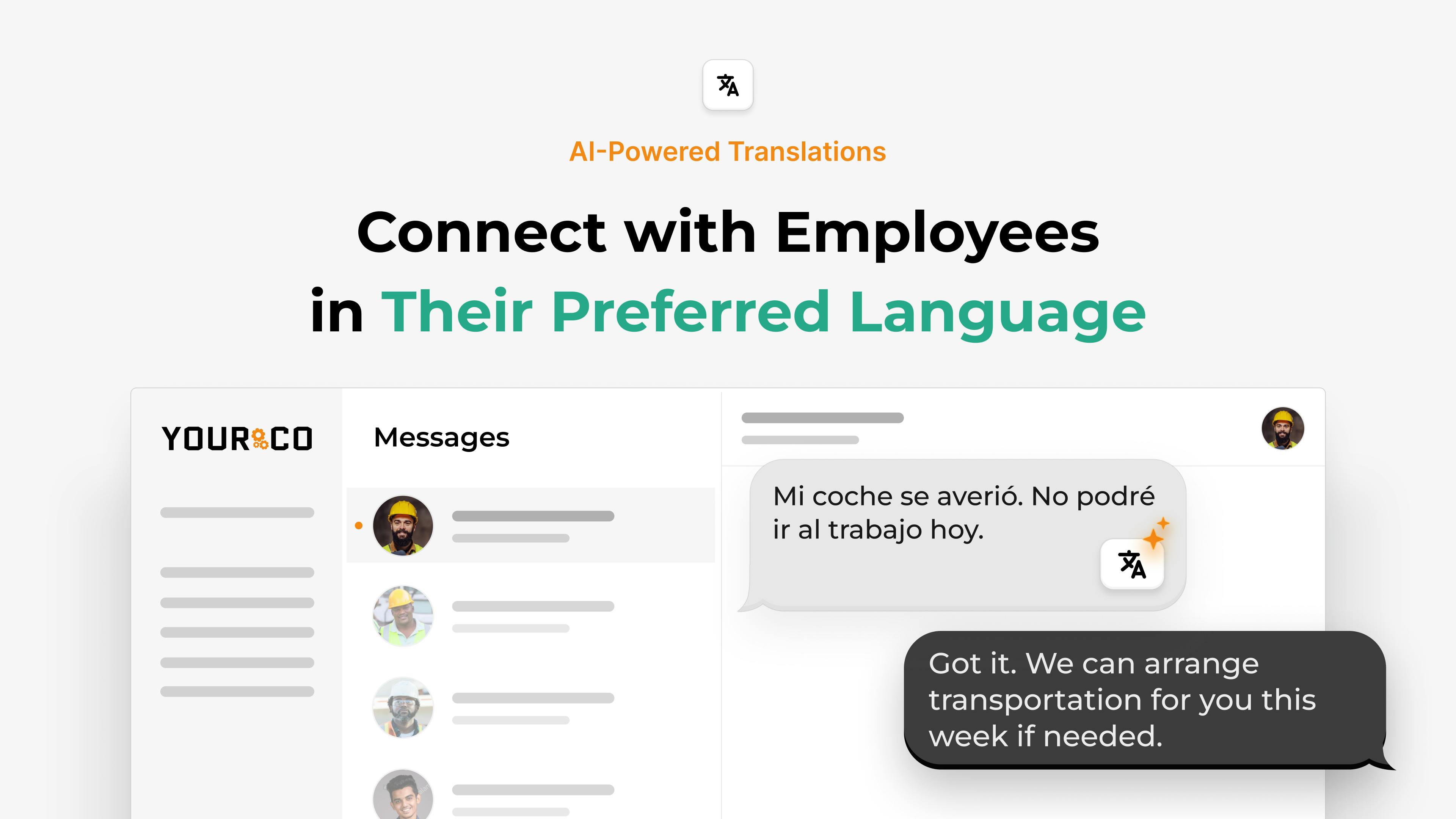
Automatic translation lets employees send and receive messages in their preferred language, improving accuracy and reducing back-and-forth clarifications. When a Spanish-speaking warehouse worker receives document request instructions in Spanish, they understand exactly what's needed without guessing or asking coworkers for help translating.
Platforms like Yourco support translation for over 135 languages and dialects, ensuring each message arrives in the employee's language without extra steps from HR. This capability is especially valuable pre- and during onboarding, when new hires need to submit multiple documents quickly and may feel overwhelmed by unfamiliar processes. For complete language-specific onboarding checklists that integrate document submission into a broader first-day-through-90-day framework, explore our guides for Spanish-speaking employees, Vietnamese-speaking employees, and Tagalog-speaking employees — each with translated milestones, mentor assignments, and SMS-ready phrasing.
Maintain Compliance With Automatic Message Logging and Secure Storage
Many HR teams follow internal compliance guidelines that require timestamped communication and documented follow-up. While we are not legal professionals, best practices suggest that maintaining clear records protects organizations during audits and helps resolve disputes.
SMS-based record-keeping makes this straightforward. Every submission is timestamped at the moment it arrives, creating an automatic paper trail. All messages are archived and searchable, so HR can retrieve proof of submission within minutes. When auditors ask for documentation of employee communications, you have a clear record showing what was sent, when it was received, and how the employee responded. One of the highest-risk areas for documentation failures is I-9 verification across multiple sites — our guide on why multi-location employers fail I-9 compliance covers the most common mistakes and how centralized, text-based workflows help prevent penalties at every location.
Track Document Submissions Across Locations Without Spreadsheets
Managing documents across multiple worksites becomes messy when each manager handles things differently. One location might use email, another relies on paper drop-offs, and a third collects submissions through personal text messages. This inconsistency creates gaps that make tracking difficult and compliance risky.
Centralized tracking solves this problem by giving HR one dashboard for all incoming documents. You can filter by location, department, or employee to see exactly who has submitted what. Instant notifications alert HR when documents arrive, eliminating the need to chase supervisors for updates. This visibility helps HR leaders identify bottlenecks before they become problems.
Use Frontline Intelligence to Spot Patterns in Missing or Late Documents
HR leaders need accurate, real-time insights to make the best decisions possible, but traditional methods fall short. Quarterly engagement surveys provide snapshots rather than trends, and manager reports often filter information before it reaches leadership. By the time data arrives, it's already outdated or diluted.
Analyzing communication patterns through AI-powered Frontline Intelligence gives HR leaders visibility into recurring issues that might otherwise go unnoticed. When you can see aggregate data across teams and locations, patterns emerge that point to systemic problems rather than individual failures.
With frontline intelligence, you can:
- Spot which sites consistently miss documentation deadlines and identify where better onboarding guidance is needed
- Surface sentiment trends and retention risks by consolidating poll responses, survey data, and daily SMS interactions
- Prompt the platform with questions like "Why is there so much turnover happening at our Georgia locations?" or "Which sites are falling behind on compliance documentation?"
- Track response rates by location to see where communication is working well and where it needs improvement
- Move from reactive problem-solving to proactive intervention, highlighting what's working and what's not before small issues become costly problems
Build a Repeatable Workflow for HR and Managers
A permanent, predictable workflow ensures consistent document collection across hiring cycles and locations. When every team follows the same process, quality stays high even as personnel changes.
To build a repeatable workflow:
- Standardize instructions for all new hires so everyone receives identical guidance on how to submit documents
- Set clear expectations for photo quality, including what makes a submission acceptable and what requires resubmission
- Use scheduled reminders for deadlines so employees get automatic nudges before paperwork is due
- Build simple templates for common document requests that managers can send with minimal customization
- Train supervisors on what to check when photos arrive so they can quickly flag incomplete submissions
A repeatable workflow also makes it easier to train new HR staff and managers, pointing them to established templates and procedures that already work.
Collect Employee Documents Faster With Yourco
Yourco helps HR teams collect documents and employee information faster and with fewer mistakes by using SMS-based communication that works for every employee. Workers can send photos of required documents instantly from any phone, including basic devices without internet access or app capabilities. Plus, built-in polls and surveys make it easy to gather additional details, confirmations, or feedback without switching to a separate system.
Messages translate automatically into over 135 languages and dialects, ensuring every employee understands exactly what's needed without confusion. All submissions are archived and searchable for audits, creating the compliance documentation you need without manual tracking. Role-based permissions and encryption protect sensitive data throughout the collection process.
With Yourco's AI-powered frontline intelligence, you can transform everyday communication data into actionable insights. The platform consolidates message activity, response rates, and submission patterns to help you spot disengagement before it turns into attrition, flag documentation bottlenecks in real time, and identify which locations need additional support. Leaders can prompt the system with questions like "Which sites are falling behind on document collection?" and get immediate, data-driven answers.
Try Yourco for free today or schedule a demo and see the difference the right workplace communication solution can make in your company.
Frequently Asked Questions
What types of documents can employees submit via text?
Employees can text photos of ID cards, tax forms, doctor's notes, license renewals, proof of address, training certificates, and most other documents that HR needs to collect. The photo must be clear enough to read all text and show all corners of the document.
How do you protect sensitive documents sent via text?
Secure SMS platforms use encryption for messages in transit and at rest, role-based access controls to limit who can view submissions, and automatic logging that tracks every interaction. Look for systems with SOC 2 compliance and data protection features aligned with privacy regulations.
Can text-based document submission work for multilingual teams?
Yes. Platforms with AI-powered translation can deliver document requests and instructions in each employee's preferred language, then translate their responses back for HR. This removes language barriers and reduces errors caused by misunderstanding.
How do you track submissions across multiple locations?
Centralized dashboards allow HR to see all incoming documents in one place, filter by site or department, and receive instant notifications when new submissions arrive.
What happens if an employee submits an unclear photo?
HR or the assigned manager can reply directly via text to request a new photo with specific guidance on what needs to be corrected. Two-way messaging keeps all communication in one thread for easy reference.
Can employees sign documents via text with legal validity?
Many HR documents require signatures that carry the same legal standing as handwritten ones. While we are not legal professionals, the Electronic Signatures in Global and National Commerce (ESIGN) Act and the Uniform Electronic Transactions Act (UETA) generally recognize electronic signatures as legally binding when consent is established and records are properly retained. SMS platforms that log timestamped responses and confirmations can support this requirement, but consult legal counsel for specific compliance needs.


