
62% of HR professionals cite limited computer access during the workday as a barrier to communicating benefits to frontline workers, according to research from SHRM and Fidelity Investments. That single stat exposes a problem most benefits analytics programs never address: if the communication channel cannot reach the workforce, utilization data does not exist, and every decision built on that data starts from a blind spot. Human resources (HR) and total rewards leaders can fix this with a step-by-step approach that improves engagement, lifts retention, and controls benefits spent for the workers who need them most.
TL;DR
- Benefits analytics breaks down for frontline workers because the email-and-portal stack that feeds most measurement systems never reaches them
- Replace portal-login metrics with mobile-native engagement signals like SMS delivery confirmation, response rates, poll participation, and link click-throughs
- Segment by location, role, tenure, and shift using HRIS data so patterns surface instead of being averaged across the entire workforce
- Connect low benefits engagement to absenteeism and early turnover to flag retention risk before it becomes a resignation
- Use turnover and replacement cost data to translate communication improvements into hard-dollar savings finance teams can verify
- SMS-based platforms like Yourco deliver the communication channel and the analytics layer in one system and reach frontline workers on any phone
What is Employee Benefits Analytics?
Employee benefits analytics is the practice of collecting and analyzing data on how workers engage with, enroll in, and use employer-sponsored benefits. It combines three data streams: communication engagement (whether messages reach workers and whether they respond), enrollment and utilization (which plans workers pick and which services they actually use), and workforce outcomes (turnover, absenteeism, and productivity patterns that correlate with benefits engagement).
Employee benefits analytics pulls data from HRIS, communication platform metrics, and survey responses, then segments these signals so HR teams can answer specific questions: Which sites have the lowest open enrollment completion rates? Which shifts show benefits of comprehension lagging? Which locations are not responding to benefits messages at all? Without that structure, benefits decisions get made on intuition, anecdote, or aggregated averages that hide the patterns most worth acting on.
Recognize Why Benefits Analytics Breaks Down for Frontline Teams
Most benefits analytics platforms assume every employee has an email address, a laptop, and regular access to an HR portal. Frontline workers represent 70-80% of the global workforce, roughly 2.7 billion people, according to BCG's 2024 research. For that population, portal-login metrics are meaningless because the portals themselves were never designed to reach them.
When frontline workers do not receive information about benefits, they do not enroll. When they do not enroll, they show up as low-utilizers in aggregate data, and HR teams question the benefits of design when the delivery channel has actually failed. Many workers at firms that offer benefits never end up enrolled, and frontline populations without portal or email access tend to be overrepresented in that group. Benefits analytics requires a communication channel that also serves as the data source.
Step 1: Identify What Frontline Workers Actually Need
Pull HRIS data and answer one question first: which segments of the workforce lack company email access? From there, three data sources combine to build a picture of actual frontline needs:
- Early turnover data (departures within 90 days): High first-quarter attrition signals an onboarding and benefits comprehension problem. Frontline roles consistently show higher first-year turnover than office-based roles, which makes early-tenure benefits awareness a retention lever rather than a compliance task.
- Absenteeism patterns by site and shift: Spikes in specific locations or shifts often point to unmet health or wellness needs that existing benefits could address if workers knew about them.
- SMS pulse surveys: Short, direct questions ("Do you know your deductible amount? Reply YES or NO") delivered to personal phones generate response data that portal-based surveys never capture for this population.
42% of voluntary leavers say their exit could have been prevented, and compensation and benefits comprise 30% of the actions that would have retained them, according to Gallup research. The first analytical task is identifying which benefits frontline workers do not know they have.
Step 2: Replace Portal-Login Metrics with Mobile-native Signals
When frontline workers lack access to email and portals, the measurement stack needs to be rebuilt around mobile and SMS. Traditional portal-based metrics map to mobile-native replacements: email open rate becomes SMS delivery confirmation rate; portal login rate becomes SMS two-way response rate; portal page views become link clicks from SMS messages; and online survey completion becomes SMS polls via keyword replies.
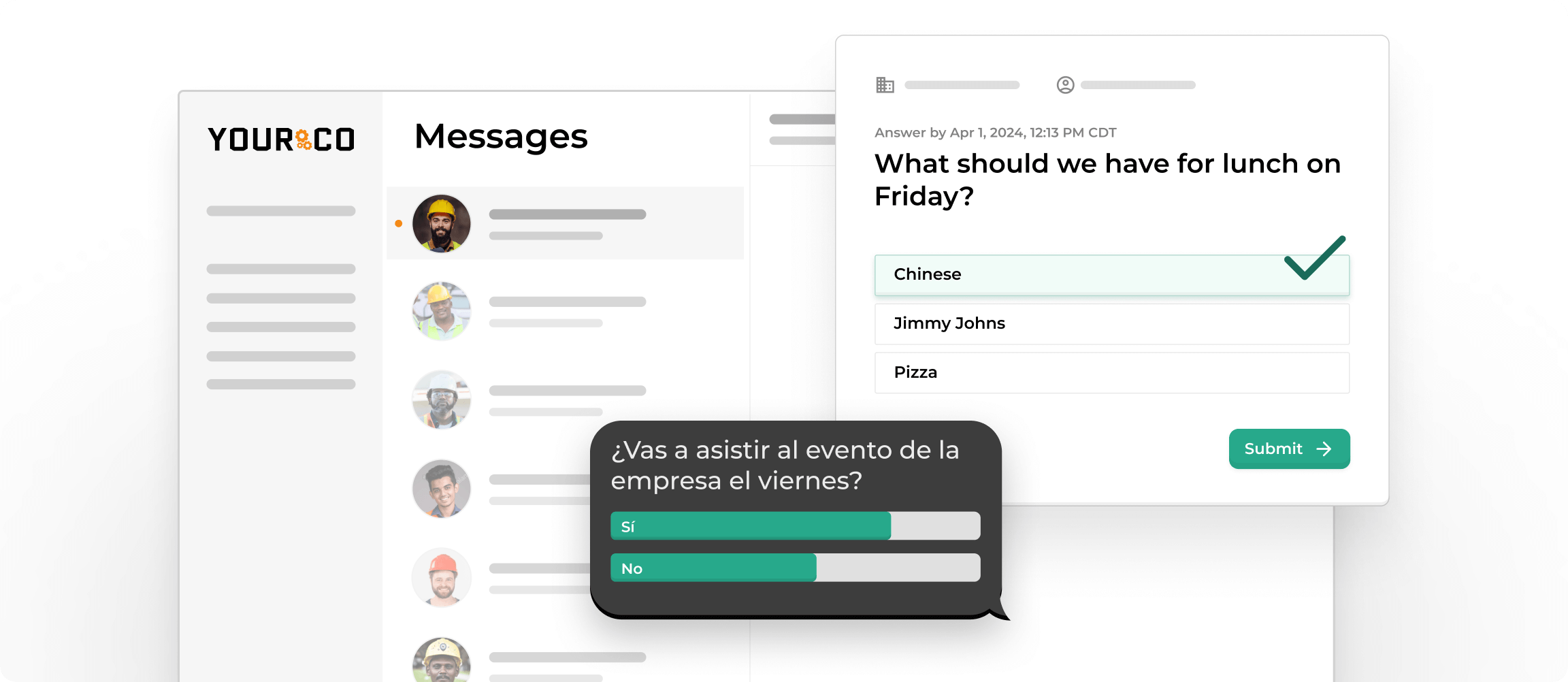
SMS delivery confirmation establishes a floor for reach with no equivalent in email or portal communications. An SMS reply ("Reply 1 if you have reviewed your plan options, Reply 2 if you have questions") requires active intent and provides both an engagement signal and qualitative routing data simultaneously. SMS-based platforms like Yourco generate these signals natively, so the channel that delivers the benefits message also produces the analytics layer.
QR codes placed in break rooms and common areas, with unique codes for each location, create a physical-to-digital bridge. Scan volume by site, time-of-day patterns, and completion rates after scanning generate location-level analytics without any login infrastructure. One implementation detail most organizations overlook: a single QR code across all facilities yields only aggregate data, undermining the segmentation that makes the analytics useful in the first place.
Step 3: Segment the Workforce by Role, Tenure, Location, and Shift
Aggregate response rates mask which sites, shifts, or departments are actually engaging with benefits communications. Effective frontline benefits analytics requires segmenting the workforce before communications go out so that differential engagement can be measured by group.
Pull these segmentation variables from HRIS and payroll systems:
- Location and site: Comparing engagement rates across facility surfaces where benefits awareness lags
- Shift (day, evening, overnight): Differential response patterns determine optimal message timing, and open enrollment workflows built on standard business hours systematically exclude many hourly and frontline workers
- Tenure band: New hires and long-tenured workers have different benefits literacy levels, and the first 90 days carry disproportionate weight for retention
- Preferred language: English-only communications understate engagement among non-English-speaking workers, especially in hospitality, retail, and logistics
- Job classification: Targeting communications by plan eligibility prevents misalignment, since a warehouse associate and a fleet driver may qualify for different benefit tiers
96% of HR leaders agree that better communication tools boost productivity, according to a Yourco-commissioned survey of 150 HR leaders. Segmentation improves the relevance of communication and creates the analytical structure needed to interpret engagement data by meaningful subgroups.
Step 4: Connect Benefits Utilization to Retention and Flight Risk
Benefits analytics programs that report only on communication engagement face budget scrutiny unless those metrics connect to outcomes, operations and finance. Four outcome metrics belong alongside engagement data:
- Open enrollment completion rate by communication channel, to provide internal evidence for channel investment decisions
- Voluntary turnover rate by location and shift, pulled from HRIS, to allow correlation analysis with benefits engagement without claiming causation
- Absenteeism patterns by site and shift, sourced from HRIS or time-and-attendance data, to surface unmet wellness or scheduling needs
- Benefits comprehension scores from post-enrollment polls, which serve as a leading indicator of future HR service volume and follow-up communication needs
Turnover and absenteeism costs enable ROI estimation. Replacing a frontline employee can cost between one-half and two times the annual salary, according to Deloitte's research on frontline workforce strategy. A 500-person manufacturing facility with a 25% annual turnover rate faces millions in annual replacement expense. Reducing that rate by even a few points through better benefits awareness delivers measurable savings that finance teams can verify against HRIS data.
This information is for general awareness only. For specific compliance guidance, consult with qualified legal professionals.
Step 5: Build a Year-round Feedback Loop with SMS Pulse Polls
Treating open enrollment as the only measurement moment is the single most significant structural failure in frontline benefits analytics. A continuous listening cadence works better:
- Monthly: 1 to 3 SMS pulse questions on benefits awareness, segmented by location or department
- Quarterly: A slightly longer SMS or QR-linked poll on benefits satisfaction, analyzed by segment
- Life-event trigger: When a qualifying life event is recorded in HRIS, trigger an SMS with relevant benefits information and a comprehension check
- Pre-enrollment (60 to 90 days out): A segmented SMS campaign with benefit summaries and tracked links
- Post-enrollment: Confirmation SMS plus a comprehension poll
This cadence captures feedback when the benefits experience is fresh and generates a time-series dataset showing whether comprehension improves over the plan year. Half of enrollees spend less than 1 hour selecting their plan, according to the EBRI/Greenwald 2024 Consumer Engagement in Health Care Survey. A year-round feedback loop gives HR teams the data to intervene before enrollment becomes a last-minute decision.
Reach Every Frontline Worker and Measure What Matters with Yourco
Anonymous feedback only works when every employee can actually participate, regardless of where they work, what device they use, or what language they speak. 88% of HR leaders believe better communication tools can reduce employee churn, according to the same Yourco-commissioned survey of 150 HR leaders. Yourco is the SMS-based employee communication platform built for that reality.
Core communication capabilities:
- SMS to any phone, from smartphones to basic flip phones, with no app download, no Wi-Fi, and no cost to employees
- Two-way messaging that enables real-time conversations between managers, HR, and frontline teams
- AI-powered translation across 135+ languages and dialects, so every worker receives messages in their preferred language
Yourco integrates with 240+ HRIS and payroll systems to automatically sync employee data, so segmentation by location, role, shift, and language stays up to date without manual imports.
Enterprise Bridge lets corporate leadership send centralized updates across all locations, while local managers maintain direct communication with their teams.
Frontline Intelligence gives HR and total rewards teams centralized visibility into benefits communication engagement across all locations. It surfaces response rates by site, tracks which locations show low engagement with benefits messages, and highlights patterns that need follow-up. Corporate leadership can see across all facilities, identify where benefit awareness lags, and make informed decisions about where to focus outreach.
"Getting a lot more response from employees than we have in the past, and it's so easy to just be able to send out a quick text company-wide, or just to a specific group. We love it!"
– Maddy Kristjanson, Human Resources Generalist, Plymouth
After 90 days on Yourco, companies see two-way employee engagement reach 86%.
Try Yourco for free today, or schedule a demo to see the difference the right workplace communication solution can make for your company.
Frequently Asked Questions About Employee Benefits Analytics
How are the benefits of ROI measured for frontline teams?
ROI measurement compares program cost against savings tied to better outcomes. For frontline teams, that usually means tracking utilization by segment alongside turnover, absenteeism, and enrollment completion so leaders can see whether better communication is improving both participation and workforce stability.
Why do frontline workers have low benefits utilization?
Low utilization among frontline workers is often driven by communication and access barriers. When workers do not have company email or easy access to the portal, they miss enrollment details, plan summaries, and reminders. SMS-based platforms like Yourco can close that distance on a channel workers already use.
What metrics should replace portal logins for frontline benefits analytics?
Portal logins should be replaced with mobile-first engagement signals that frontline workers can actually generate. Useful measures include SMS delivery confirmation, two-way response rate, text-message link clicks, poll participation by keyword reply, and QR code scan volume by location.
How often should organizations survey frontline workers about benefits?
A year-round cadence works better than a single enrollment-season survey. Monthly pulse questions, quarterly satisfaction checks, and life-event-triggered messages help HR teams capture feedback when the benefits experience is still current.
How is benefits engagement data connected to employee retention?
Start by segmenting the workforce by location, shift, and tenure, then compare benefits engagement patterns with turnover and absence trends in the same groups. When one segment shows a weak communication response and worsening workforce outcomes simultaneously, HR has a clearer signal of where to focus follow-up first.