
When employees can't understand their benefits, they're more likely to feel undervalued and disengage, leading to enrollment gaps, confusion, and preventable turnover. With 90% of U.S. employers relying on multilingual workers and 25.7 million people having limited English proficiency, these communication gaps affect a significant portion of the workforce. This guide walks you through seven actionable strategies to communicate benefits to a multilingual workforce so every employee understands and values what you offer.
TL;DR
- Translate your highest-impact benefits documents first, starting with enrollment guides, plan summaries, and deadline reminders in your workforce's top languages.
- Use SMS-based platforms like Yourco to reach frontline workers on any phone, in any language, without apps, internet, or portal logins.
- Supplement written materials with short native-language videos and visual infographics that simplify complex plan comparisons.
- Build bilingual support channels and train supervisors to serve as language bridges, enabling employees to ask questions and receive answers in real time.
- Simplify benefits jargon across all materials and extend communication beyond open enrollment to drive year-round engagement.
1. Reach Every Employee With Translated Benefits Guides
Translation is the foundation of effective multilingual benefits communication. Without materials in languages employees actually read, even the best benefits package becomes invisible to a significant portion of your workforce.
Start by analyzing your workforce demographics to identify which languages are spoken by the highest percentage of limited-English-proficiency employees. Focus on three to five key documents first, then expand from there.
Here's how to prioritize your translation efforts:
2. Meet Your Multilingual Workforce Where They Are With SMS-First Communication
Frontline workers don't sit at desks or check email regularly. Reaching them requires meeting them where they are: on their mobile phones.
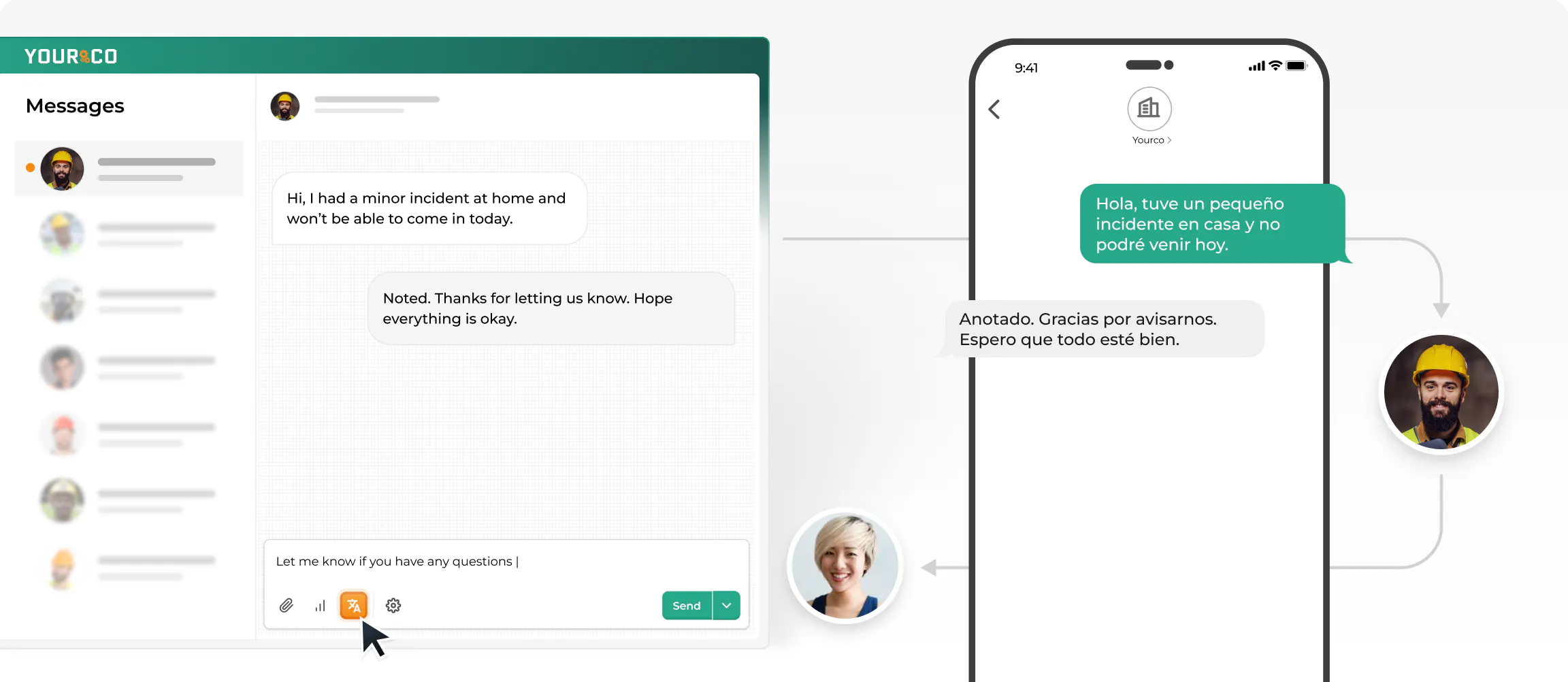
SMS is the most accessible channel for communicating benefits to frontline workers. SMS works on any mobile device without downloads and doesn't depend on internet connectivity, making it particularly valuable for communicating enrollment deadlines and time-sensitive benefits information.
Consider these implementation steps for SMS-first benefits communication:
- Choose platforms that support automatic translation across multiple languages
- Ensure the solution works on basic phones, not just smartphones
- Enable two-way communication so employees can ask questions and get immediate answers
- Integrate with your HRIS to automatically target employees based on eligibility or enrollment status
The key is removing barriers. When you eliminate the need for downloads, new accounts, or portal passwords, benefits communication reaches the employees who need it most.
3. Cut Through Complexity With Native Language Videos
Video content cuts through complexity in ways written materials can't. A two-minute video explaining how to choose between health plan options often communicates more effectively than a ten-page enrollment guide.
Benefits concepts tied to healthcare systems that don't exist in workers' countries of origin require cultural contextualization, not just literal translation. Multi-format communication strategies that include visual aids alongside verbal communication tend to produce stronger comprehension across diverse workforces.
Build an effective video strategy with these approaches:
- Keep videos under three minutes to respect employees' limited break time
- Focus each video on a single topic, such as "How to Enroll" or "Understanding Your Health Plan Options."
- Use native speakers, not just translated voiceovers, to build trust
- Make videos accessible via text message links rather than requiring portal logins
These video practices help employees quickly grasp complex benefit concepts during short breaks.
4. Simplify Plan Comparisons With Visual Infographics
Insurance jargon can confuse even native English speakers. Visual infographics transform complex comparisons into digestible information that employees can understand at a glance, particularly supporting workers with varying literacy levels.
Design effective benefits infographics with these principles:
Infographics remove language barriers and simplify plan comparisons for all literacy levels.
5. Build Workforce Confidence With Bilingual Support Channels
Even with excellent written and visual materials, employees will have questions. Providing support in their native language prevents confusion from snowballing into missed enrollment or incorrect plan selections.
Establish effective multilingual support with these tactics:
- Identify your workforce's primary languages and staff support channels accordingly
- Train support staff on benefits fundamentals and common employee questions
- Create FAQ documents in multiple languages that the support staff can reference
- Track question patterns to identify where your materials need improvement
Multilingual support channels build employee confidence and prevent enrollment mistakes.
6. Remove Barriers by Simplifying Benefits Jargon
Benefits communication is filled with terminology that even educated native speakers find challenging. For employees with limited English proficiency, this jargon creates an even steeper barrier. Research shows that individuals with limited English proficiency have unequal access to and use of health care services, resulting in worse health outcomes than English‑proficient populations.
Transform your benefits language with these plain-English swaps:
Beyond vocabulary swaps, use short sentences and short paragraphs to minimize cognitive load. Explain abstract concepts through familiar analogies tied to employees' daily experiences, and test materials with employees with limited English proficiency before finalizing.
According to plain language guidelines, communication should be clear, concise, and well-organized so employees can understand it the first time they read it and act on the information. Pairing simplified language with multilingual SMS platforms helps you deliver these plain-English messages to every worker in their preferred language.
7. Extend Your Reach Through Supervisor Language Bridges
Frontline supervisors occupy a critical position in multilingual benefits communication. They have daily contact with employees, existing trust relationships, and often share language backgrounds with their teams. Peer-reviewed research shows that supervisors often act as informal translators for LEP employees, providing real-time clarification on complex HR communications, such as benefits, in everyday interactions.
Develop supervisors as language bridges through these steps:
- Provide multilingual benefits cheat sheets that supervisors can reference during conversations
- Train supervisors on core benefits concepts and common employee questions
- Teach verification techniques, like having employees explain concepts back in their own words
- Establish clear boundaries about when to escalate questions to HR or professional interpreters
Supervisors shouldn't function as professional translators or benefits experts. Their role is to provide first-level clarification and facilitate connections between employees and appropriate resources.
Avoid These Common Multilingual Benefits Communication Mistakes
- Assuming no translation obligations exist: Language assistance is required under ERISA when the required threshold is met
- Using bilingual employees as translators: Benefits terminology requires professional expertise; incorrect translations may create liability concerns
- Forgetting required taglines: Include required language assistance statements on benefits notices when the threshold is met
- Translating without localizing: Literal translations that ignore cultural context confuse rather than inform
- Limiting communication to enrollment periods: Extend benefits education throughout the year for additional impact
This information is for general awareness only. For specific compliance guidance, consult with qualified legal professionals.
Connect Every Worker With Yourco's Instant AI Translation
Communicating benefits to a multilingual workforce requires meeting employees where they are: on their mobile phones, in their preferred languages, without complicated portals or passwords.
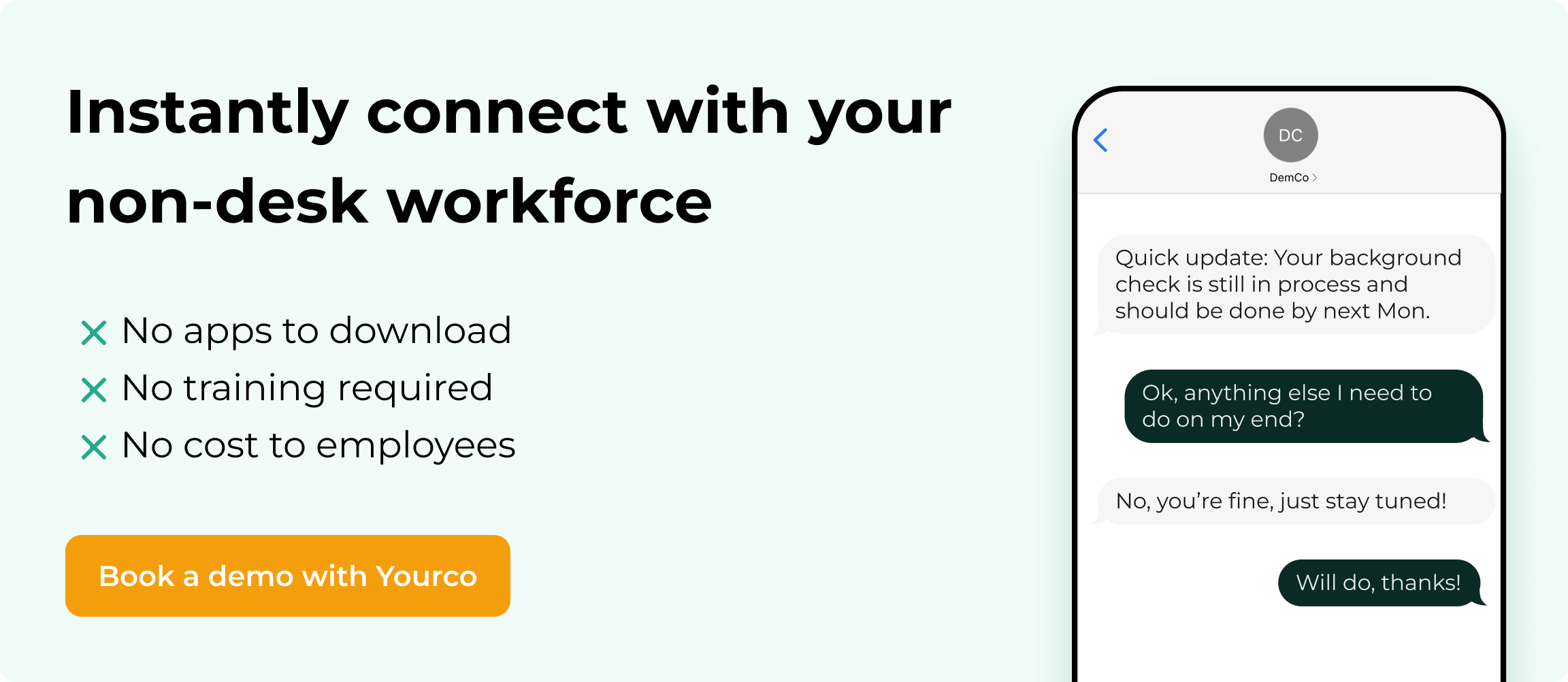
Yourco makes multilingual benefits communication simple through SMS-based messaging that works on any phone. With AI-powered automatic translation across 135+ languages and dialects, you can send benefits enrollment reminders, deadline alerts, and plan summaries that reach employees in the language they actually understand. The platform's two-way communication lets employees ask benefits questions and receive immediate answers, so no one misses open enrollment because they couldn't understand the instructions.
Integration with 240+ HRIS and payroll systems means you can automatically target communications based on eligibility, location, or enrollment status. Scheduled messaging helps HR teams automate reminders before, during, and after enrollment periods, reducing manual workload while keeping every employee informed. After 90 days on Yourco, companies see two-way employee engagement reach 86%.
"Yourco has helped to change the way we communicate at McCarthy Auto Group. We have nearly 700 employees and 80% are non-desk based, communication is a challenge. Yourco provides a quick easy way to reach everyone within our organization and a secure way for employees to reach HR and leadership without a computer."
— Felisha Parker, VP Human Resources, McCarthy Auto Group
Try Yourco for free today or schedule a demo and see the difference the right workplace communication solution can make in your company.
Frequently Asked Questions about Communicating Benefits to a Multilingual Workforce
What languages should I prioritize when translating benefits materials?
Start by analyzing your workforce data to identify which languages are spoken by the highest percentages of employees with limited English proficiency. Focus on the top three to five languages first and expand based on employee feedback and enrollment patterns.
When does ERISA require benefits documents in other languages?
ERISA does not require full translation of Summary Plan Descriptions, but it does require language assistance when a significant share of plan participants in a geographic area are literate only in the same non-English language. This includes oral interpretations and required tagline notices. Consult legal counsel for your specific situation.
Can I use bilingual employees to translate benefits materials?
Professional translation is recommended for benefits communications. Benefits terminology requires specialized expertise that non-professional translators typically lack. Relying on bilingual employees to translate benefits materials is a common mistake because inaccurate translations can create liability concerns when employees make coverage decisions based on faulty information.
How often should I communicate about benefits beyond open enrollment?
Effective benefits communication extends beyond the annual enrollment period. Consider periodic reminders about available programs, timely communications around life events that trigger enrollment opportunities, and year-round education on how to use existing benefits. SMS-based platforms make it easy to maintain consistent touchpoints without adding to HR's workload.
What is the best way to reach frontline workers with benefits information?
SMS-based communication works best for frontline teams because it reaches any phone, even those without internet access or logins. Text messages are opened at far higher rates than email, and platforms like Yourco, with built-in translation, ensure every worker receives benefits information in their preferred language. Two-way messaging lets employees ask questions and get answers immediately.