Manufacturing recorded a 2.9% absence rate in 2025, according to federal labor data. That single-digit number hides a bigger operational problem: on a thin-staffed line, one unreported absence can push overtime and disrupt changeovers. A shift can miss its target before a supervisor has time to rebuild coverage. Most HR leaders already have a call-out policy, but the version in the handbook and the one employees actually follow rarely align. That mismatch usually starts with the reporting channel, not the discipline ladder.
TL;DR
- A call-out policy specifies how employees report unplanned absences and how much notice they owe so managers can cover the shift.
- Most templates overbuild the discipline steps and neglect the reporting channel, but for frontline workers, the channel is the policy.
- Define notice windows by absence type, by one authorized reporting channel, and by the exact information employees must provide.
- Apply a documented discipline progression consistently, with room for genuine emergencies and protected leave.
- SMS-based platforms like Yourco let employees text off from any phone, and AI Call-Off Agent logs a timestamped, downloadable report for every call-out.
Understand What a Call-Out Policy Has to Accomplish
A call-out policy, also called a call-off policy, is a set of business guidelines covering employee absences, late shifts, and other moments when someone is unexpectedly unable to work. Within a full attendance policy, a call-out policy focuses on the real-time reporting process for when an employee will miss a shift.
For frontline workers, the call-out policy has to do two jobs well. It has to give employees a clear, low-friction way to report an absence and give managers enough notice to cover the shift. Advance notice lets a supervisor reassign work or find coverage before the line runs short. Everything else in the document, including the discipline ladder, only works after employees can report absences and managers can cover shifts.
Understaffing is the biggest stressor for frontline managers and the main factor limiting job productivity, according to a January 2024 SHRM report. A policy that reduces last-minute coverage lowers that pressure for supervisors who need time to rebuild the shift before work starts.
Make the Reporting Channel the Center of the Call-Out Policy
Most templates pour detail into the discipline progression and treat the reporting channel as a line item: "notify your supervisor." But if that supervisor does not respond, or the policy requires a portal login from a personal device, the process fails no matter how the employer writes the disciplinary steps.
Email-dependent policies fall short because many organizations still rely primarily on email for employee communication, even though frontline workers often have limited email access. A policy written around email is functionally no policy for those employees.
When the official process slows employees down, they leave a voicemail or text a manager directly. Some contact another department. A 2025 paper by Hadjisolomou et al. documented exactly this: employees describe official email procedures but default to informal text messages because that is what actually reaches someone fast. When absence reports are sent by voicemail or personal text, HR ends up with missing records instead of a reliable log. Contacting different departments creates the same problem.
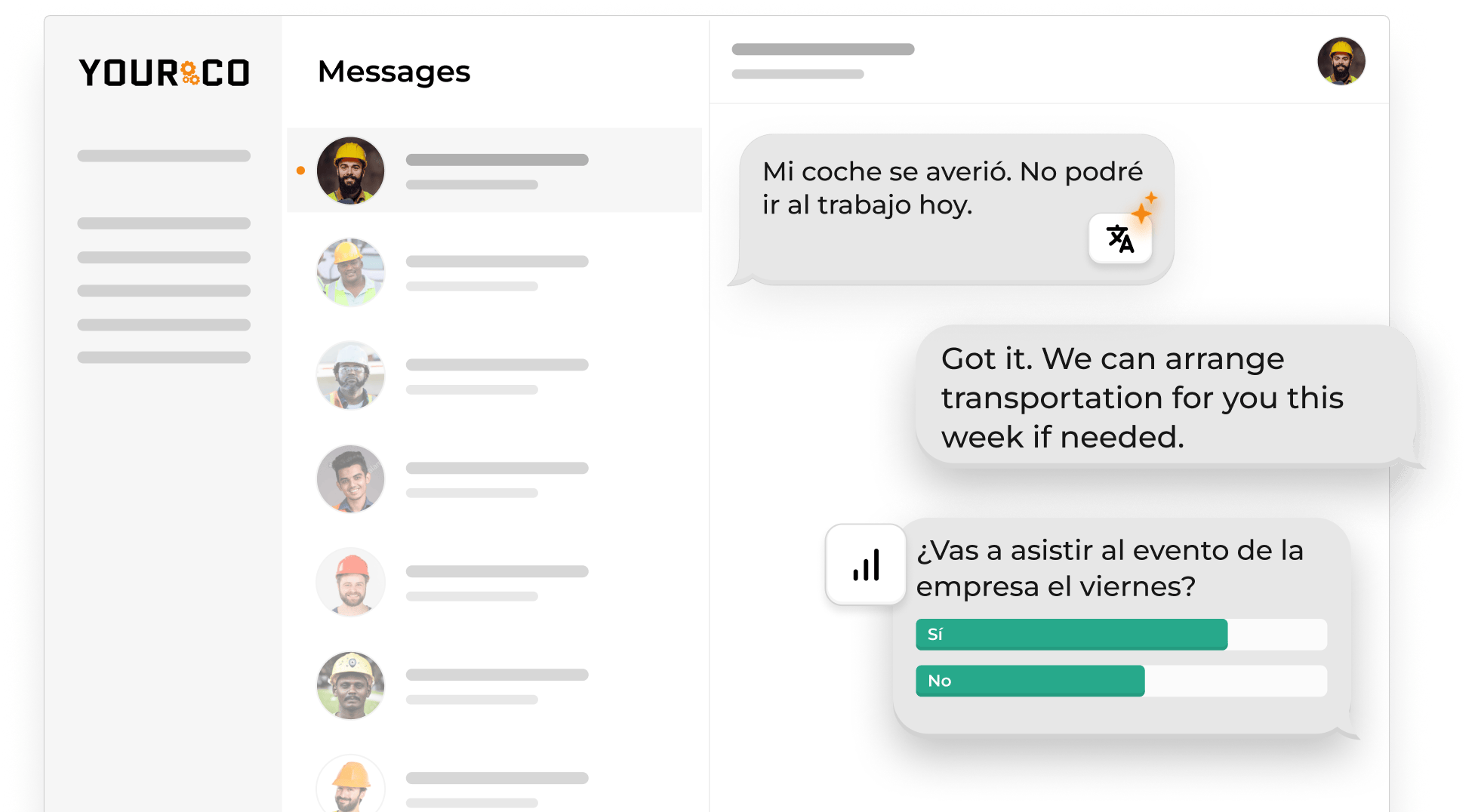
Use a single, authorized channel that meets frontline workers where they already are. SMS-based platforms like Yourco let employees text off-line from any phone, including basic flip phones, with no app download, no company email, and no portal login. The choice of channel determines whether documentation is effective and whether alerts reach managers before escalation steps are triggered.
For organizations that want to remove the manual back-and-forth entirely, Yourco's AI Call-Off Agent carries the conversation itself. When an employee texts in an absence, the agent asks for any missing details, such as the dates and reason, confirms the request in plain language, and logs it automatically once the employee confirms. The supervisor gets an instant notification, and HR gets an auditable record without joining the conversation.
Set Clear Call-Out Policy Notice Windows and Required Information
Set notice requirements to match how fast a vacancy cascades in the specific operation. Shift-coverage operations in manufacturing, healthcare, and other coverage-heavy sectors often require several hours of advance notice because supervisors need time to pre-position crews. Foreseeable absences such as scheduled FMLA leave often warrant longer lead times.
Beyond timing, the call-out policy should specify exactly what to report and to whom. When a manager does not answer, the policy should route the employee to HR as a backup.
A useful call-out report captures a short, consistent set of data points:
- Timing of notice, which HR records against the shift start
- Who the employee notifies: a supervisor or manager through the approved channel, not a coworker
- Reason category only, such as sick leave or family care, with emergency available as a separate category
- Enough information to flag potential FMLA coverage, since employees need not request FMLA by name
- Expected return date or duration, or an estimate when the illness is open-ended
Lead with plain language and skip legal jargon to leave no room for misunderstanding. Employers generally should not insist on specific medical details, and many request medical documentation only after roughly three consecutive days of absence. SMS-based platforms like Yourco can prompt employees through these fields in a short text exchange, capturing a clean record without a phone-tag loop.
This information is for general awareness only. For specific compliance guidance, consult with qualified legal professionals.
Build a Consistent, Documented Disciplinary Progression
HR reduces legal and employee-relations risk when managers apply the same progression across departments and locations. A standard progression starts with a documented verbal warning, then moves through written and final written warnings before termination, with managers reminding the employee at each step that further violations may escalate. Many employers pair this with a no-fault point system that assigns values to events and triggers discipline at set thresholds.
The legal exposure comes from applying the ladder unevenly. Employment attorneys warn that when employers consistently follow their written progressive discipline procedures and then abandon them for certain employees without justification, the deviation can serve as evidence of discriminatory treatment. Even a completely valid reason for treating two employees differently can become a hook for a lawsuit when the treatment looks inconsistent.
Written records give HR the facts needed to apply the policy consistently. Recording every occurrence in writing, including the first, provides HR with an objective, factual basis rather than relying on a manager's memory. The reporting channel also automatically stores the timestamped text-off record, so the log exists before anyone needs it.
Attendance infractions also deserve the full progression, unlike serious conduct issues that may justify moving straight to a final warning. Regular audits of discipline records across departments and locations help catch inconsistencies in application before they turn into a claim.
This information is for general awareness only. For specific compliance guidance, consult with qualified legal professionals.
Build In Emergency and Protected-Leave Exceptions
Courts or managers may overturn a rigid policy that punishes every miss, and employees may ignore it. Use clear rules with defined exceptions so managers can enforce the policy without punishing protected or emergency absences.
Some absences need a protected-leave review before managers assess points. Federal guidance explains that employers generally should not count FMLA leave under no-fault attendance policies. The guidance also provides an example in which, if managers assess a point for FMLA-related lateness, the employer must remove the point. DOL guidance frames the employer's review around the information provided, including facts that may signal FMLA coverage.
To keep exceptions from undermining the policy, write in specific safeguards:
- Enumerate protected categories that carry zero points, including approved FMLA and civic or military obligations such as jury duty, while still allowing individualized accommodation beyond the list
- Consider delayed-notice provisions so employees can explain an emergency absence after the fact instead of facing automatic discipline
- Add a dispute-and-removal mechanism that lets managers remove points for a lawful absence
- Start progressive discipline with a conversation, since first offenses often have legitimate explanations
- Avoid automatic termination for a single no-call-no-show, which courts and employees can view as excessive
Close the loop by documenting exceptions the same way as everything else. When managers record the reason for every removed point, the policy stays both flexible and defensible.
This information is for general awareness only. For specific compliance guidance, consult with qualified legal professionals.
Track Every Call-Out Instantly With Yourco
A call-out policy is only as reliable as the channel behind it, and Yourco gives HR and operations teams a channel every frontline worker can actually use. Employees text off from any phone, HR gets an instant, timestamped record, and no one waits for a voicemail that never gets checked.
Yourco's capabilities match how frontline teams report absences:
- Standard SMS: works on any phone, including basic flip phones, with no company email, no Wi-Fi, and no app download
- Two-way messaging: absence reports and follow-up questions stay in the same thread
- Translation: AI-powered translation across 135+ languages and dialects lets multilingual crews report absences in their own language
- AI Call-Off Agent: automatically collects call-off details over text, confirms the request with the employee, and logs it without manager follow-up
Yourco connects with 240+ Human Resources Information Systems (HRIS) and payroll systems through HRIS integrations, so absence records and employee data stay in sync with the systems HR already runs.
For multi-location organizations, Enterprise Bridge allows corporate leadership to broadcast one-way policy updates and attendance procedures to every site at once, while local managers keep direct two-way conversations with their teams.
Frontline Intelligence provides HR and operations leaders with centralized visibility into call-off activity across all locations. Leaders can generate reports on shift confirmations and response times. They can also track call-off volume and identify patterns by site or department to support better attendance conversations. That corporate-level view turns everyday text-off messages into the data HR needs to spot problems early and support attendance decisions later.
"We have tried 3 text communication tools, and this is the best experience we've had by far. A consistent line of communication to our employees is one of the most important things when it comes to our employee communication strategy, and Yourco is the most reliable system around."
— Terri Kasper, HR Manager, Calumet Carton Company
After 90 days on Yourco, companies see two-way employee engagement reach 86%.
Try Yourco for free today, or schedule a demo to see the difference the right workplace communication platform can make for your company.
Frequently Asked Questions About Call-Out Policies
What should a call-out policy include?
A call-out policy should include the notice window for different absence types, the single authorized channel for reporting, who to contact, and what information the employee must provide. It should also spell out consequences, documentation practices, manager responsibilities, backup contacts, and clear exceptions for emergencies and legally protected leave so supervisors can apply it consistently.
How much notice should employees give when calling out?
Results vary by organization and staffing model, so each employer should set notice windows around how quickly a missed shift affects operations. Notice windows should match the speed at which a missed shift affects coverage, production, customer service, or patient care. Some policies use shorter minimums for sudden illness, while shift-coverage operations often require several hours' notice, and foreseeable absences should allow longer lead times.
How should employees text off when they can't make a shift?
Employees should text off through the single channel designated by the call-out policy before shift start, whenever possible. The message should include the reason category, the expected duration and the person they notified. SMS-based platforms like Yourco let workers text off from any phone and automatically create a timestamped record for HR.
What is the difference between a call-out policy and an attendance policy?
A call-out policy focuses specifically on the real-time process for reporting an unplanned absence before a shift starts. An attendance policy is broader, covering shift assignments, tardiness, leave, documentation, and overall attendance expectations. The call-out policy is the reporting mechanism within that larger attendance framework.
How do you handle a no-call-no-show fairly?
Handle a no-call-no-show through documented progressive discipline that starts with a conversation, since early incidents may have legitimate explanations. HR and managers should document each occurrence consistently, review whether an emergency or protected leave issue applies, and avoid automatic termination after a single incident, which can appear excessive.