
When an employee doesn't show up for their shift, the ripple effects hit fast. Supervisors scramble to find coverage, coworkers pick up extra work, and operations slow down. The problem often isn't that employees don't want to report absences. In most cases, they don't know how, when, or who to contact. A clear call-in procedure removes the guesswork and gives everyone a reliable process to follow. This article walks through essential call-in practices with ready-to-use policy examples you can adapt for your team.
TL;DR
- Require employees to report absences at least 1-2 hours before their shift starts
- Specify exactly how to call in (text, phone, or dedicated system) so there's no confusion
- Keep required information simple: name, shift, reason, and expected return date
- Create a fair no-call/no-show policy with progressive discipline steps
- Document every absence for compliance and to spot patterns early
- Have a separate process for extended or recurring absences that balances support with accountability
Employee Call-Off & Absence Management Policy Summary
Set Clear Notification Timeframes
Employees need to know exactly when to report an absence. Most organizations require notification at least one to two hours before a shift starts, though this may vary based on your industry and shift schedules. The key is picking a window that gives managers enough time to find coverage while remaining reasonable for employees dealing with unexpected illness or emergencies.
- Require notification at least one to two hours before the scheduled shift start time
- Adjust timeframes for early morning or overnight shifts when calling at odd hours isn't realistic
- Allow notification the evening before for shifts starting before 6:00 a.m.
- Specify that emergencies still require contact as soon as reasonably possible
- Clarify that late notification may result in the absence being marked unexcused
Policy Example:
Employees must notify their supervisor of any absence at least two hours before their scheduled shift start time. For shifts beginning before 6:00 a.m., employees should notify their supervisor by 9:00 p.m. the evening prior when possible. If an emergency prevents advance notice, employees must contact their supervisor as soon as reasonably possible. Failure to provide timely notification may result in the absence being marked as unexcused.
Establish Approved Communication Channels
Your policy should list the exact methods employees can use and clarify who they need to contact. For frontline teams where many workers don't have company email or regular computer access, phone calls and text messages are typically the most reliable options, with text messages leading the way.
- List every approved method for reporting absences (direct call, text, SMS system)
- Name specific contacts such as direct supervisor, shift lead, or on-duty manager
- Clarify what doesn't count as proper notification (voicemails to coworkers, social media messages)
- Provide a backup contact if the primary supervisor is unavailable
- Include a designated phone number or system for documentation purposes
Policy Example:
Employees must report absences using one of the following methods: calling the supervisor directly, sending a text message to the designated absence reporting number, or using the company's SMS notification system. Leaving a voicemail with a coworker or sending a message through personal social media doesn’t count as proper notification. If the direct supervisor is unavailable, employees should contact the shift lead or on-duty manager. All absence reports should be directed to the designated reporting line for documentation purposes.
Define Required Information for Call-Ins
When someone calls in sick, supervisors need specific details to manage the absence effectively. Keep the requirements simple and focused on what's operationally necessary. At minimum, employees should provide their name, scheduled shift, general reason for the absence, and when they expect to return. This gives managers what they need without turning a quick notification into an interrogation.
- Require employee name and employee ID if applicable
- Ask for the date and time of the scheduled shift being missed
- Request a general reason for the absence without requiring specific medical details
- Include expected return date or commitment to provide an update
- Confirm that supervisors will acknowledge receipt of the report
Policy Example:
When reporting an absence, employees must provide their full name, scheduled shift date and time, general reason for the absence (such as illness, family emergency, or transportation issue), and expected return date. Employees don’t need to disclose specific medical details unless requesting extended leave or accommodation. Supervisors will confirm receipt of the absence report and note any follow-up actions required.
Create a No-Call/No-Show Policy
Having a clear no-call/no-show policy protects both the organization and employees. A fair approach uses progressive discipline, starting with a conversation and escalating only if the behavior repeats. This gives employees a chance to explain circumstances that may have prevented them from calling while establishing that repeated violations have consequences.
- Define what qualifies as a no-call/no-show (missed shift without approved notification)
- Start with a verbal warning and documented conversation for first occurrences
- Escalate to written warnings for repeated violations within a set timeframe
- Specify when termination becomes appropriate (typically after multiple offenses)
- Allow exceptions for documented emergencies at management's discretion
- Address job abandonment for consecutive no-call/no-show days
Policy Example:
A no-call/no-show occurs when an employee fails to report for a scheduled shift and doesn’t notify their supervisor using approved methods. First occurrence results in a verbal warning and documented conversation with the supervisor. Second occurrence within 12 months leads to a written warning placed in the employee file. Third occurrence within 12 months triggers a final written warning and meeting with HR. Fourth occurrence within 12 months results in termination of employment. Exceptions may be made for documented emergencies such as hospitalization or accidents at management's discretion. Three consecutive no-call/no-show days may be considered job abandonment and result in immediate termination.
Document and Track All Absences
Every call-in should be recorded, even when the reason seems straightforward. Consistent documentation protects you during audits, helps identify patterns before they become serious problems, and ensures fair treatment across the team. Tracking doesn't need to be complicated. A simple log with the date, employee name, reason given, and supervisor who received the call works for most teams.
- Record absences within 24 hours of receiving notification
- Include employee name, date, shift missed, reason, notification method, and receiving supervisor
- Store records in a central location accessible to HR and management
- Retain documentation for at least three years or per industry requirements
- Review absence patterns quarterly to identify trends and ensure consistency
- Allow employees to request access to their own attendance records
Policy Example:
Supervisors must document all reported absences within 24 hours of receiving notification. Documentation should include employee name, date of absence, shift missed, reason provided, method of notification, and name of supervisor who received the report. Absence records will be maintained in the designated HR system and retained for a minimum of three years. HR will review absence patterns quarterly to identify trends and ensure consistent policy application. Employees may request to review their own absence records by contacting HR.
Handle Extended or Recurring Absences
Situations in which an employee needs multiple days off or frequently calls in over several weeks require a different approach that balances operational needs with employee support. For extended absences, requiring medical documentation or a return-to-work clearance helps you plan coverage and ensures the employee returns safely. For recurring absences, a supportive conversation often reveals underlying issues that can be addressed together.
- Require medical documentation for absences exceeding three consecutive workdays
- Direct employees to HR for extended leave discussions, including FMLA options
- Schedule private conversations when absence patterns raise concerns
- Develop attendance improvement plans collaboratively rather than punitively
- Commit to providing reasonable accommodations for documented medical conditions
- Lead with curiosity rather than accusation when addressing recurring absences
Policy Example:
Absences exceeding three consecutive workdays require medical documentation or other supporting paperwork before returning to work. Employees anticipating extended absences should contact HR to discuss leave options, including FMLA or company-provided leave where applicable. When an employee's absence pattern raises concerns, supervisors should schedule a private conversation to understand any underlying issues. Recurring absences may require a formal attendance improvement plan developed collaboratively between the employee, supervisor, and HR. The company is committed to providing reasonable accommodations for employees with documented medical conditions affecting attendance.
Simplify Call-Ins with Yourco
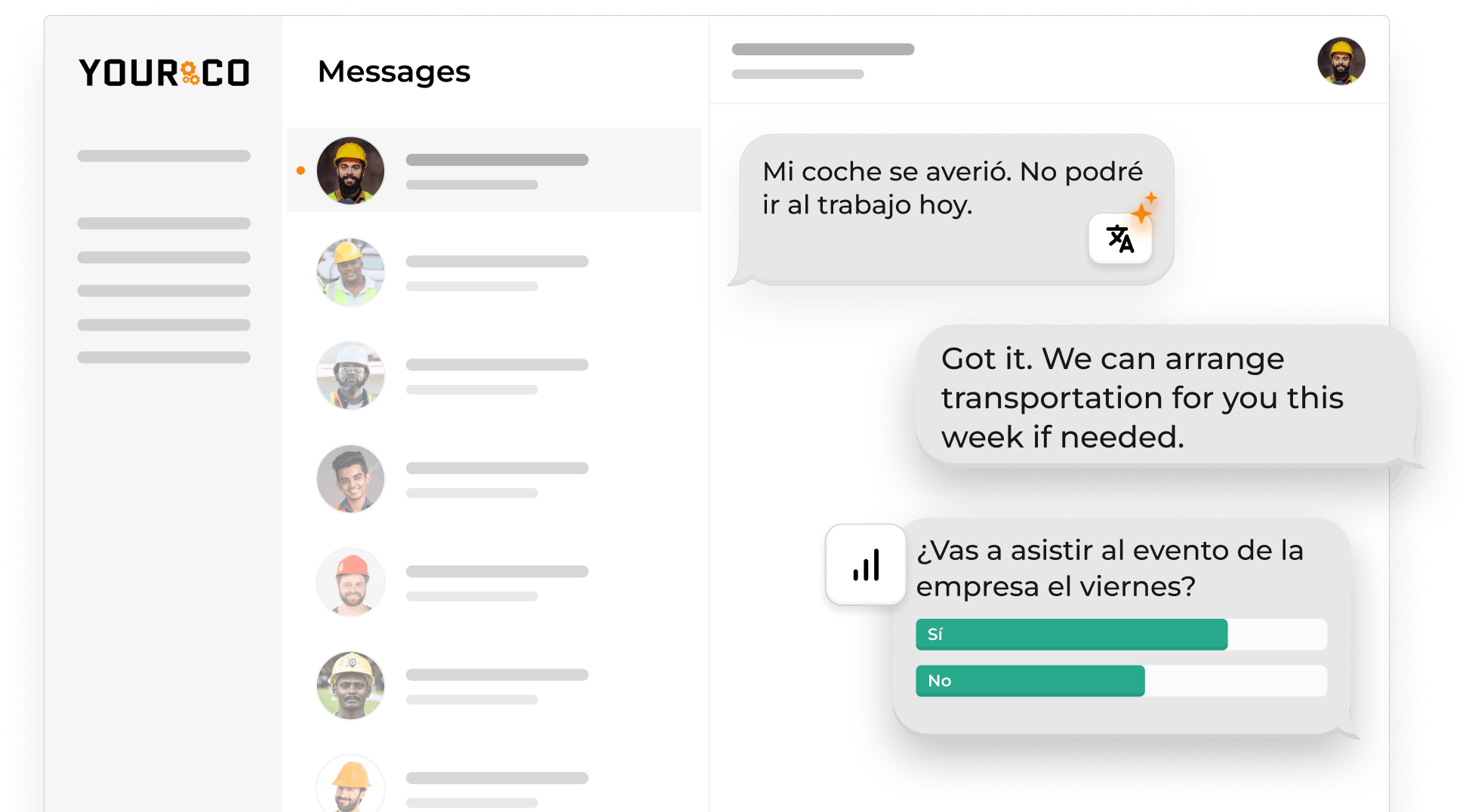
Managing call-ins through voicemails, phone trees, and personal text messages creates headaches for supervisors and documentation gaps for HR. Yourco's Text Off Line feature gives employees a simple way to report absences via SMS, with automatic notifications sent to supervisors and HR the moment a message comes in. Every absence is timestamped and documented, creating the audit trail you need without any manual logging.
Because Yourco works on any phone, including basic flip phones, every employee can report absences the same way regardless of what device they own. Messages are automatically translated across 135+ languages and dialects, so multilingual teams can communicate clearly without relying on bilingual supervisors to relay information.
Beyond faster reporting, Yourco’s Frontline Intelligence turns call-in texts into clear patterns HR and operations teams can act on. By analyzing absence trends across locations, shifts, and roles, it helps managers spot recurring issues like understaffed shifts or burnout early. For example, repeated last-minute call-ins on the same shift can signal a workload or scheduling problem before it leads to overtime costs or safety risks.
Teams using Yourco see real engagement gains fast. After 90 days, two-way employee engagement increases to 86%, showing that when communication works on every phone and feels easy to respond to, employees actually participate.
Try Yourco for free today or schedule a demo and see the difference the right workplace communication solution can make in your company.
Frequently Asked Questions
How far in advance should employees call in sick?
Most organizations require at least one to two hours of notice before a shift starts. This gives supervisors time to arrange coverage. For early morning shifts, consider allowing notification the evening before since calling at 4 a.m. isn't practical for most people.
What should a call-in policy include?
A complete policy covers notification timeframes, approved communication methods, required information (name, shift, reason, expected return), no-call/no-show consequences, and documentation procedures. Keep the language simple so employees at all levels can understand expectations.
How do you handle no-call/no-show situations fairly?
Use progressive discipline that starts with a conversation rather than immediate punishment. First offenses often have legitimate explanations. Document everything consistently so all employees are held to the same standard, and make exceptions for genuine emergencies.
Can call-in procedures work for multilingual teams?
Yes, but you need communication channels that support multiple languages. SMS-based systems with automatic translation remove barriers for non-English speakers. Keep required information simple and consider providing visual templates employees can reference.
How do you document call-ins for compliance?
Record every absence with the employee name, date, shift missed, reason given, notification method, and receiving supervisor. Store records in a central location and retain them according to your industry's requirements, typically at least three years. Consistent documentation protects you during audits and ensures fair treatment.
Can you discipline employees for not following call-in procedures?
Yes. Employers can discipline employees for not following call-in procedures, as long as the policy is clearly communicated and applied consistently. Most teams use progressive discipline, starting with a documented conversation and escalating only if the behavior repeats.
What exceptions do you allow for emergencies or incapacity?
Most organizations allow exceptions when an employee is genuinely unable to follow call-in procedures due to emergencies or incapacity. Common exceptions include sudden medical emergencies, accidents, hospitalization, loss of consciousness, or situations where the employee has no reasonable way to communicate. In these cases, notice is usually accepted as soon as practicable, either from the employee or a family member, and documentation may be requested once the employee is able to return.