
TL;DR: You can measure employee sentiment by job title through SMS-based pulse surveys, daily communication patterns, and response tracking, segmented by role, shift, and location. This reveals which positions are struggling before turnover spikes, unlike annual surveys that only capture filtered snapshots. Act fast on what you learn and close the feedback loop so employees see their input drives real change.
A manufacturing HR manager notices turnover spiking among machine operators, but satisfaction surveys show decent scores. The disconnect? Traditional surveys miss the subtle signals hiding in everyday communication. Annual reviews and surface-level metrics don't capture how employees truly feel about their roles, their managers, or the company. By the time dissatisfaction shows up in exit interviews, it's too late to act.
Sentiment analysis changes this by giving HR leaders a real-time window into workforce attitudes. Instead of waiting for problems to surface in resignation letters, you can spot frustration early, understand which roles are struggling, and act before good people walk out the door.
Understand What Sentiment Analysis Shows About Your Workforce
Employee sentiment analysis is the process of understanding how employees truly feel about their roles, the organization, and their work environment. Rather than relying on a single annual score, this approach tracks the emotional signals behind what workers say and do every day.
Employees typically express three main sentiment categories:
- Positive sentiment reflects happy, engaged, and motivated workers who feel connected to their jobs
- Neutral sentiment indicates indifference or uncertainty, often a warning sign that engagement could tip either direction
- Negative sentiment signals frustration, disconnection, and dissatisfaction that, left unaddressed, leads to turnover
Linking sentiment to measurable outcomes is where the real value lies. Positive sentiment is associated with higher productivity, reduced turnover, and better customer satisfaction. However, traditional measurement methods like annual surveys fall short because they only offer snapshots rather than ongoing insights.
Such surveys often capture filtered responses, creating a significant gap between what employers think is working and what employees actually experience.
To get a fuller picture, employee sentiment analysis draws on various data sources: pulse surveys, daily communications, feedback forms, and response patterns. For organizations employing frontline workers, capturing sentiment requires reaching employees in their work environments, away from traditional desk setups. This brings unique challenges that require specialized approaches to data collection.
Segment Sentiment by Job Title and Role
Different jobs create different feelings. When you mix warehouse workers, night supervisors, and office staff into one engagement score, you miss problems that are right in front of you.
Frontline roles usually show the biggest sentiment gaps. Many frontline employees report that company communication simply does not reach them. A cheerful corporate newsletter might look successful on paper, but forklift drivers changing shifts never see it.
Job titles help you organize feedback clearly. When you track sentiment by role, you can spot that call-center agents feel overwhelmed while field technicians stay positive, or that drivers in one region feel ignored while the same role elsewhere thrives. This insight helps you fix specific problems instead of rolling out expensive programs that miss the real issues.
The cost of getting this wrong is high. Workers who feel their position lacks recognition disengage quickly and start looking elsewhere, a pattern that shows up across industries. Lost engagement hits frontline environments especially hard since turnover is already expensive.
Tracking sentiment by position also reveals fairness problems. Hourly frontline workers often report lower trust and fewer growth opportunities than their office-based colleagues, pointing HR toward solutions like pay transparency, skills training, or better manager coaching instead of generic perks that don't address the real concerns.
Understanding how sentiment differs by position is just the beginning. The next challenge is gathering honest feedback from employees who rarely sit at a desk.
Track Sentiment Across Your Frontline Workforce
When it comes to understanding your frontline workforce, traditional survey tools often fall short. Many frontline workers lack access to corporate email, making alternative feedback channels a necessity.
Choose Accessible Feedback Channels
For frontline employees, SMS-based surveys offer the most practical solution. With a 98 percent read rate compared to roughly 20 percent for email, text messages reach workers wherever they are without requiring internet access or app downloads.
Pulse surveys, which are quick and frequent check-ins, capture sentiment more accurately than annual reviews. These shorter surveys encourage honest, immediate feedback from busy workers who only have a few minutes between tasks.
The key is meeting employees where they already are. A warehouse worker checking messages during a break can answer a two-question text survey in seconds. That same worker might never open a lengthy email questionnaire sent to an inbox they rarely check.
Segment Feedback by Role and Location
Breaking down sentiment data by position, shift, and location reveals whether challenges are widespread or confined to specific teams. If sentiment drops significantly among night-shift warehouse workers but stays steady during day shifts, you know exactly where to focus your attention.
This segmentation also protects anonymity while enabling actionable insights. When you aggregate responses at the team or location level, individual workers feel safer sharing honest feedback. A single complaint might be noise, but when an entire shift reports the same frustration, you have a clear signal to investigate.
Capture Sentiment From Daily Communication Patterns
Sentiment shows up in more than survey responses. Response rates, message tone, and participation in company initiatives all reveal how workers feel. Changes in engagement levels can highlight potential turnover weeks or months before someone actually quits.
When message replies slow down or participation in voluntary programs drops, these patterns often precede resignations. Tracking these signals across your workforce helps you spot trouble before it becomes a crisis.
Connect Sentiment Data to Employer Brand and Retention
Employer brand lives within employee sentiment. What your workers express about the company to peers and on review sites directly shapes your ability to attract and retain talent. A subtle shift in internal sentiment can lead to an external ripple effect.
Negative sentiment often spreads quietly, seeding dissatisfaction long before it becomes evident in turnover stats. Employees frequently share their frustrations within teams before making moves to search for new jobs, potentially setting off a wave of discontent. If employees don't feel supported or heard, they're more likely to explore other opportunities.
Sentiment analysis becomes an early warning system here. By tracking how employees feel about leadership, communication, and growth prospects, you can intervene well before resignation letters start to pile up.
When you catch sentiment dips early, you have time to address concerns before they spread. Engaged frontline workers tend to provide better customer service and represent your brand more positively, both to customers and to potential hires.
Turn Sentiment Insights Into Workplace Improvements
Closing the feedback loop transforms data into real change. When employees observe that their input leads to actual improvements, engagement rises, and future survey participation increases. The key is acting quickly and visibly on what you learn.
Here's how to turn sentiment data into meaningful action:
- Prioritize high-impact issues that correlate with turnover, safety, or productivity rather than trying to fix everything at once
- Investigate and respond within days when multiple workers across a position or location express similar frustrations
- Share what you learned with employees, explain what steps you're taking, and provide a timeline for changes
- Track effectiveness through follow-up surveys after implementing improvements
- Celebrate wins with your teams when scores improve to reinforce that feedback matters
When deciding on interventions, options may include targeted coaching for managers, workload adjustments for high-stress teams, or recognition programs for isolated workers. The key is matching the solution to the specific problem your data revealed.
Overcome Common Challenges in Sentiment Analysis
Gathering accurate sentiment insights from your workforce comes with obstacles that require thoughtful solutions.
Boost Low Participation Rates
Low participation often stems from workers feeling surveys are irrelevant or doubting that their feedback leads to meaningful changes. Keep surveys short and send them at convenient times, such as right after shifts.
Demonstrating that previous feedback has led to real changes builds trust and encourages future participation.
Break Through Language Barriers
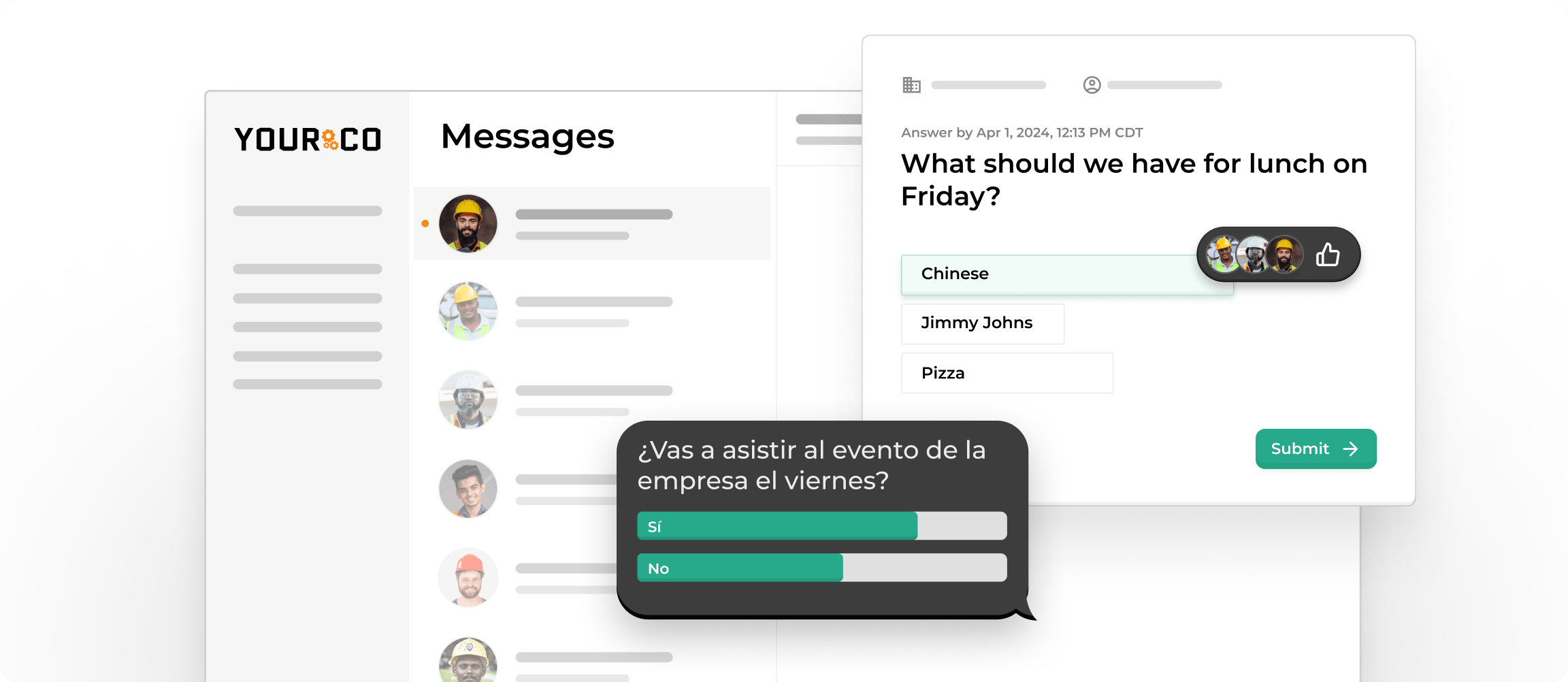
Diverse workforces need communication in their preferred languages. Platforms with automatic translation ensure every worker can participate comfortably and be understood, regardless of which language they speak at home.
Manage Data Overload
When feedback pours in from hundreds or thousands of workers, manually sorting through responses becomes impossible. Tools that automatically categorize responses and highlight patterns reduce the manual work and surface the insights that matter most.
Build Trust in Feedback Systems
Some employees stay silent because they worry their responses will be traced back to them, especially in smaller teams. Offering anonymous feedback options and aggregating data at the team level helps address these concerns. Communicating clearly about how data will be used also builds confidence.
Close the Gap Between Data and Action
Collecting feedback without acting on it damages trust more than not asking at all. When employees share concerns and nothing changes, they stop participating. Build action planning into your feedback process from the start, with leadership accountable for implementing changes.
Capture Real-Time Workforce Sentiment With Yourco
Sentiment analysis only works when you can actually reach your workforce. For organizations with frontline employees, that means meeting workers where they are, on their phones.
Yourco's SMS platform sends quick pulse surveys, collects open-text feedback, and tracks response patterns across shifts and locations. Nothing to download, no login screens to navigate. Even workers who rarely touch a computer can share how they feel in seconds. Messages work on any phone, including basic devices without internet access.
With automatic translation supporting more than 135 languages and dialects, every employee can respond in the language that feels most natural. This removes barriers that leave diverse teams out of the conversation and ensures you hear from your entire workforce, not just those comfortable in English.
Yourco's Frontline Intelligence turns everyday communication into actionable insights. The platform analyzes response patterns, participation rates, and feedback themes to spot early signs of frustration or disengagement. You see which sites show rising concerns, where morale is slipping, and which teams deserve recognition, all on a live dashboard.
Leaders can ask questions like "What's employee sentiment been like this month?" or "Where are we seeing safety concerns across locations?" and get answers based on actual frontline data rather than secondhand manager reports.
This visibility helps you move from reactive to proactive. Instead of learning about problems in exit interviews, you catch sentiment shifts as they form and address them while there's still time to make a difference.
Try Yourco for free today or schedule a demo and see the difference the right workplace communication solution can make in your company.
Frequently Asked Questions
What is employee sentiment analysis?
Sentiment analysis shows how your team feels about work by looking at their actual words, not just survey scores. When employees share feedback through texts, surveys, or daily communications, patterns emerge that reveal whether comments are positive, negative, or neutral. This helps you catch problems early, before small frustrations turn into resignations.
How does sentiment analysis differ by job title or role?
Different positions face different challenges, so their feedback tells different stories. Machine operators might express concerns about equipment or safety, while supervisors worry about communication from leadership.
When you track sentiment by position, you see exactly which roles need the most support. This helps you focus resources where they'll make the biggest difference instead of using the same approach for everyone.
Can sentiment analysis really predict turnover?
Employees often show declining engagement weeks before they quit. Their messages get shorter, their tone turns negative, or they stop participating in team activities. Tracking these changes flags at-risk workers, giving you time to step in with coaching or workload adjustments before they start job hunting.
What should you do after collecting sentiment data?
Act fast and tell people what changed. Share the main themes you found, explain what steps you're taking, and give a timeline. After you make improvements, send another quick survey to see if things have gotten better.
When employees see their feedback leading to real changes, they trust the process more and participate in future surveys. Companies that close this loop see higher engagement and lower turnover.