
TL;DR: You can measure frontline communication effectiveness by tracking SMS delivery and response rates, survey participation, attendance patterns, and safety reporting frequency. These real-time metrics flag engagement gaps before they become turnover or safety incidents. And unlike email or annual surveys, SMS reaches workers on any phone with 98% open rates.
Knowing whether your messages actually reach frontline employees is one of the toughest challenges in workforce communication. Managers often assume updates get through, but frontline teams frequently tell a different story. That disconnect contributes directly to turnover, safety risks, and operational breakdowns.
Relying on email opens or annual surveys won't cut it for workers who spend their days away from desks and inboxes. You need real-time metrics that track delivery, response, and engagement rates, data that flags communication gaps before missed messages turn into no-shows, accidents, or resignations.
Recognize Why Traditional Engagement Metrics Miss Frontline Workers
When it comes to evaluating how engaged frontline employees are, traditional methods like annual surveys and email-based metrics often miss the mark. These approaches offer infrequent snapshots that fail to capture real-time shifts within dispersed teams. Surveys conducted quarterly or annually are retrospective, providing data that's already outdated by the time it's analyzed.
This timing gap leads to missed opportunities for immediate adjustments, particularly in fast-paced environments where frontline workers operate.
One major hurdle is accessibility. Many frontline employees lack corporate email or reliable internet access, which are typically required for participating in these traditional measures. Rotating shifts add another layer of complexity, often resulting in falling survey participation. This low accessibility creates a significant gap between what's measured and what frontline workers actually experience.
Traditional metrics not only overlook immediate needs but also fail to drive actionable insights. Often, the data gets collected but not shared or acted upon, leading to eroded trust in sectors where turnover is already high. Moving beyond these ineffective approaches requires methods designed to meet frontline teams where they are, in real time and in ways that they can easily engage with.
Track These Employee Engagement Metrics to Measure Communication Success
To effectively measure communication success with your frontline teams, focus on specific engagement metrics that provide insights into reach, interaction, trust, and operational impact.
1. Track Message Delivery and Response Rates
Begin by assessing the effectiveness of your SMS communications through delivery rates, read rates, and response rates. Delivery rates indicate messages successfully sent, while read rates show messages that have been opened. Response rates measure employee engagement by tracking replies or acknowledgments.
SMS messages typically achieve a 98% open rate, vastly exceeding email's 20% open rate, highlighting their efficiency in urgent communications.
By tracking response times, you can gauge the level of urgency recognized by your employees. Faster responses suggest higher trust and convenience. Segment your analysis by shift, location, and department to detect patterns and identify any delivery issues caused by opt-outs or network problems.
Look for trends post-onboarding where response rates may drop, prompting you to address gaps in manager follow-up.
2. Monitor Survey Participation and Feedback Volume
Monitoring survey completion rates is another vital indicator of engagement. SMS surveys typically outperform email by 15-35 percentage points in response rates. Evaluating anonymous feedback over time uncovers qualitative insights, with low volumes indicating disengagement. Distinguish between detailed responses and quick ratings to assess engagement depth.
Participation can be affected by factors like timing conflicts with shift changes or survey fatigue due to lengthy forms. The importance of transitioning from survey delivery to feedback within 10 minutes cannot be overstated, as it signals trust and convenience.
3. Connect Attendance and Absenteeism Patterns
Effective communication is directly linked to attendance rates. Higher engagement correlates with reduced absenteeism. Track specific data points such as call-off frequency and timings between notification and shift start to interpret these trends. Monitor last-minute absences as potential indicators of missed communications or disengagement.
Generally, companies with high engagement are more likely to experience significant reductions in absenteeism. Furthermore, reducing no-shows through pre-shift SMS reminders provides clear operational metrics that directly impact your bottom line.
4. Measure Safety Reporting Frequency
The number of near-miss reports and hazard submissions your team files tells you a lot about whether they trust your communication channels. When workers can text a concern the moment they spot it, reports come in faster and more often. On the other hand, when reporting feels slow or complicated, issues go unreported until something breaks or someone gets hurt.
Track the time between an incident and when it reaches your system. Short gaps mean your channels are accessible, and workers feel confident using them. Long gaps, or silence altogether, signal friction in the process or a lack of trust that reporting leads to action.
5. Identify Employee Turnover and Retention Signals
Be proactive by identifying early signs of disengagement. Declining response rates can signal impending resignations. Examine exit interview data to connect communication satisfaction scores with retention outcomes.
Recognizing that a significant portion of frontline workers view fractured communication as a turnover driver underscores the urgency of addressing this challenge. Higher message open and response rates can predict reduced turnover, thanks to automated engagement efforts.
Choose Measurement Methods That Reach Every Shift
To effectively measure communication across dispersed teams, selecting practical methods that fit their unique needs is critical. The key is meeting workers where they are, using tools that don't create additional barriers to participation.
Several measurement approaches work well for frontline teams:
- SMS-based surveys don't require app downloads and work on any phone. This makes them ideal for evaluating how well messages reach and engage your team, even during shift changes.
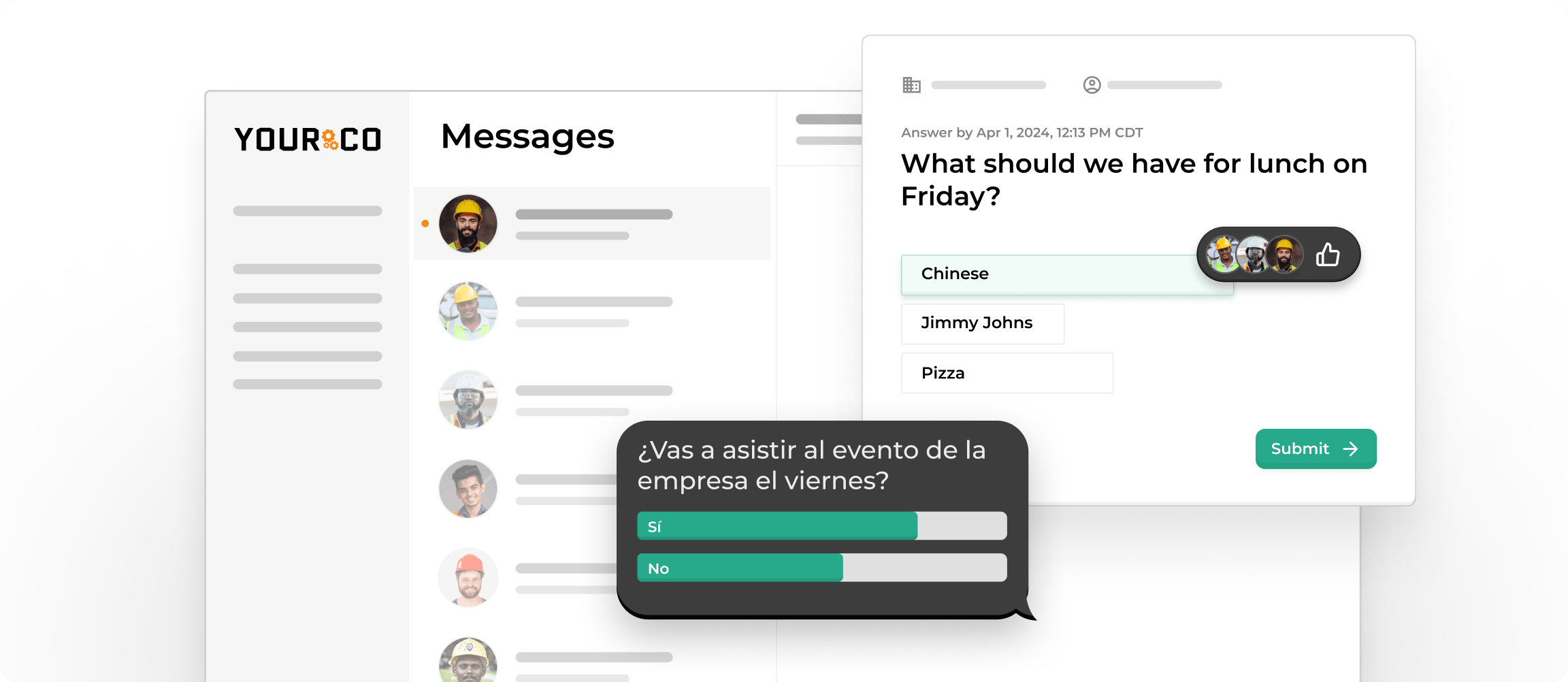
- Micro-surveys consisting of 1-3 questions achieve high response rates by using conversational formats that only take seconds to answer. These quick touchpoints provide continuous insight without overwhelming busy workers.
- Real-time check-ins keep the pulse on your team's engagement through regularly scheduled polls or open-ended SMS prompts. Use automated reminders to boost completion rates and ensure you're capturing feedback from all shifts, not just the most vocal employees.
- Response tracking tools integrated into communication platforms provide automatic logging of delivery, read, and response data. This setup enables near-real-time dashboards that visualize engagement trends, helping you stay up to date on communication effectiveness across all locations.
- Supervisor feedback provides crucial qualitative insights based on firsthand observations. Share findings in monthly huddles to address immediate issues and leverage managers' direct contact with team members.
Combining quantitative metrics with qualitative insights helps pinpoint underlying issues. Numbers highlight where problems lie, whereas conversations reveal the causes. By blending SMS sentiment with behavioral data such as absenteeism, you create a comprehensive view of team dynamics.
Analyze Communication Data Across Locations and Teams
Managing communication data across various locations requires a systematic approach that reveals patterns and drives targeted improvements. For organizations with multi-site operations, breaking down data by site, shift, and role is crucial. By comparing response rates across different locations, you can identify specific teams needing support and track patterns that might indicate systemic issues.
Establishing benchmarks plays a vital role in maintaining consistent communication effectiveness. Using a rolling four-week average as your standard helps flag any team that drifts below expectations.
This is particularly helpful during onboarding phases, where tracking engagement fluctuations can reveal areas needing attention. It's important to recognize that a single poor week may not signify a larger problem, but recurring issues often do.
An essential aspect of analysis is correlating communication data with other metrics. When you notice low message engagement, look for concurrent spikes in absenteeism or safety incidents. These correlations can highlight deeper issues requiring more thorough investigation, like unaddressed safety concerns or low morale.
Manager performance is another key area to consider. Response and engagement rates often vary by supervisor, offering insights into where coaching might be necessary. The satisfaction gap between managers and non-managers often affects overall team performance, making supervisor-level analysis particularly valuable.
Act on Engagement Metrics to Improve Communication
To effectively bridge the communication gap with your team, it's essential to act upon engagement metrics rather than simply collecting data. Closing the feedback loop can greatly enhance your workforce's connection to your organization. When employees see their input leading to real changes, their engagement levels soar, building a cycle of continuous improvement.
Turn your engagement data into action with these approaches:
- Close the loop visibly: Use tools that show employees you've acted on their feedback. Include simple clarity checks after messages, like "Was this clear? Y/N," to gauge understanding and improve future communication.
- Address gaps immediately: Don't wait for the next quarterly review to investigate a drop in response rates. Flag urgent issues as they appear and tackle problems before they escalate into operational breakdowns.
- Adjust timing to match work rhythms: If night shift engagement dips, experiment with different message delivery schedules. Pre-shift reminders land better than mid-shift interruptions and help avoid message overload.
- Train supervisors on local patterns: Equip managers with their team's metrics so they can spot emerging issues and intervene early. Sharing data builds understanding and enables timely action.
- Celebrate improvements: When metrics move in the right direction, acknowledge it. Recognition reinforces the value of feedback and builds trust for the next round.
Turn Frontline Communication Into Actionable Intelligence With Yourco
Every text you send to the floor, every quick poll, and every shift confirmation contains valuable data about how your team feels and performs. Yourco captures this information automatically and converts it into clear insights you can use immediately.
The platform records each message with timestamps, delivery confirmation, and reply tracking. This data feeds directly into real-time workforce analytics, giving you instant answers to questions like "Which site is slipping on response rates this week?" or "Where are absence alerts spiking?"
Yourco's Frontline Intelligence goes deeper than dashboards. It analyzes patterns across your communication data to flag early signs of disengagement, highlight safety concerns as they emerge, and forecast staffing needs based on attendance trends.
Instead of waiting for quarterly reports or piecing together spreadsheets, you can prompt the system with plain questions like "What's driving turnover in our Southeast locations?" or "Which shifts have mentioned safety concerns this month?" The AI surfaces insights you'd otherwise miss, turning reactive firefighting into proactive management before small issues become resignations, incidents, or missed shifts.
What’s more, language barriers no longer hide critical information. Built-in AI translation automatically converts messages and replies in 135+ languages and dialects, so every worker can share feedback, and you see the complete picture without extra work.
Ready to see what your frontline can tell you? Try Yourco for free today or schedule a demo and see the difference the right workplace communication solution can make in your company.
Frequently Asked Questions
Which employee engagement metrics matter most for frontline teams?
Focus on five key signals: delivery and response rates, survey participation, attendance patterns, safety reports, and turnover indicators. High delivery and quick replies confirm your updates reach every shift. Strong survey completion tells you workers feel heard.
Fewer last-minute call-offs point to clear scheduling. Frequent hazard reports show trust in your safety process. A sudden dip in any of these areas can foreshadow resignations, so monitor these patterns weekly by location and shift.
How often should I measure frontline communication effectiveness?
Check core numbers every week. A weekly look at response and participation keeps issues from snowballing, especially in fast-moving environments. Run a brief monthly pulse survey to capture broader sentiment, then dig deeper each quarter to see if changes stick.
What causes low engagement scores among frontline workers?
Low scores usually come from hard-to-reach channels, irrelevant timing, or one-way messaging. When updates live in email or an app that needs Wi-Fi, many workers never see them. Messages that land after a shift ends feel out of touch.
If feedback disappears into a black hole, trust erodes, and participation can drop significantly. Start by asking workers how they prefer to hear from you, then act on what they say.
Can SMS-based metrics really improve retention?
Yes. Text messages reach employees that email and apps miss, because any basic phone can receive a text. Many employers now use SMS for workforce communication, leading to faster issue resolution and higher engagement scores.
When you track opens and replies, a slowdown often appears weeks before someone quits, giving you time to check in and keep them on board.