
GoHappy works for sending updates, but many teams hit limits once they need real interaction. Frontline workers can’t reply, feedback gets pushed to side channels, and leaders lose visibility into what’s happening across sites and shifts.
This guide looks at where GoHappy falls short and what alternative tools help frontline teams stay safer, more connected, and easier to manage.
TL;DR
- GoHappy is effective for announcements, but its one-way messaging limits feedback, interaction, and visibility across frontline teams.
- When workers can’t reply or ask questions, issues surface late, engagement drops, and managers rely on side channels to fill gaps.
- Two-way communication helps reduce safety risks, improves retention, and creates clearer feedback loops across shifts and locations.
- Yourco stands out by using SMS-based, two-way communication to reach every worker on any phone, while turning everyday messages into actionable insight for leaders.
Understand GoHappy Communication Limits
The most significant limitation of GoHappy is its one-way messaging architecture. This constraint creates real problems:
- Prevents interactive communication workflows
- Blocks employee feedback on announcements
- Eliminates dialogue between management and frontline workers
- Leaves workers feeling disconnected from leadership
In contrast, two-way communication delivers measurable results:
- Reduces workers' compensation claims significantly
- Decreases injury costs substantially
- Improves employee engagement and retention
- Creates feedback loops that improve operations
When evaluating alternatives, prioritize platforms that support real conversations and enable workers to provide feedback, ask questions, and receive responses from leadership.
7 Best GoHappy Alternatives for Frontline Teams
1. Yourco
Yourco stands out among GoHappy alternatives by focusing on the one channel every frontline worker already uses and trusts: two-way SMS communication.. Instead of asking employees to learn a new tool or log into another system, it fits directly into how work actually happens on the ground. Managers can reach people instantly, hear back just as quickly, and keep conversations clear even across languages, locations, and shift patterns.
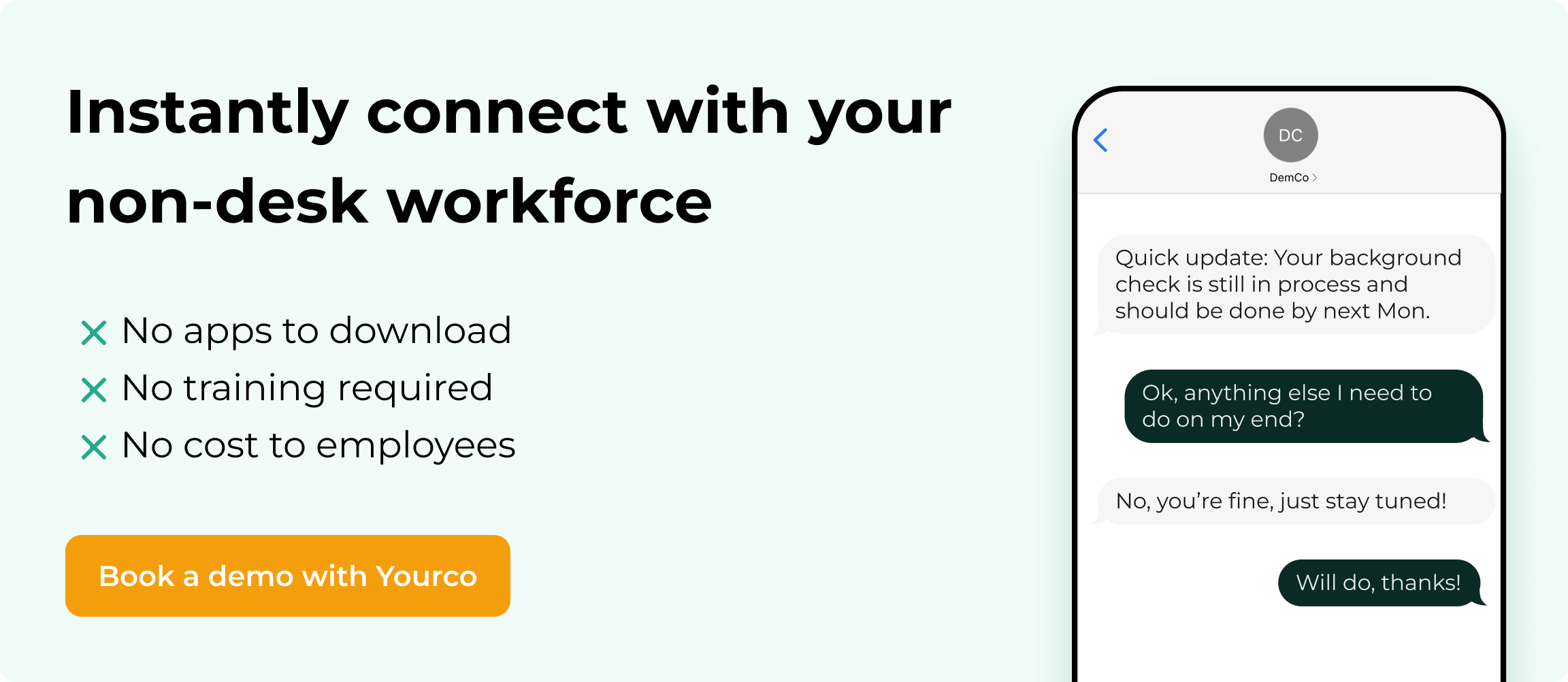
What sets Yourco apart is how it turns everyday messages into something more useful for leadership. Communication doesn’t stop at sending updates. It creates visibility into what is happening across sites, surfaces patterns that point to safety or engagement issues, and keeps a reliable record of interactions for audits and follow-ups.
Key features:
- SMS technology that reaches employees instantly on any phone
- Offers two-way communication for local teams, with one-way broadcasts from corporate leadership
- Real two-way conversations that build engagement and trust
- Automatic translation into 135+ languages and dialects
- AI-Powered Frontline Intelligence that surfaces sentiment trends, flags safety concerns in real time, and forecasts labor needs by analyzing message patterns across all locations
- Integration with multiple HRIS and payroll systems for automated data sync
- Real-time delivery tracking, compliance documentation, and analytics dashboards
- Free tier for up to 50 employees with pilot programs available for mid-market (up to 500+ employees) and enterprise organizations (500+ employees)
- A communication platform that fits every size of business, from small businesses to Fortune 500 Enterprises
2. Beekeeper
Beekeeper offers a mobile-first platform designed specifically for frontline workers in manufacturing, transportation, and hospitality environments. The platform emphasizes connecting deskless employees through an intuitive interface.
Key features:
- Mobile-first design for deskless workers
- Two-way communication capabilities
- Document sharing and content management
- Surveys and polling for employee feedback
- Transparent per-user pricing at $4 per month
3. Connecteam
Connecteam provides an all-in-one workforce management platform that combines communication tools with operational features. The platform offers a free tier for small teams getting started.
Key features:
- Task management and assignment tracking
- Scheduling and shift planning tools
- Time tracking and attendance monitoring
- Training and onboarding modules
- Free tier available for small teams
4. WorkStep
WorkStep focuses on AI-powered engagement analytics specifically designed for high-turnover frontline environments. The platform emphasizes retention insights and workforce analytics.
Key features:
- AI-powered engagement analytics
- Focus on high-turnover workforce environments
- Retention tracking and prediction tools
- Transparent per-user pricing
- Designed specifically for frontline workforce challenges
5. Staffbase
Staffbase offers enterprise-grade internal communications with AI-native multi-channel orchestration. The platform serves large organizations requiring comprehensive communication capabilities.
Key features:
- AI-native multi-channel orchestration
- Enterprise-grade security and compliance
- Documented implementations across industries
- Comprehensive analytics and reporting
- Designed for large-scale deployments
6. Blink
Blink is purpose-built for frontline worker experience with mobile-optimized interfaces. The platform focuses specifically on the needs of deskless employees.
Key features:
- Purpose-built for frontline worker experience
- Mobile-optimized interface design
- Employee engagement and recognition tools
- News feed and content sharing
- Two-way communication capabilities
7. ChangeEngine
ChangeEngine takes a no-login-required approach that reaches employees through existing communication channels. The platform offers flat monthly pricing for predictable budgeting.
Key features:
- No-login-required approach for employees
- Reaches workers through existing communication channels
- Flat monthly pricing at $350 for 200 employees
- Reduces adoption barriers by meeting workers where they are
- Defined pricing structure for mid-market organizations
Connect Your Entire Frontline Workforce With Yourco
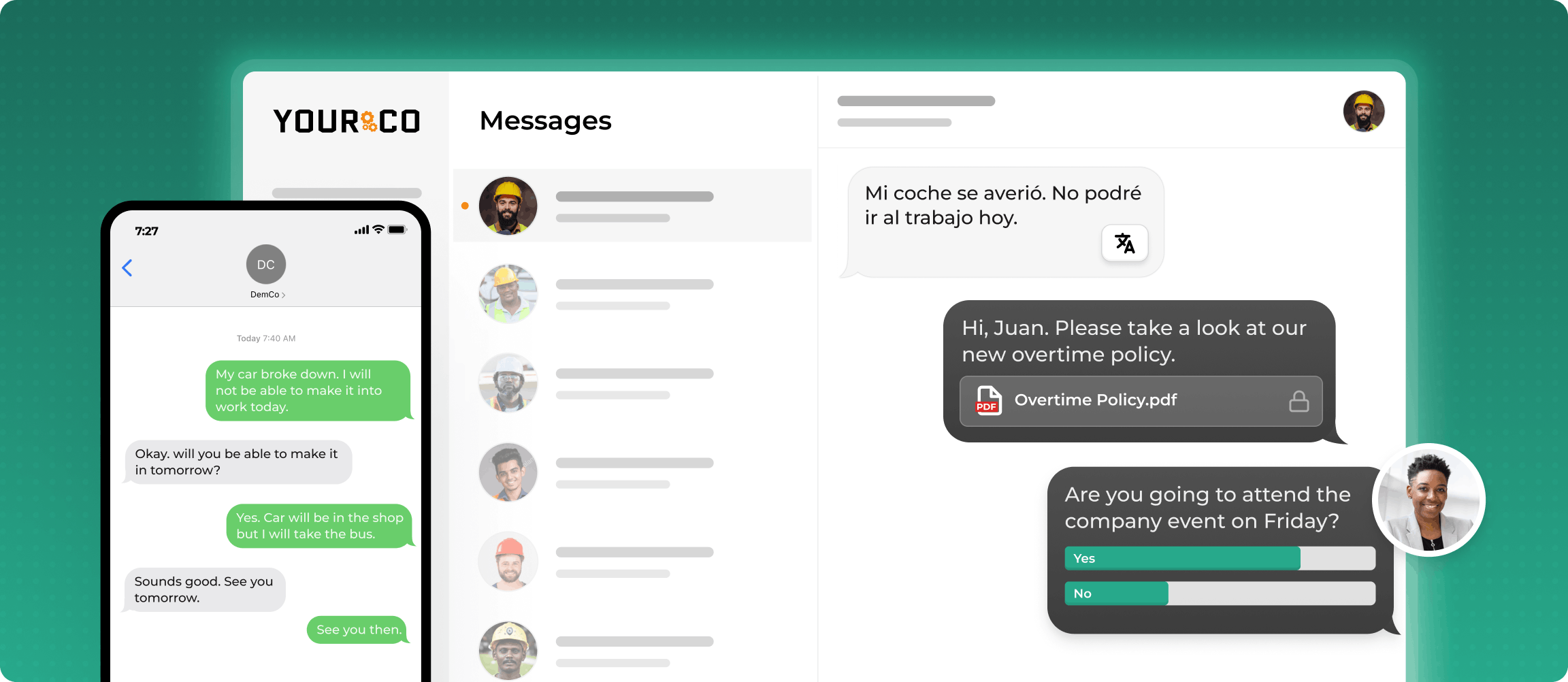
If GoHappy’s one-way messaging is creating blind spots, Yourco offers a more practical alternative for reaching and engaging frontline teams. It uses SMS to connect with workers on any phone, removing app downloads, logins, and access barriers that slow communication down.
With two-way messaging, managers can send updates, collect confirmations, answer questions, and document issues in real time. Built-in translation supports multilingual teams, while delivery tracking and message logs help maintain consistency across locations.
Frontline Intelligence adds another layer by turning response patterns into insight, helping leaders spot engagement or safety concerns earlier without changing how teams communicate.
Try Yourco for free today or schedule a demo and see the difference the right workplace communication solution can make in your company.
Frequently Asked Questions
What are the biggest limitations of GoHappy for frontline teams?
GoHappy is built around one-way messaging, which works for announcements but breaks down when teams need interaction. Workers can’t reply, ask questions, or flag issues directly, which forces managers to rely on side channels like phone calls or personal texts. Over time, this creates gaps in visibility and documentation.
Why does two-way communication matter for frontline operations?
Two-way communication allows workers to confirm messages, report issues, and give feedback in real time. This helps managers spot safety concerns earlier, respond faster to operational problems, and keep better records of what was communicated and when. It also helps teams feel more connected and heard.
What should companies look for when evaluating GoHappy alternatives?
Strong alternatives prioritize reach, simplicity, and response. Look for tools that work on any phone, support two-way messaging, handle multilingual teams, and provide clear delivery tracking and message history. The goal is reliable daily communication, not more complexity.
Is it difficult to switch from GoHappy to another communication platform?
In most cases, no. Many alternatives are designed to layer into existing workflows and sync with HR or payroll systems. The key is choosing a platform that does not require employee training, app installs, or new logins, so teams can transition without disruption.