
A single workplace injury rarely stays a single expense. In manufacturing, logistics, healthcare, and construction, one incident can cascade into insurance premiums, replacement hiring, overtime, regulatory penalties, and productivity losses that quietly erode margins quarter after quarter.
Most leadership teams underestimate the true financial damage because the highest costs never appear on the original claim. This article covers the financial case for proactive safety investment, including the ROI benchmarks and cost data that support presenting safety as a revenue-protecting priority.
TL;DR
- Preventable workplace injuries cost U.S. employers $181.4 billion annually, with indirect costs multiplying every claim
- Proactive safety programs return $4 to $6 for every dollar invested, according to federal research
- Direct savings include lower workers' comp claims, reduced insurance premiums, and avoided OSHA penalties
- Safety culture reduces turnover, absenteeism, and workforce disruption in frontline industries
- Safety investment strengthens hiring and retention in labor-constrained industries where employer reputation matters
- SMS-based platforms like Yourco deliver instant safety alerts and near-miss reporting to every worker without app downloads
Quantify the True Cost of Preventable Workplace Injuries
Most safety budget conversations start with the wrong number. Leaders look at direct workers' compensation claims and miss the full financial picture. The total cost of work injuries in 2024 reached $181.4 billion, according to the National Safety Council (NSC). Those are the visible costs. Hidden costs include supervisor investigation time, replacement worker training, co-worker productivity loss, overtime to cover absent workers, morale effects on the remaining workforce, and future insurance premium increases.
OSHA's Safety Pays methodology, based on occupational health research, uses these sliding-scale multipliers for indirect costs by direct cost severity:
OSHA emphasizes that minor injuries carry the highest indirect-to-direct cost ratios (up to 4.5×), and these uninsured costs hit profit directly. At a 3% margin, a typical $48,000 injury requires $1.6M in new sales to break even.
This information is for general awareness only. For specific compliance guidance, consult with qualified legal professionals.
Calculate the ROI of Every Safety Dollar Spent
The most widely corroborated benchmark for proactive workplace safety program returns comes from the U.S. Department of Energy and the American Society of Safety Professionals (ASSP): for every $1 invested in an effective safety program, $4 to $6 may be saved. This accounts for avoided medical costs, reduced workers' comp premiums, maintained productivity, and decreased regulatory penalties.
93% of HR leaders believe clear safety communication reduces workplace incidents, according to a Yourco-commissioned survey of 150 HR leaders. Research confirms the financial dimension of that finding: a randomized study published in Science that California firms receiving a random OSHA inspection saw injuries fall by 9.5% and workers' compensation costs drop by 26% over the four years that followed.
Reduce Direct Costs Through Proactive Prevention
Three direct cost categories respond immediately to proactive safety investment: workers' compensation claims, OSHA penalties, and insurance premiums. The table below summarizes what prevention delivers against each category.
Workers' compensation claims represent the largest direct expense. Construction accounts for a disproportionate share of U.S. workers' compensation premium relative to its share of employment, reflecting the elevated injury risk that proactive safety programs directly address.
OSHA penalties have increased substantially. As of January 15, 2025, willful or repeated violations carry a maximum of $165,514 per violation. A construction trench collapse in Yarmouth, Massachusetts resulted in $4,699,362 in proposed penalties across 57 violations. Insurance premiums improve with better safety records. Firms with safety management programs commonly report a positive impact on their ability to negotiate better insurance terms.
Recover Lost Productivity and Reduce Operational Downtime
Of the $181.4 billion in total work injury costs, $54.9 billion represents wage and productivity losses alone, according to the NSC. 1.8 million cases involving days away from work were recorded across the 2023-2024 period, with a median of 8 days missed per case, according to the Bureau of Labor Statistics. In logistics and warehousing, injuries requiring days away from work run significantly above the private industry average.
Productivity losses extend beyond the injured worker. Every incident pulls supervisors into investigations, diverts HR resources to claims processing, forces overtime on remaining crew members, and creates break-in periods for replacement workers. Gallup research found that top-quartile business units achieved higher profit than bottom-quartile units, driven by less absenteeism, lower turnover, fewer safety incidents, and fewer quality defects.

Attract and Retain Talent Through a Strong Safety Culture
Safety investment also shapes talent outcomes in manufacturing and construction, where labor constraints make every instance of attrition expensive. 1.9 million manufacturing jobs could remain unfilled by 2033 if workforce challenges go unaddressed, according to Deloitte and the Manufacturing Institute.
The connection between safety culture and retention is measurable. Employees with the highest levels of psychological safety are 72% more motivated than those who feel the least safe, according to PwC's 2025 Global Workforce Hopes and Fears Survey.
When leaders build psychological safety in the workplace, attrition risk drops from 12% to under 3%, according to BCG research. Under the new European Sustainability Reporting Standards (ESRS), large companies operating in EU markets may be required to report on workforce safety impacts, thereby extending the regulatory context for safety investment decisions.
This information is for general awareness only. For specific compliance guidance, consult with qualified legal professionals.
Close Communication Gaps That Create Safety Risk
OSHA’s 2026 Safety Champions Program includes communication and coordination as one of seven core elements of effective safety and health programs, underscoring why safety efforts fail when critical information does not reach every worker. A 2025 construction safety study from ASSP and J.J. Keller highlights ongoing communication and training gaps in the industry.
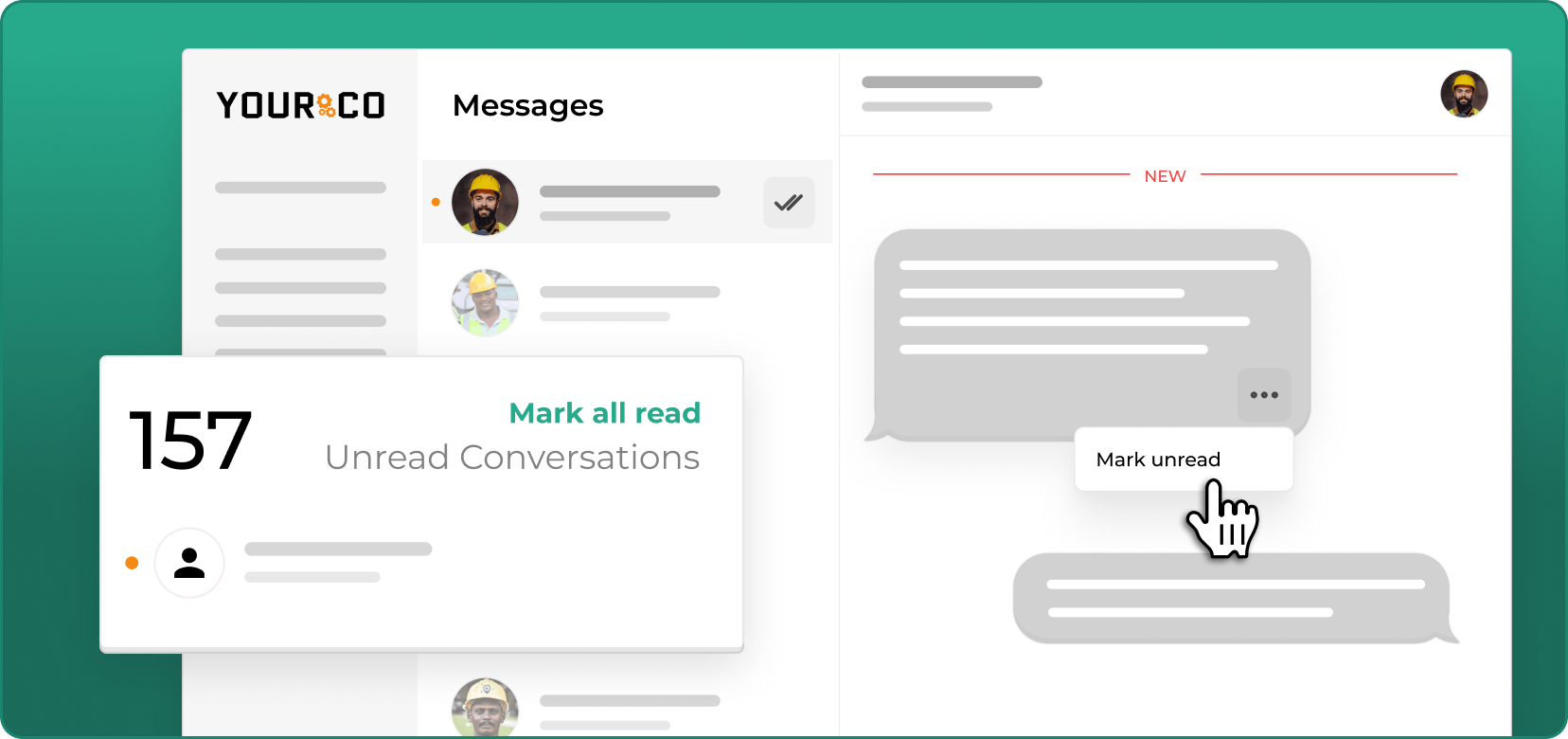
91% of HR leaders say SMS increases frontline employee response rates, according to a Yourco-commissioned survey of 150 HR leaders. Near-miss reporting is where communication infrastructure pays for itself. According to NSC’s Safety Shift: EHS Readiness in 2026, EHS professionals are prioritizing the digitalization of incident reporting and investigation as part of a broader move toward more effective, data-driven safety programs.
Deliver Instant Safety Alerts to Every Worker With Yourco
When safety communication needs to reach every frontline worker regardless of language, device, or location, Yourco gives operations and HR teams a direct channel built for how frontline organizations actually work. With a 98% SMS open rate, safety alerts, standard operating procedure (SOP) updates, and emergency notifications reach workers in seconds on whatever phone they already carry.
Yourco's core capabilities for safety communication include:
- SMS to any phone: no app download, no Wi-Fi, and no cost to employees, including basic flip phones
- Two-way messaging: workers report near-misses, hazards, and safety concerns directly to supervisors
- AI-powered translation: across 135+ languages and dialects, so every worker receives safety protocols in their preferred language
Yourco integrates with 240+ HRIS and payroll systems, keeping employee rosters accurate so safety alerts always reach the right people.
Enterprise Bridge enables corporate leadership to send centralized, one-way safety directives and crisis communications across all locations, while local managers maintain direct communication with their teams.
Frontline Intelligence gives safety and operations leaders centralized visibility into communication patterns across all locations. It scans everyday messages for high-risk language, from safety concerns to interpersonal conflict, and delivers real-time site-level insights. Leadership can identify which locations report the most near-misses, track the speed of acknowledgment for safety alerts, and spot risk patterns across sites to support more informed decisions.
"Yourco has been huge for us, especially during the weather crisis. It is such a fast and easy way to communicate with everyone. We were able to keep our employees safe and make sure everyone was notified of updates in a timely manner. It could not have been built any easier for the end user."
— Scott Pfantz, Operations Manager, Nufarm — Alsip
After 90 days on Yourco, companies see two-way employee engagement reach 86%.
Try Yourco for free today, or schedule a demo to see the difference the right workplace communication solution can make for your company.

Frequently Asked Questions About Workplace Safety ROI
What is the average ROI of proactive workplace safety programs?
Proactive workplace safety programs return $4 to $6 for every dollar invested, according to research from the U.S. Department of Energy and the American Society of Safety Professionals. The exact return depends on the industry, the program's maturity, and the extent to which the organization reduces injury risk and operational disruption over time.
How much does a single workplace injury actually cost an employer?
A single workplace injury typically costs far more than the original claim amount. Beyond direct medical and workers' compensation costs, employers absorb investigation time, replacement training, overtime, lost productivity, and other uninsured expenses that continue affecting margins well after the incident.
How do safety programs help with employee retention?
Safety programs support retention by demonstrating that leadership takes the workplace environment seriously. That kind of culture builds trust, reduces disruption, and shapes the day-to-day experience that often determines whether frontline employees stay beyond their first 60 days.
How can companies communicate safety information to multilingual frontline teams?
SMS-based platforms like Yourco help organizations deliver safety alerts, SOPs, and emergency messages in workers' preferred languages without requiring app downloads or extra training. Reaching workers on the phones they already carry removes the access barriers that make traditional safety communication ineffective on multilingual frontline teams.
What are the biggest OSHA penalty risks for employers right now?
The biggest OSHA penalty risks stem from serious incidents that result in multiple citations during a single inspection. Willful or repeated violations now carry maximum penalties of $165,514 per violation as of January 2025. Proactive safety practices reduce the chance of repeat hazards, compounding violations, and the operational disruption that follows enforcement actions.