OSHA's analysis of emergency responder fatality records finds that many incidents had identifiable safety hazards present at the time of death, with ineffective emergency response plans and uncoordinated command structures among the most common contributing factors. If you manage operations, safety, or risk across multiple sites, that pattern should stop you cold.
The emergency action plan sitting in a binder at one facility does nothing for the workers at your other locations, who have never been trained on it and cannot be reached when seconds count. Solving this requires a layered communication system designed for dispersed, frontline workforces.
TL;DR
- Multi-site emergency communication fails most often because plans exist, but frontline workers were never trained and cannot be reached when it counts
- A PACE plan creates four independent communication layers, so no single failure disables your entire alert system
- Cloud-based mass notification, IoT integration, satellite backup, and NG911 data sharing each address a different failure mode
- Location-based targeting prevents alert fatigue by reaching only the workers who need to act
- HRIS integration keeps contact lists accurate in high-turnover environments, eliminating one of the most common notification failures
- SMS-based platforms like Yourco deliver emergency alerts to any phone without app downloads, reaching frontline workers that email and app-based systems miss
Understand Why Multi-Site Emergency Alerts Fail
Before selecting any system, you need to understand the failure patterns that create the most risk. OSHA's analysis of fatality records found that many incidents had at least one identifiable safety hazard present at the time of death. At Watson Grinding, a written emergency response plan identified propylene as a fire hazard but omitted leak-response procedures, storage limits, and the use of working gas detectors. Workers received no training to recognize or respond to a release. When a leak occurred, they did not evacuate or contact emergency responders. At the BP Toledo Refinery, operators received thousands of alarms simultaneously, far exceeding anyone's ability to process them meaningfully. In each case, the system designed to communicate emergencies failed to match how frontline workers actually receive and act on information.
The structural challenges vary by sector:
- Manufacturing: Alarm systems can become failure points themselves when volume overwhelms human processing capacity
- Transportation and warehousing: Mobile and dispersed crews demand rapid, reliable alerts that reach workers away from fixed locations
- Retail: Active-threat notification is the primary life-safety challenge, requiring near-instant reach to staff across multiple floors or locations
- Healthcare: Communication gaps between departments and sites create coordination failures during mass casualty or evacuation events
The common thread is that email, apps, and intranets structurally exclude the people most likely to be in physical danger. According to a Yourco-commissioned survey of 150 HR leaders, 93% believe clear safety communication directly reduces workplace incidents. Organizations that rely solely on digital-first channels create a frontline communication gap that becomes dangerous during emergencies.
Design a PACE Plan for Every Communication Pair
A PACE plan creates four communication layers: Primary, Alternate, Contingency, and Emergency. FEMA defines PACE as a structured framework for maintaining communications when individual channels fail.
The critical design principle is independence. Each tier must use different power sources, different network infrastructure, and different hardware. A tier that shares infrastructure with another tier is a duplicate, not a backup. CISA identifies resilient, redundant technology as the foundation for maintaining operations when individual systems fail.
A multi-location organization needs a matrix of PACE plans, one per critical communication pair:
- Corporate headquarters to each site: mass notification SMS as Primary; email to site managers as Alternate; phone tree as Contingency; satellite as Emergency
- Site leadership to floor workers: PA system and digital signage as Primary; SMS to personal devices as Alternate; two-way radios as Contingency; physical muster and printed cards as Emergency
- Site-to-site: VoIP as Primary; cellular as Alternate; radio as Contingency; runner protocol as Emergency
- Any site to emergency services: landline 911 as Primary; mobile 911 as Alternate; radio as Contingency; physical dispatch as Emergency
For frontline teams without regular access to corporate intranets, physical documentation such as laminated PACE reference cards at workstations and muster point signage ensures workers know what to do when all electronic systems fail. Investing in frontline communication infrastructure before an emergency separates plans that save lives from plans that collect dust.
Deploy Cloud-Based Mass Notification for Multi-Site Emergency Alerts
Cloud-based mass notification handles the Primary and Alternate tiers for most organizations. Many employers follow OSHA guidance stating that organizations with more than one worksite should have an emergency action plan that lists text messages as an acceptable notification method.
This information is for general awareness only. For specific compliance guidance, consult with qualified legal professionals.
No single channel reaches all worker types. Effective multi-site systems combine several to cover every worker population:
- SMS reaches workers with any mobile phone, including basic devices, but does not help in no-phone zones on production floors
- Voice and text-to-speech reach workers in high-noise environments who may miss visual alerts
- Digital signage reaches production floor workers without personal devices during shifts, but requires screen infrastructure
- Push notifications reach smartphone-equipped workers with app access, but exclude anyone without the app installed
- Email provides audit documentation, but structurally excludes most frontline workers
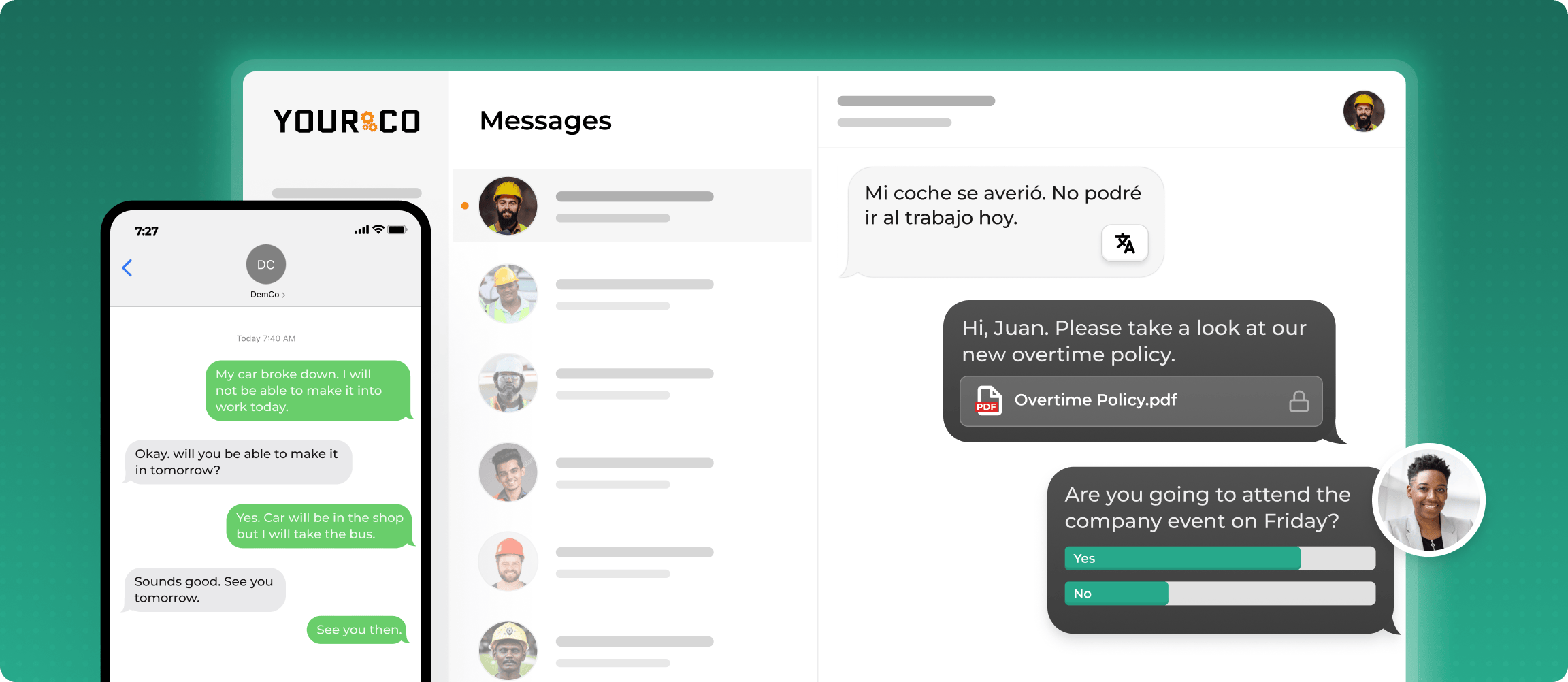
A cloud-based mass notification platform can deliver alerts simultaneously via SMS, voice, email, push notifications, desktop notifications, and digital signage. Location-based targeting reaches only the affected sites, while HRIS integration keeps contact data up to date.
Integrate IoT Platforms With Existing Fire and Safety Systems
IoT-integrated platforms connect environmental sensors directly to your emergency notification system, automating alert triggering so humans do not have to detect and manually initiate notifications.
NFPA 1 proposes explicit recognition of CO, natural gas, and propane gas detection as recognized hazard triggers. A peer-reviewed study in Scientific Reports documents the sensor architecture that enables this automation: environmental, motion, and video sensors transmit data via MQTT over TLS, and when sensor data crosses a hazard threshold, the system simultaneously triggers automated SMS alerts and activates local warning outputs.
For multi-site safety directors, this means a gas leak at one facility can automatically trigger targeted alerts to that site's workers, notify corporate leadership across all locations, and share real-time data with responding agencies. The fastest sensor trigger is useless if the alert lands in an email inbox nobody checks.
Add Satellite Backup for When Terrestrial Networks Fail
Satellite communication serves as the Contingency or Emergency tier in your PACE plan. During Hurricane Katrina, the collapse of a bridge across Lake Pontchartrain simultaneously severed fiber-optic cables carrying all voice and internet traffic, according to a DHS communications review. Satellite was the only means of communication available for weeks.
DHS explicitly recommends satellite as a redundancy layer for emergency communications infrastructure. Portable satellite backup units can create a local cellular coverage zone using satellite backhaul, allowing standard mobile phones to operate within range without any device modification. Equipment pre-positioned at high-risk sites before an event is substantially more effective than deployment into an active disaster zone.

Leverage NG911 and IP-Based Interagency Data Sharing
Next Generation 911 replaces legacy analog infrastructure with IP-based systems that enable the transmission of text, photos, videos, and data to emergency dispatch. For multi-location organizations, the key capability is cross-jurisdictional transfer, which would eliminate the current requirement for dispatchers to verbally relay information when transferring incidents between centers.
Some NG911 data-sharing tools enable cross-agency sharing of live incident data, real-time emergency vehicle tracking across jurisdictions, and direct resource requests through a single dashboard. One important caveat: NG911 capability is not uniform nationally. If your sites span multiple states, verify local PSAP capabilities before building coordination plans that assume real-time data sharing.
Choose the Right Tools for Your Multi-Site Emergency Stack
No single platform covers every layer of a PACE plan. The tools below address distinct failure modes and work together without competing for the same use case.
Yourco handles the frontline SMS tier that other platforms structurally miss; the others cover the broadcast, signage, satellite, and dispatch layers your PACE plan requires.
Reach Every Frontline Worker Instantly With Yourco
people who need to act. Yourco is built specifically for this challenge, delivering emergency alerts directly to frontline workers via SMS on any phone, at any location, without requiring an app download or internet access.
Core communication capabilities:
- SMS to any phone, including basic flip phones, with no app download, no Wi-Fi, and no cost to employees
- Two-way messaging so workers can confirm safety, report hazards, or request help during active incidents
- AI-powered translation across 135+ languages and dialects, delivering each alert in the worker's preferred language automatically
Yourco integrates with 240+ HRIS and payroll systems, automatically syncing new hires, role changes, and terminations so your emergency contact lists are always up to date across all locations.
Enterprise Bridge enables corporate leadership to broadcast emergency alerts to every frontline location simultaneously as a one-way announcement. Local managers maintain direct two-way communication with their teams through the same platform.
Frontline Intelligence gives safety and operations leaders centralized visibility into alert acknowledgment speed across all locations. Leadership can see which sites responded fastest, where messages went unanswered, and identify preparedness gaps before the next incident occurs.
"The Yourco texting system has helped the Railroad communicate with a 24/7 workforce. Sharing weather events, safety concerns and company bulletins have been priceless."
— Carl Kocur, Vice President Engineering, New Orleans Public Belt Railroad
After 90 days on Yourco, companies see two-way employee engagement reach 86%.
Try Yourco for free today, or schedule a demo to see the difference the right workplace communication solution can make for your company.

Frequently Asked Questions about the Emergency Communication System in Multiple Locations
What is a PACE plan for emergency communication?
A PACE plan establishes four independent communication layers: Primary, Alternate, Contingency, and Emergency. Each tier uses different infrastructure so that the failure of one does not disable the others. Multi-location organizations need a PACE matrix covering each critical communication pair, from corporate-to-site down to site leadership-to-floor workers.
How do you send emergency alerts to only the affected location?
Geofencing and location-based targeting allow you to segment alerts by specific site, department, shift, or geographic zone. This prevents alert fatigue by notifying only workers who need to take action, rather than triggering confusion across unaffected locations.
What emergency communication works without smartphones or Wi-Fi?
SMS-based platforms like Yourco deliver alerts to any mobile phone, including basic flip phones, without requiring an app, internet access, or a company email address. For environments where personal devices are restricted, digital signage and PA systems provide an additional layer.
How do you keep emergency contact lists accurate with high employee turnover?
HRIS integration automatically syncs employee data, so new hires are added and terminated employees are removed without manual updates. Outdated contact lists are one of the most common causes of missed emergency notifications in high-turnover frontline environments.
Does satellite backup work for multi-site emergency communication?
Satellite systems operate independently of terrestrial power, cellular, and fiber infrastructure, making them effective when regional disasters disable ground-based networks. Portable satellite units can create local cellular coverage zones at affected sites, allowing standard mobile phones to function without modification.
What OSHA requirements apply to multi-site emergency communication?
Many employers follow OSHA's guidance that each worksite should have its own emergency action plan with alarm systems capable of reaching all workers. OSHA lists intercoms, apps, text messages, emails, and phone trees as acceptable methods, and recommends tracking strategies to confirm message delivery. This information is for general awareness only. For specific compliance guidance, consult with qualified legal professionals.